
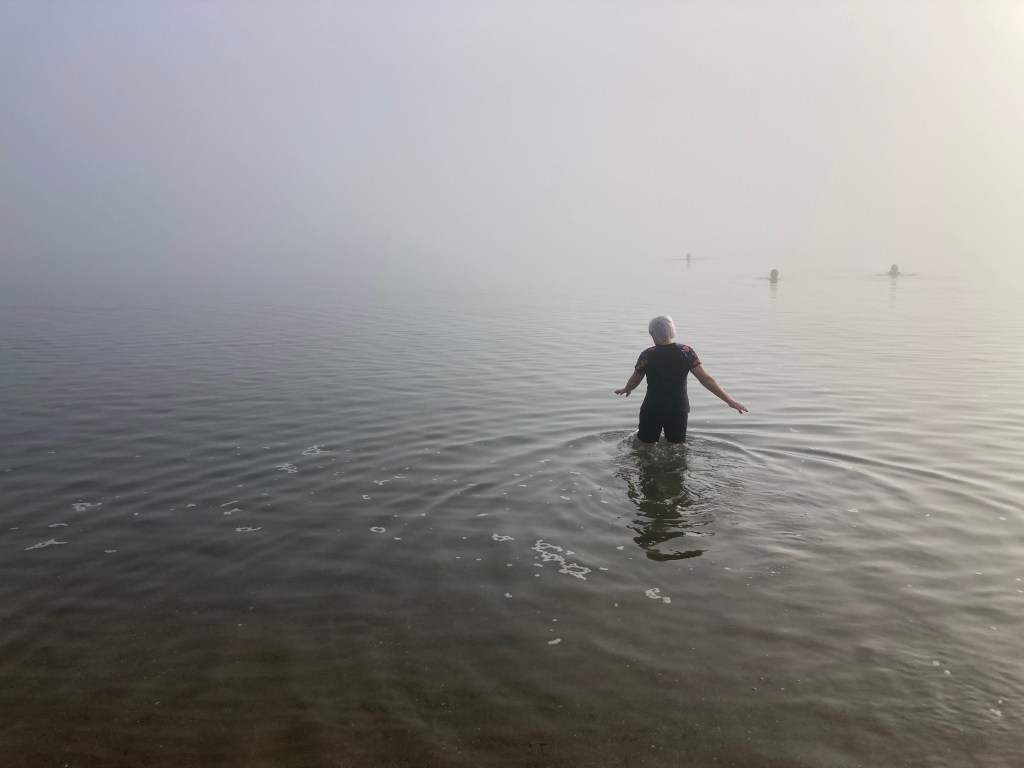
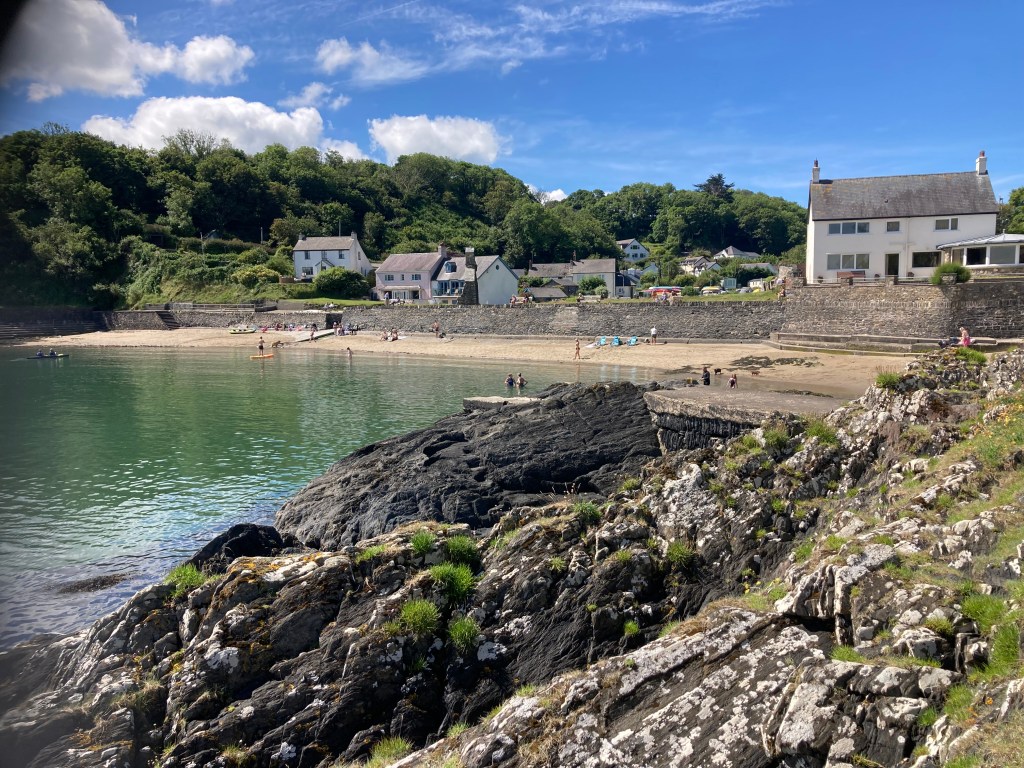
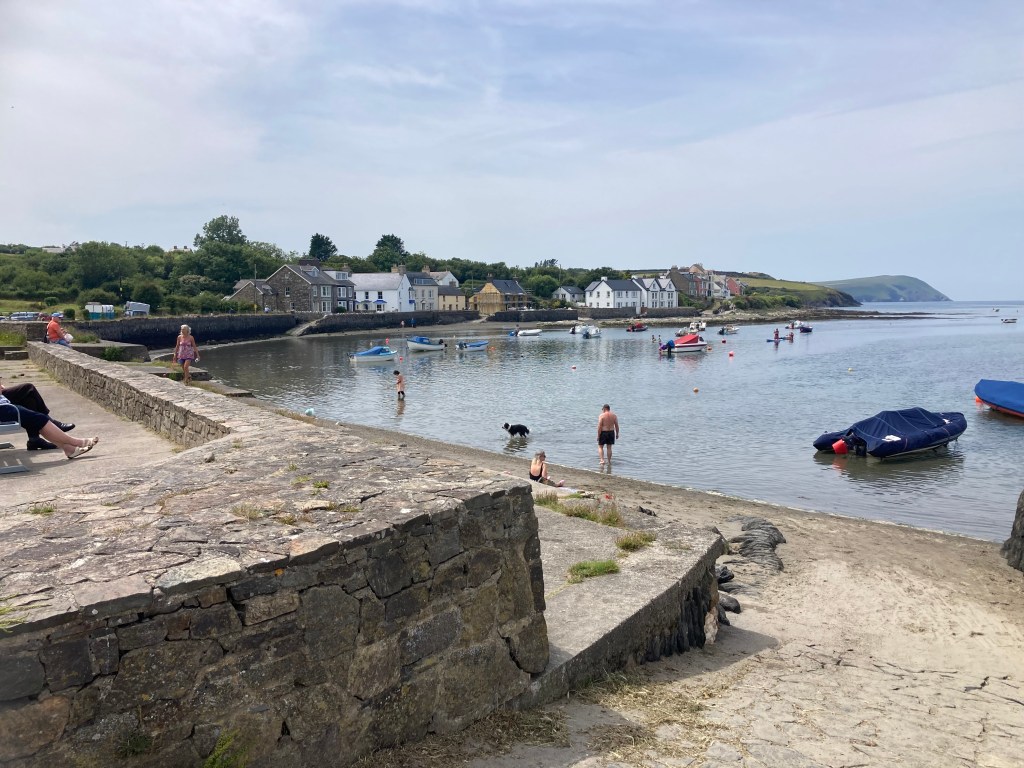
It’s 7am, today our heatwave will get to 32C, but at Aberporth Beach, just north of Cardigan on the West Ciast of Wales, it’s eerily quiet. The sea mist drifts in, drowning the sunlight and obscuring the hardy band of local swimmers who gather at the beach, in the sea, every day of the year that the weather permits. Through the mist we can hear the chatter of Welsh voices, predominately female, one lady has a wonderful woollen beanie on. Impressive the more so as it will transpire that the crutches left at the high water mark are hers, but in the water she can paddle around freely.
Aberporth has great childhood memories for Sue, as for many years her Mum and Dad would drive down here from Bolton, Lancashire, stay in a caravan over looking the beach and enjoy a family seaside holiday. I think I was 18, and was invited to join the family at Aberporth, quite a privilege. So here we are, many decades later, back at the same beach, the Irish Sea lapping on the sand. It is very cold on the arms I find as the rest of the body numbs quickly, but for some reason after about 20 strokes, I have to stand up as the arms are complaining, aching with cold. But after a few minutes I submerge again and eventually they join the rest of the body’s comfortably numb state.
But we are jumping ahead a bit, and let’s retrace our steps. We have left the Forest of Dean, driven into Wales via Monmouth, and its beautiful bridge, to a 50 year old reunion at St Dogmaels on the River Teifi ( pronounced Tivie – with a hard first I, as you would pronounce TIE), just downstream from the town of Cardigan, on the West Wales coast.
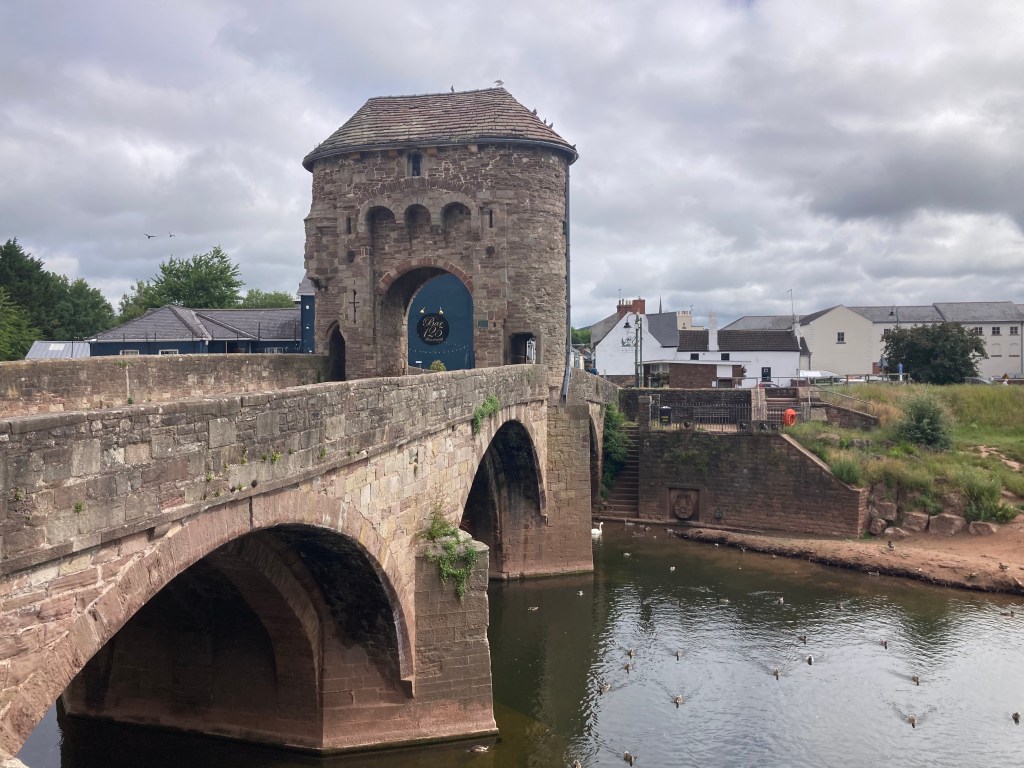
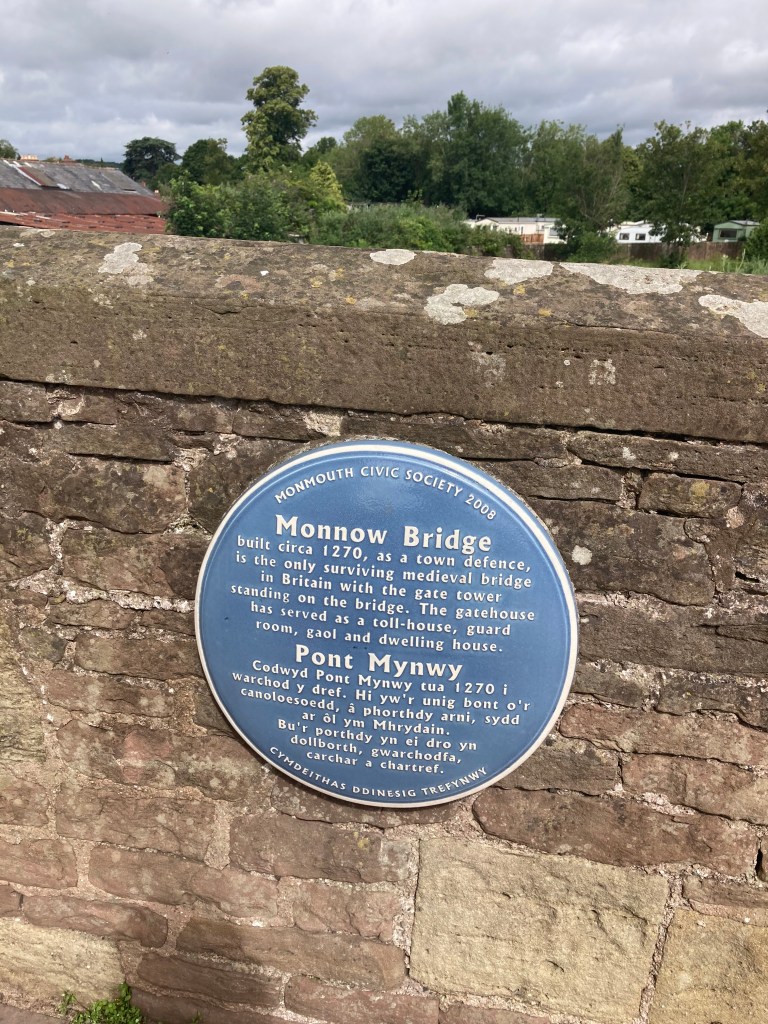
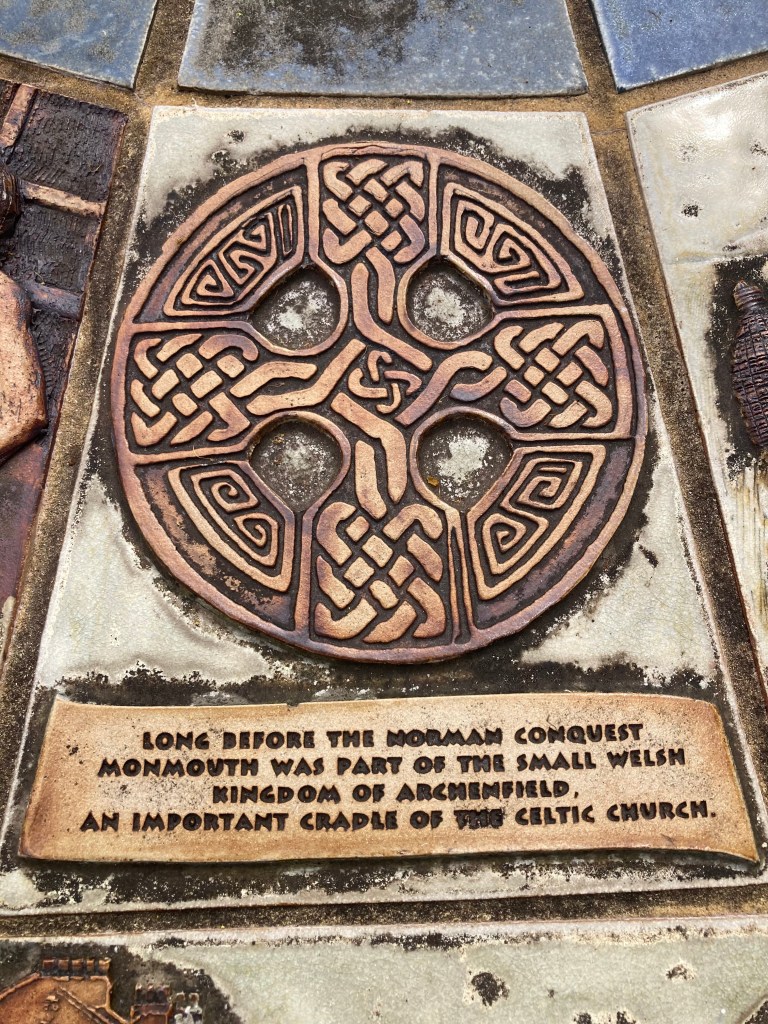
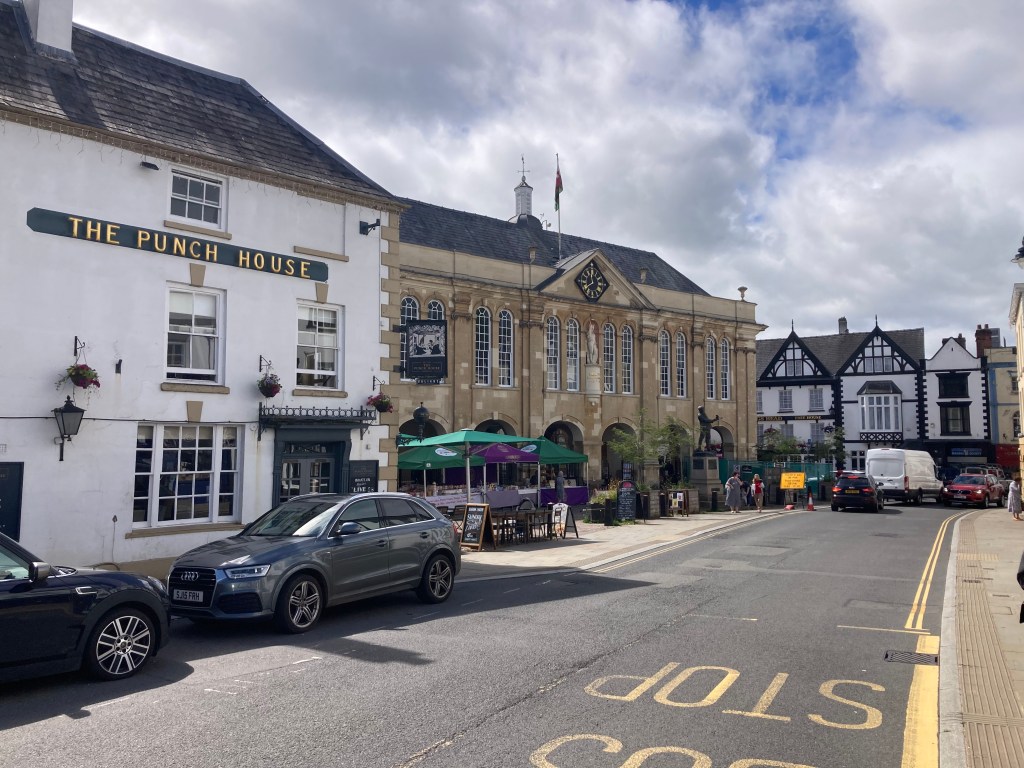
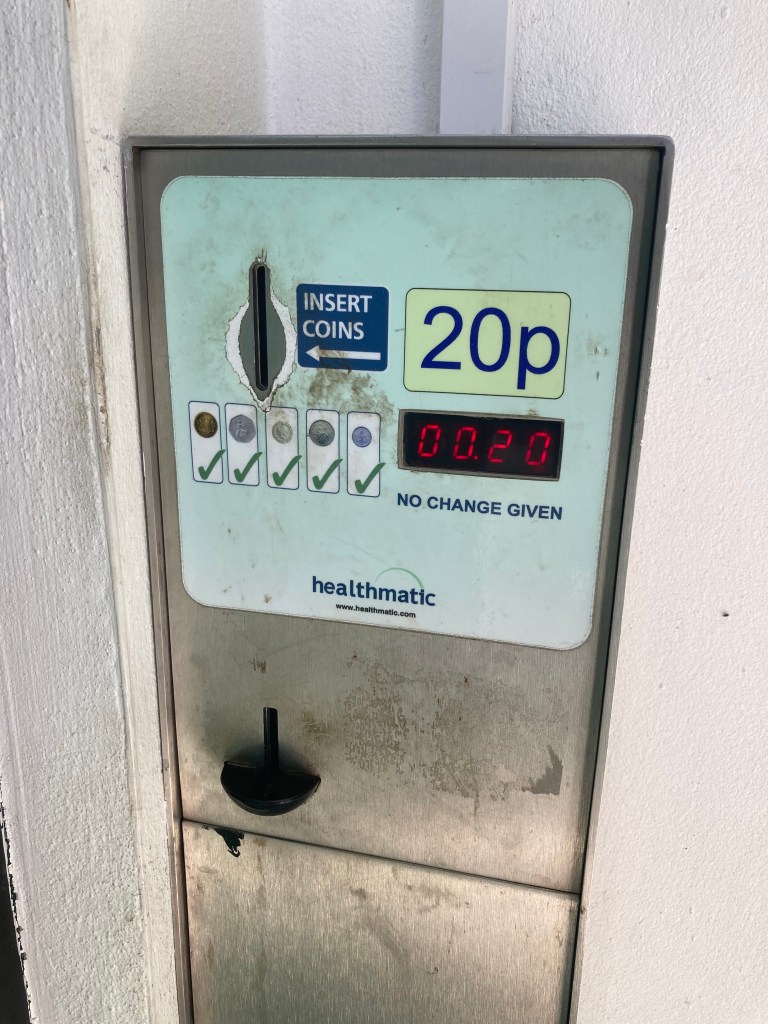
Monmouth like many Welsh towns we visit has a strong Georgian feel to the buildings, both commercial and residential. With big windows and a high stud so typical of the Georgian period. The “bridge “ is much earlier and would been a place to collect a tax on customers needing to access one side or the other of the river. In the context of the need to, “spend a penny”, in these cashless times, quite often the Public Conveniences in Wales,will annoyingly require the payment of 20p, any coin and no change given. The above pic was taken in the town of Brecon and fortunately for me, the Gents lock was malfunctioning and entry was free. Sue and a friendly local lady decided that one payment could work to gain entry to the Ladies, for two people, but some conveniences eg we found in Llangollen in N Wales have one of those soccer ground barriers for each person, opening only after payment, unless you are an acrobatic hurdler, in which case it can be free.
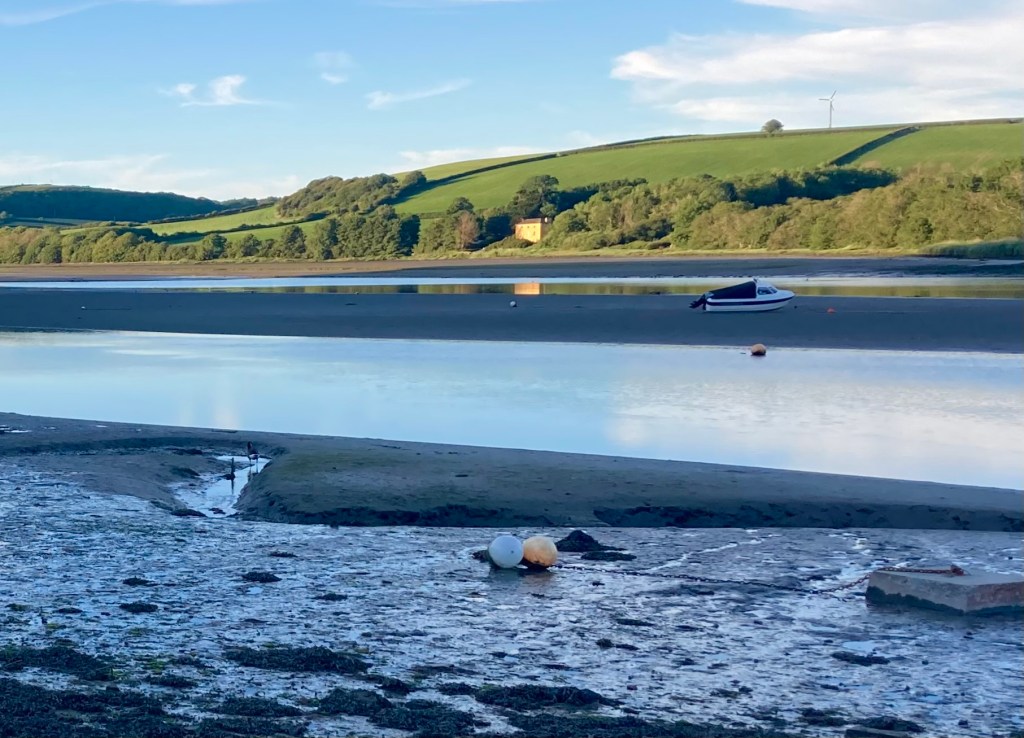
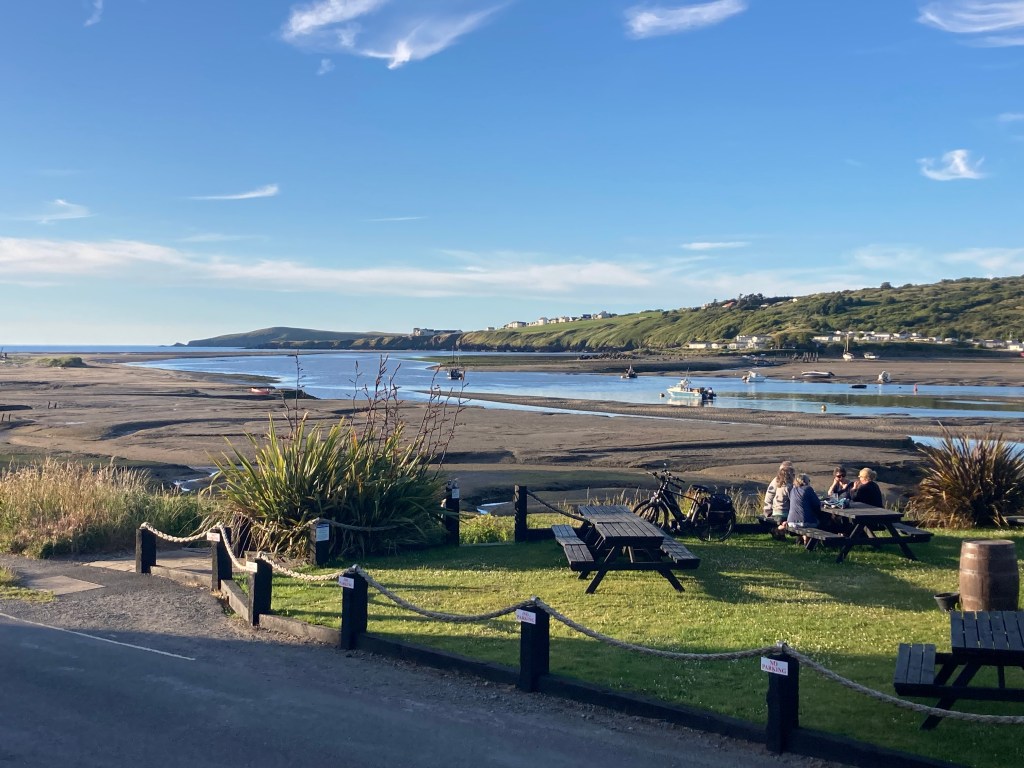
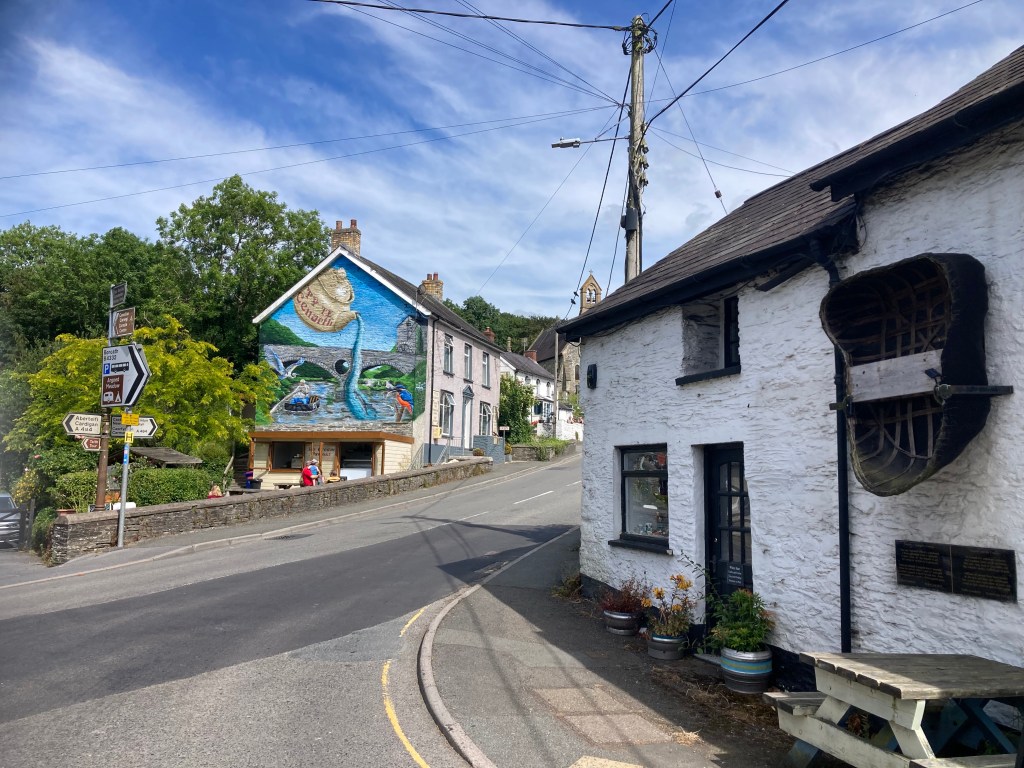
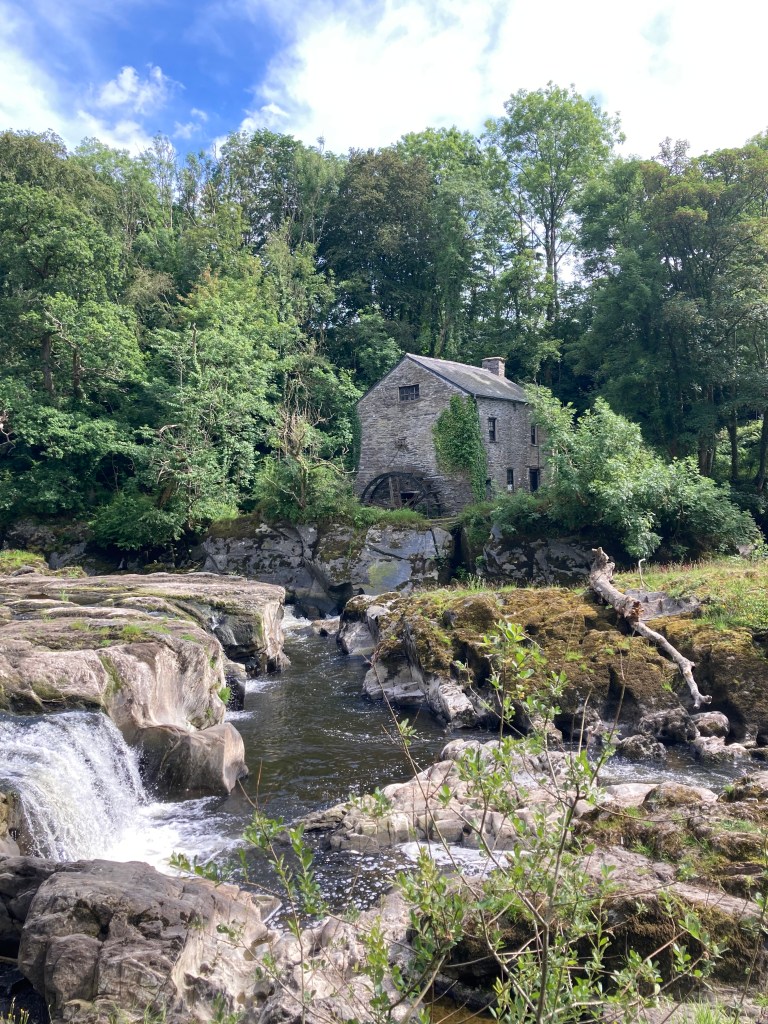
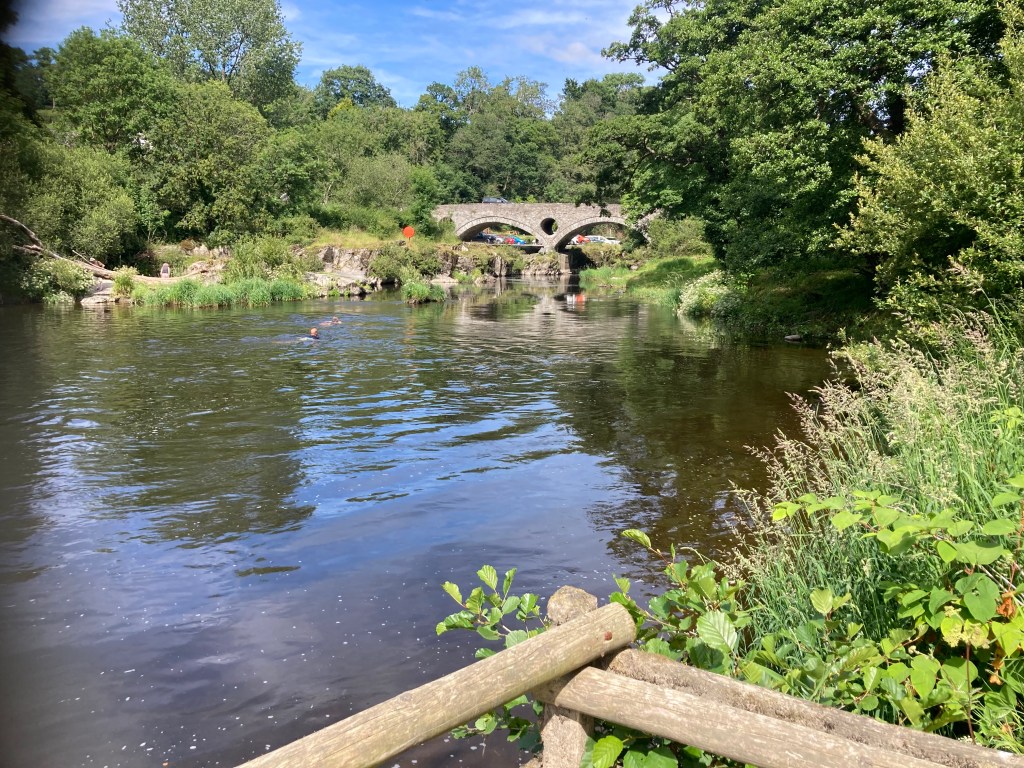
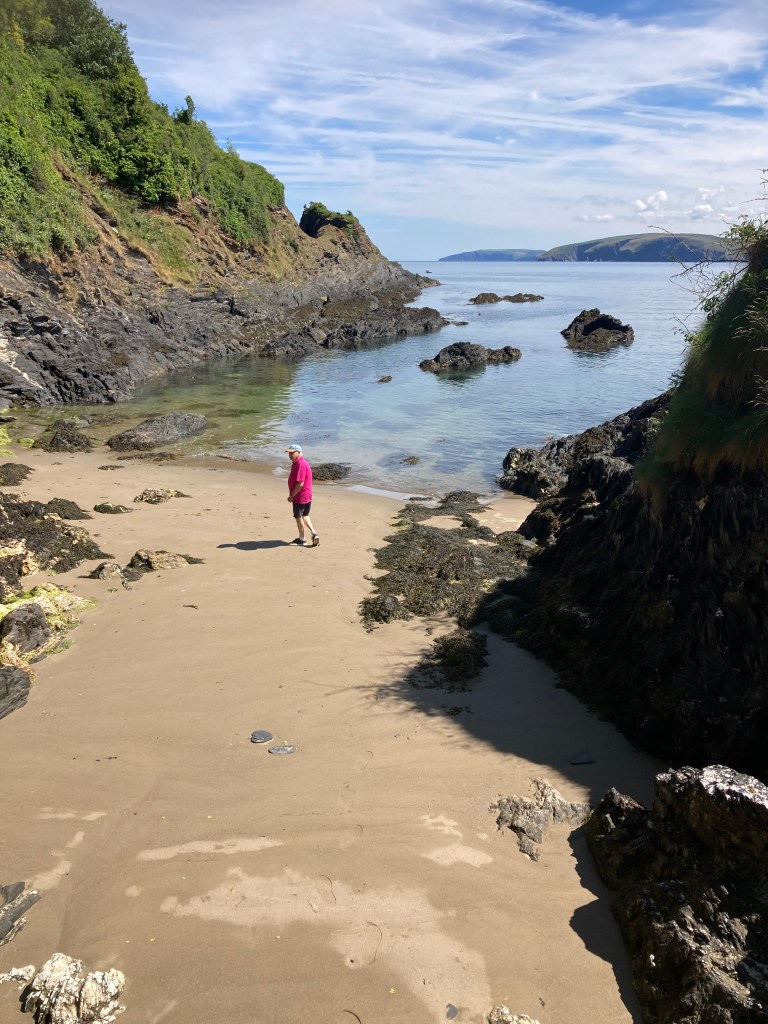
It’s summer 1976, a summer of heatwaves we recall, Sue and I are married just two years, are living in Rodley, W Yorkshire on the outskirts of Leeds. We have driven down to West Wales, trailing our National 12 sailing dinghy for a few days sailing on the estuary at St Dogmaels on the River Teifi below Cardigan. We have had a mornings estuary sailing, it’s time for lunch and as we come up to the boat landing we meet another couple who have also been sailing their dinghy. We get chatting, the pub is right there, lunch is proposed, supper follows, more sailing the next day and we then part company, holiday friends.
Roll forward, its late 1977, the British Embassy in Jeddah Saudi Arabia garden and an outdoors concert by Humphrey Lyttleton. Sue and I are there and directly in front of us are two familiar looking people. At half time, I say in a slightly loud voice, “who is that fat chap in front of us”- our two sailing buddies from St Dogmaels turn around and the inevitable, “ what are you two doing here – conversations take place!! Sailing dinghy racing on the Red Sea at weekends develops and a very long standing friendship begins. This year, some 50 years later we celebrated that friendship, pretty cool really and in a magic part of West Wales, where our friends have lived for 40+ years.
So, whilst in West Wales, we do not spend all our time “ celebrating wth friends”. But it’s super hot as the second 2026 UK heatwave kicks in and suddenly it’s 32C! Phew, so we focus on shady things to do, as we are still tourists and there are things to be explored. Here are a couple of stunning but modest local stately homes with beautiful gardens, that we visited.
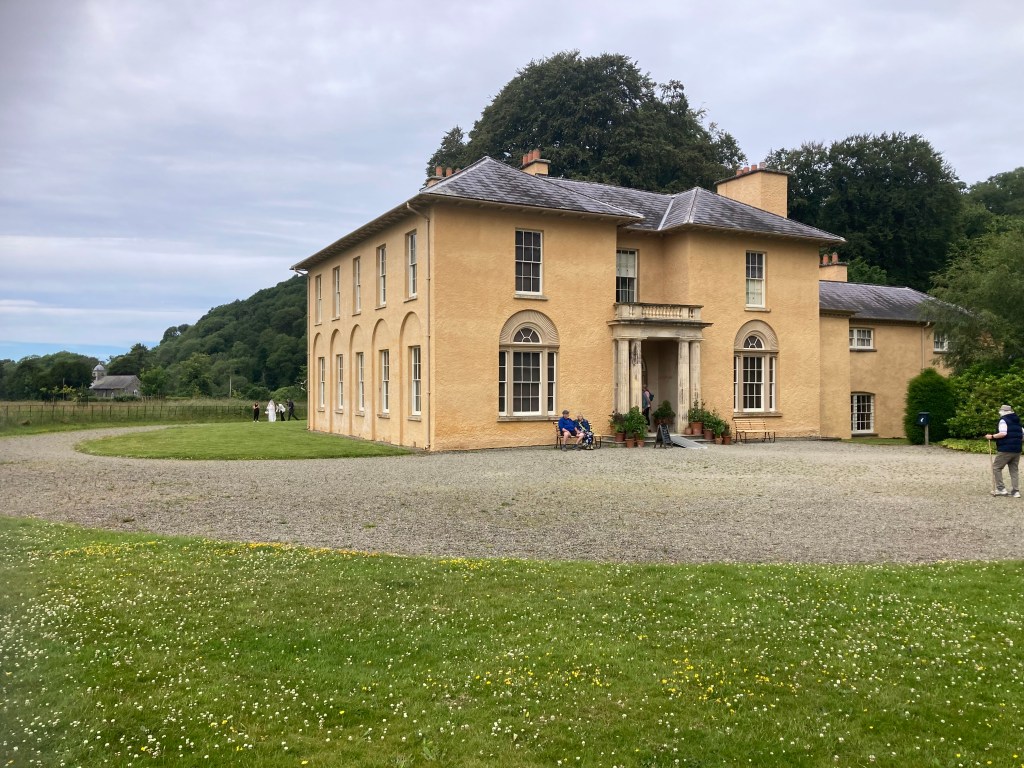
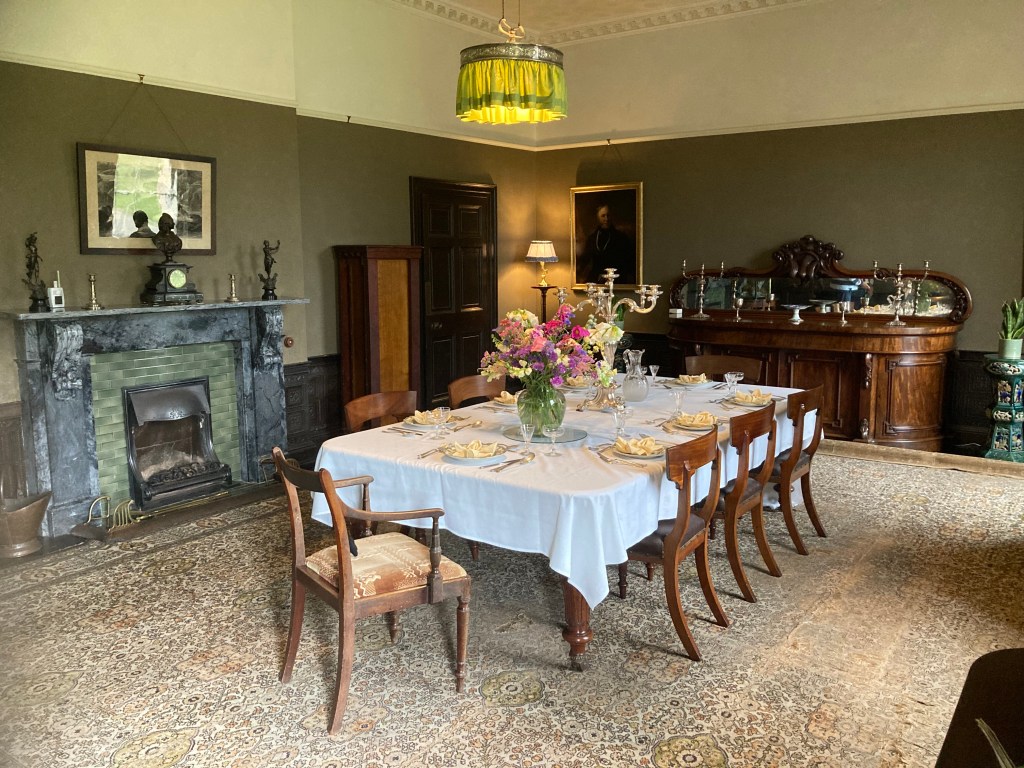
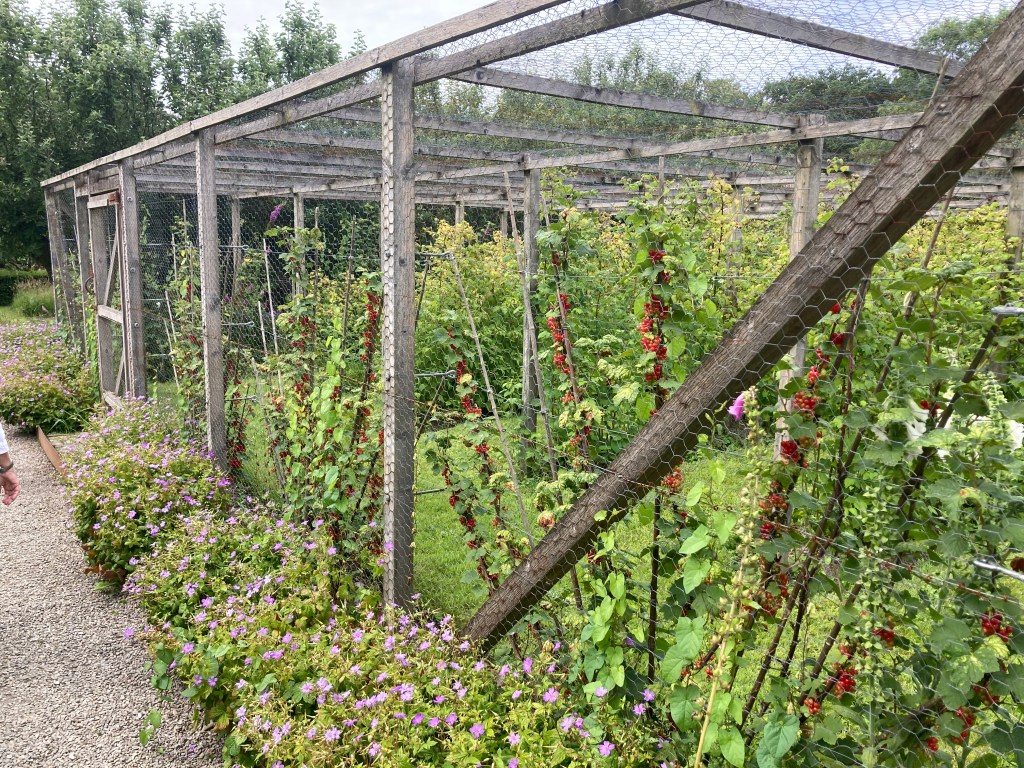
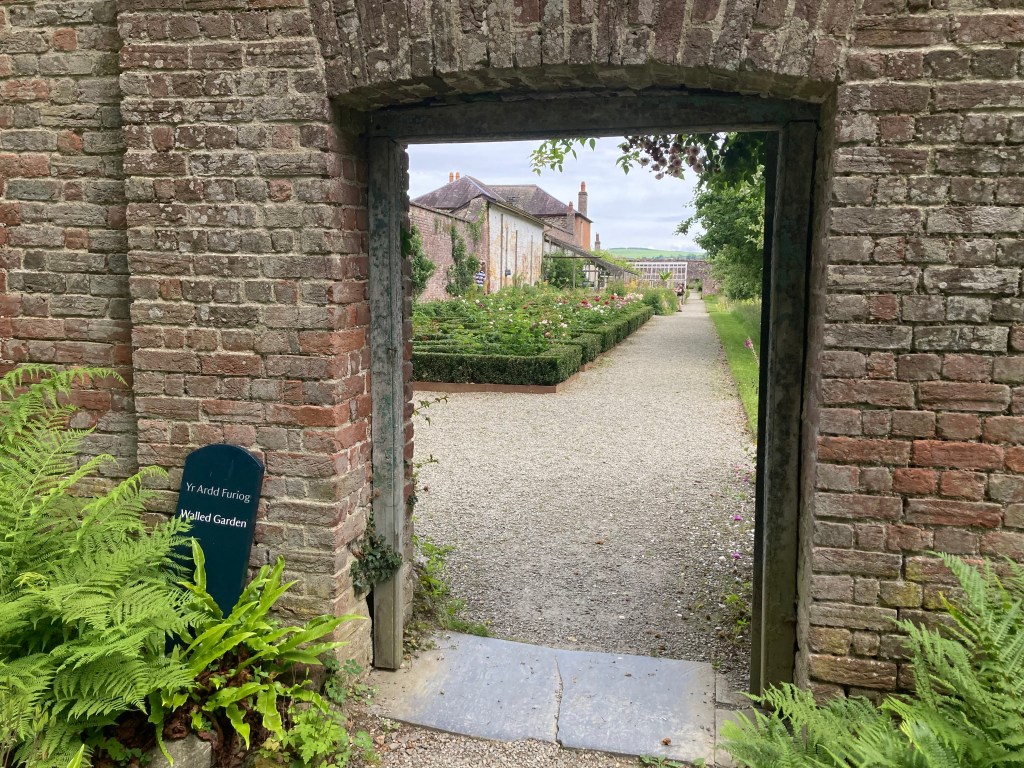
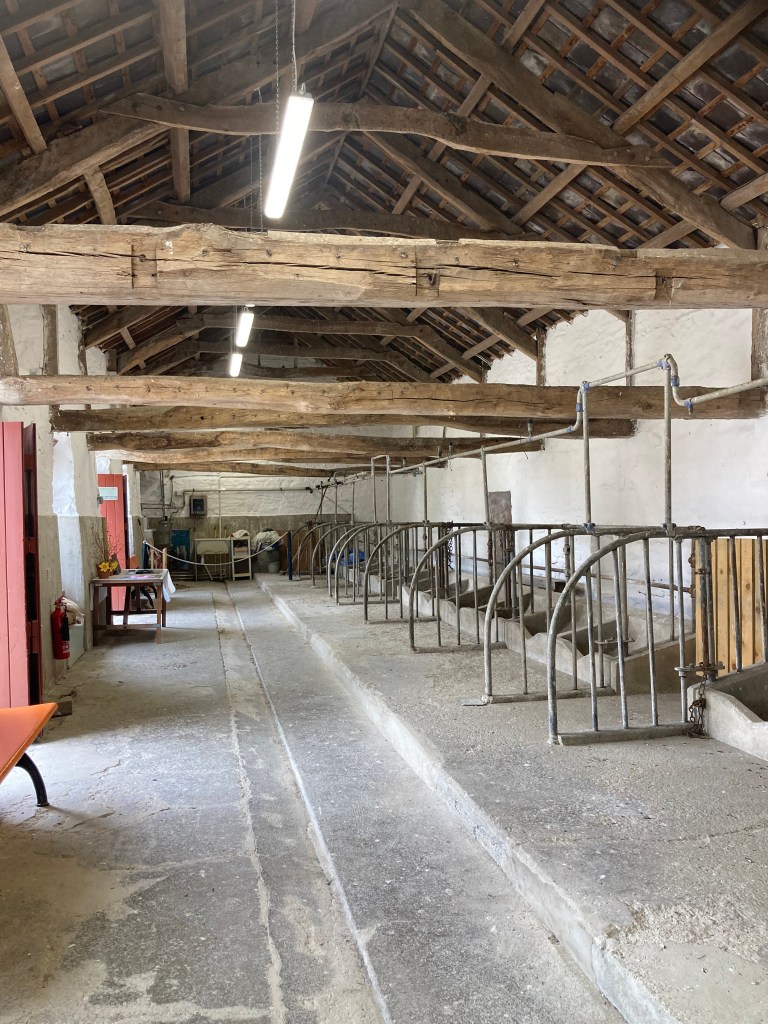
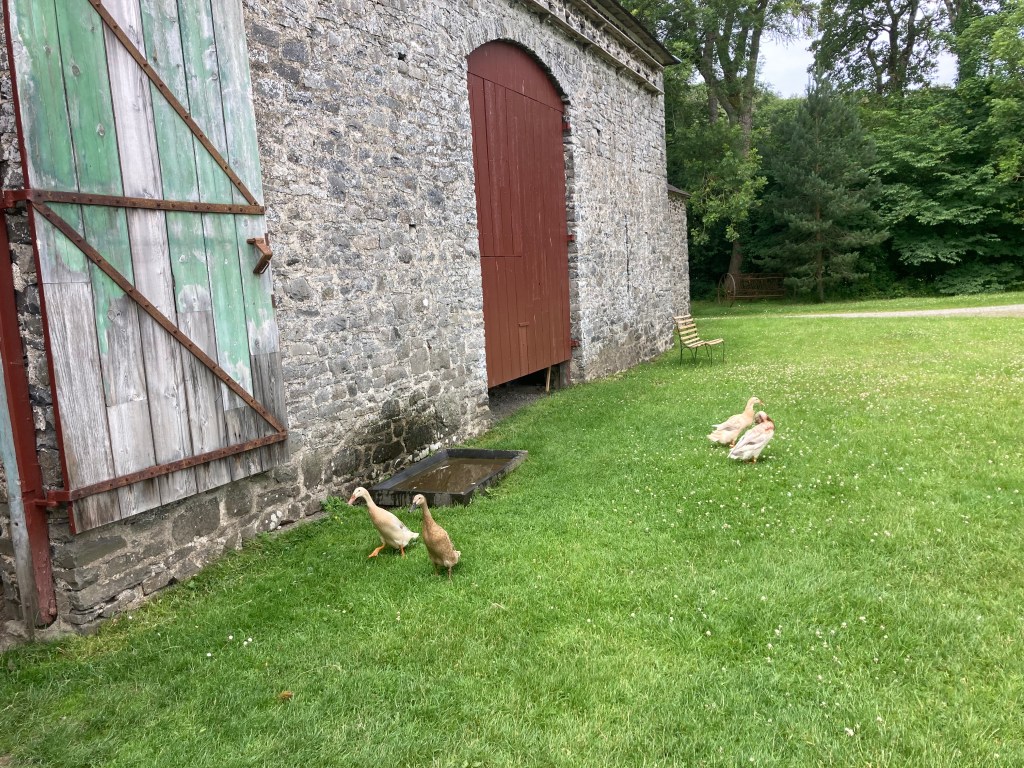
Our first, Llanerchaeron, started life as a farmhouse, and John Nash the Georgian Architect, whose works included the royal Pavilion in Brighton, then remodelled the house turning it in 1790 to the Georgian home we see today, complete with false windows to complete the illusion. Adjoining the house, a lovely walled garden, farm buildings, a lake and formal gardens with stunning big trees. The house is beautifully presented with original furnishings as it is now owned and run by the National Trust. A fan of antique furniture, I am struck by the beautiful sideboard in the dining room and a mahogany writing desk upstairs.
And it’s upstairs that the real jewels of the house can be found. As you come up the formal stairs the roof opens up and to the immediate left and right of the top of the stairs, two perfectly round reception rooms, round walls and round solid doors – stunning!!
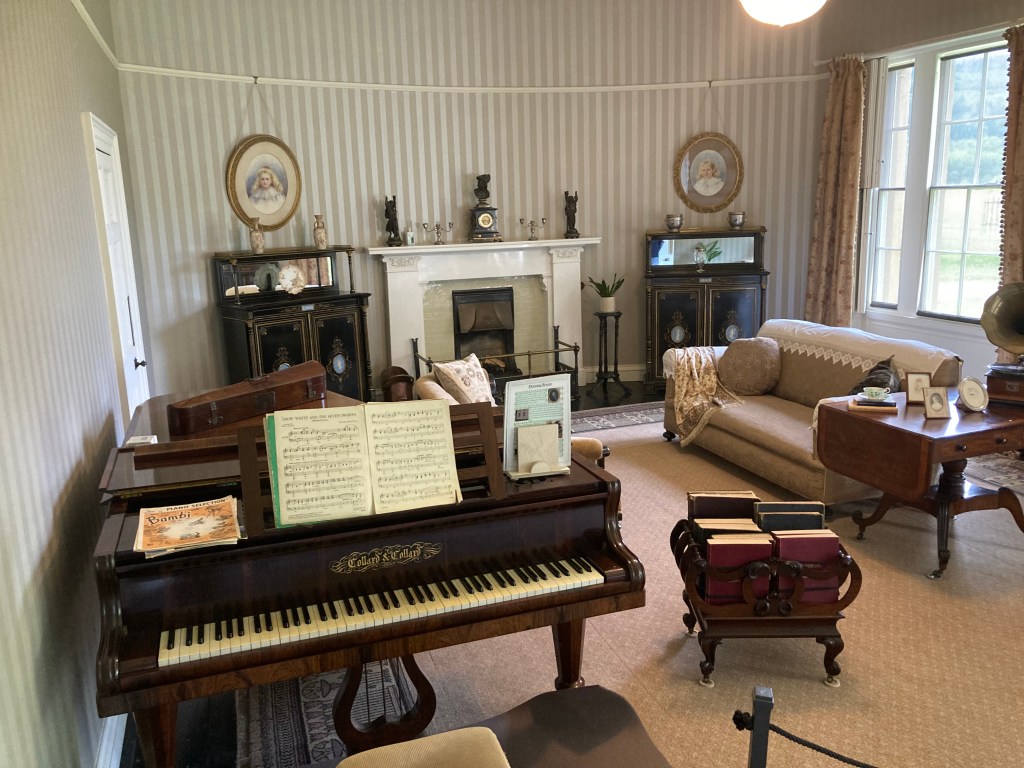
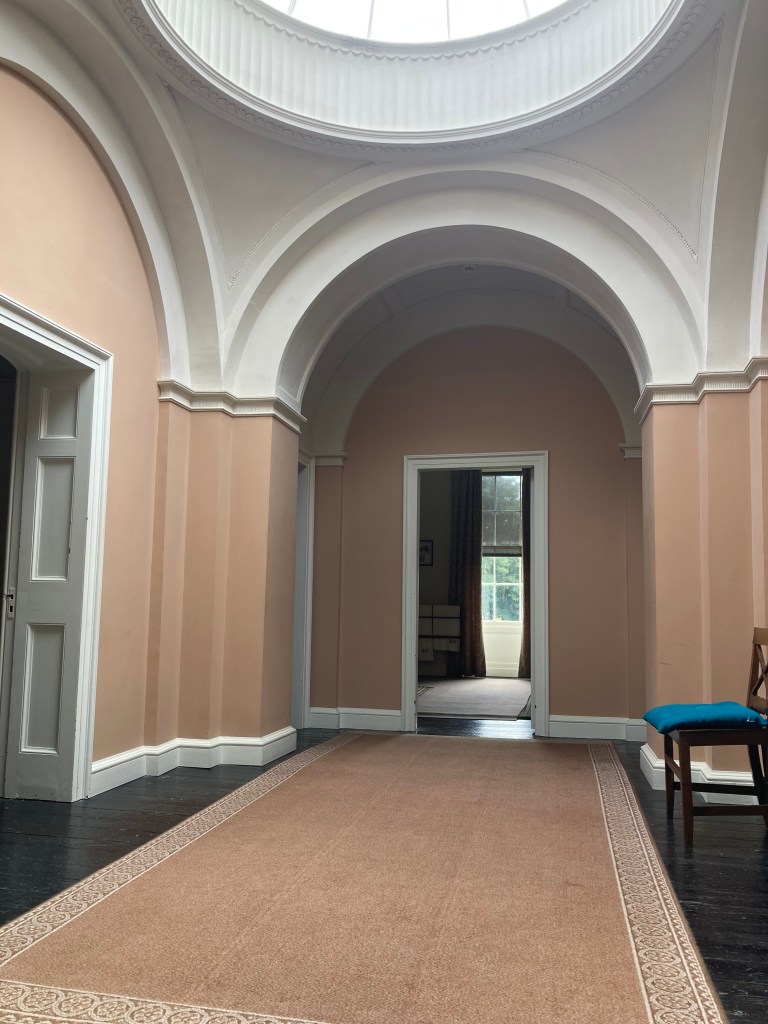
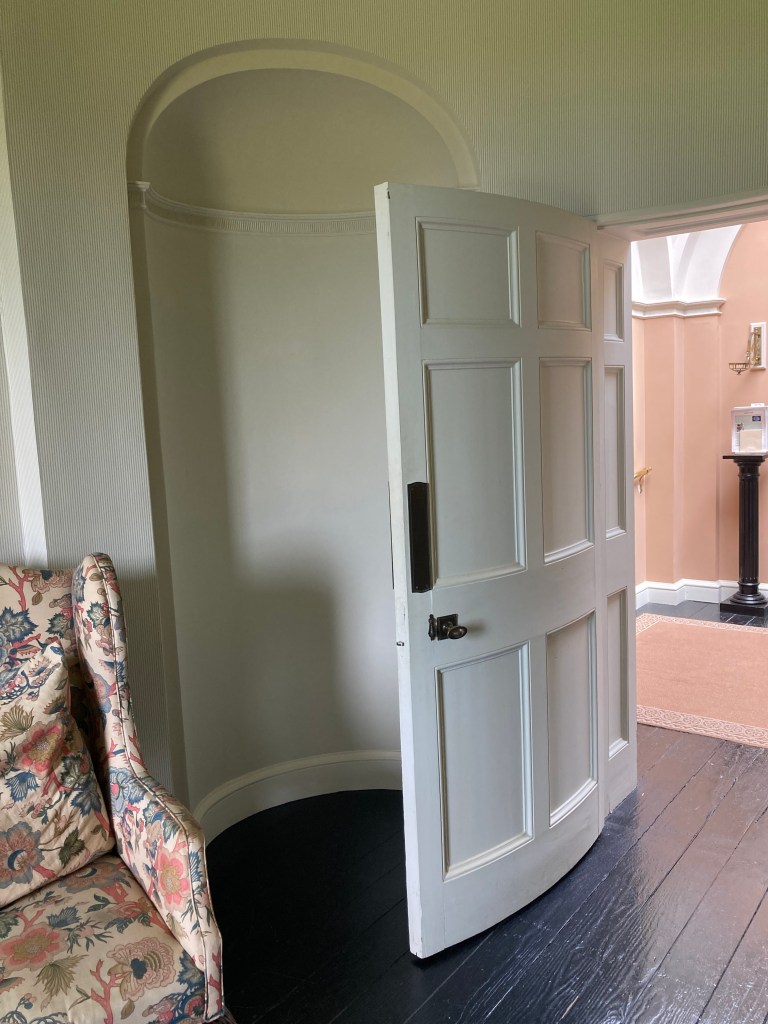
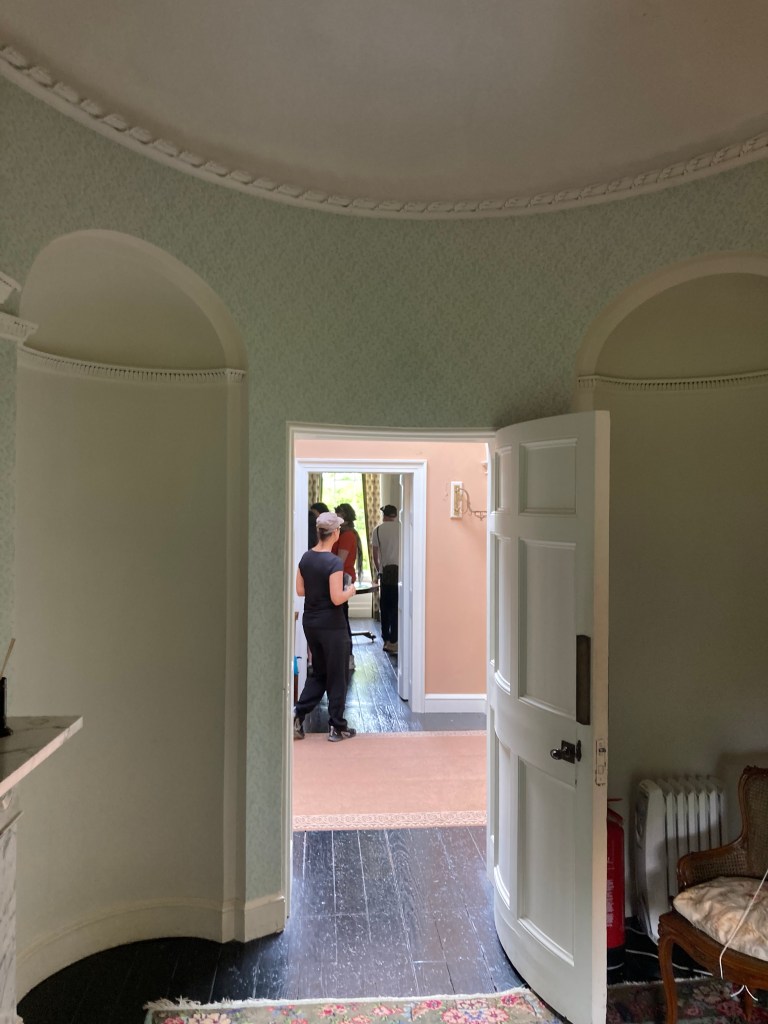
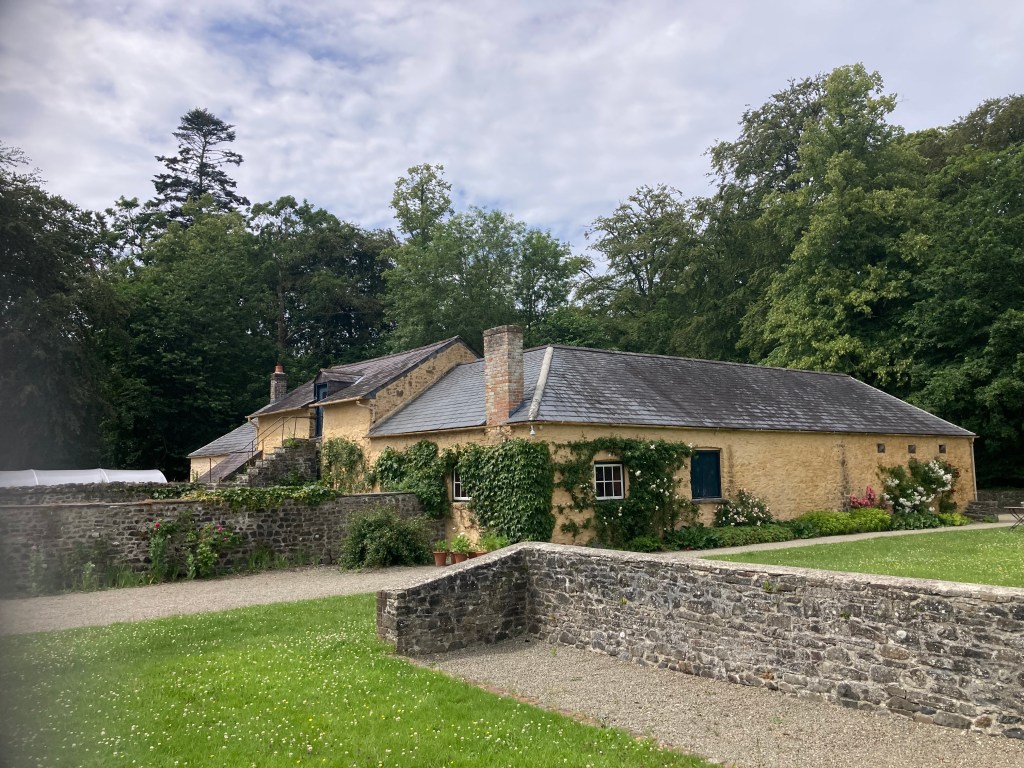
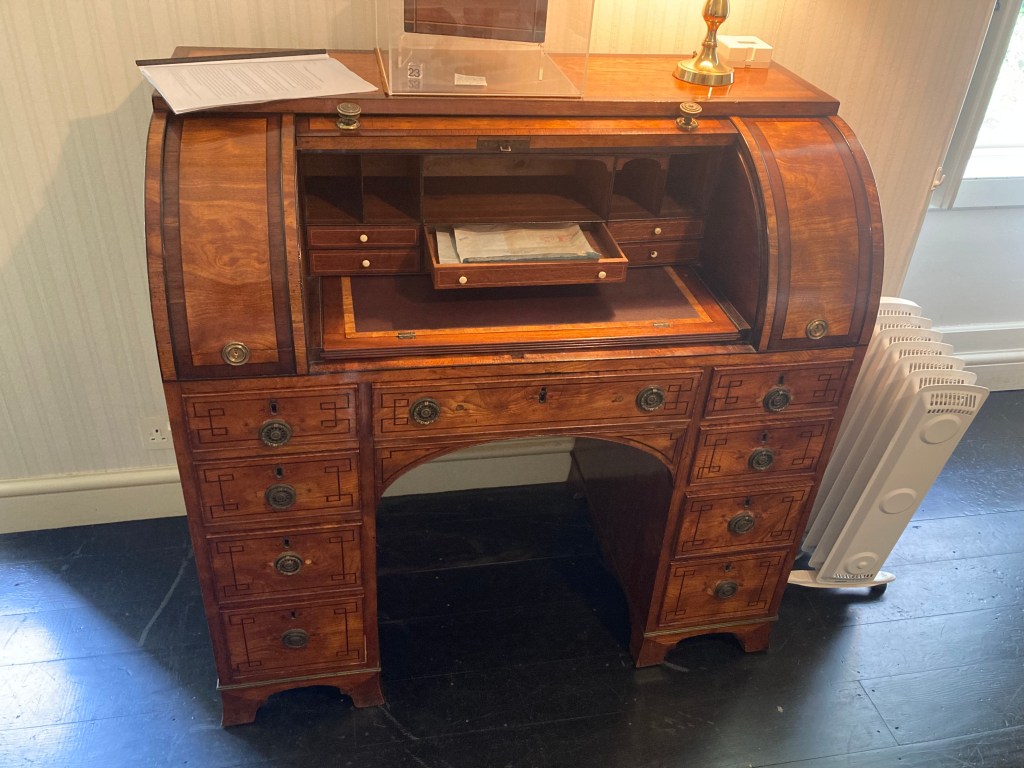
It’s a sad piece of British history, that time and again we visit a stately home, or even modest “landed gentry house”, and the impact of slavery comes through. It was an investment not just for a few entrepreneurs, but for many, who then profited from the Abolition and the Tax Payer handouts. Centuries later, descendants of those slaves came from the West Indies to the UK, the Windrush immigration and now form a vibrant society throughout the UK.
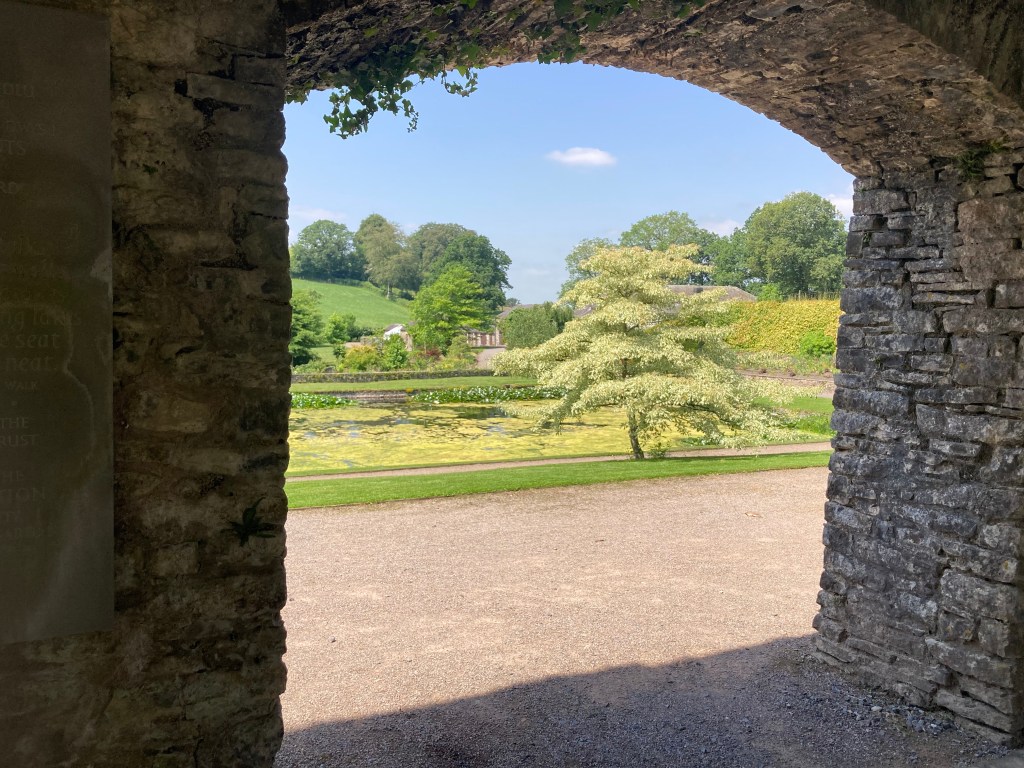
The second property we visited, Aberglasny courtesy of a Trust with a generous US benefactor that had been rescued from decay, essentially rebuilt and was used internally for exhibitions, although the upstairs is still work in progress. Impressive though the house was, the gardens were extraordinary and I hope the photos give a glimpse of that.
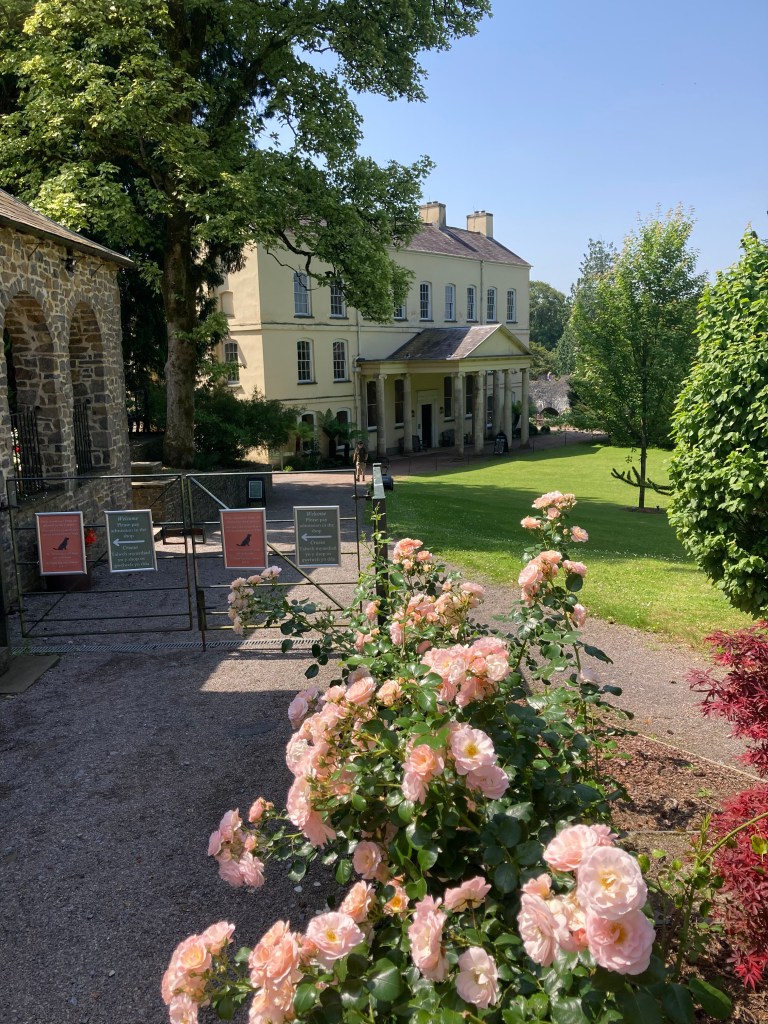
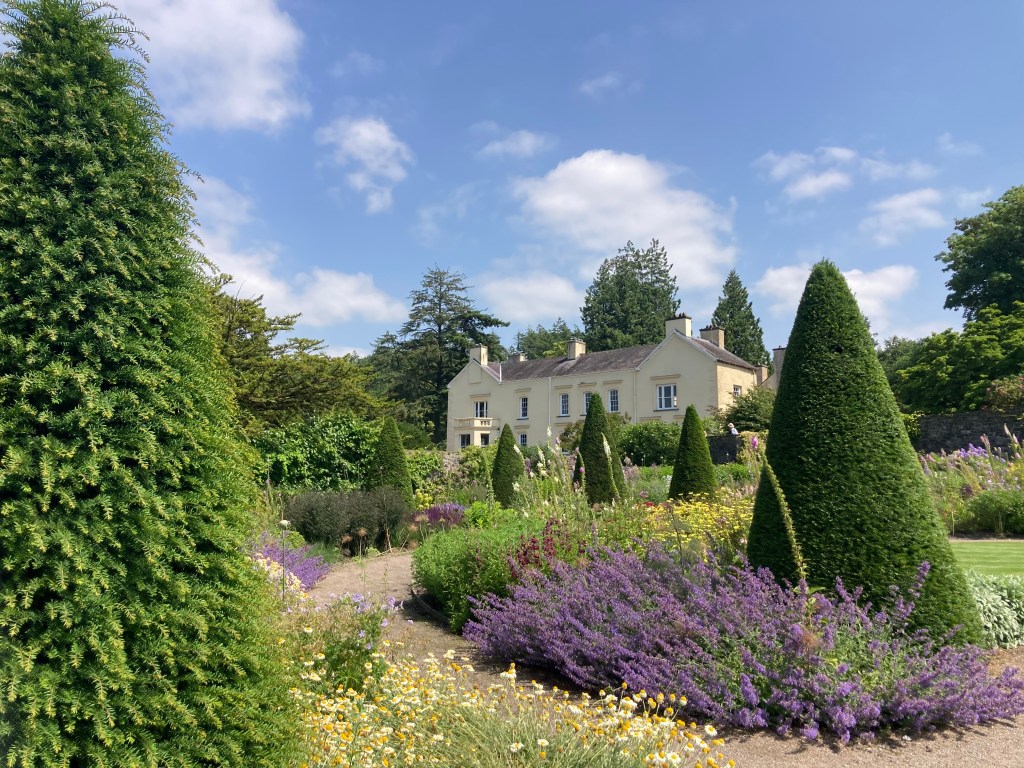
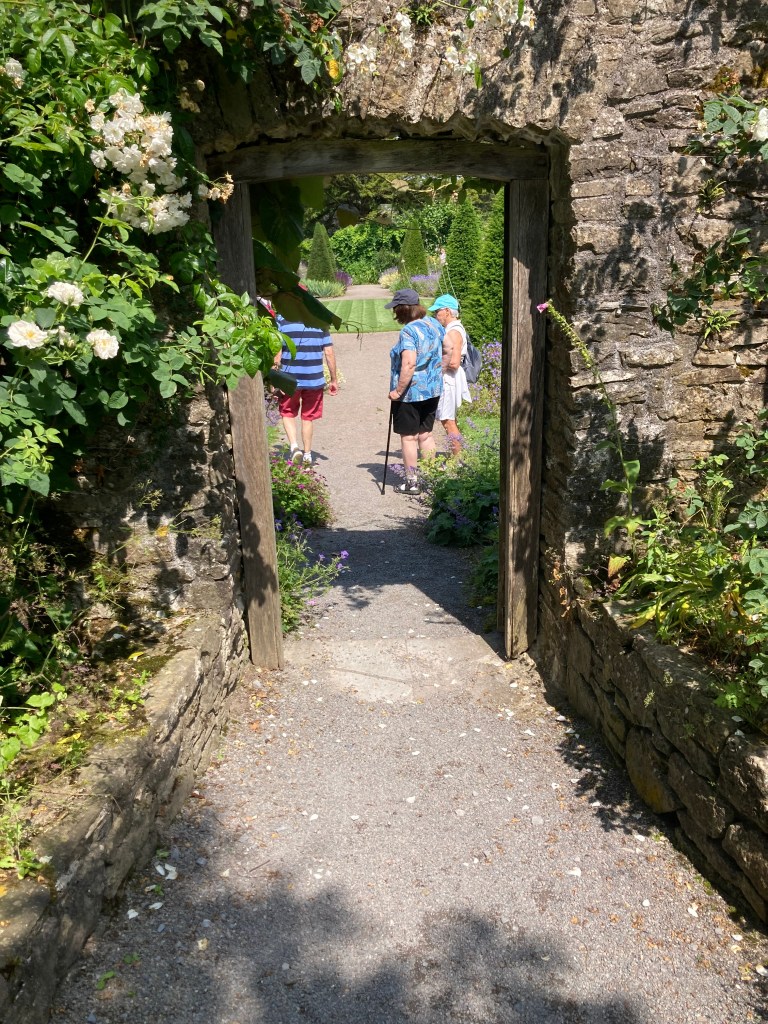
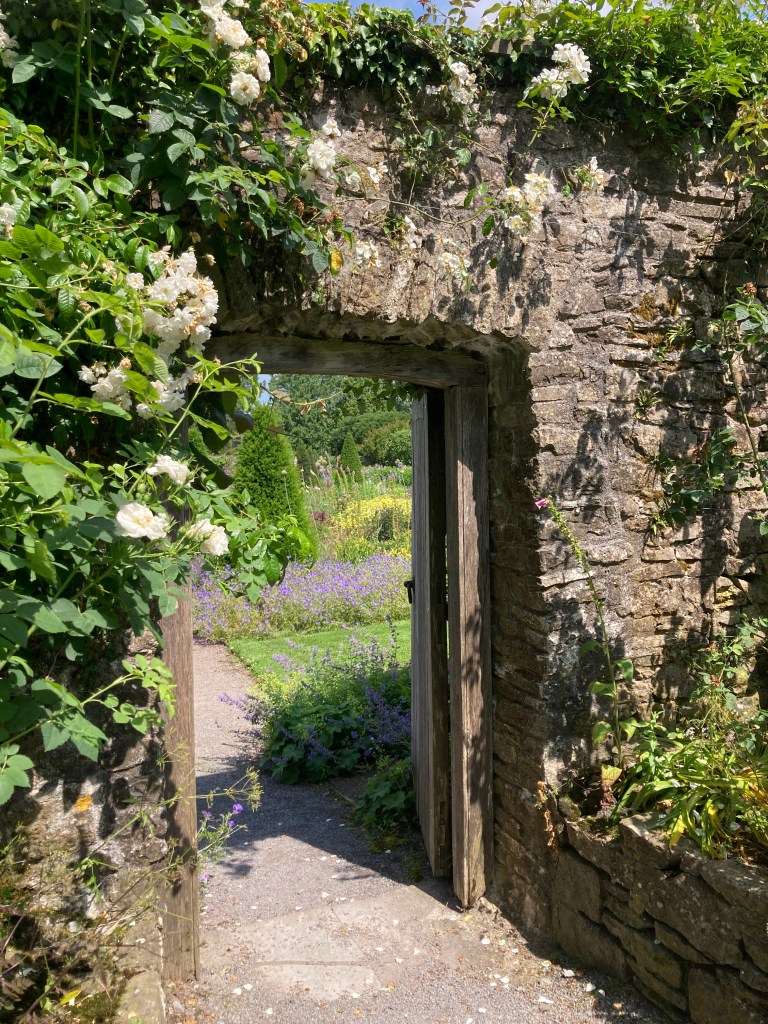
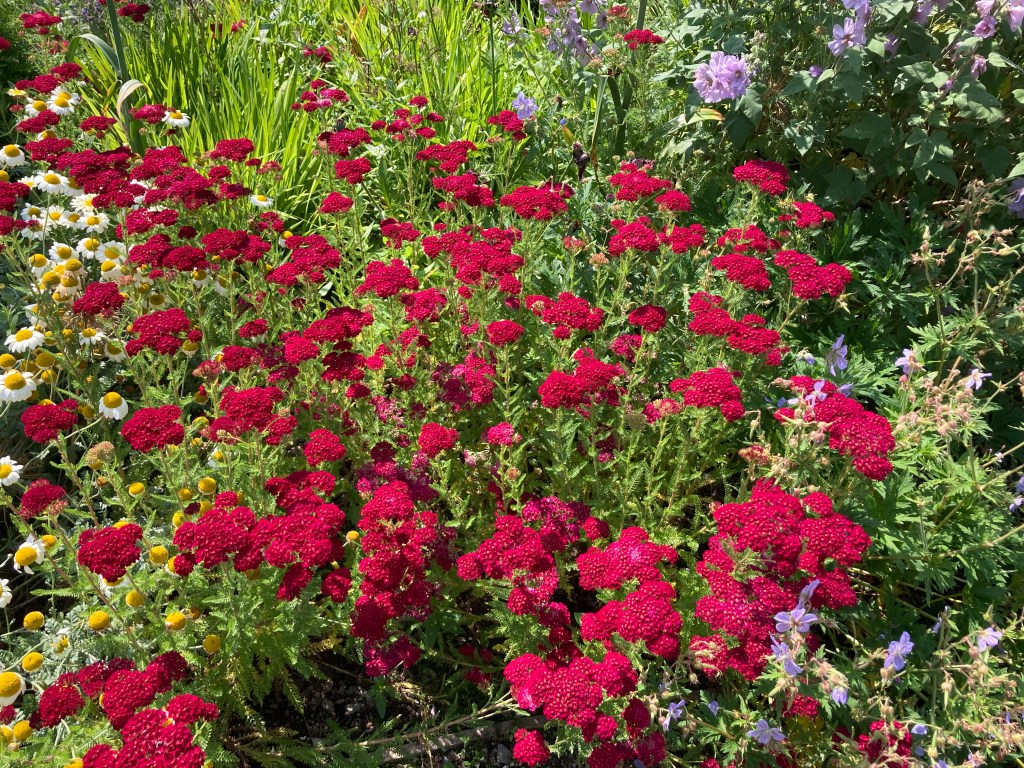
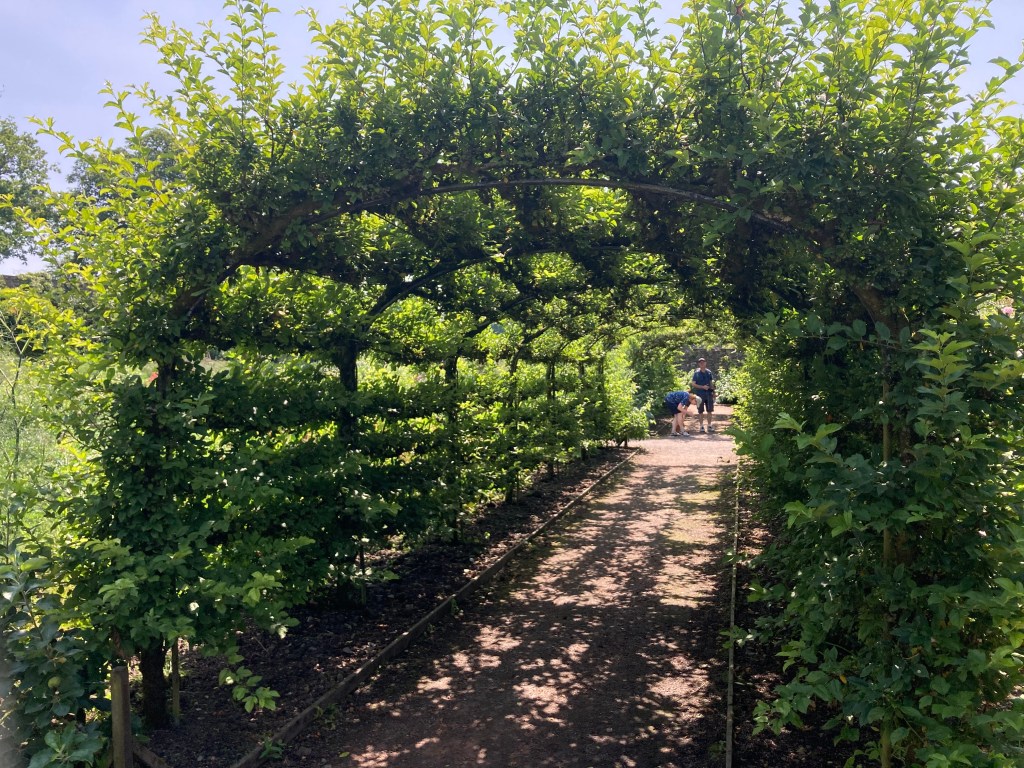
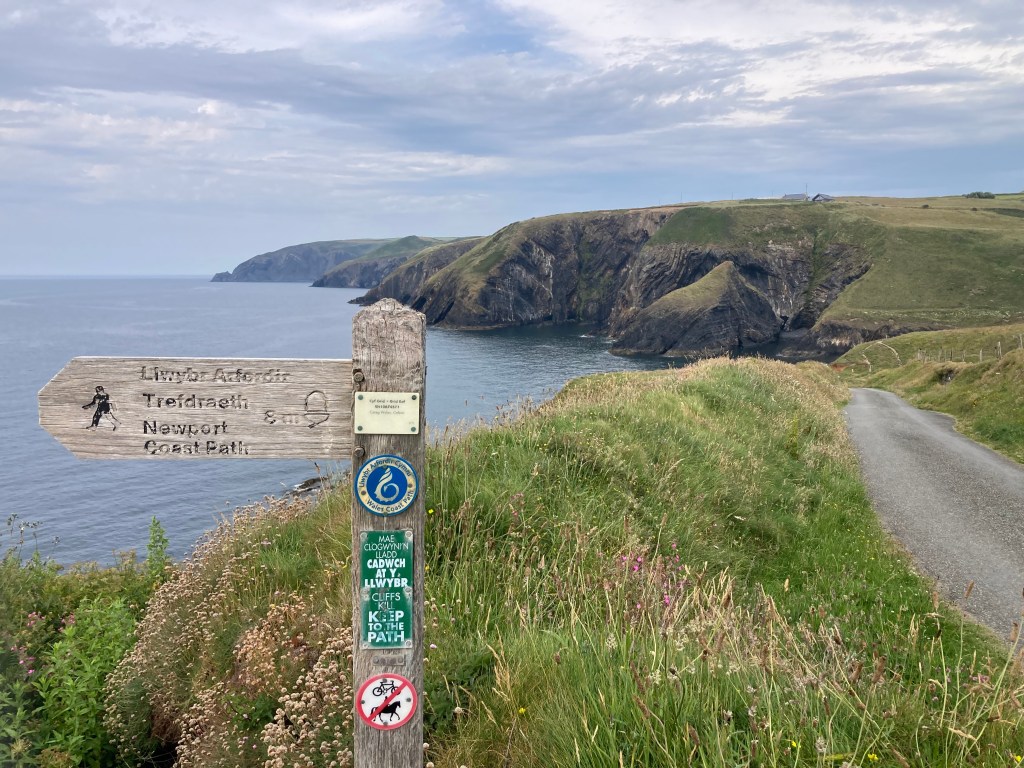
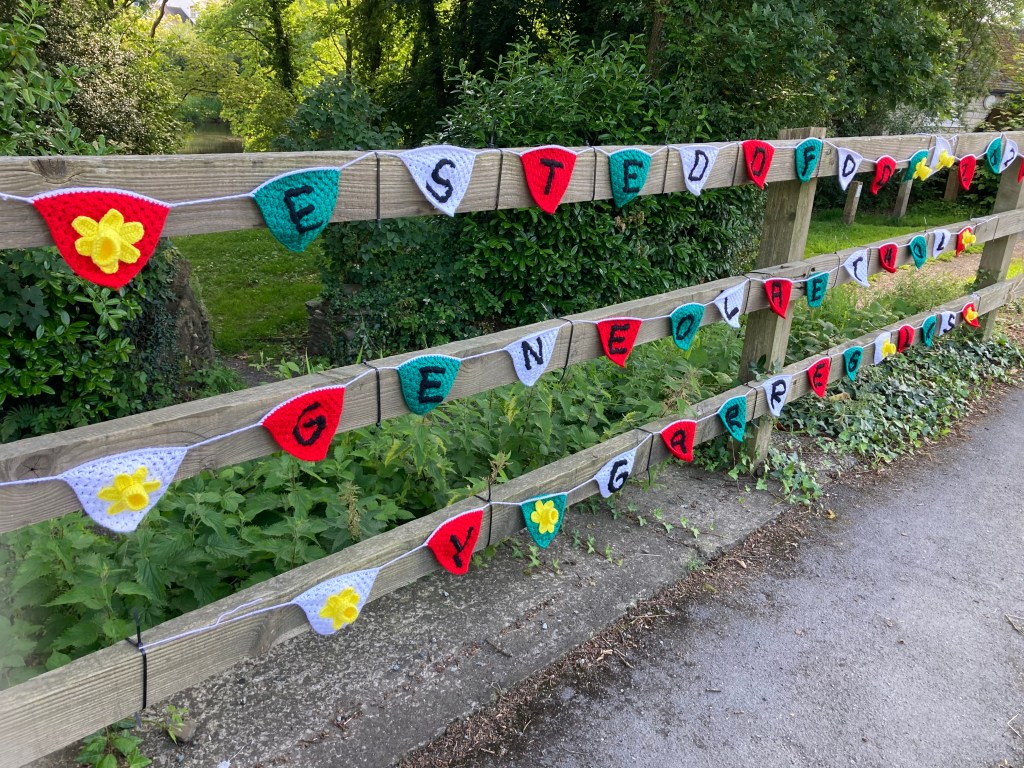
And finally, a brief view of the Welsh Coastal Path, as it winds long the coastline, and Wales would not be Welsh without the Esteddford, the annual celebration of Welsh Culture, this year in Cardigan.


Peter,
Letters that make you think.
I had never thought of Monmouth as being in Wales. For me, there is an association with the Monmouth Rebellion; now I learn just an association of name. I thought it was a rebellion from there, wherever the heck it was, but now I know it was a bloke whose head got cut off. Entirely bad timing on his part, and then things went well for England later.
And Cardigan. I knew it as a horse and now i dscsoveer its a place in Wales.
Your part in my education is enormous.
John Gill Wellington NZ 0274 300 582
LikeLike