
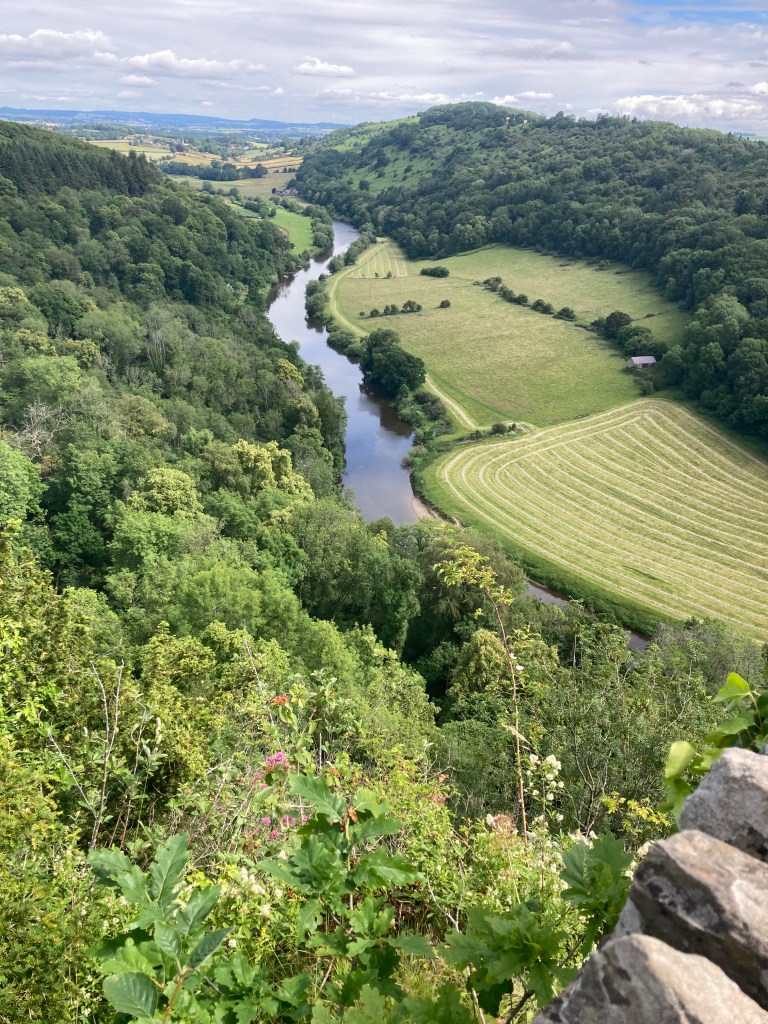
It’s mid June and the summer solstice events at Stonehenge are being advertised. The first of the “summer heat waves” has been neatly avoided and its a pleasant 20c although slightly cloudy, here in Coleford, Gloucestershire and the Forest of Dean.
We arrived in London, on the 11th June, the 6am arrival time from Singapore is just perfect for easy Customs clearance and baggage collection. Best still the timing of our emerging with our baggage into the Arrivals Hall in T2, as our son Mike also arrives to collect us!!Thirty minutes later we are at the family home in Teddington, just a couple of blocks back from the River Thames and two grandchildren having breakfast in preparation for school. Hugs, cuddles and some breakfast for us follows, plus requests, “ can you play with me?” And of course we can, even though they will now be late getting to the German Richmond School, which they do by ECargo bike, to and from every day!
FOREST OF DEAN
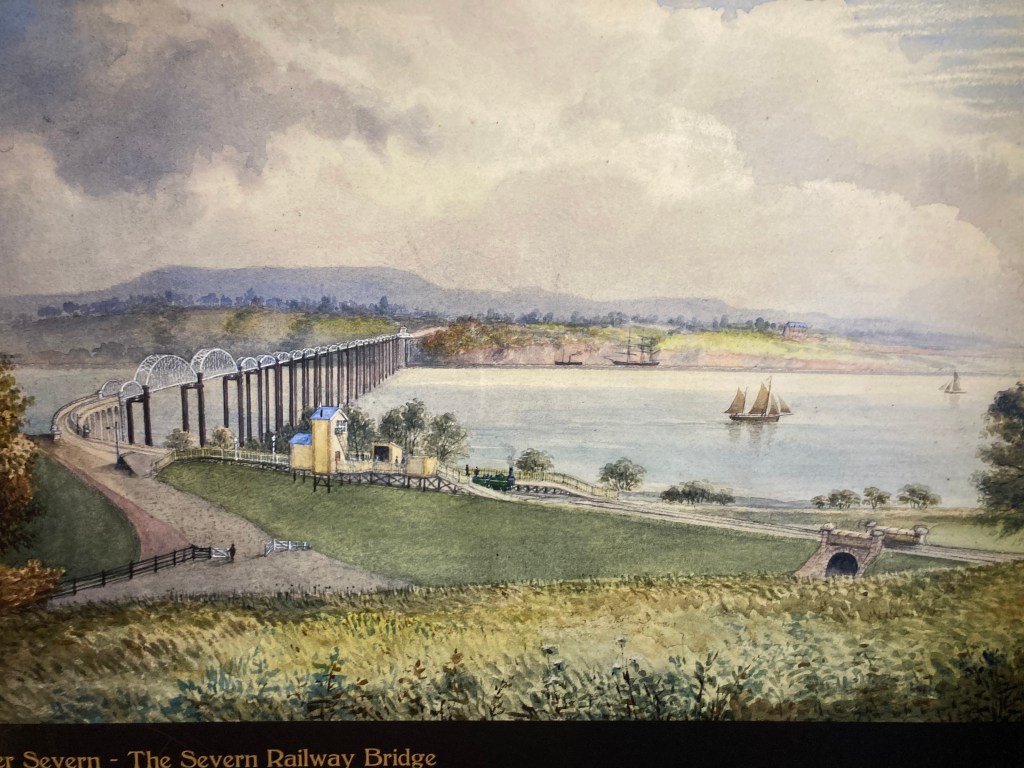
Jet lag and a long weekend with the family behind us, we head to a college reunion with friends in a part of the UK, that is completely new to us, the Forest of Dean. This area sits in Gloucestershire at the south end of the English / Welsh border counties. The southern end of Offas Dyke is located nearby at Sedbury Cliffs overlooking the Severn River. This 8th century earthworks, used natural landscape features plus earthen works to construct a barrier to warring parties and runs north to Prestatyn in North Wales, a journey of 177 miles. The Severn river has two big lower reaches bridges, the original aka,”Gavin & Stacey” M4 bridge, and the one at Chepstow A48 . We cross the Severn on this Chepstow bridge and thirty minutes later we arrive in Coleford our base to explore the Forest of Dean.
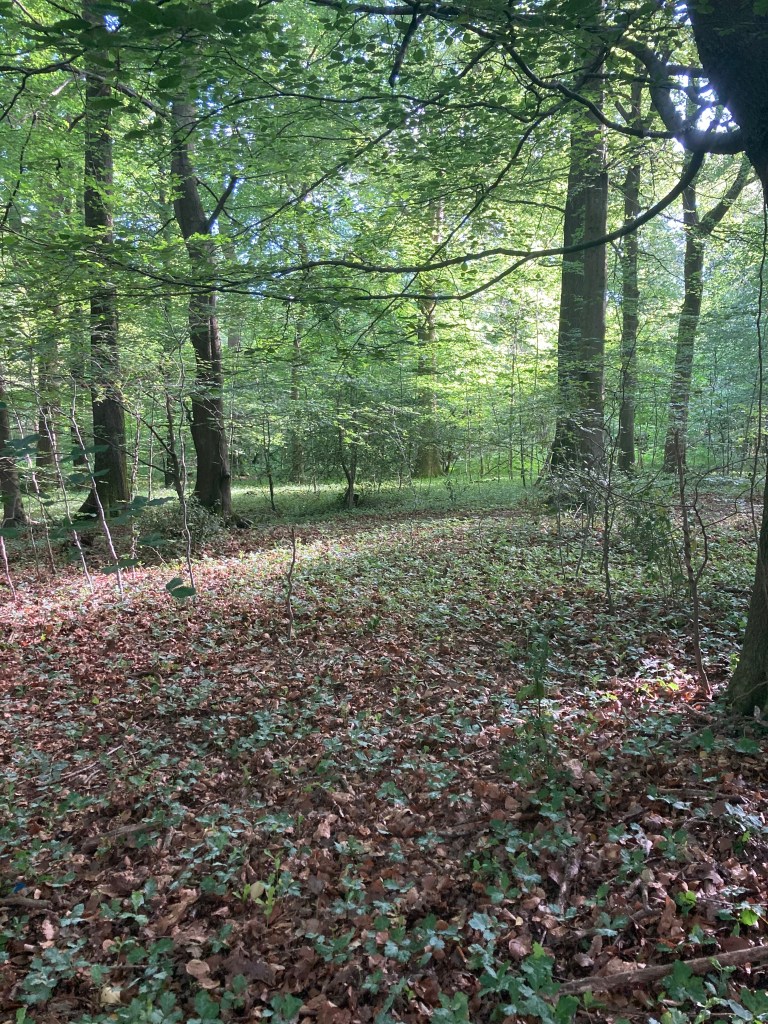
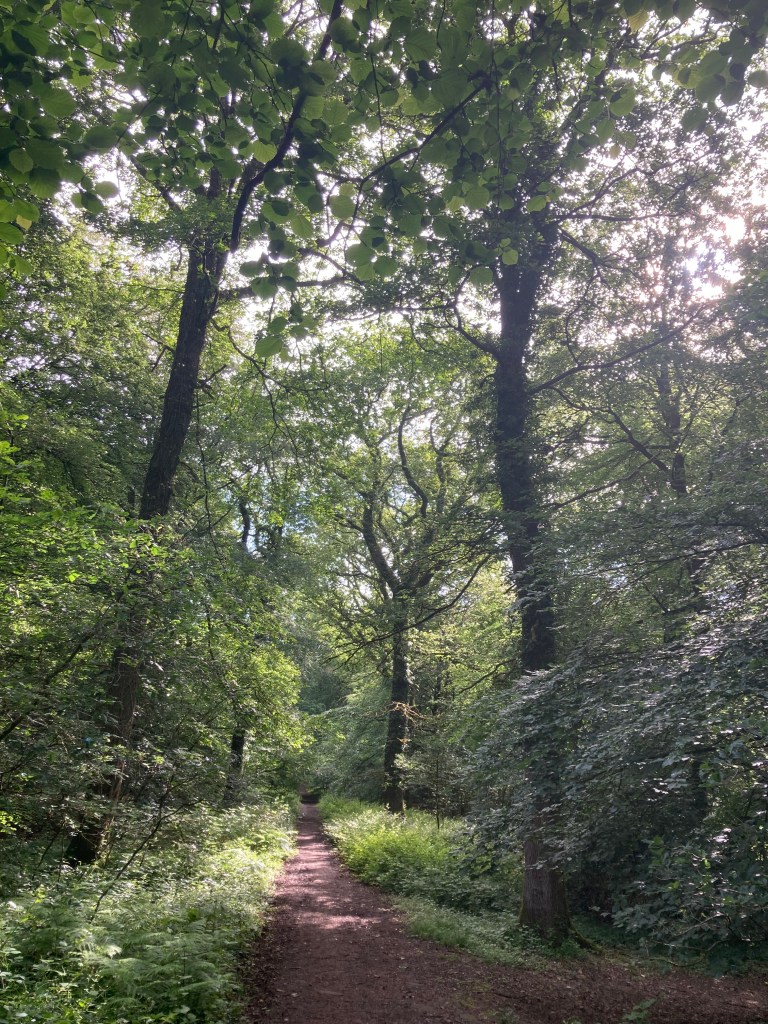
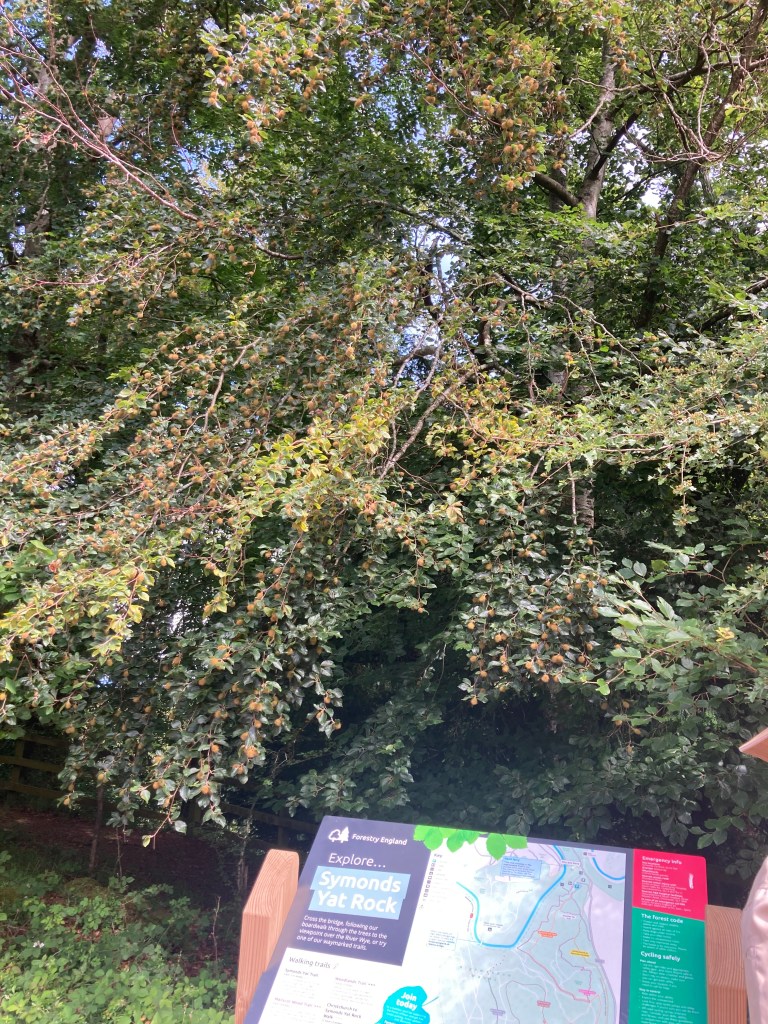
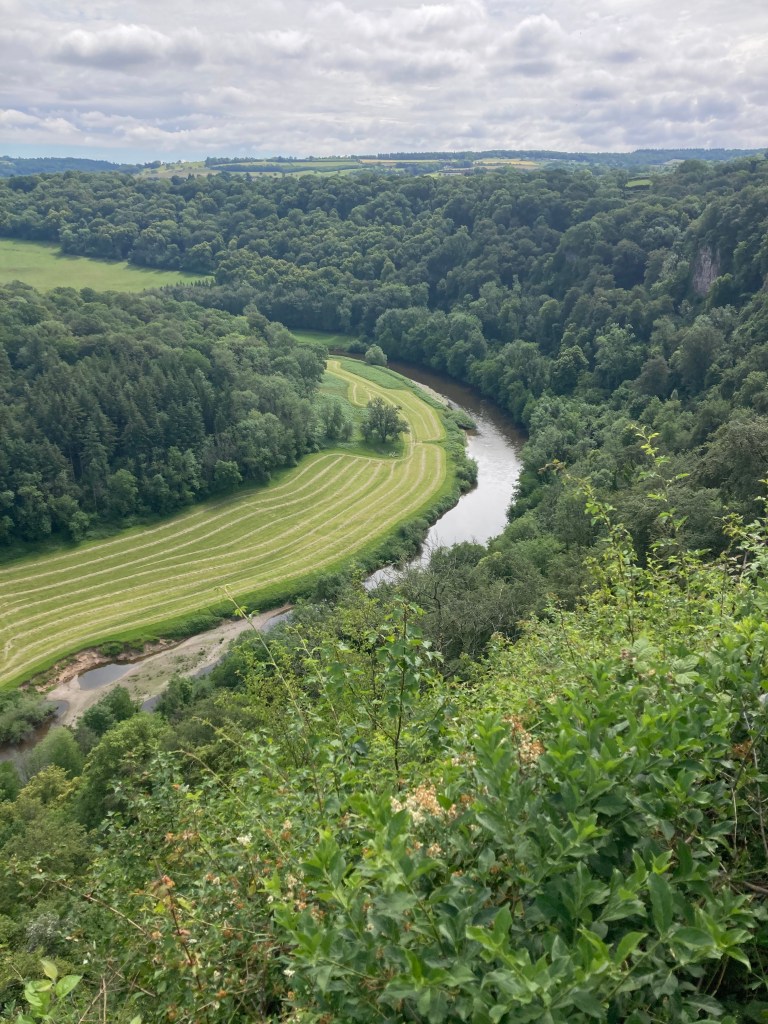
The name for this area, Forest of Dean, comes from old English, Denu Parva – small valley – Denu Magna – large valley- both being forested with English native trees, like hazel , beech and Roman imported varieties like oak and sweet chestnut. Today this area sits between the Severn and Wye Rivers and is about 110sqkm in area. Popular with walkers, cyclists, canoeists and more, its undeniably an “area of outstanding natural beauty”.
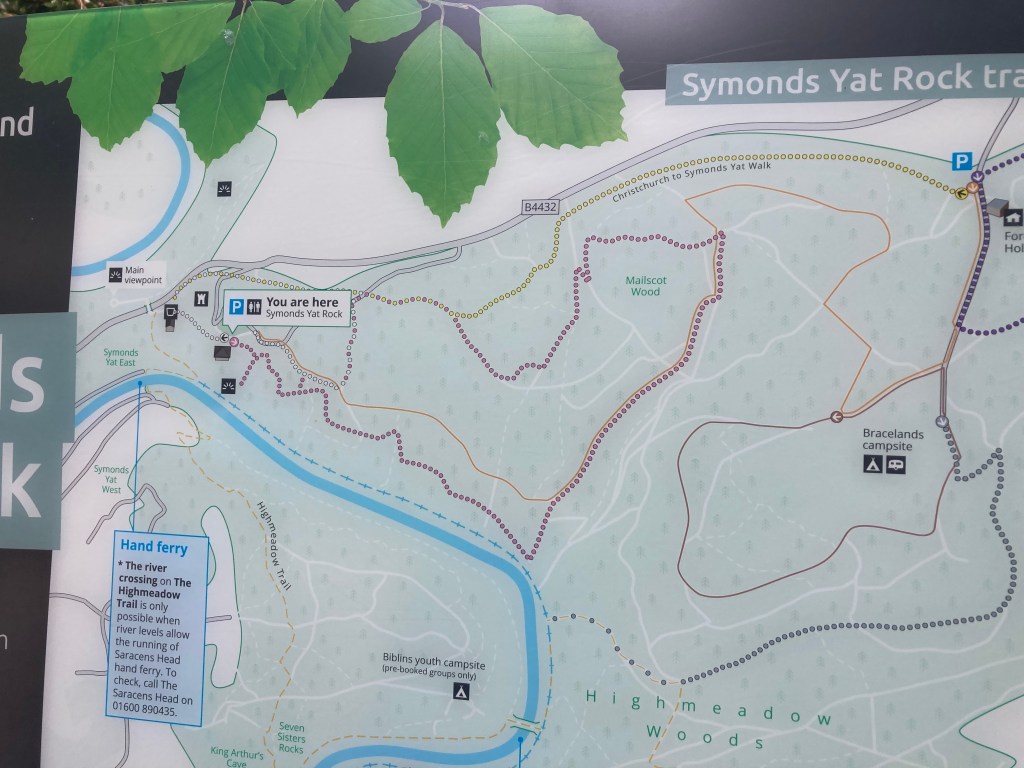
On our first full day we complete a good 8km walk at Symonds Yat, where the above pics of the River Wye are taken from the promontory that was part of the original Iron Age Fort. Back in the day the Fort would have been stunningly protected on three sides by the steep sided river valleys. In mid June for our visit the forest beech trees laden with early season nuts are glorious, but in the late autumn fall the area will look simply stunning.
GLOUCESTER
“Dr Foster went to Gloucester in a shower of rain, he stepped into a puddle up to his middle and never went there again”. Wednesday dawns and with it childhood rhyming memories, a prospect of a grey day draws us to the city of Gloucester, in the county of the same name. And this is a first for us, as Sue and I have never been to Gloucester before, have little appreciation of its history or what we will find there.
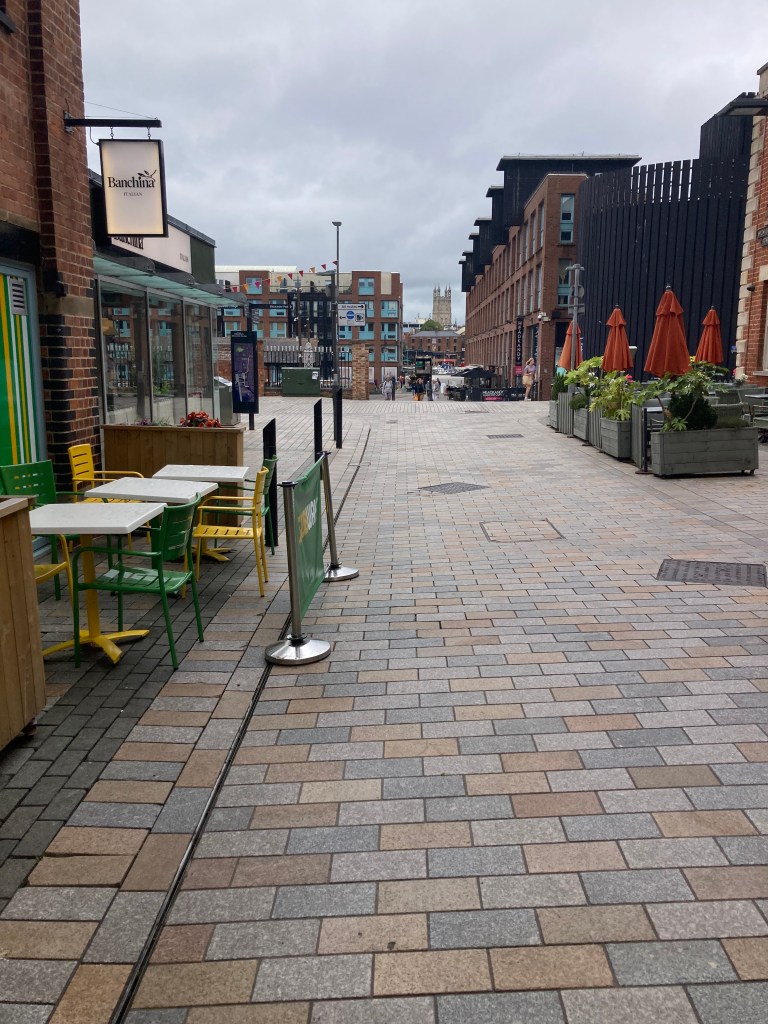
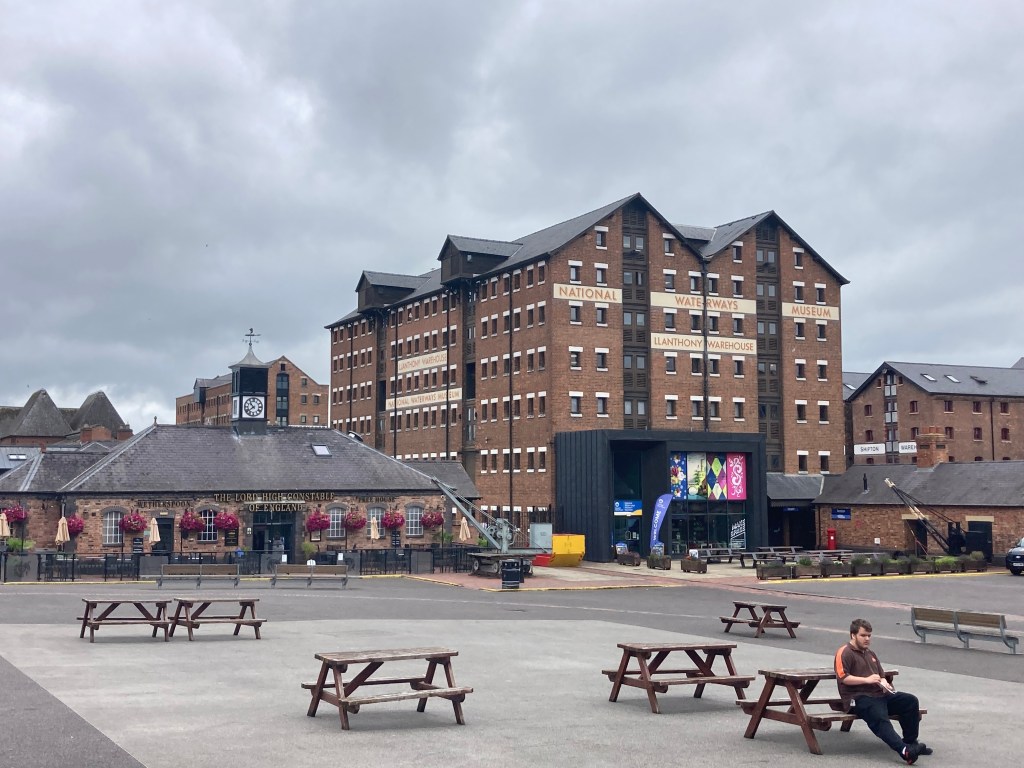
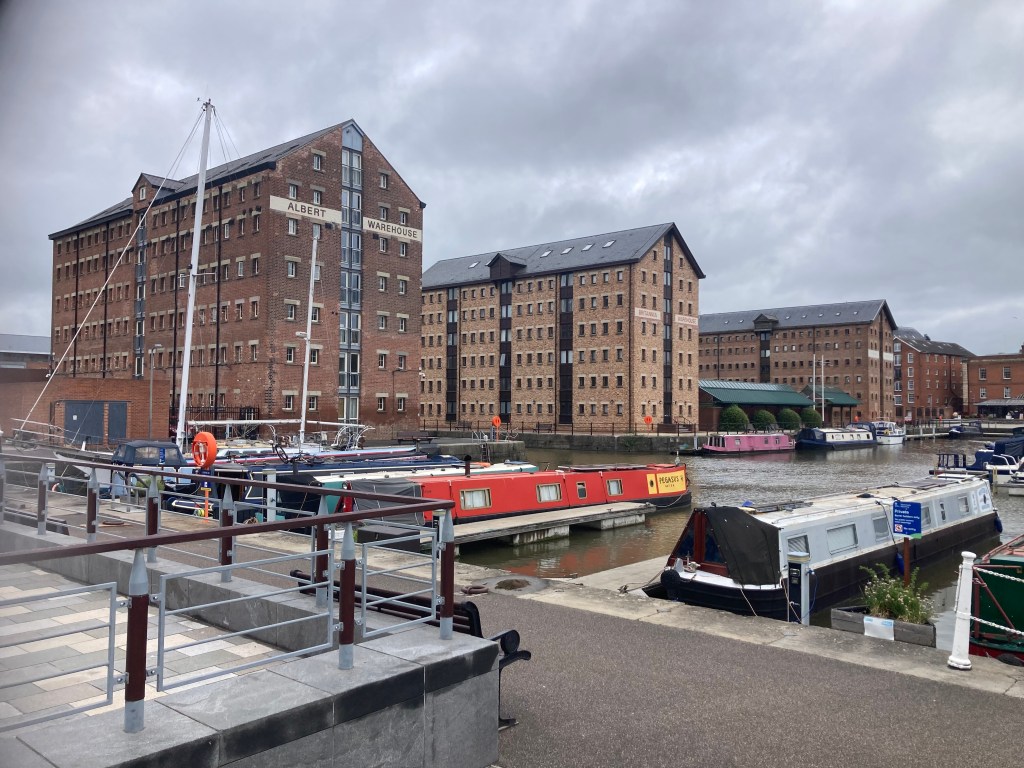
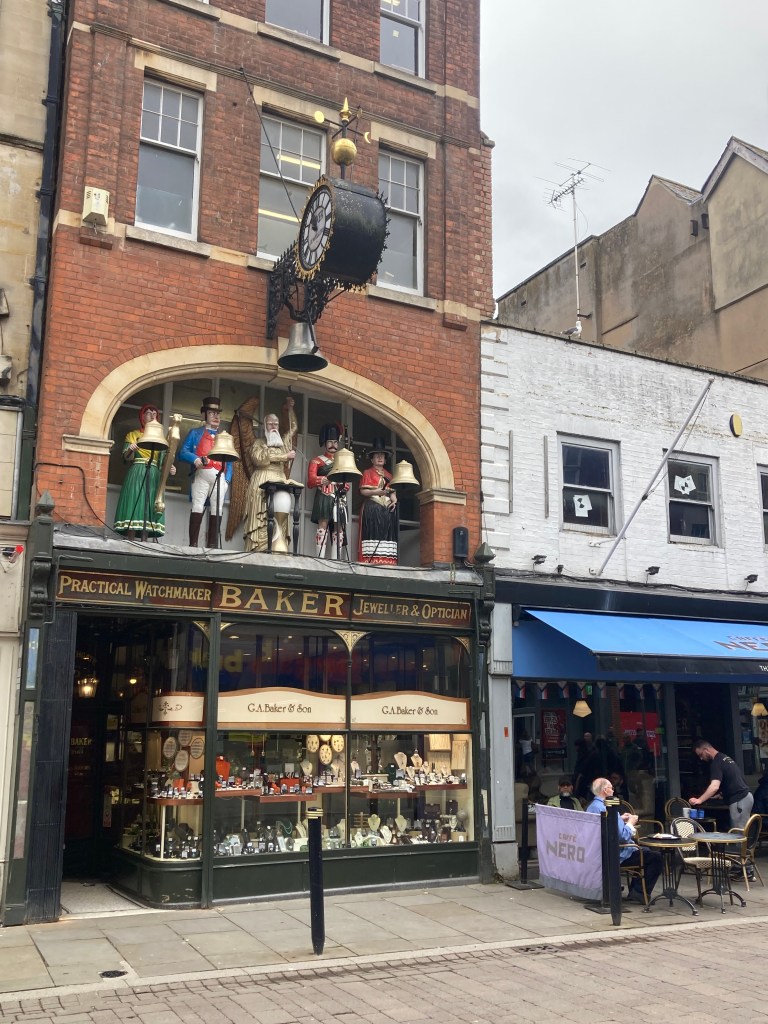
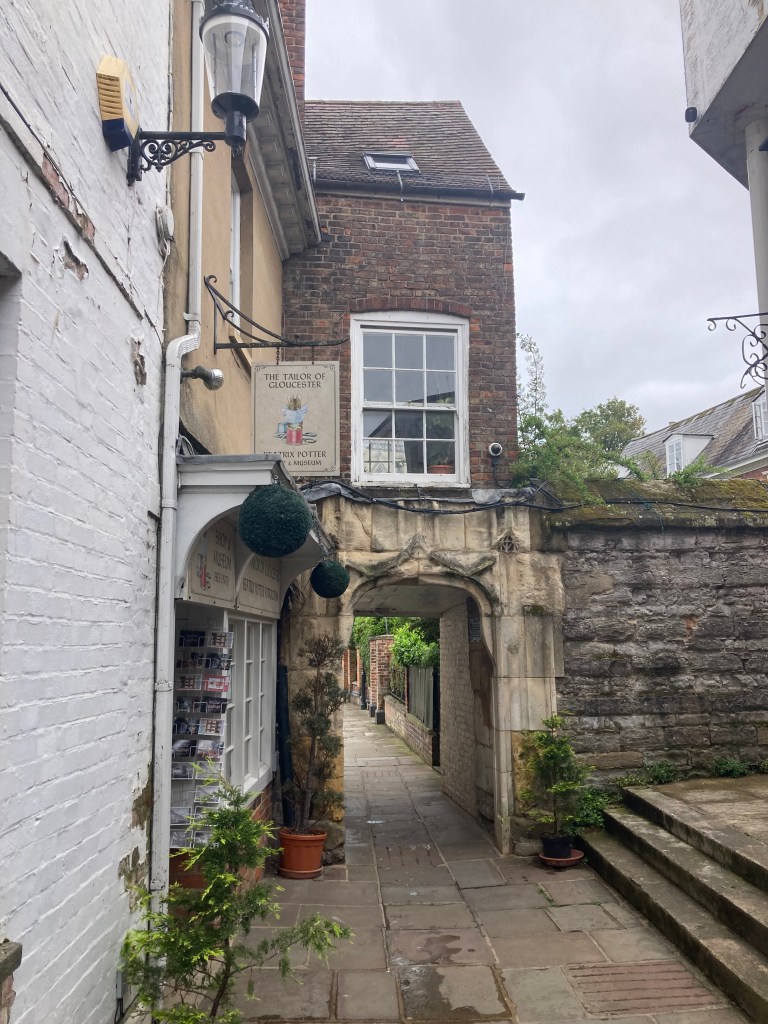
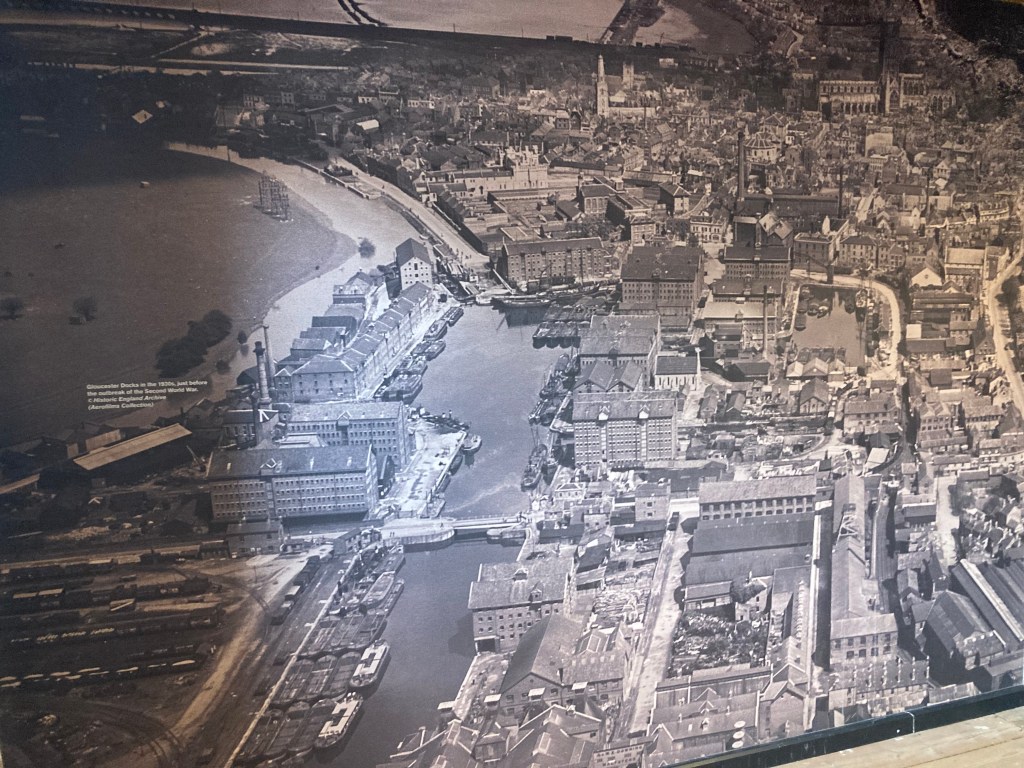
The first thing we find on emerging from the multi storey car park, is to find ourselves in a Port! Big Victorian warehouses, wharves, waterways, but we are many miles from the Bristol Channel and the Irish Sea!! In the 18th and 19th centuries as canals provided easy transportation of materials and goods, before the railways and roads took over, a 17 mile canal was created that linked the tidal Severn Estuary and the Bristol Channel aka the world, to the city of Gloucester and thence by canal to the Industry of the English Midlands and further afield.
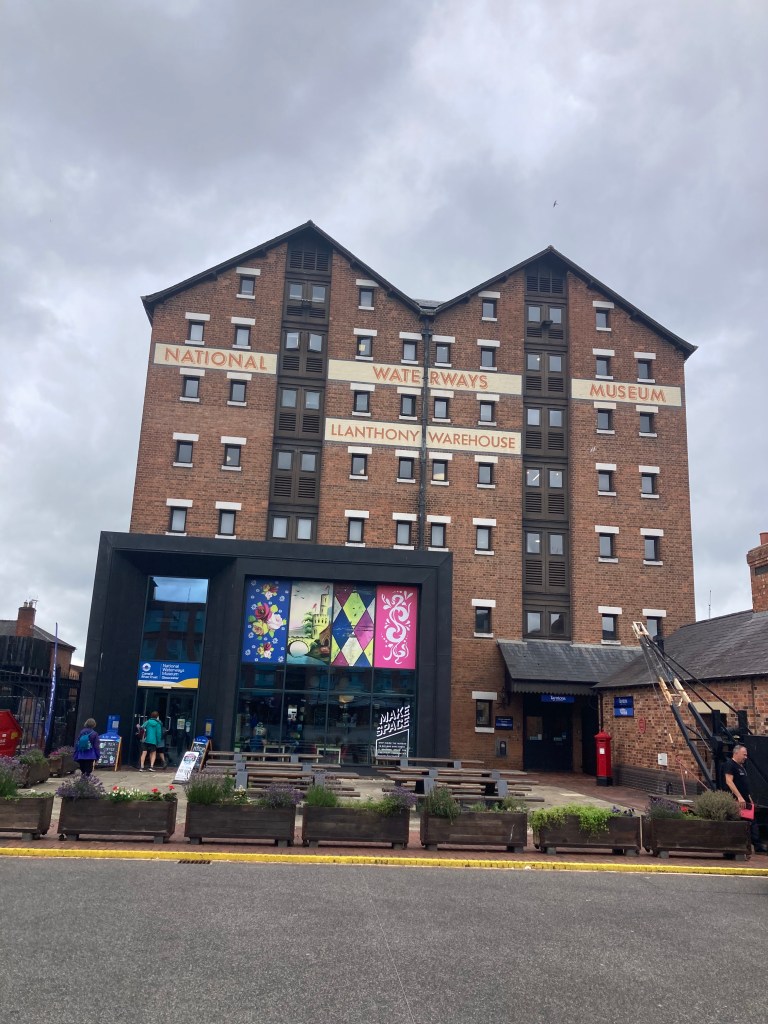
We visit the National Waterways Museum which is set up in one of the warehouse buildings. Everything about the place is “ substantial”, solid massive timber flooring and rafters to support goods storage and cranes to lift and move goods about. Arriving on the second floor of the warehouse/museum we are greeted with film of workers who were employed on the canals, which are brilliant short tales of life gone by, of hard work, pride in that work and a sadness that the commercial days of the canal are past and its purpose is primarily leisure. Many warehouses are now converted to apartments, but the canal boats on moorings below still give the area a sense of its maritime past. It’s beautiful in a maritime historical sense.
The Cathedral
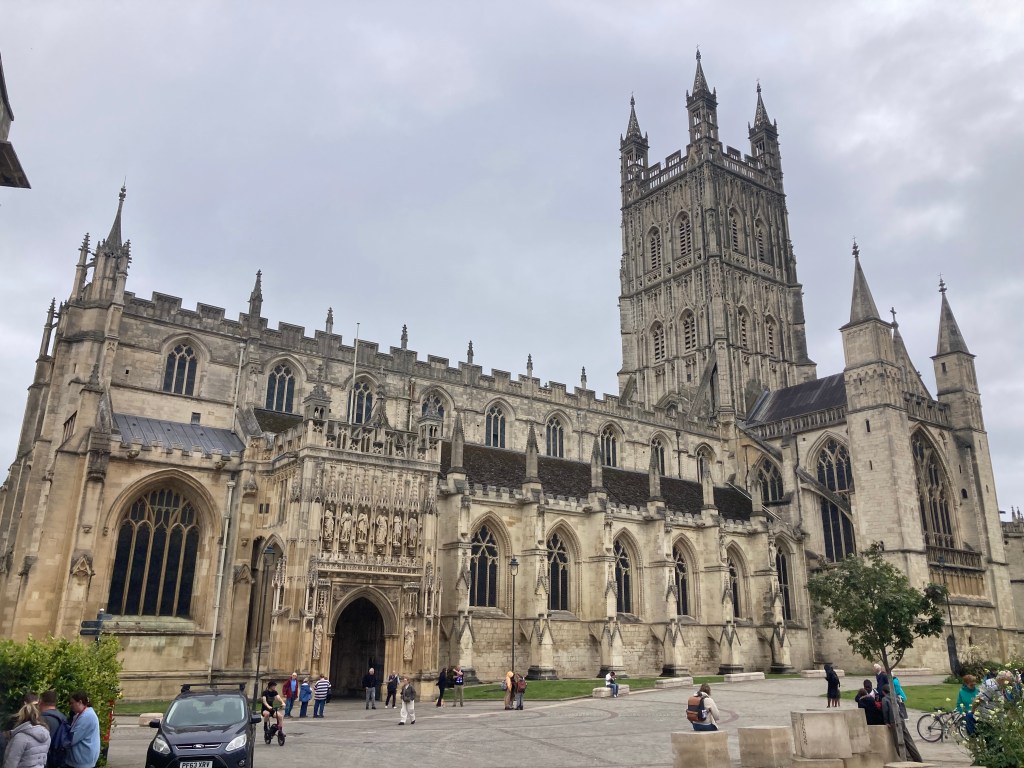
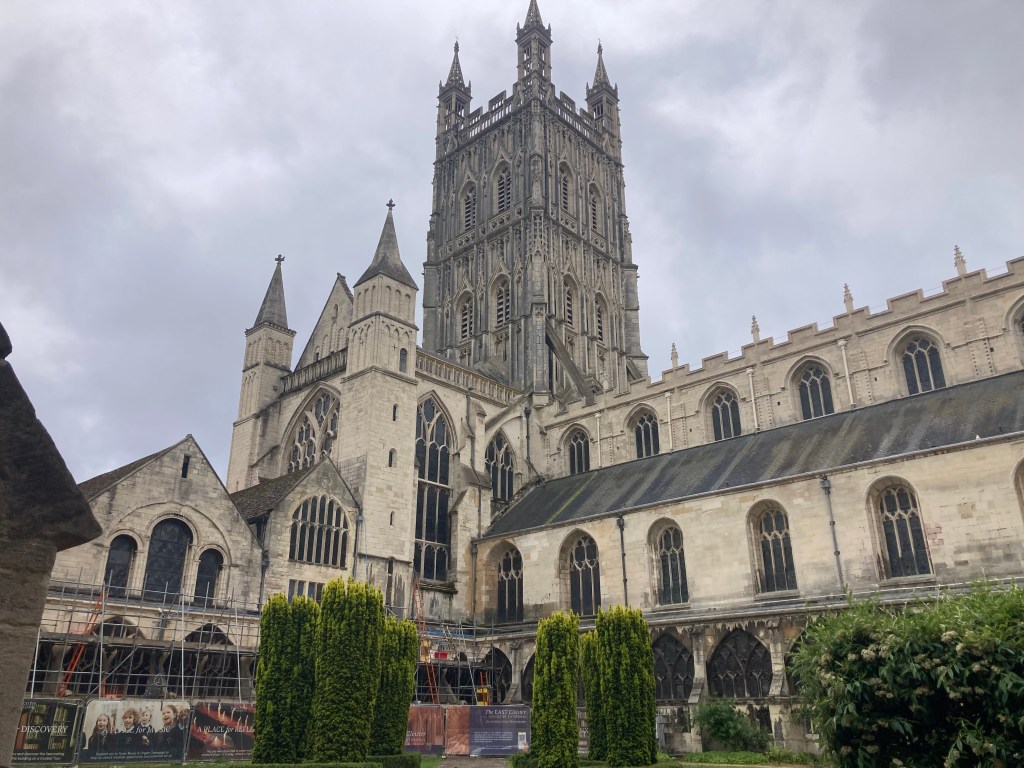
Unlike many cities, Gloucester Cathedral does not dominate but in spite of being of modest size, it is both lovely and fascinating.
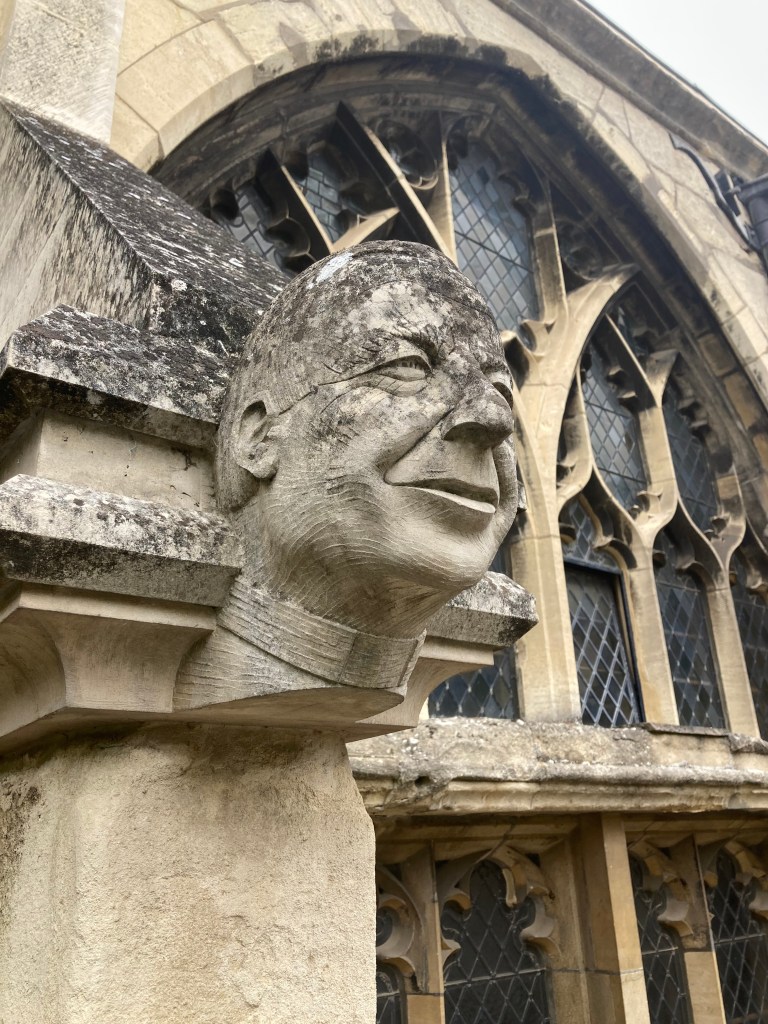
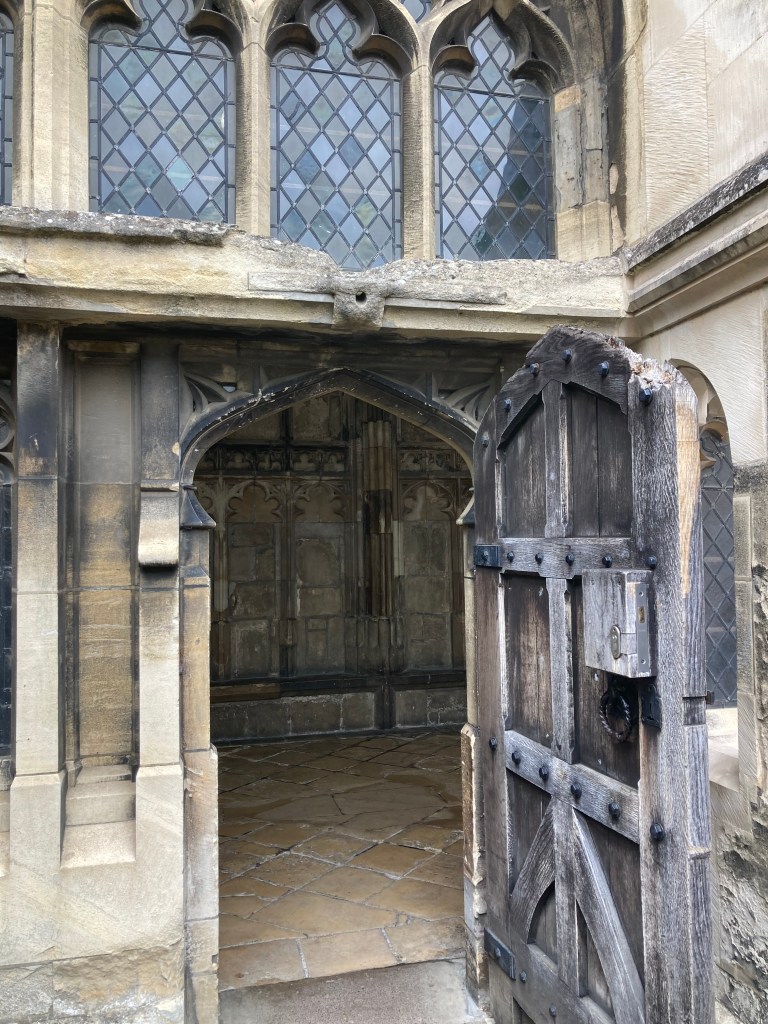
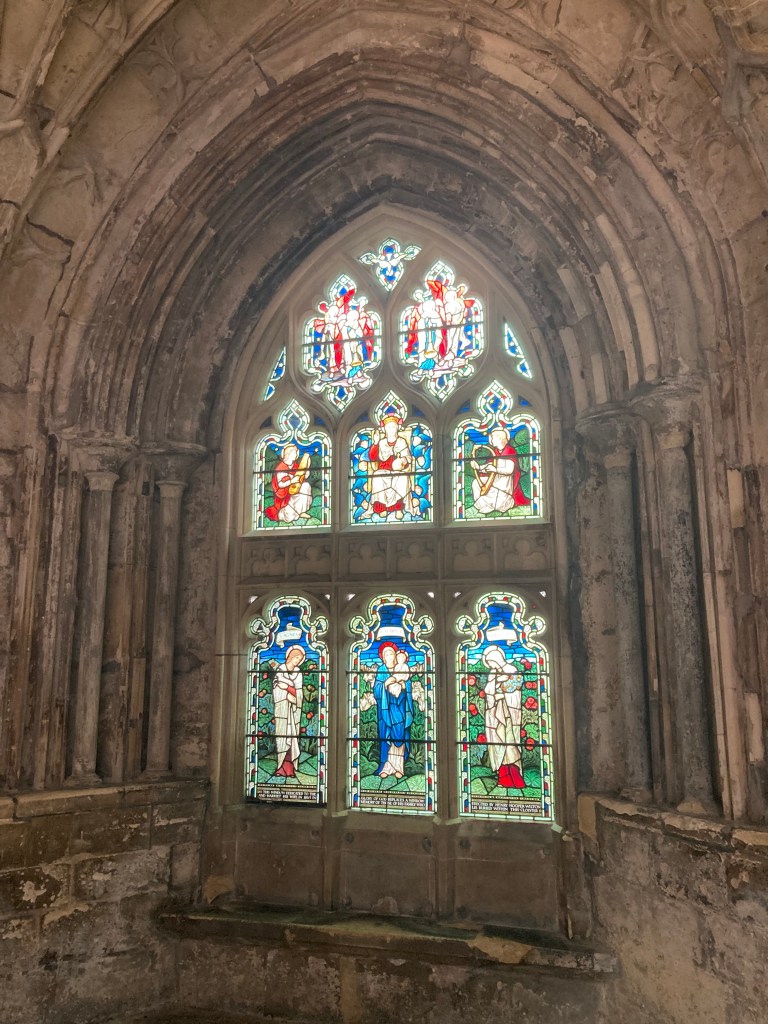
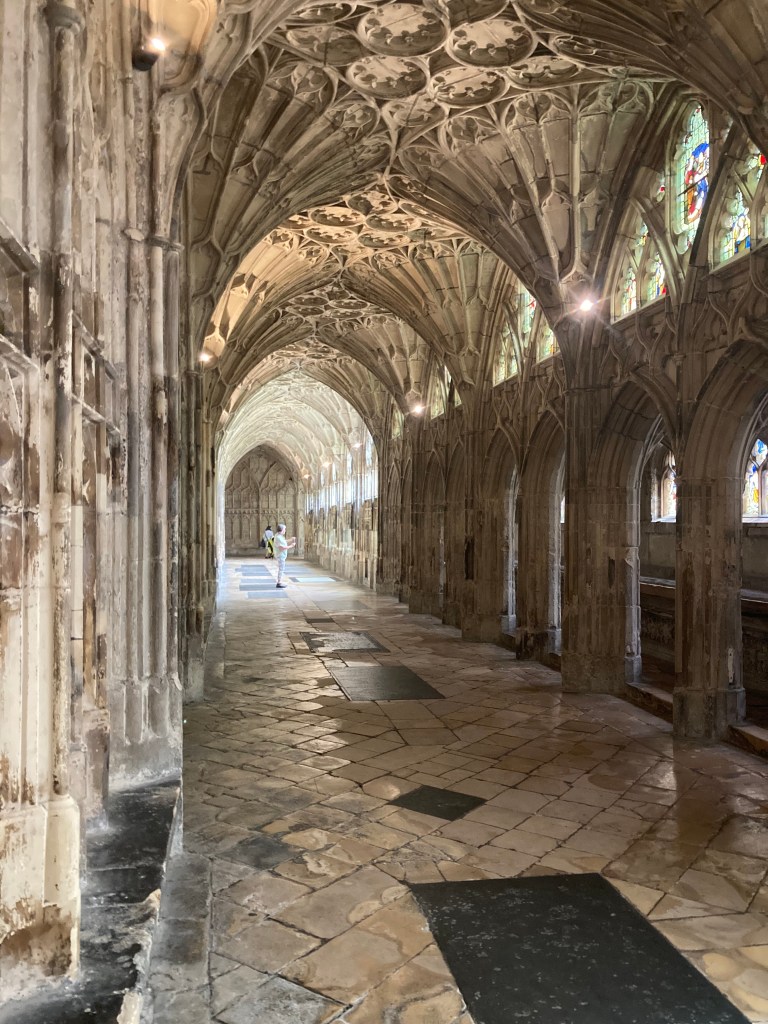
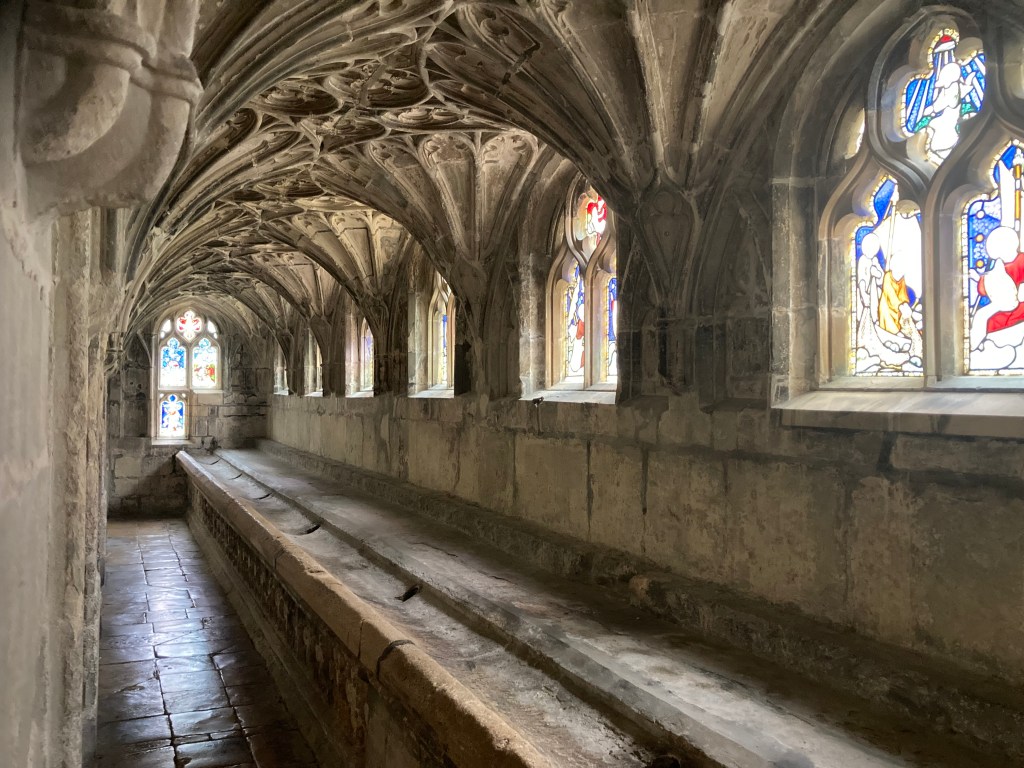
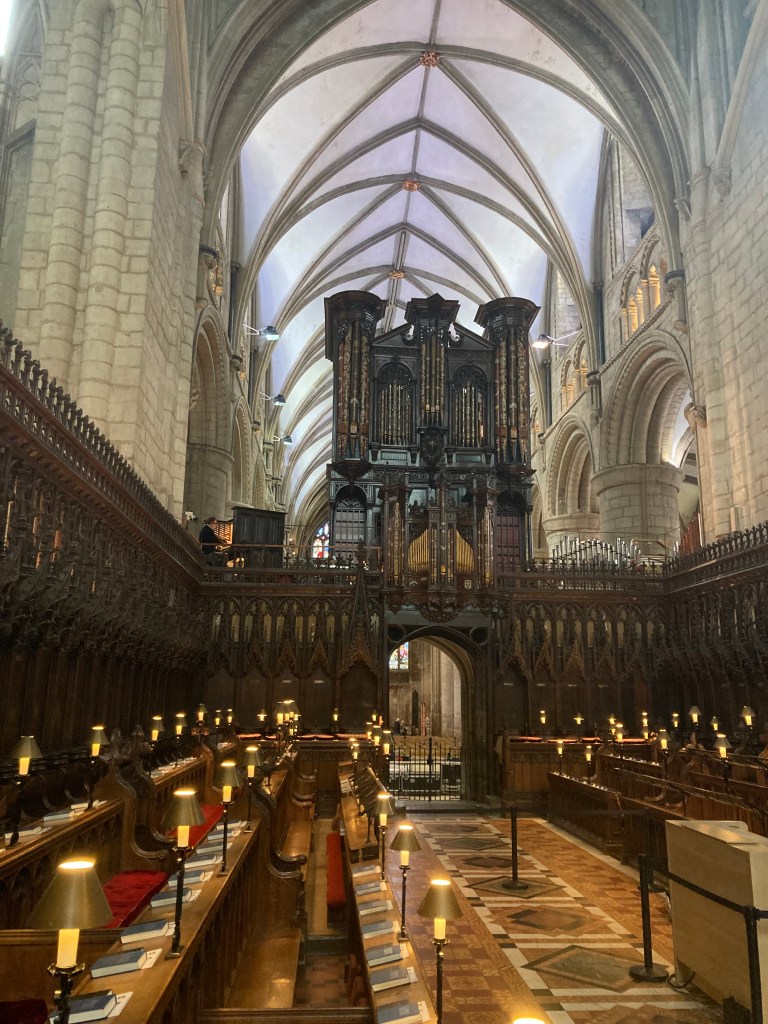
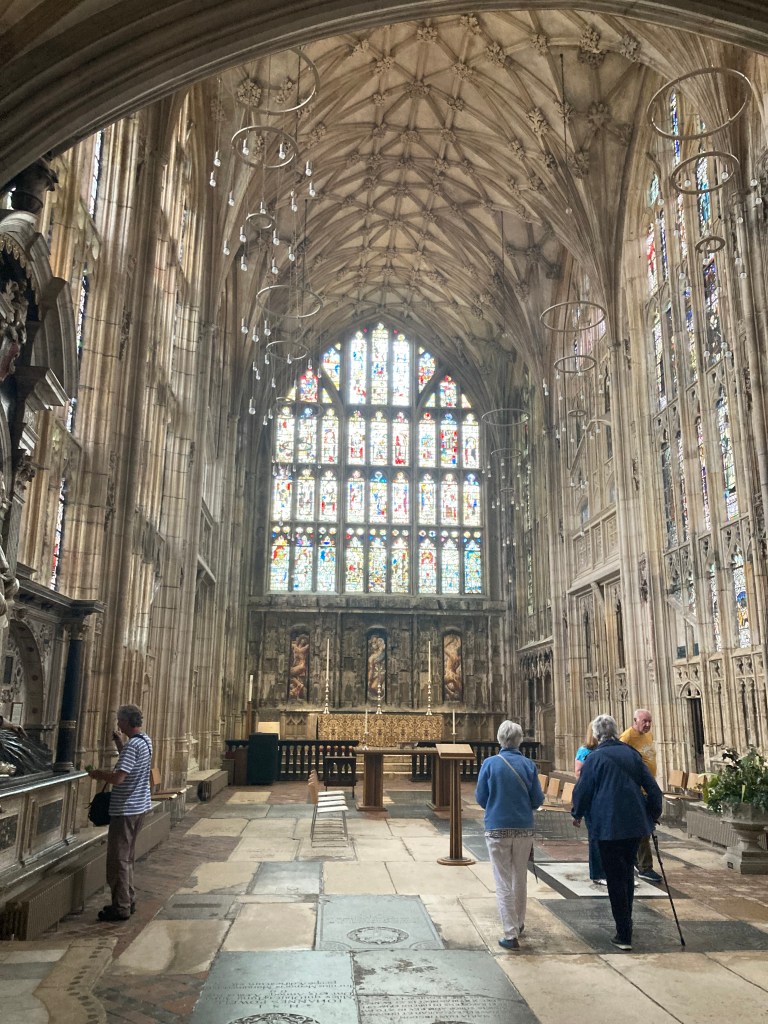
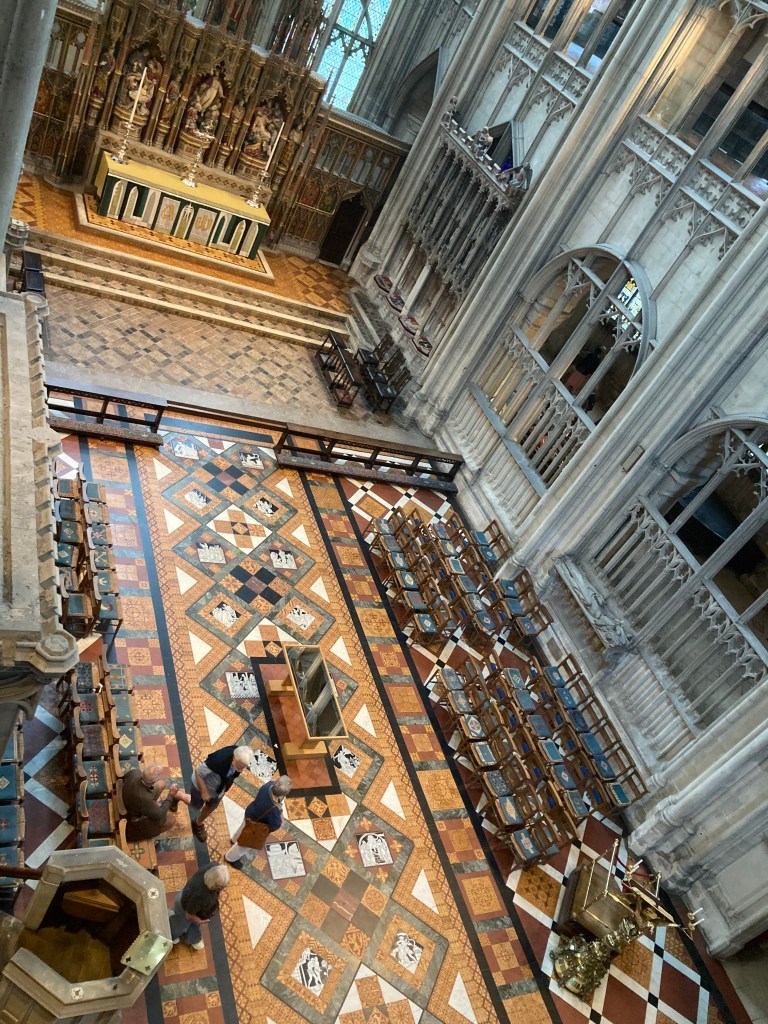
A footnote to our Gloucester visit is that we walked through the city, an old Georgian but slightly dishevelled look, and wandered past the new looking County Police Headquarters, Gloucester Bearlands Police Station!! And what do “ bears” have to do with this small English city? Instant IPhone research tells us that back in the days, the then King ordered that the land around the Castle, where the Police Headquarters is now positioned , to be cleared, to protect from attack ie “bare lands”. Over time the spelling changed and today its now “bearlands”.
BACK TO THE FOREST
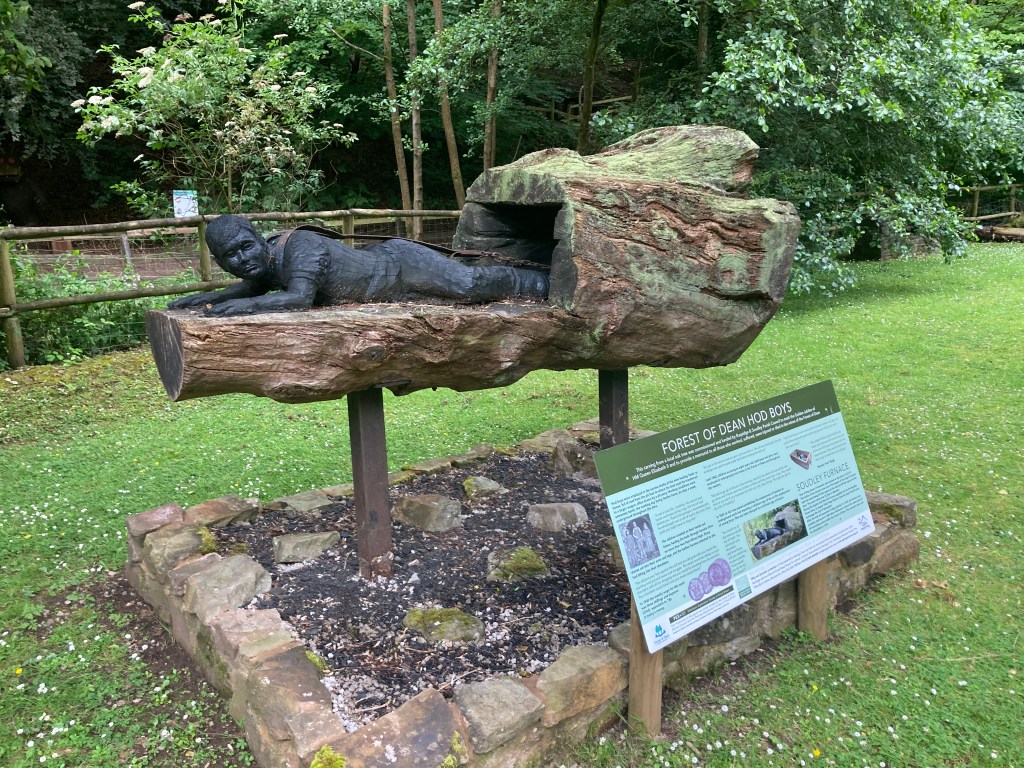
The Forest of Dean when the Romans arrived was already an important centre for charcoal, timber, bows, arrows, iron work and later coal was discovered. Today trees are coppiced to ensure sustainability and charcoal is still produced. In the area we visited the Heritage Centre where this wooden sculpture of a “Hod Boy” at work in a local coal mine was depicted most visibly. Children as young as 8 years old , boys and girls. would work in the coal mine, with a leather strapped “hod of coal”around their shoulders as they crawled all day long on hands and knees moving the coal from coal face to its route out of the mine. In 1842 an act was passed forbidding girls to work underground and raising the minimum age for boys to 12. Pretty sobering to think of how we treated children only 200 years ago.
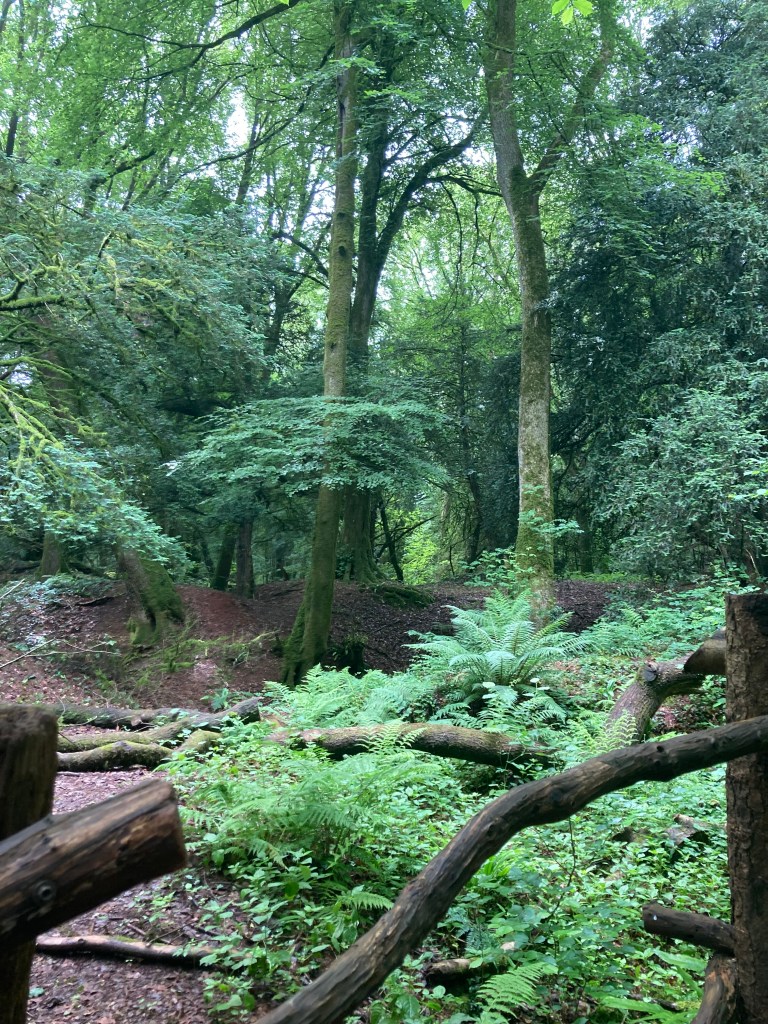
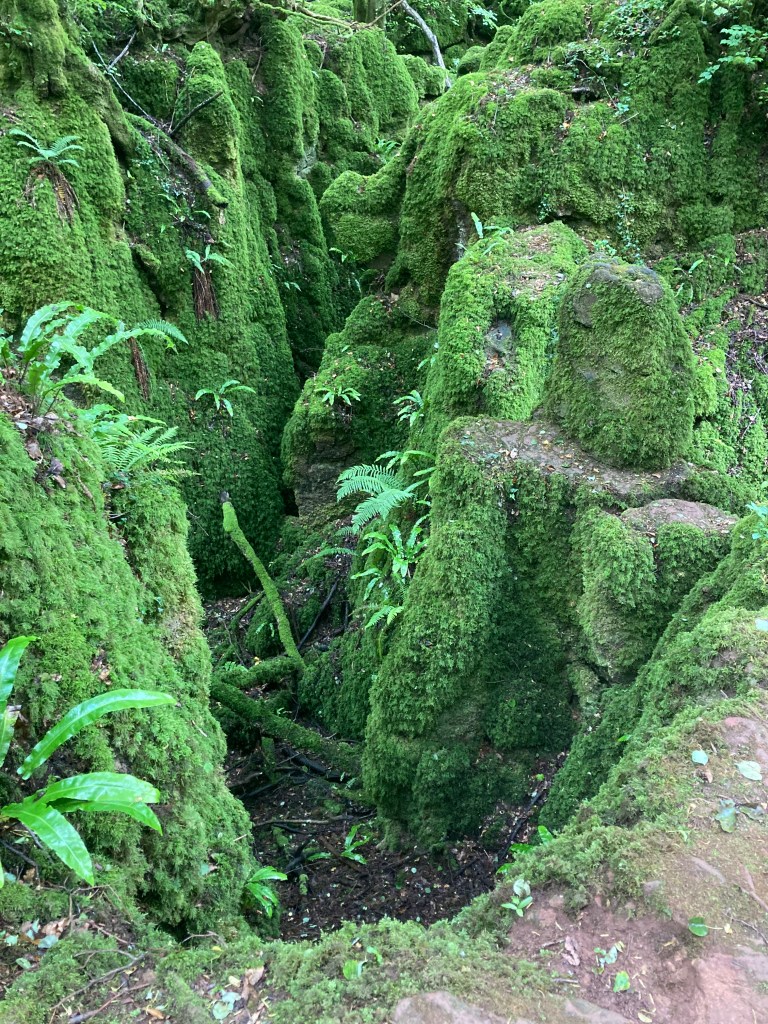
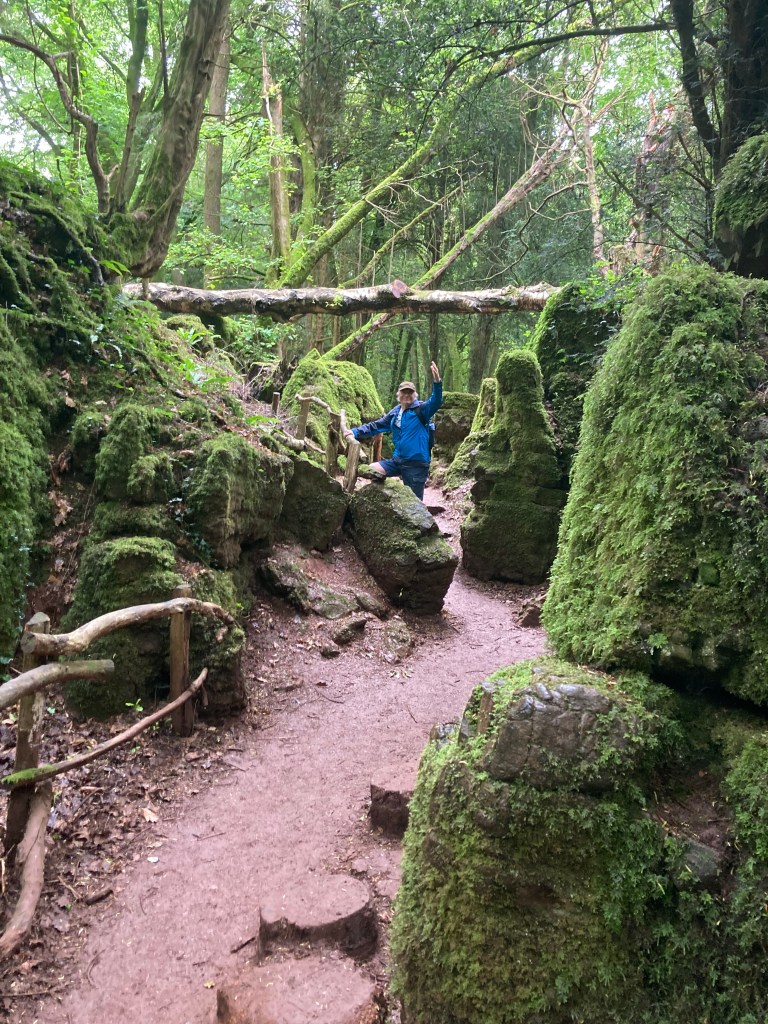
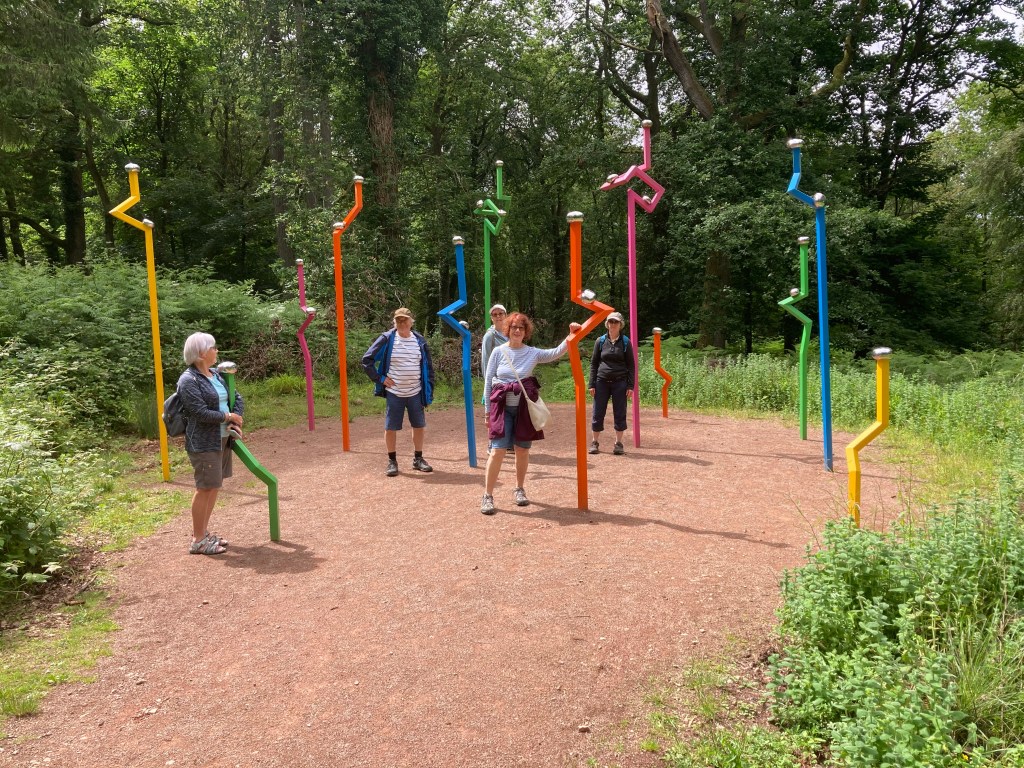
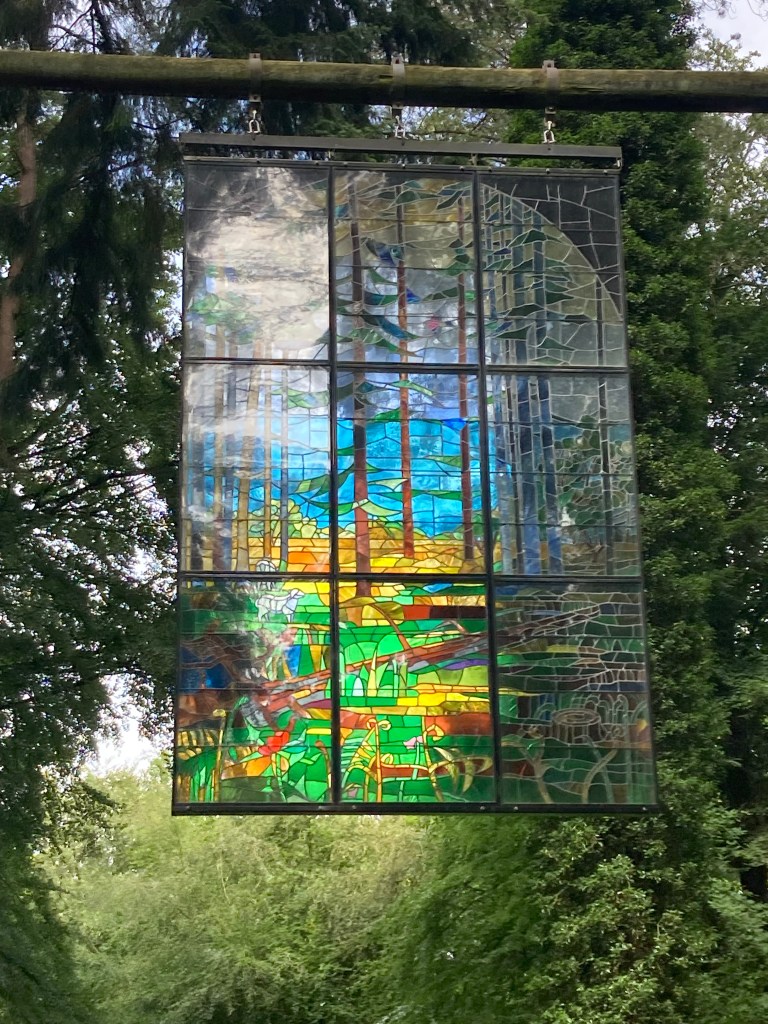
A couple of “tourist attractions’ in the area – Puzzlewood, an interesting wander around a forested area of “scowls” – limestone features, once underground and carved by water, now on the surface, but damp, covered with moss and underneath a forest canopy. One way in, some dead end trails and a couple of ways out, fun and fascinating. And then a “sculpture park” set out in the forest, with some quirky fun exhibits, with the showpiece a large hanging stain glass window – super impressive but not that easy to photograph to see it at its best
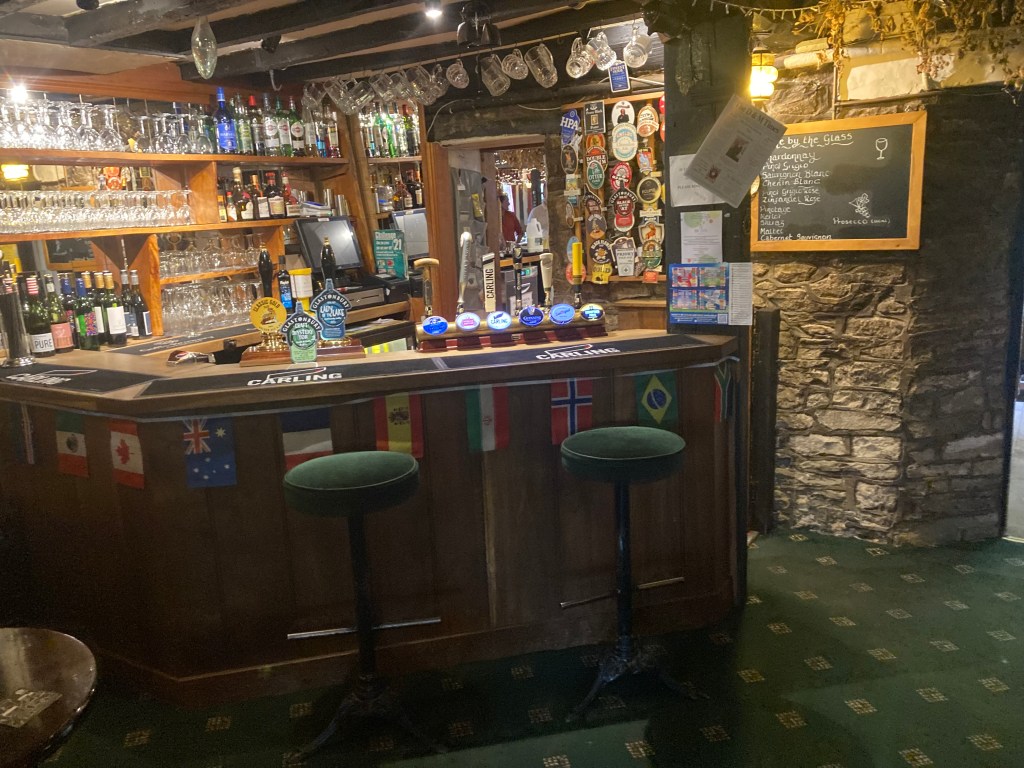
So our time in Gloucestershire is at an end. Not an area we knew, but an area that has not disappointed in any way. We even found a neat pub tucked down a tiny lane, the Dog and Muffler- great name – hedgerows crowding in from either side, cleaning the car, and a brilliant well priced menu.
Next stop Wales!!

