
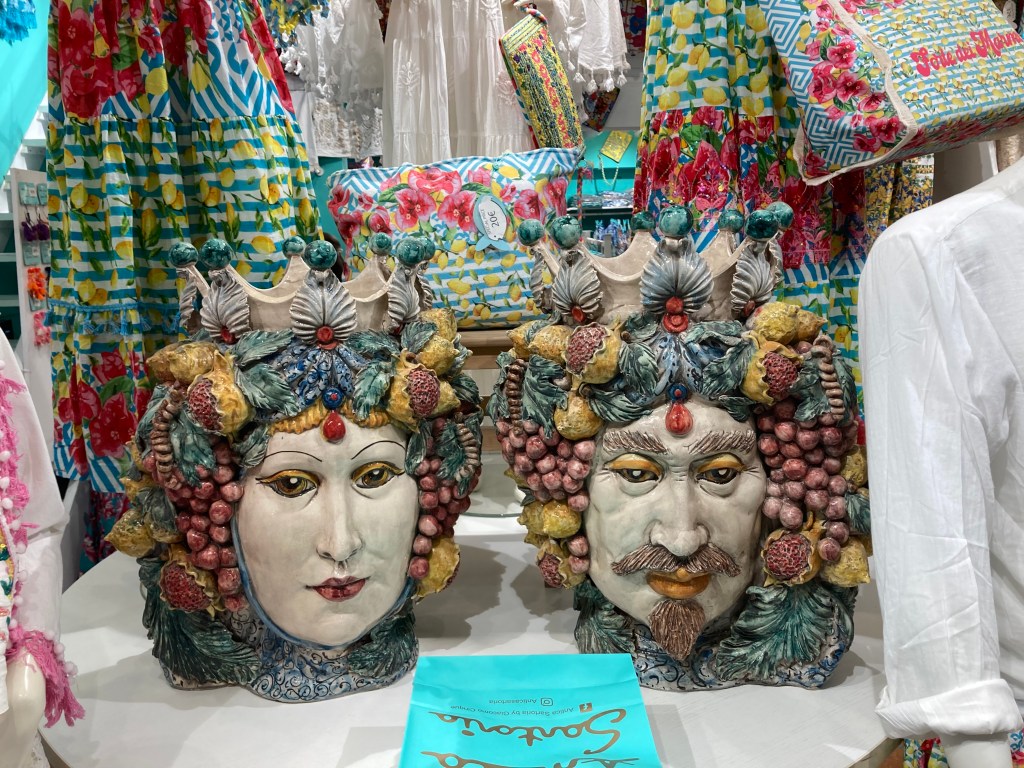
We had not been to Sicily before but had been to the Italian island of Sardinia – which we loved – and to mainland Italy, where based in Salerno we had explored the Amalfi coast a little. So Sicily was very unknown and with an October visit being later in the Northern Summer we wanted a warm, beach side location for some good sea swimming, local food and some exploration opportunities. We chose two coastal locations on the island, one down in the south – east corner – Reitani in the Noto District ( about 1 hours drive south of Catania International Airport) for 10 days. Then another for 4 days in the north at Cefalu which is about 1 hours drive east of the capital Palermo. In both places we had self catering accommodation via Airbnb.
We flew into and out of Catania Airport on Ryanair from London Stansted, about a 3 hour direct flight, each way, but there are direct flights from other UK Airports – eg Luton, Gatwick . We had rented a car via AutoEurope NZ back in May at a very reasonable price. It was not with a major car hire company, and it took a little finding at Catania Airport, but in the end all was fine. Just to point out that by October, the car was no longer in perfect condition, ie a few scratches and marks – so we took photos of all the bodywork, wheels etc, to be on the safe side. We had also been warned to check the oil and windscreen water – plenty of the former and none of the latter – easily sorted.
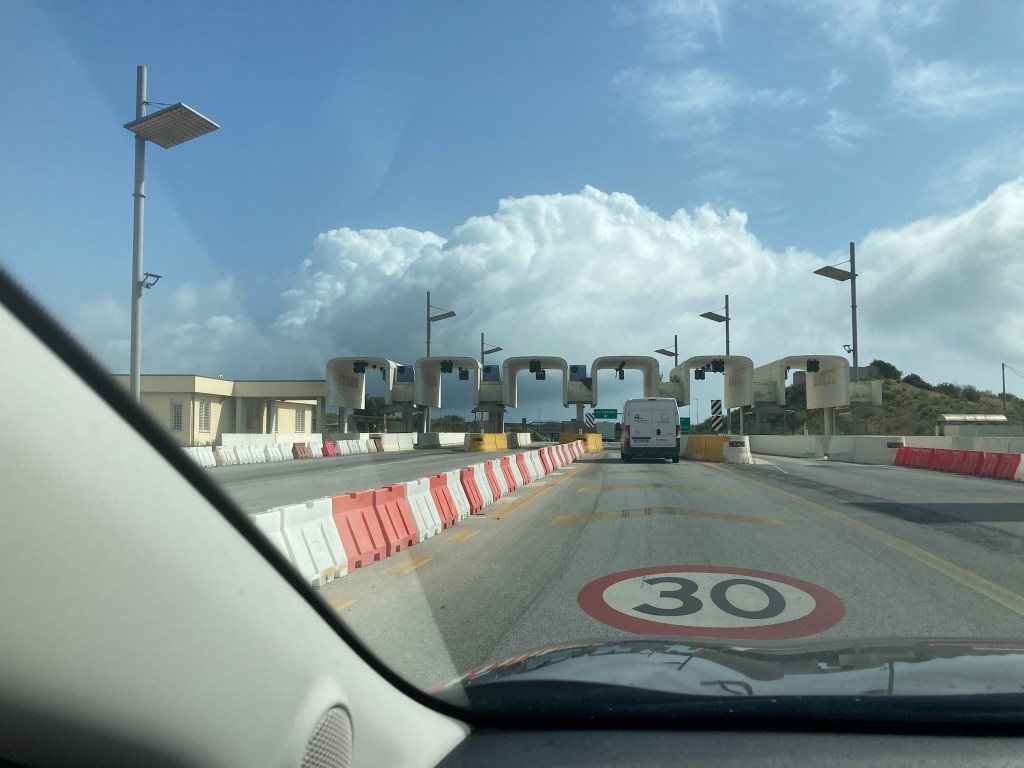
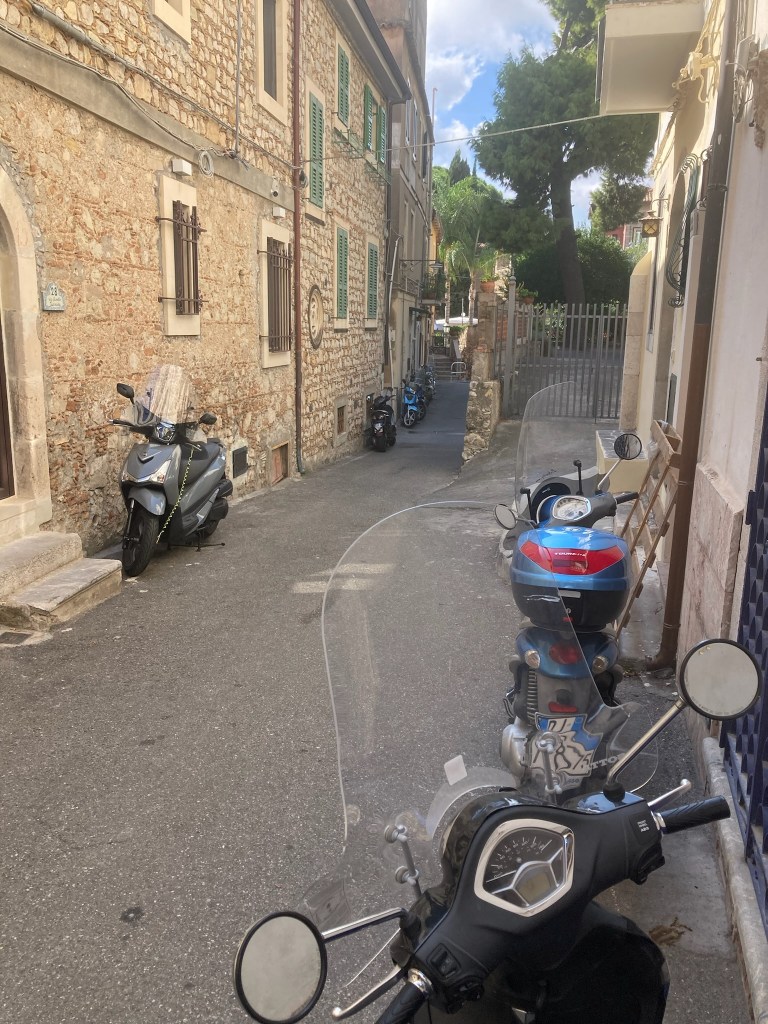
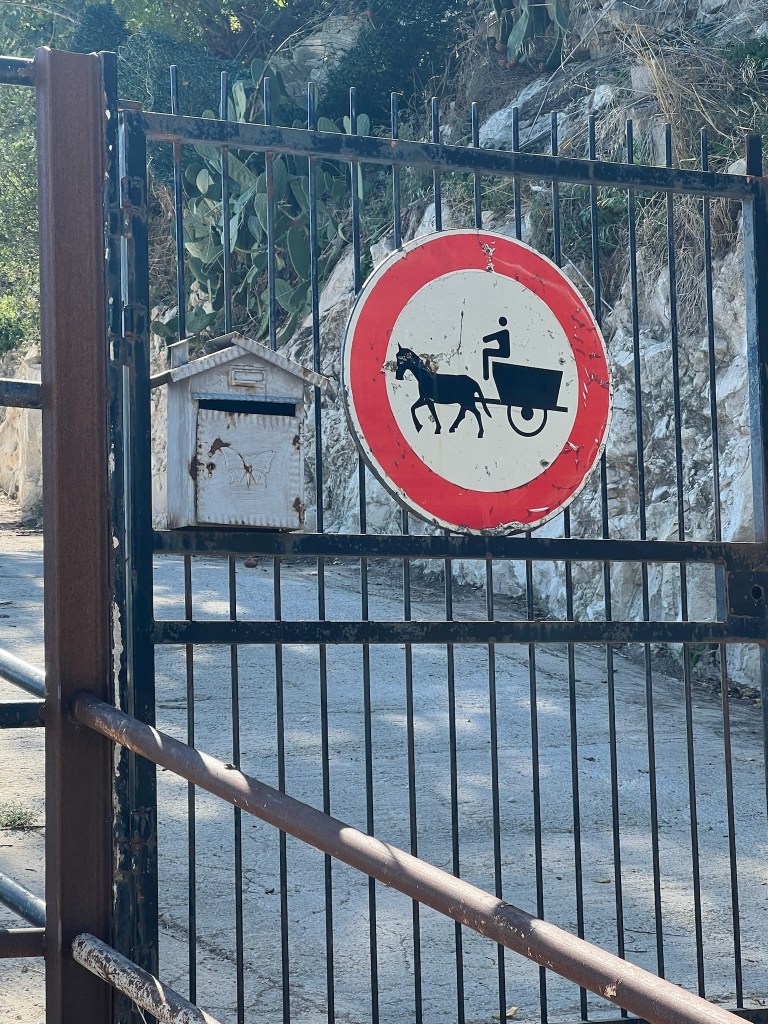
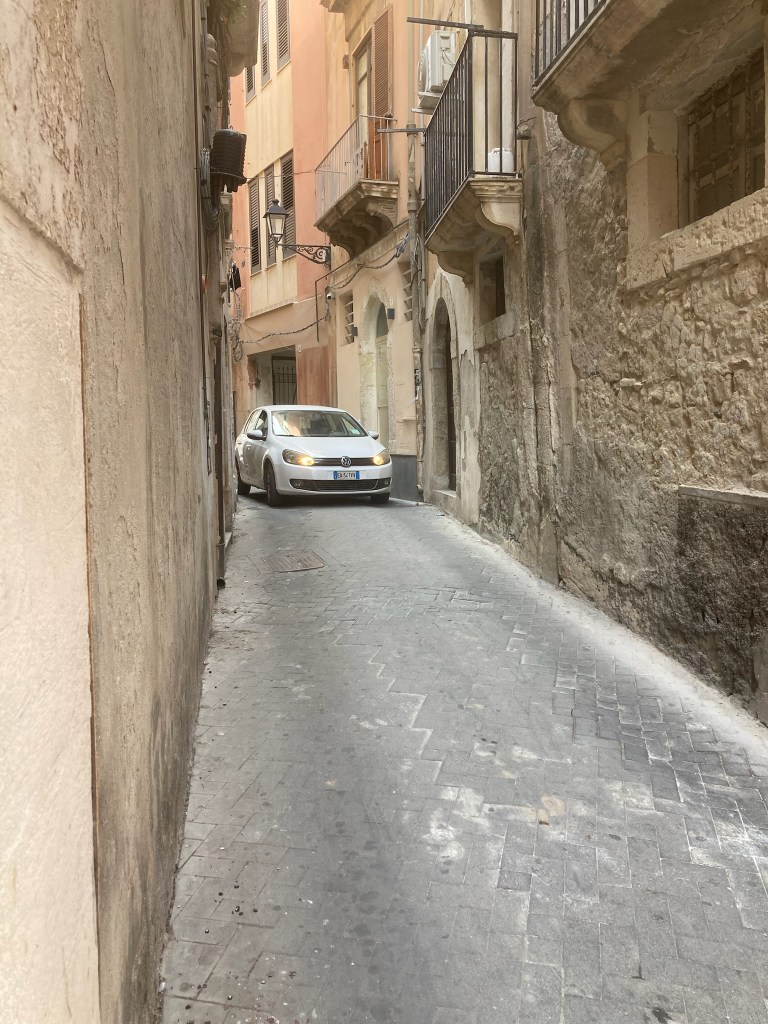
Italian driving is “different”! For us, with time spent working in the Middle East & E Africa , it much more resembles the sort of driving that we encountered there than what we are used to back home in NZ, or the UK. Out of town speed limits seem to be largely ignored, as are the use of direction indicators. In towns a degree of assertive driving is required to weave one’s way around convoluted, one-way systems. One excellent piece of advice that we did get was not to hire too big a car due to the generally narrow roads and poor road surfaces. However, narrow streets & pot hole strewn roads are all part of the fun of driving and a good co-driver is most useful at the cross roads of tiny streets, where right of way is debatable and vehicles are trying to push in from all sides.
NOTO
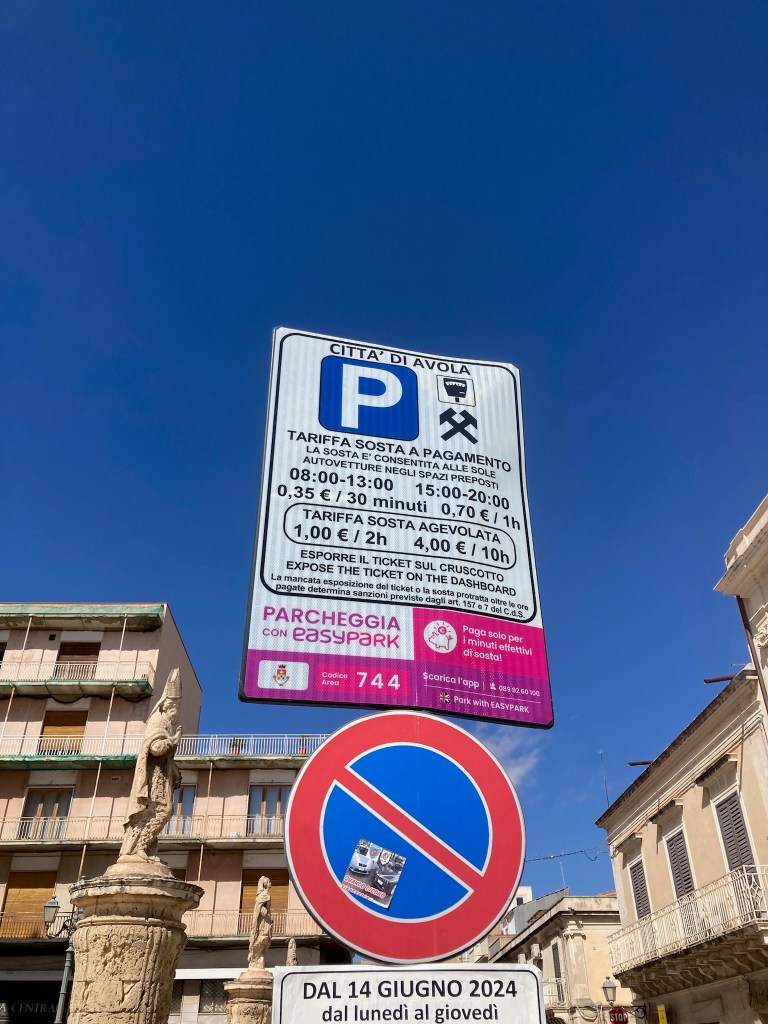
Our beachside villa was in the small settlement of Reitani in the District of Noto. Noto itself is a hillside town badly damaged by earthquakes in earlier centuries, but has an age and a charm to it which we discovered on a days visit. It’s about a 25 minute drive north of our villa, and on arrival in Noto, the first challenge was to find a safe car park, and then to understand how to pay for parking there!! All sorted, we set off on foot to explore this very clean and beautifully presented town.
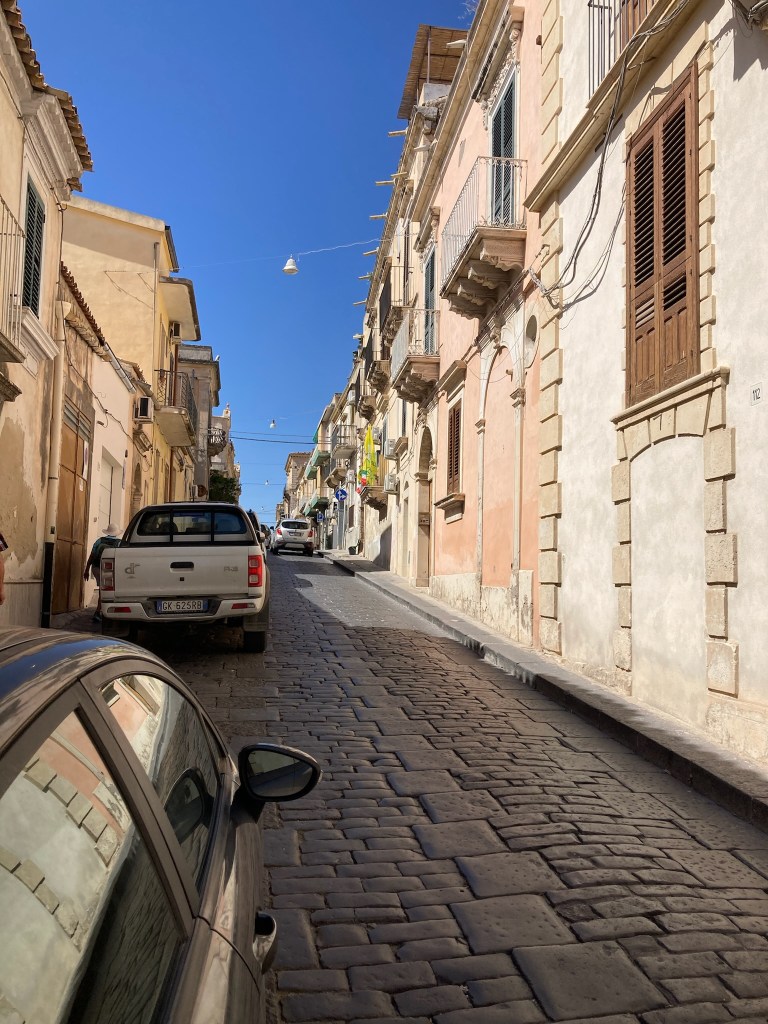
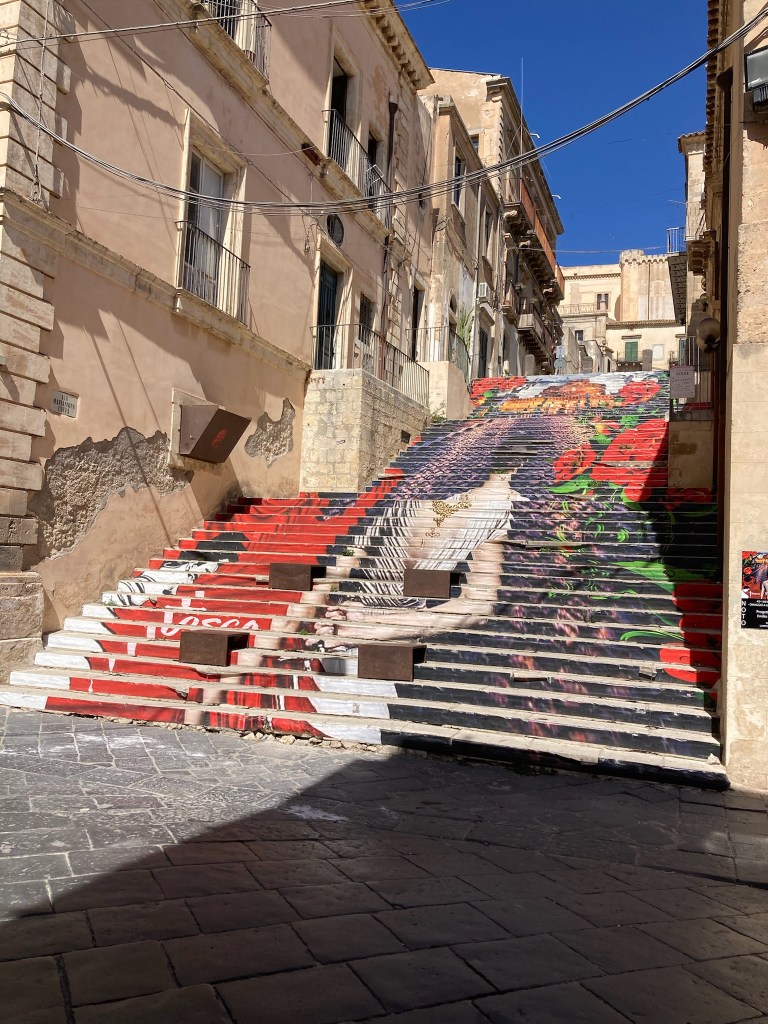
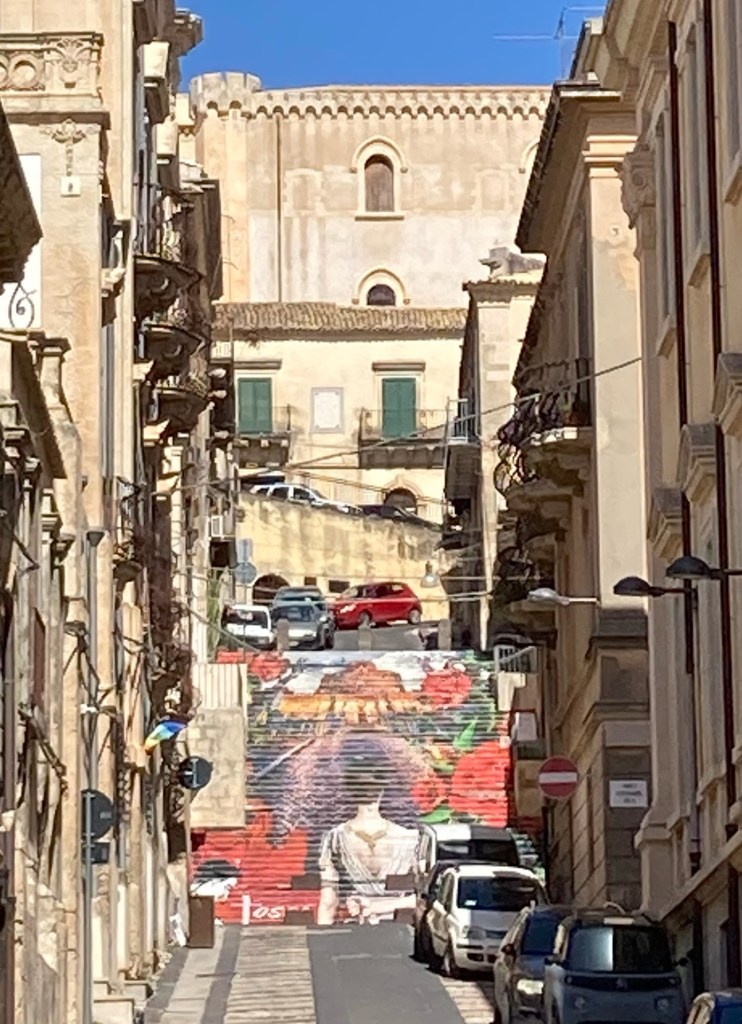
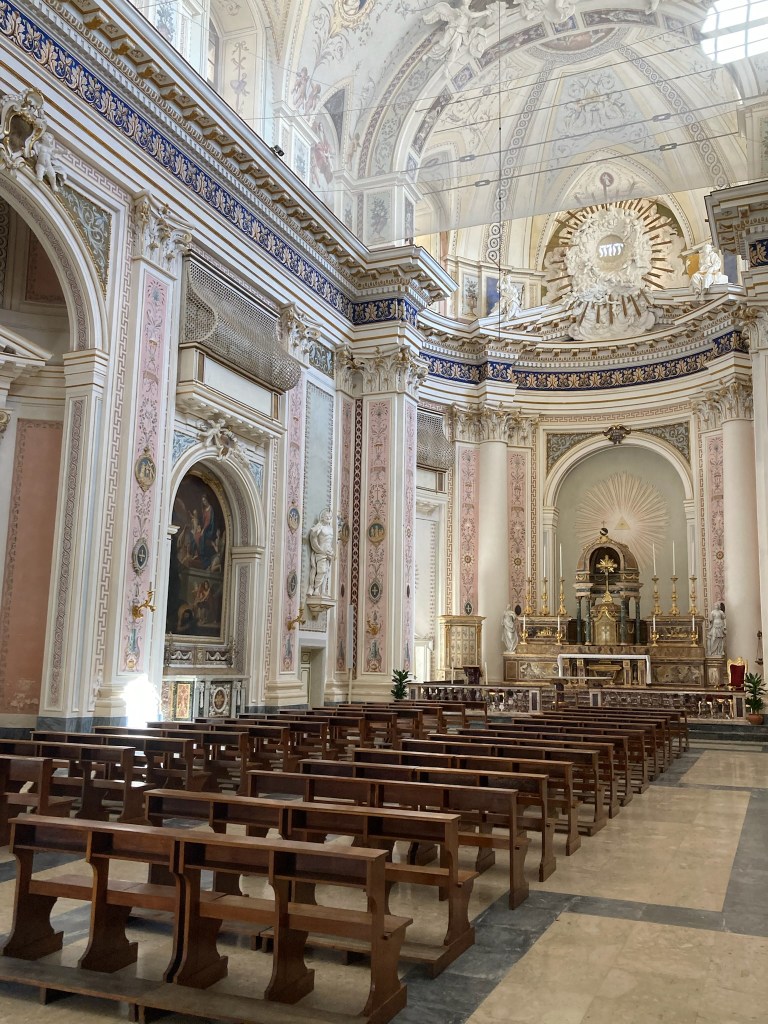
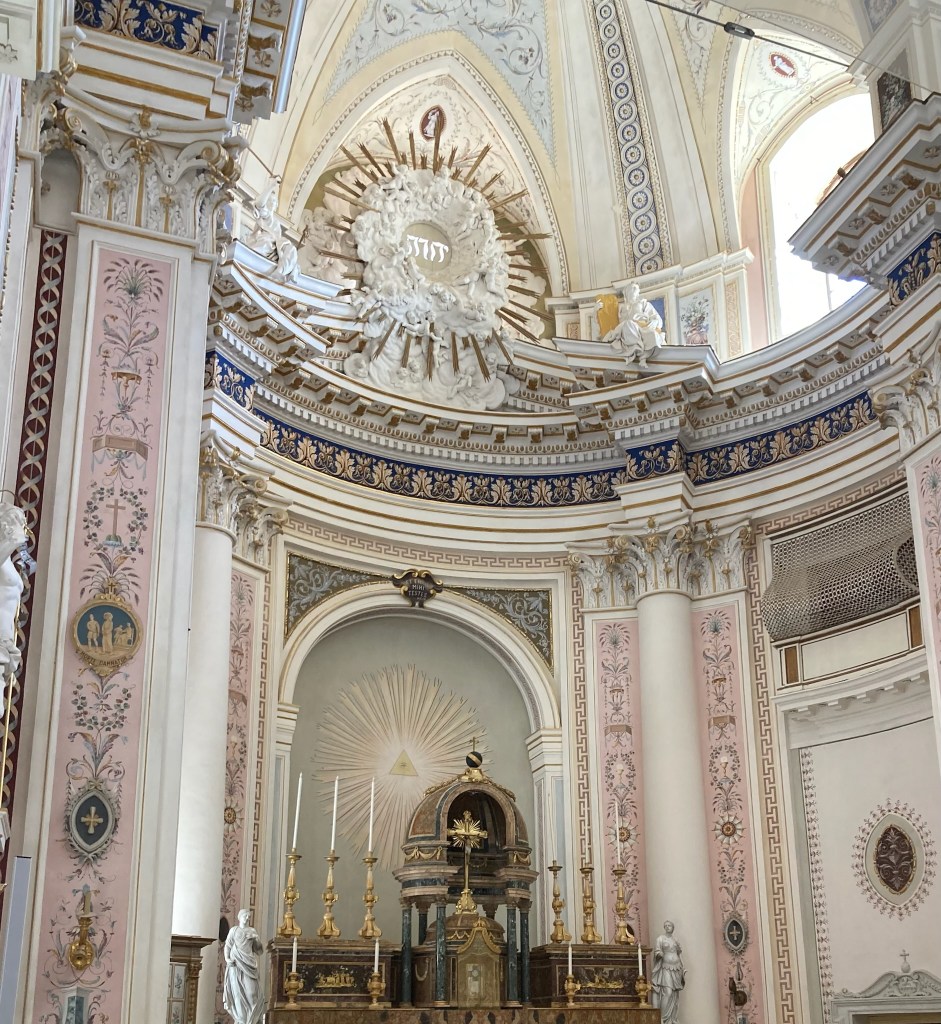
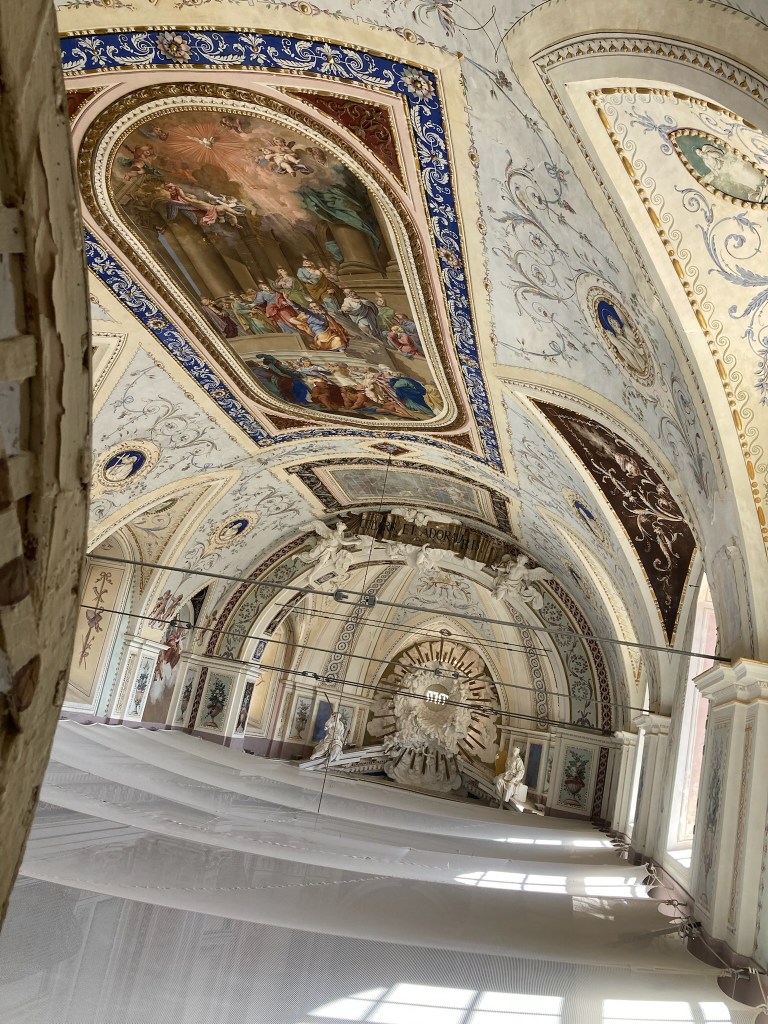
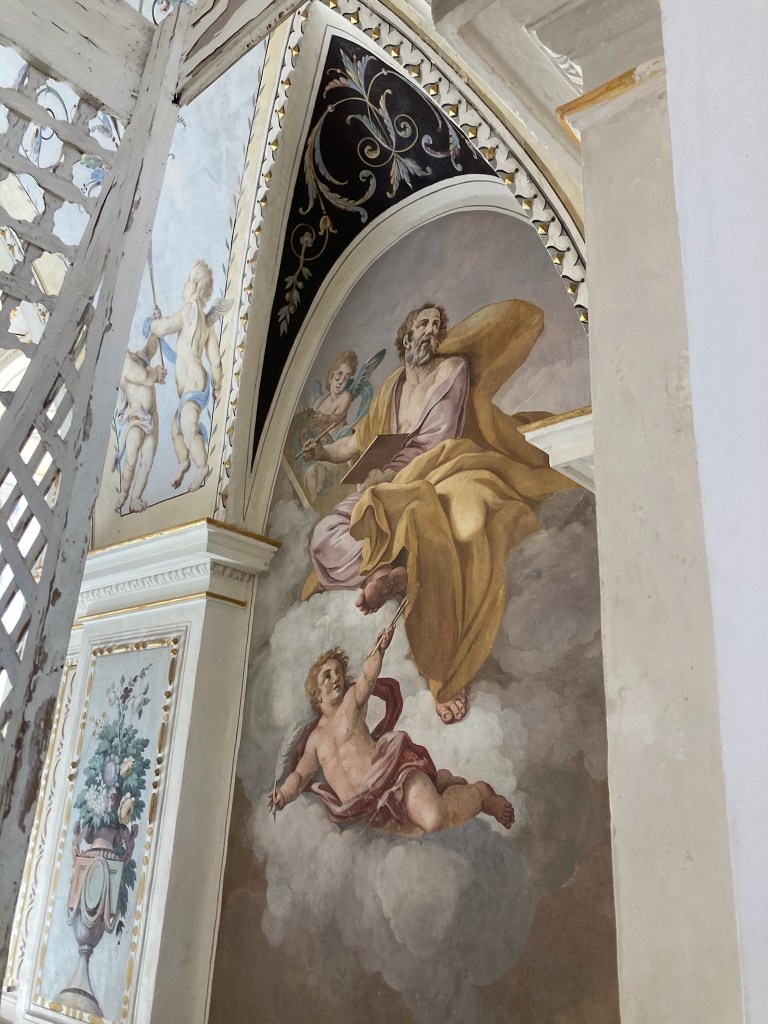
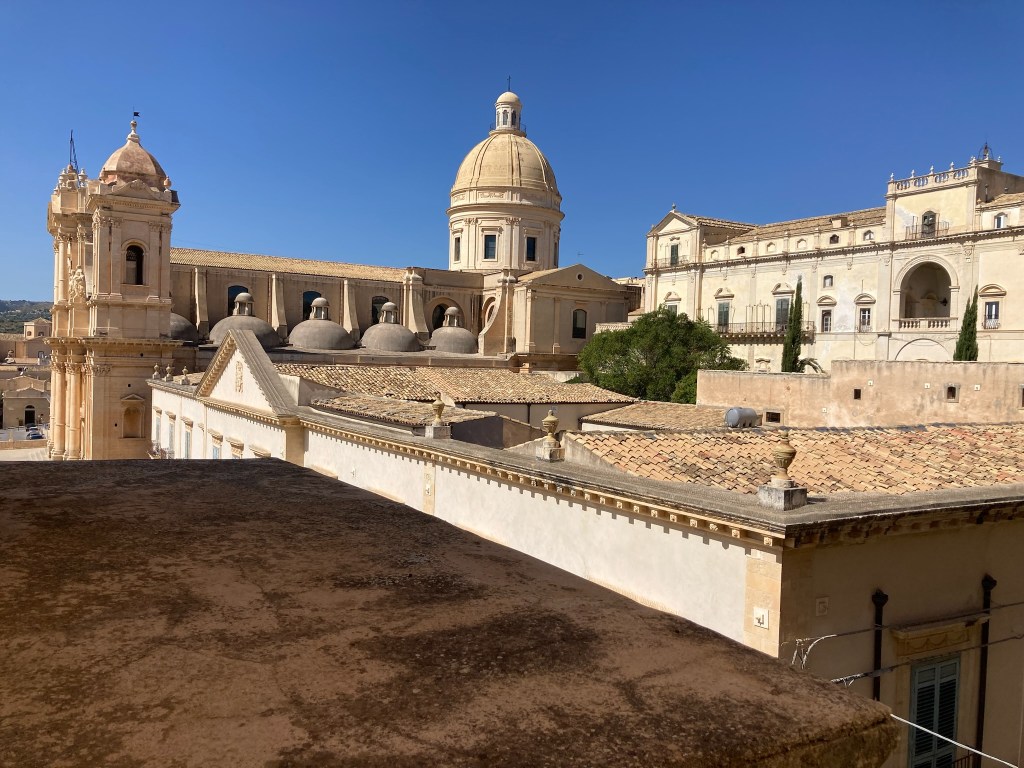
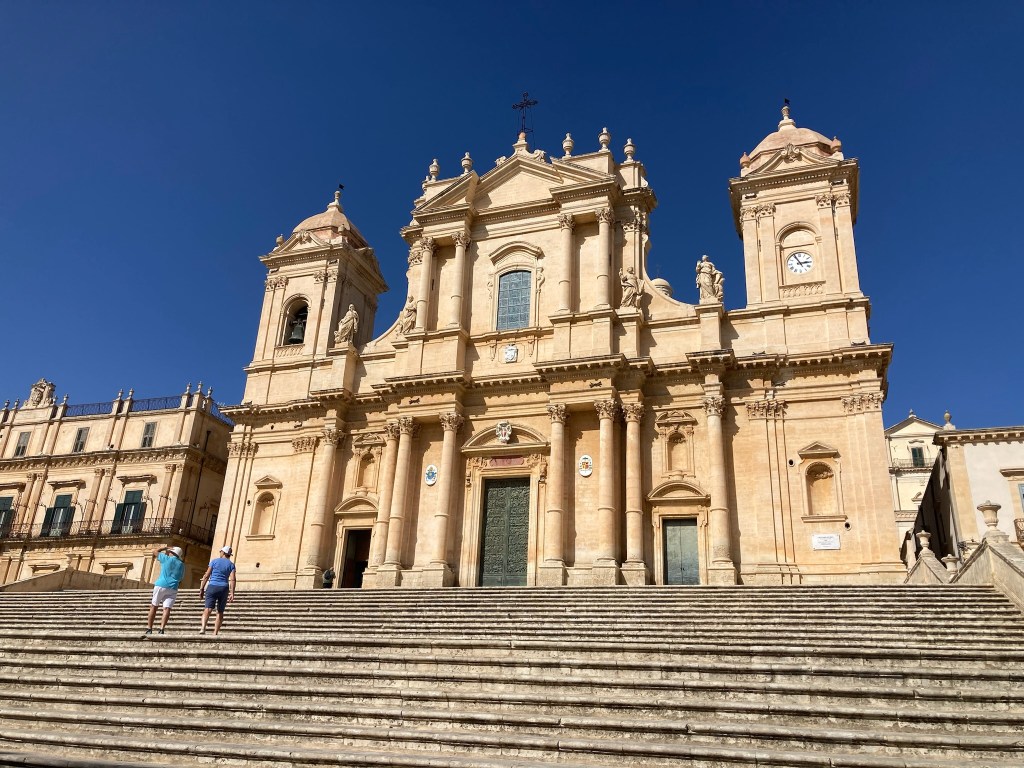
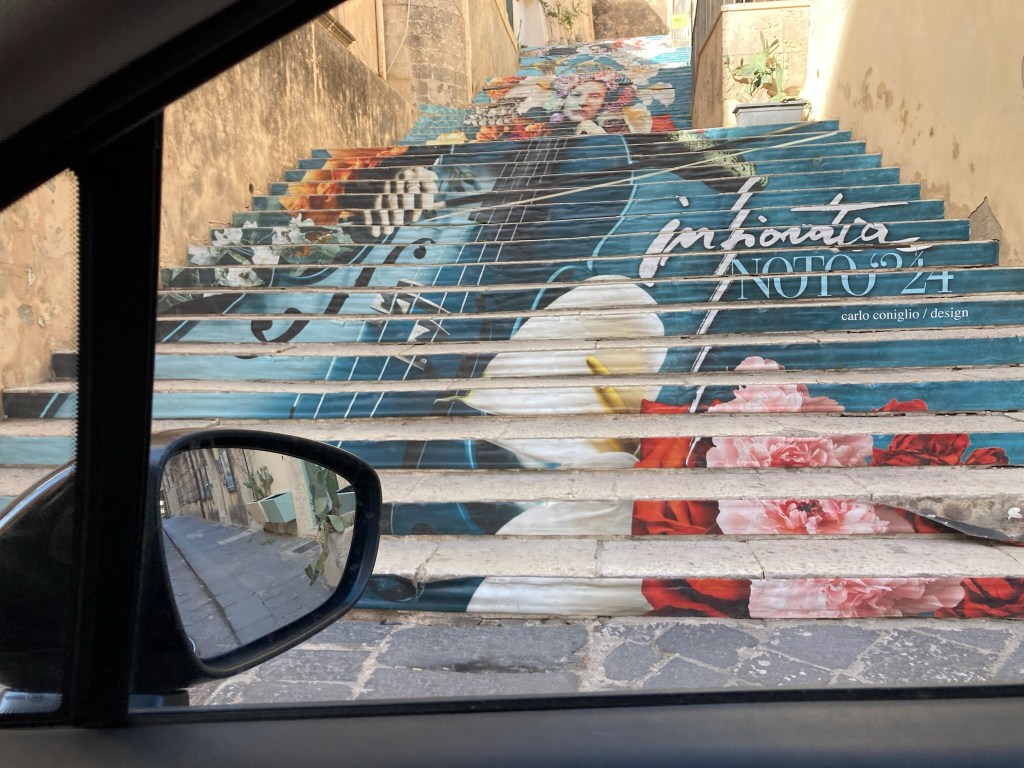
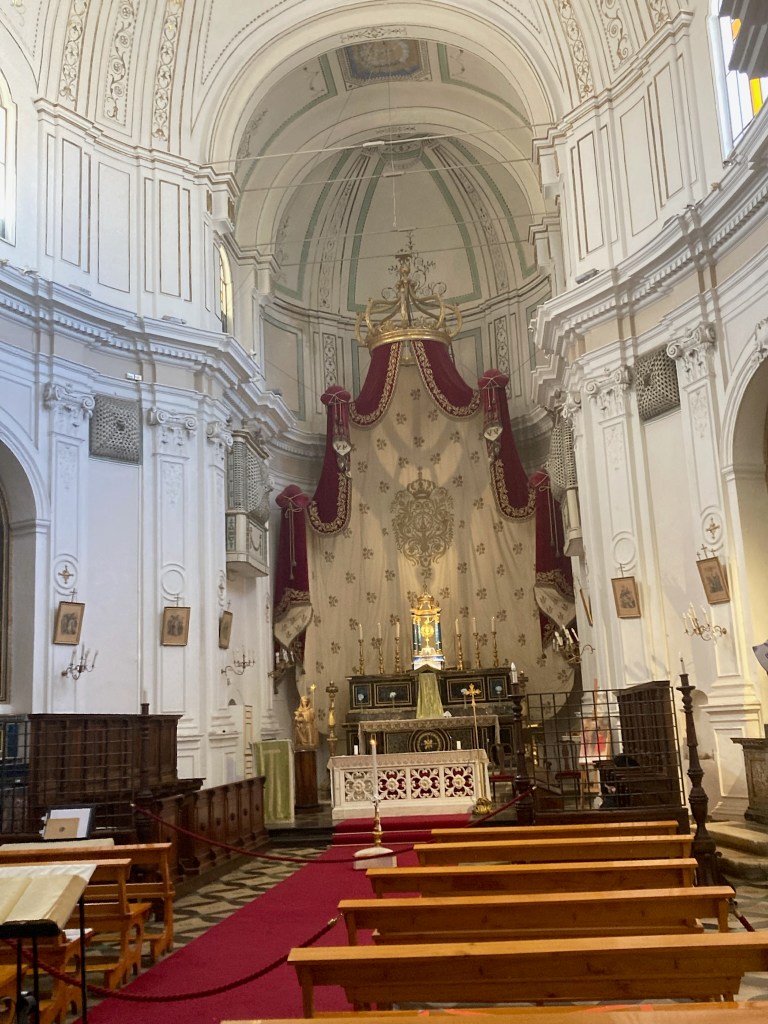
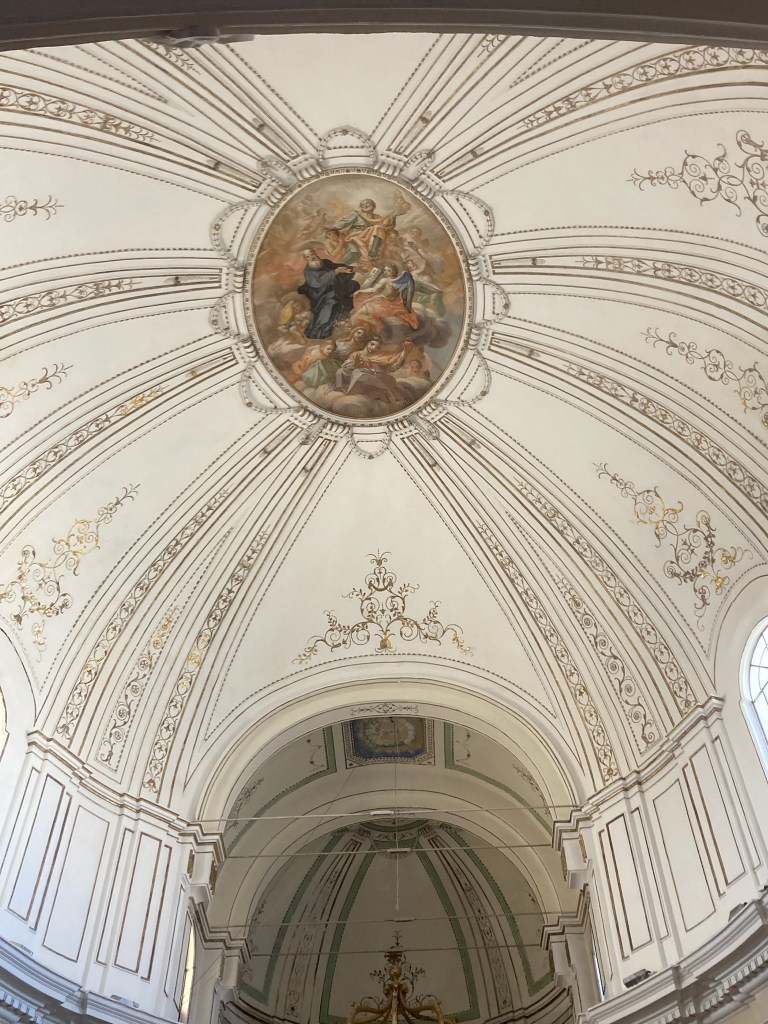
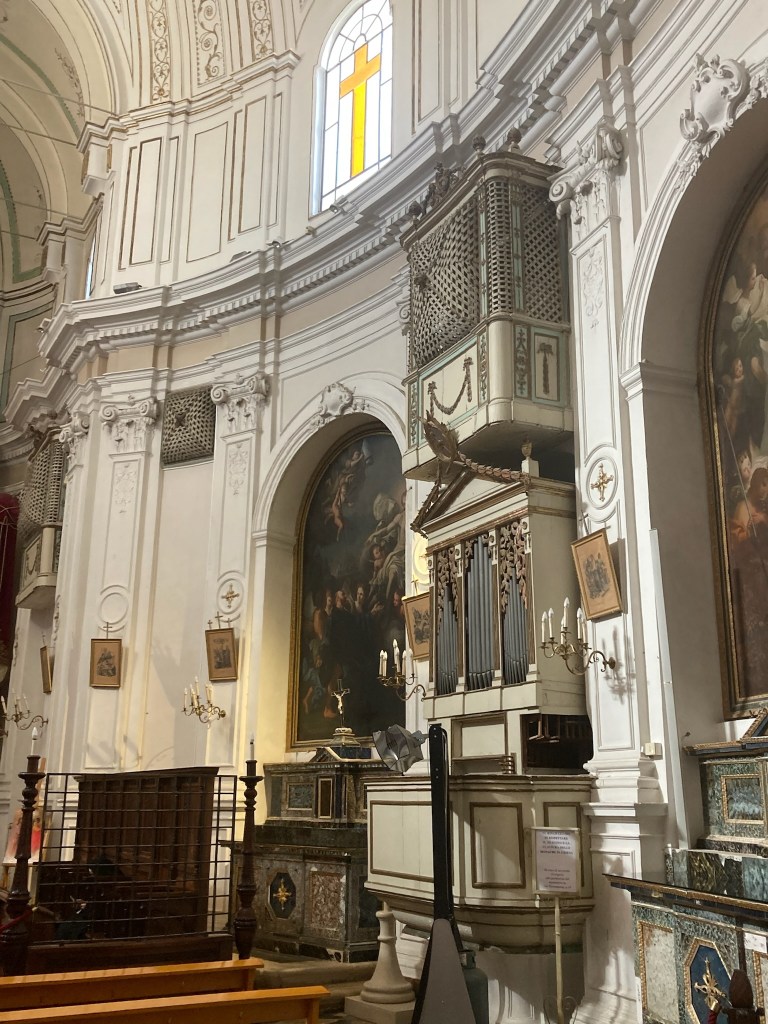
Earthquakes have wrought damage to Italy over the millennia, volcanic activity eg Etna and the movement of the African and European tectonic plates all create havoc. Here in Noto, as we find in many other places, the Baroque architecture often on display demonstrates the rebuilding periods of damaged buildings in the 17th & 18th centuries. What did take us by surprise in the Church of SS.Salvatore was the more recent redecoration still underway on the ceiling and that public access to witness this was facilitated. Standing up just under the ceiling of the Church was slightly mind blowing, imagining the artists at work, brilliant – at a charge of just 2.5 euros per person for the privilege – money well spent.
Marzamemi & Reitani
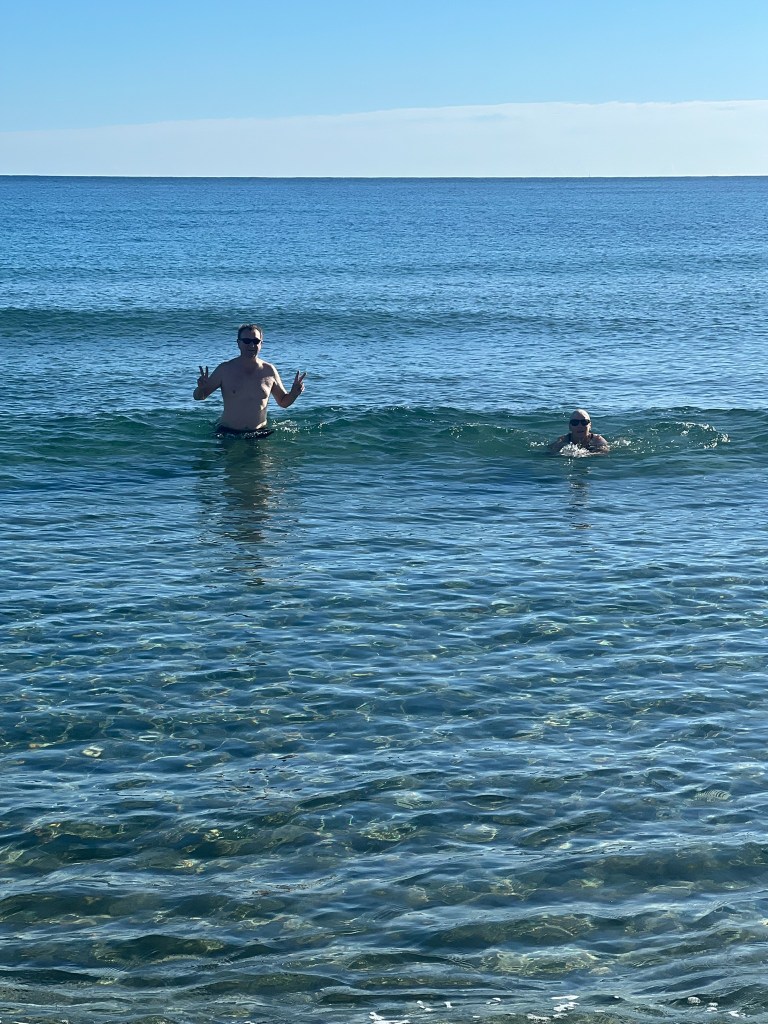
Being based in Reitani in a modern, airconditioned villa was great, and with a “free beach” 100 metres down a side street across from the villa, pre- brekkie sea swims were a must. The Ionian Sea was delightful in October, hardly a soul but us, except at the weekend when it got a little bit busier, but the sea was warm and we even hired a sailing catamaran for an hours quite exhilarating sailing. There are “free beaches” and other beaches where you have to “pay for” sunbeds, umbrellas etc but can still access bars and restaurants, toilets etc. Whilst the ‘paid for, beaches were kept clean, unfortunately, the “free beaches” were not! Maybe it was the end of the summer but whilst our free beach was fine to swim from it was not ideal to sit on – it had cigarette butts, bits of plastic and rubbish.

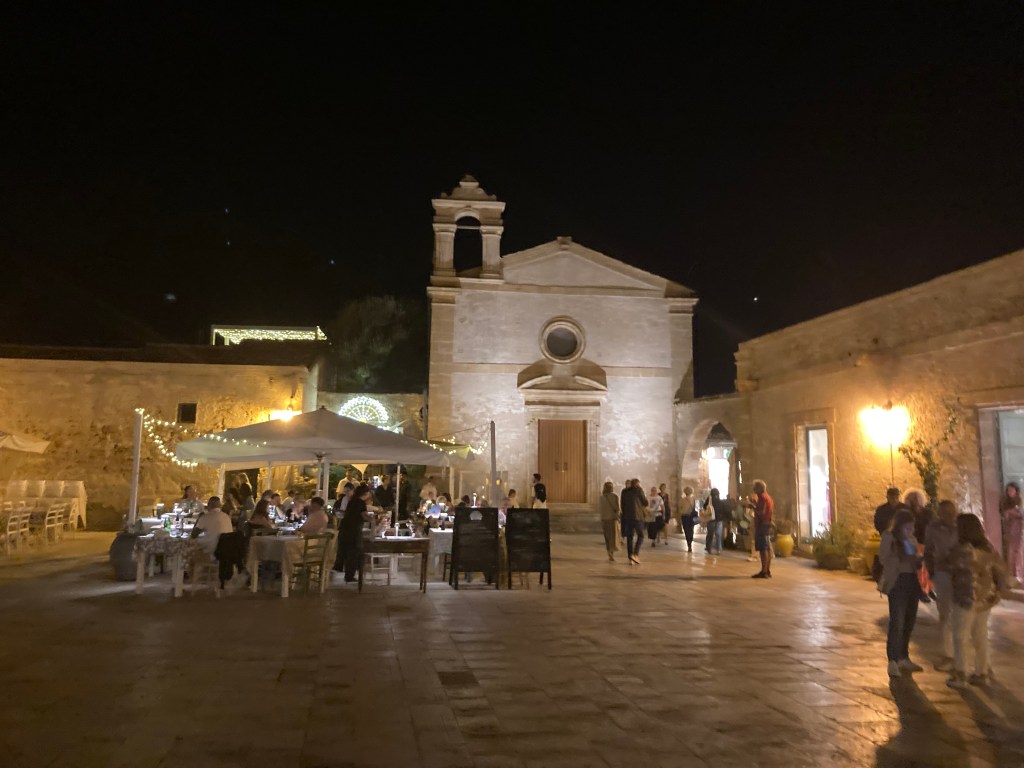
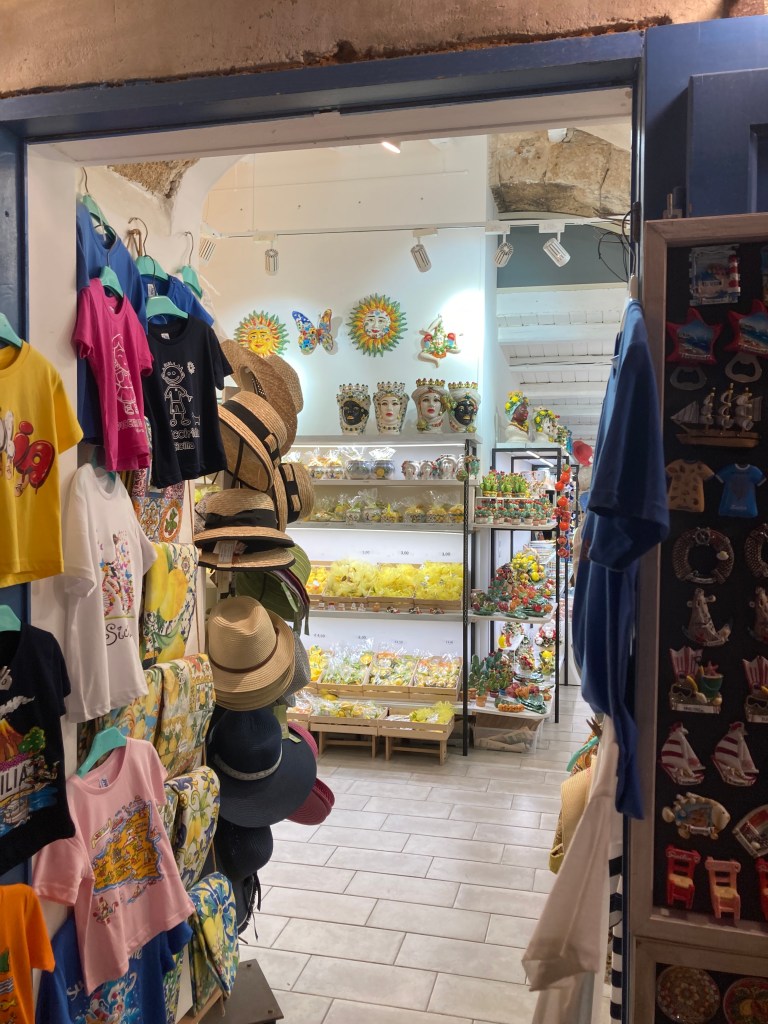
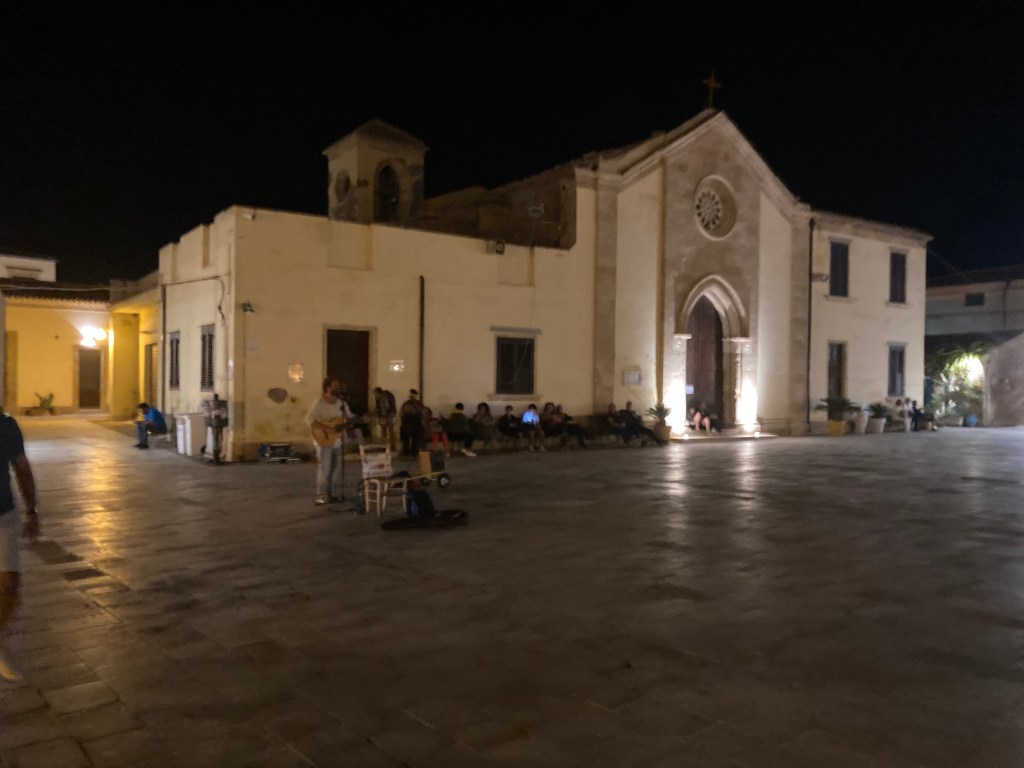
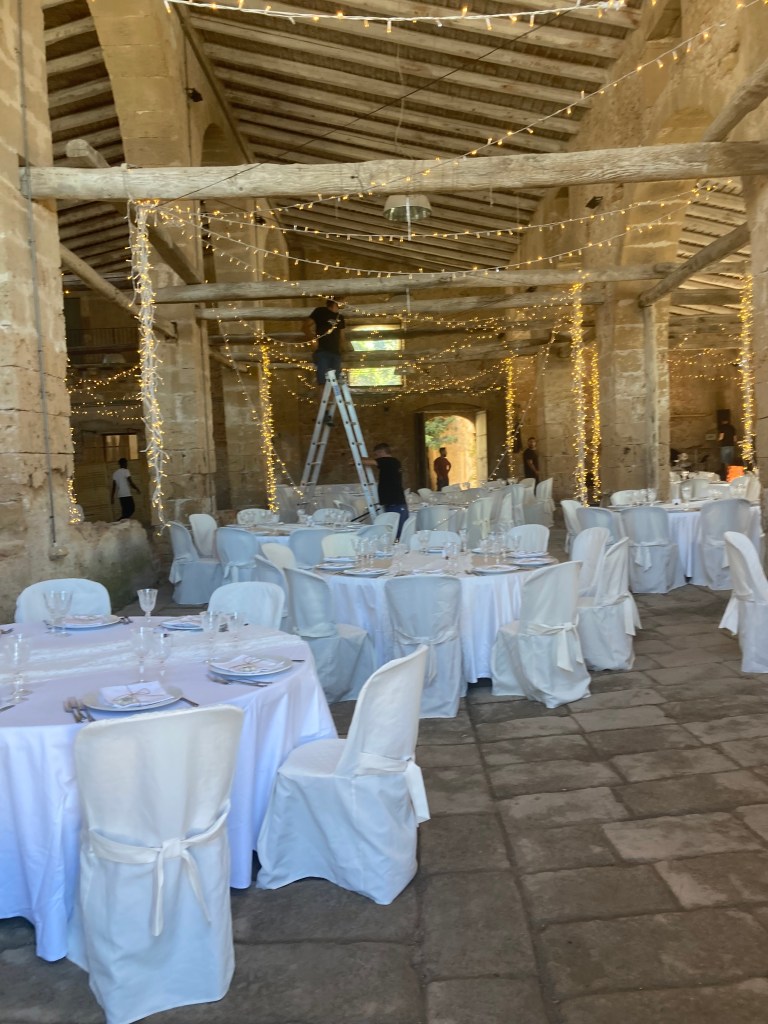
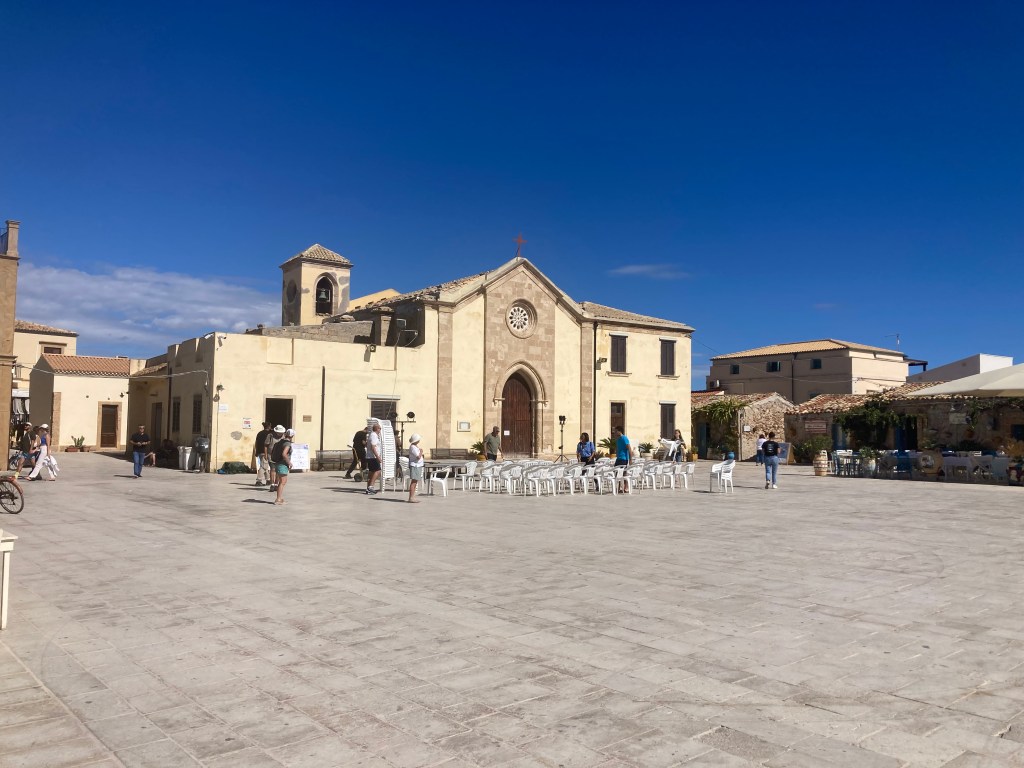
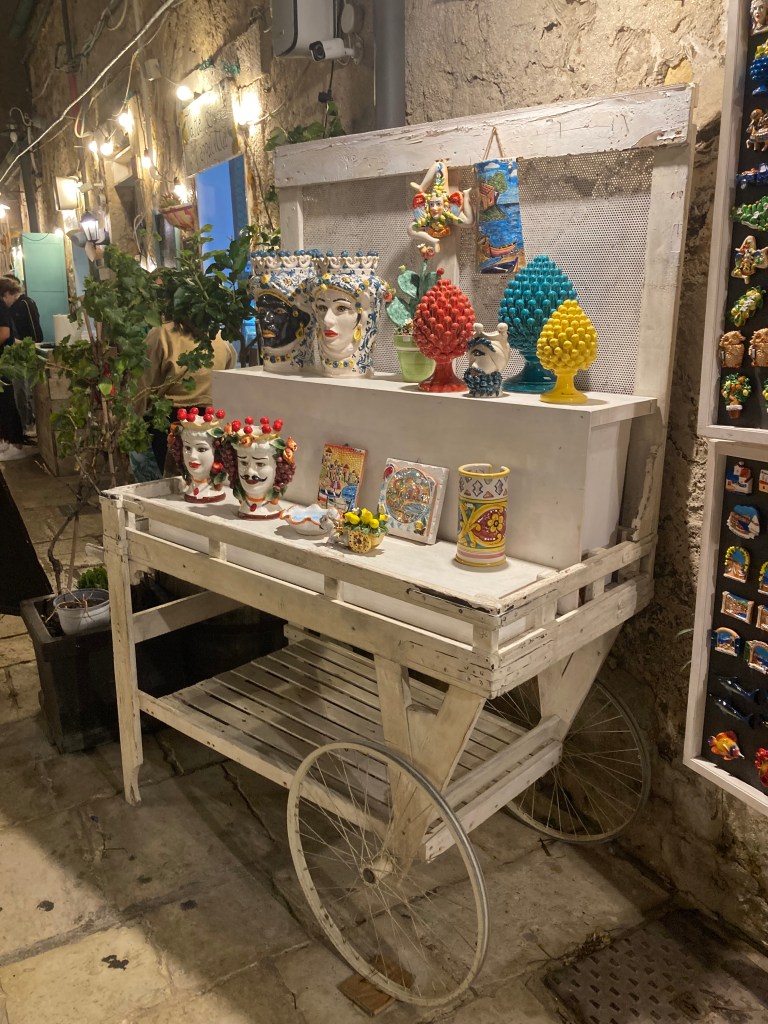
Marzamemi was our nearest village, a small coastal settlement with plenty of good local restaurants. Definitely “repurposed “ as a tourist destination, the town square has been redeveloped for restaurants, shops, events and more. Following the decline of the tuna fishing industry – the old tuna factory is now a wedding venue it appears!
Syracusa & Ortigia – originally Greek and birthplace of “Eureka – Archimedes”.
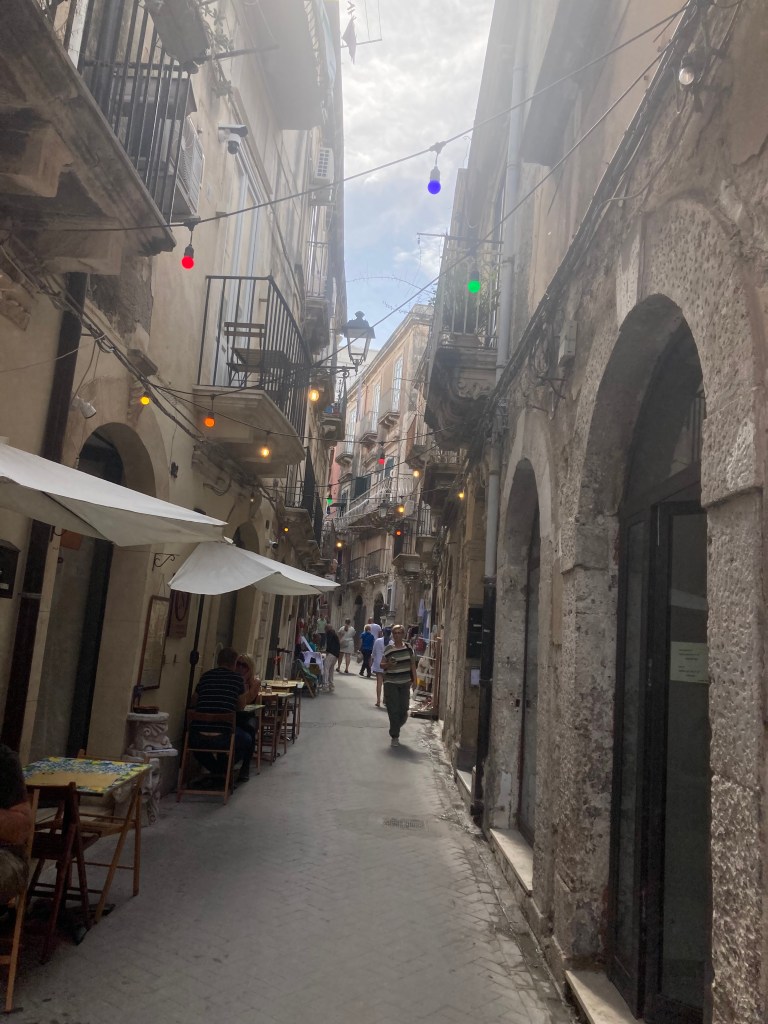
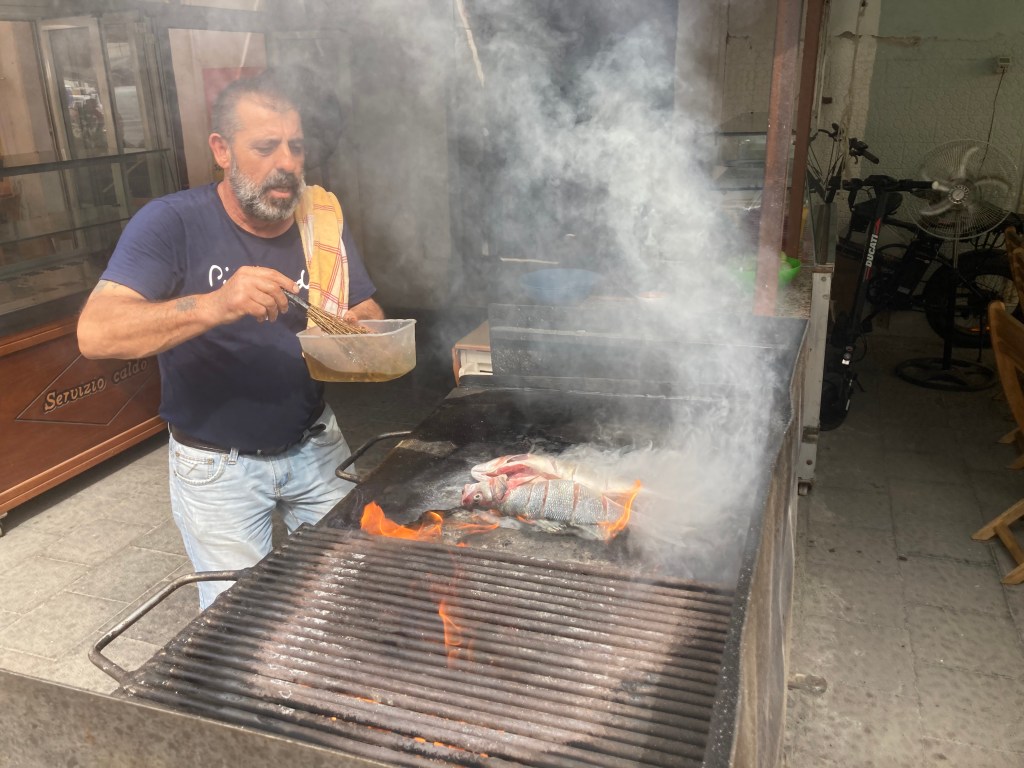
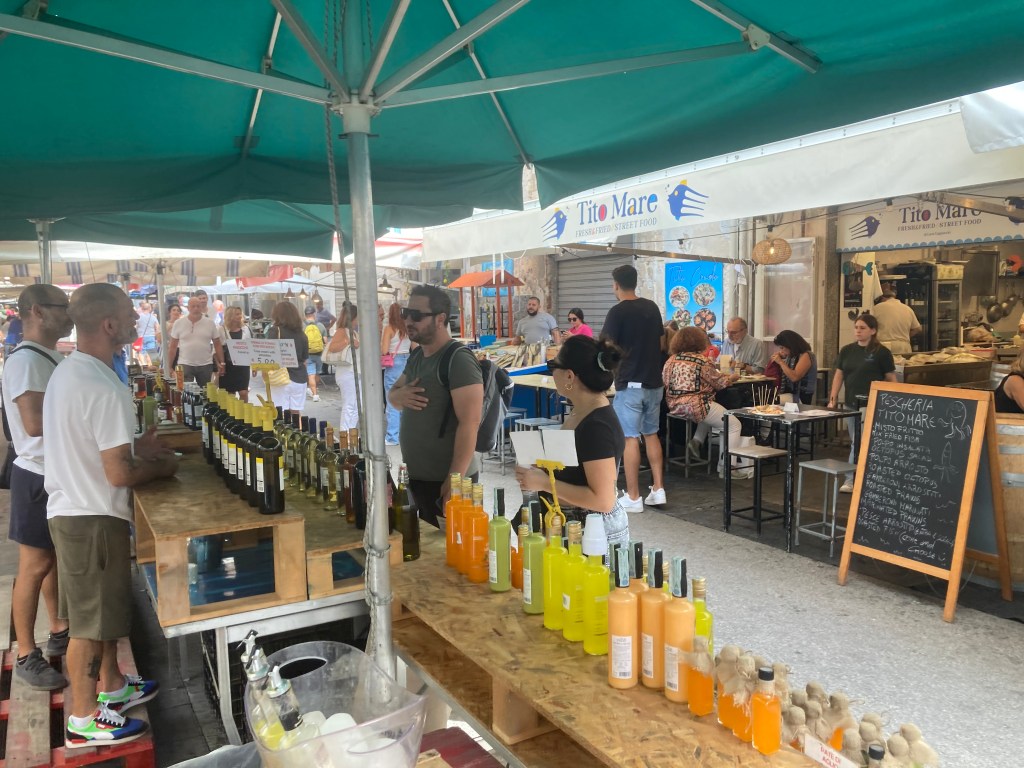
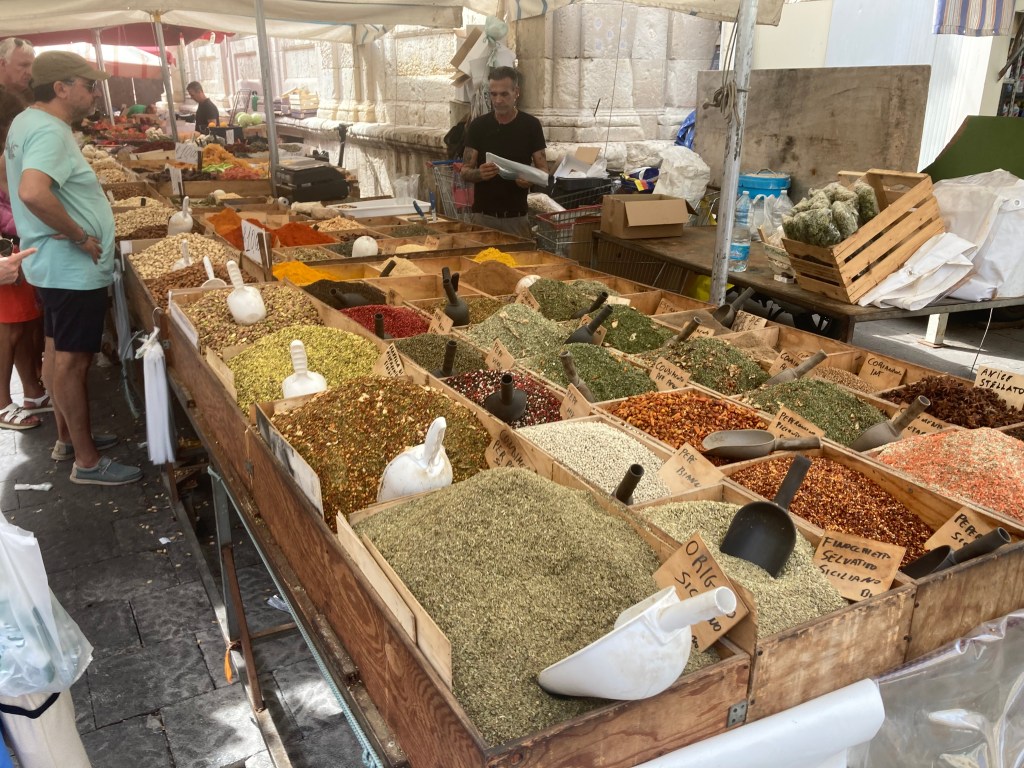
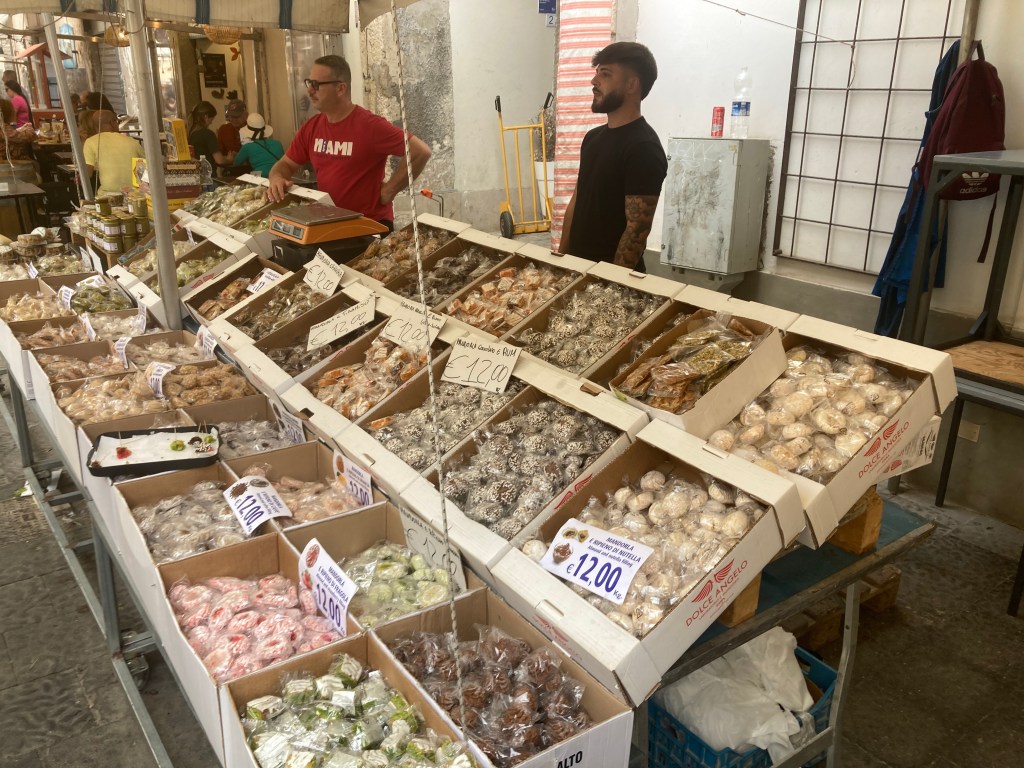
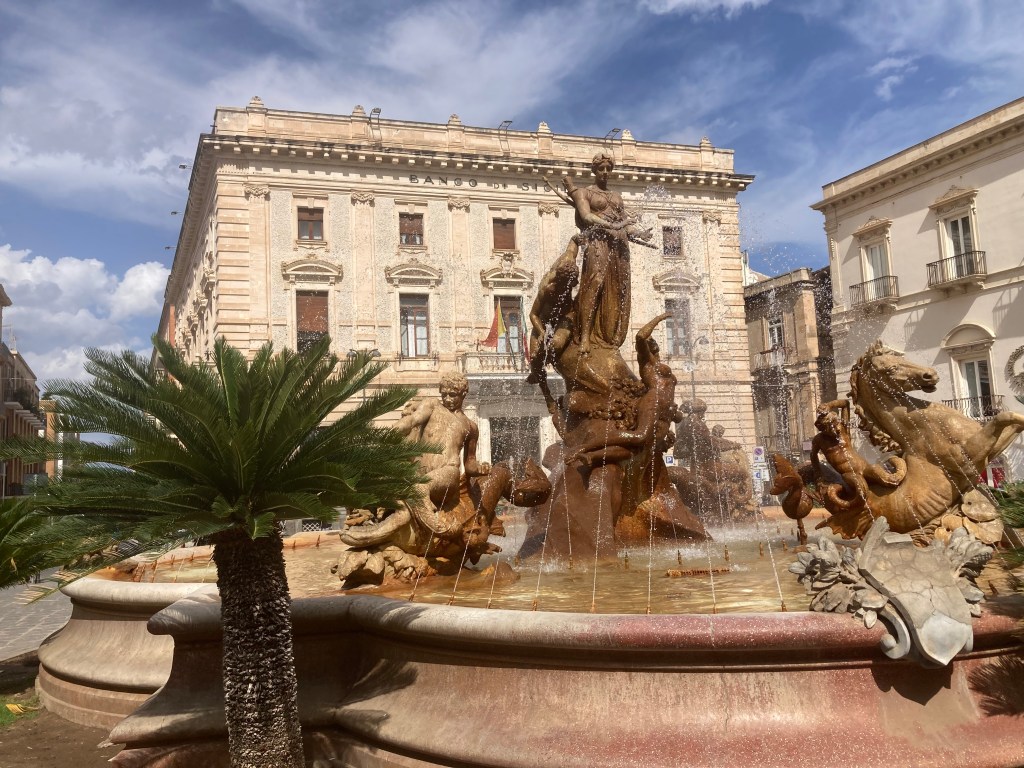
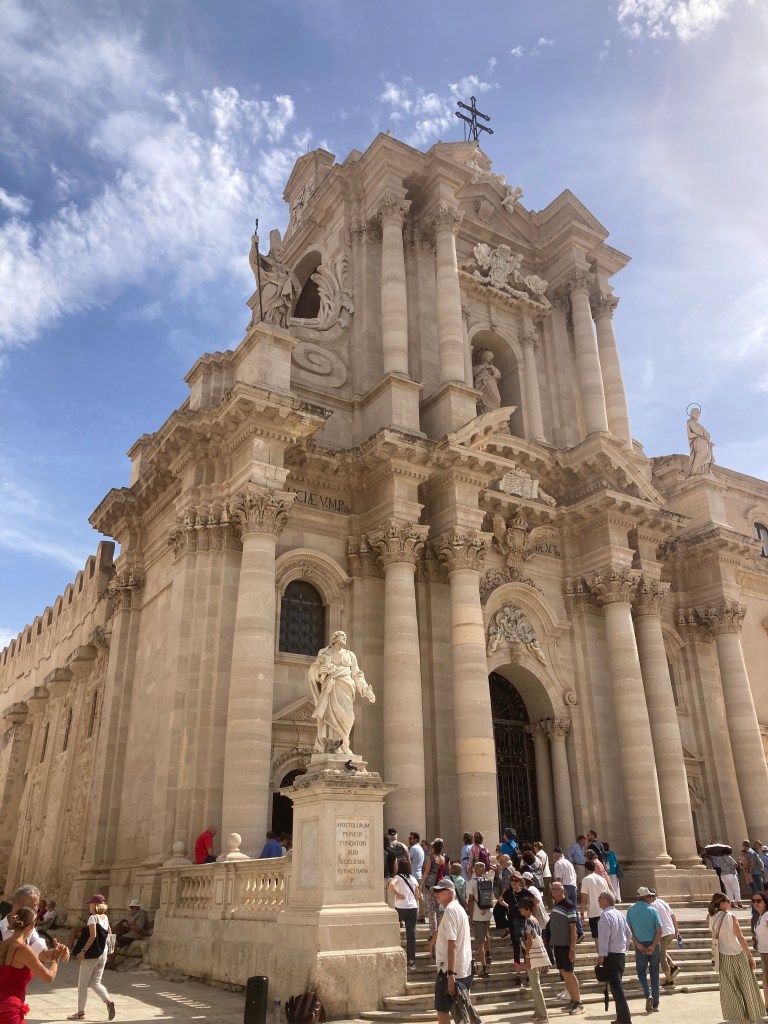
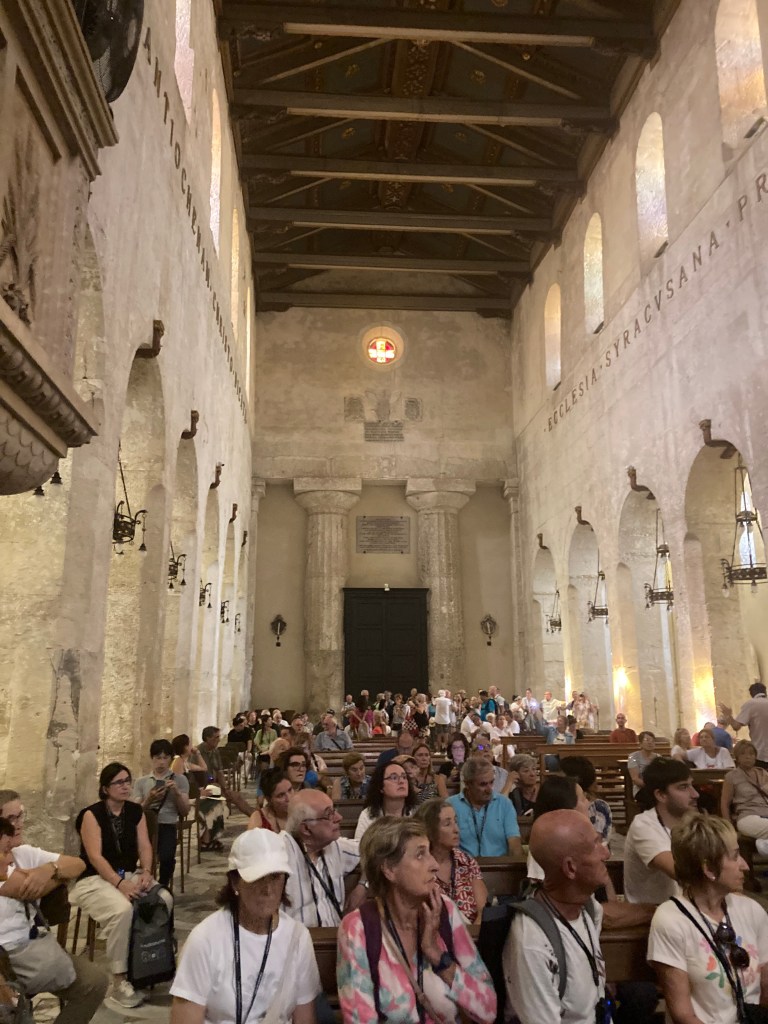
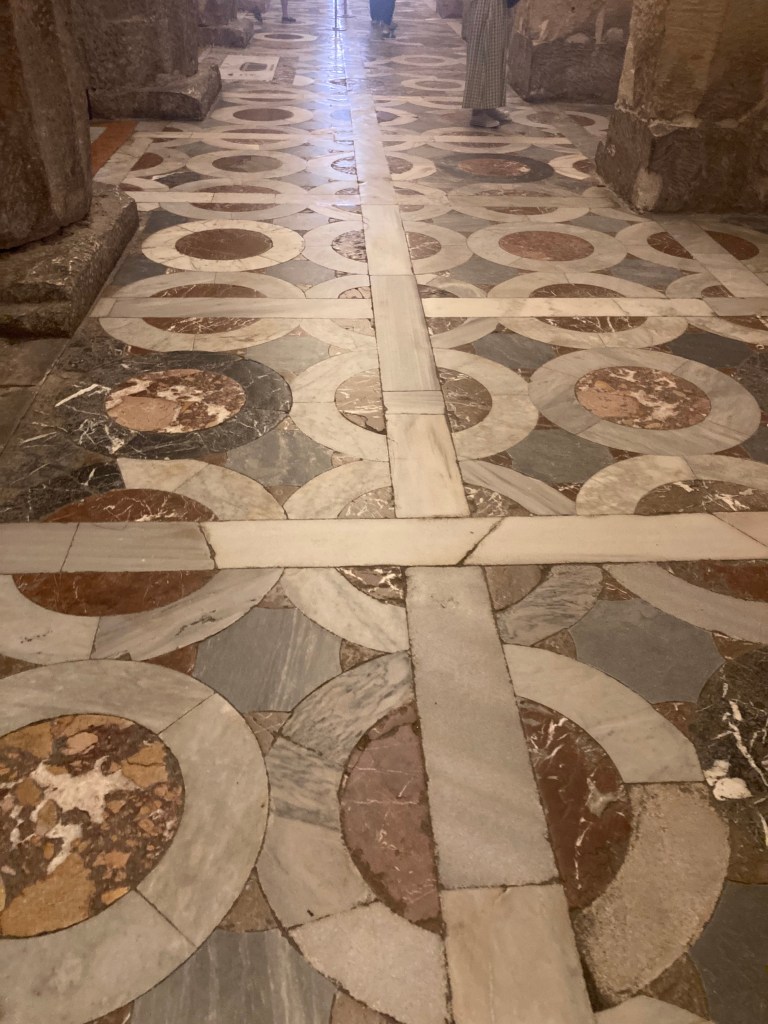
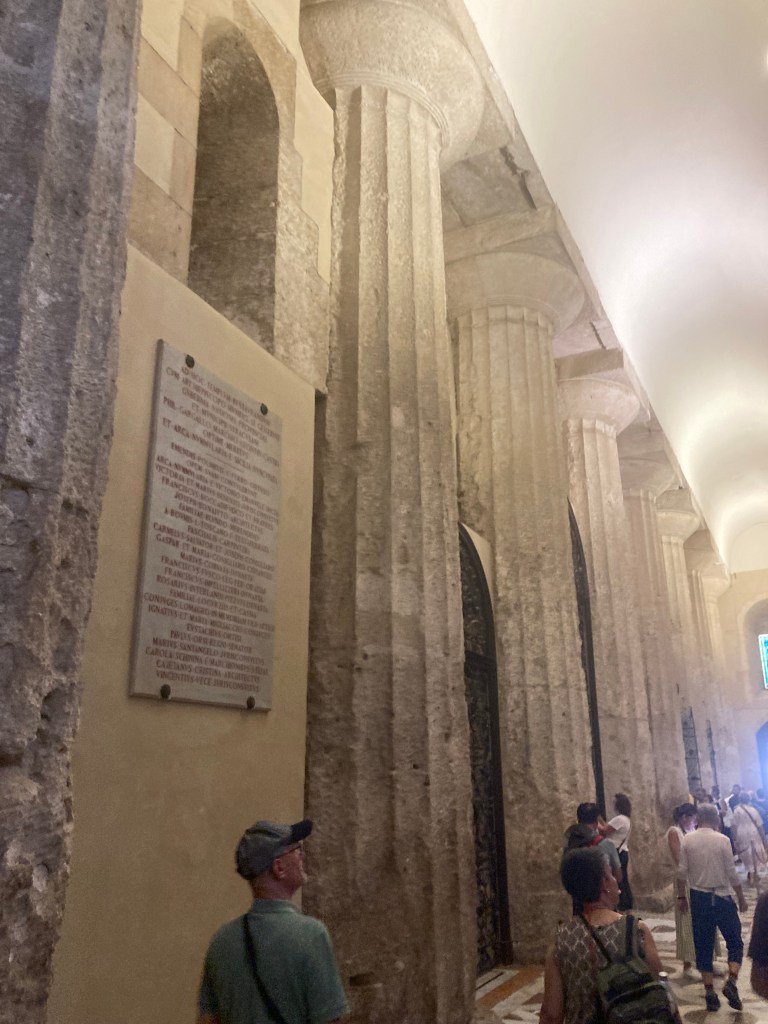
A 40 minute drive north-east of us up the coast was the town of Syracusa and the linked Island of Ortigia (which was the historical centre of Syracusa) Now a huge “tourist destination”. Sadly we were not the only tourists – lots & lots in fact – but it was a fine half day wander, lovely market, nice bit of lunch, narrow streets, water fountains and a lot of history. A bonus of these old narrow streets, when it’s 32c in the sunshine, is the coolness of shade and the cool draughts that the winding alleyways generate.
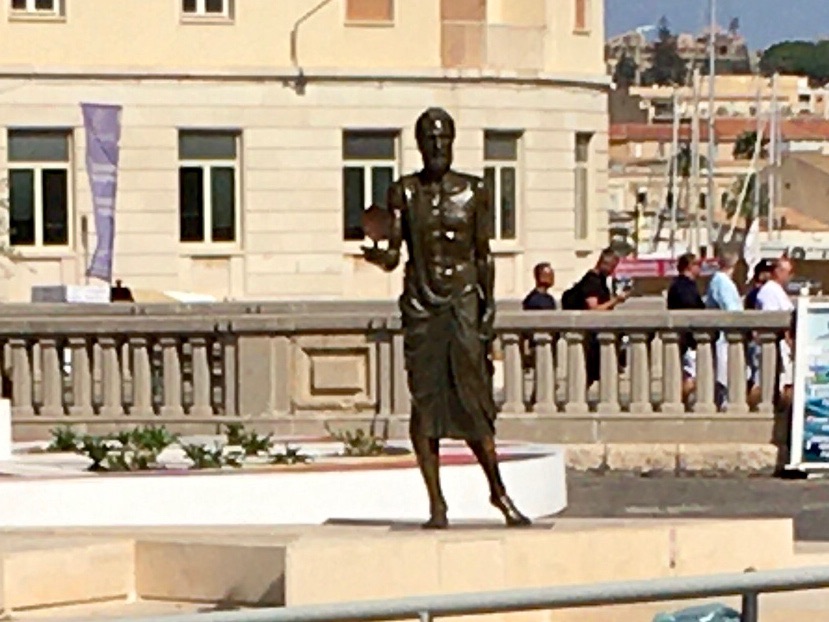
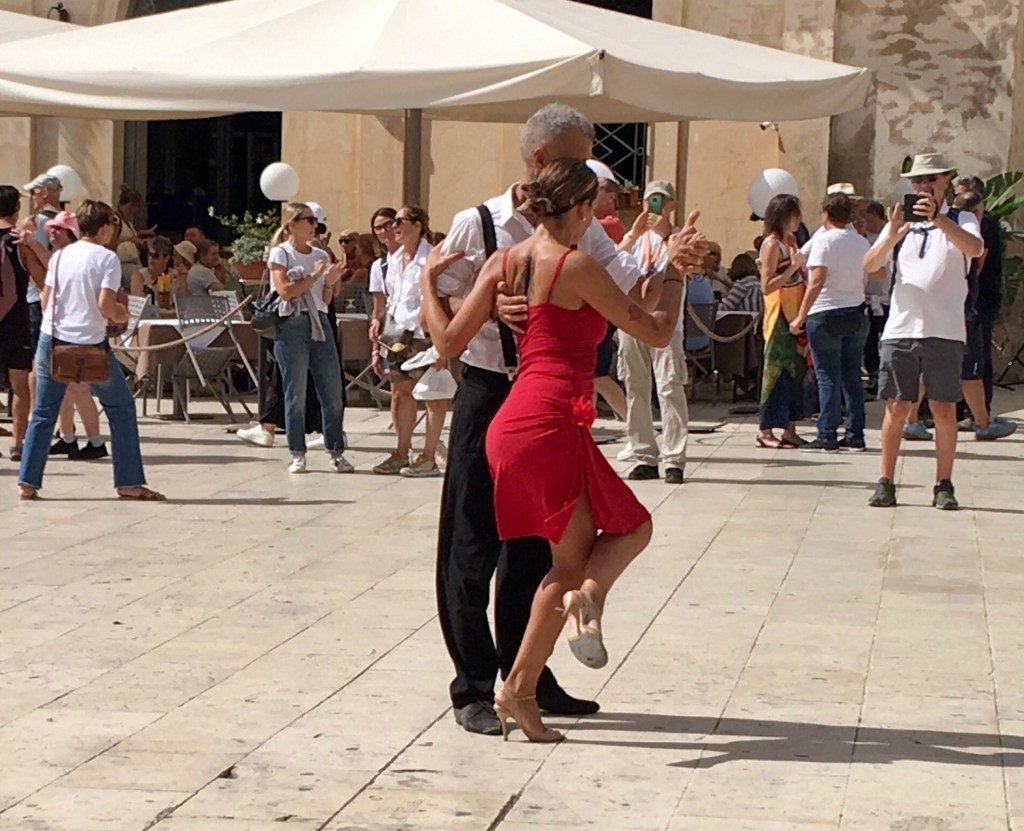
Yes Ortigia – the birthplace of Archimedes – whom we always thought was Greek, and he was, but back then Ortigia itself was Greek and a bigger settlement than Athens. Unfortunately all we could find was a statue & Museum about him, no local citizen running around in a bathrobe shouting Eureka – an opportunity missed, maybe!! There was though, a very competent couple dancing the Argentine Tango in the ‘Piazza Duomo’!
Modica & Ragusa
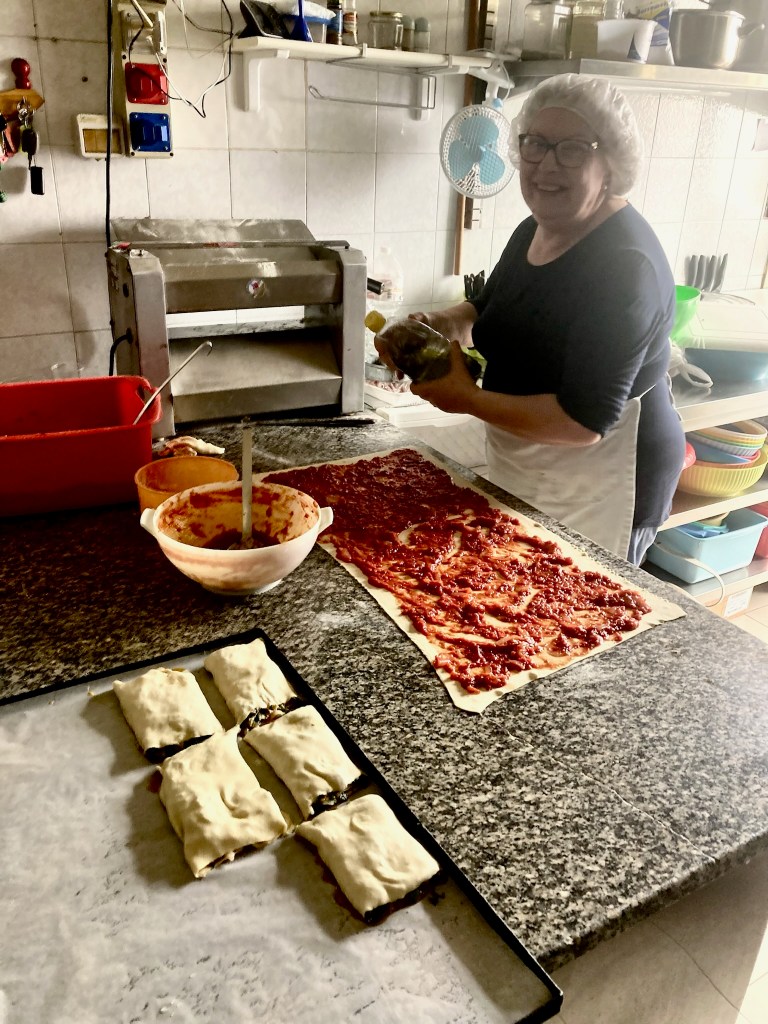
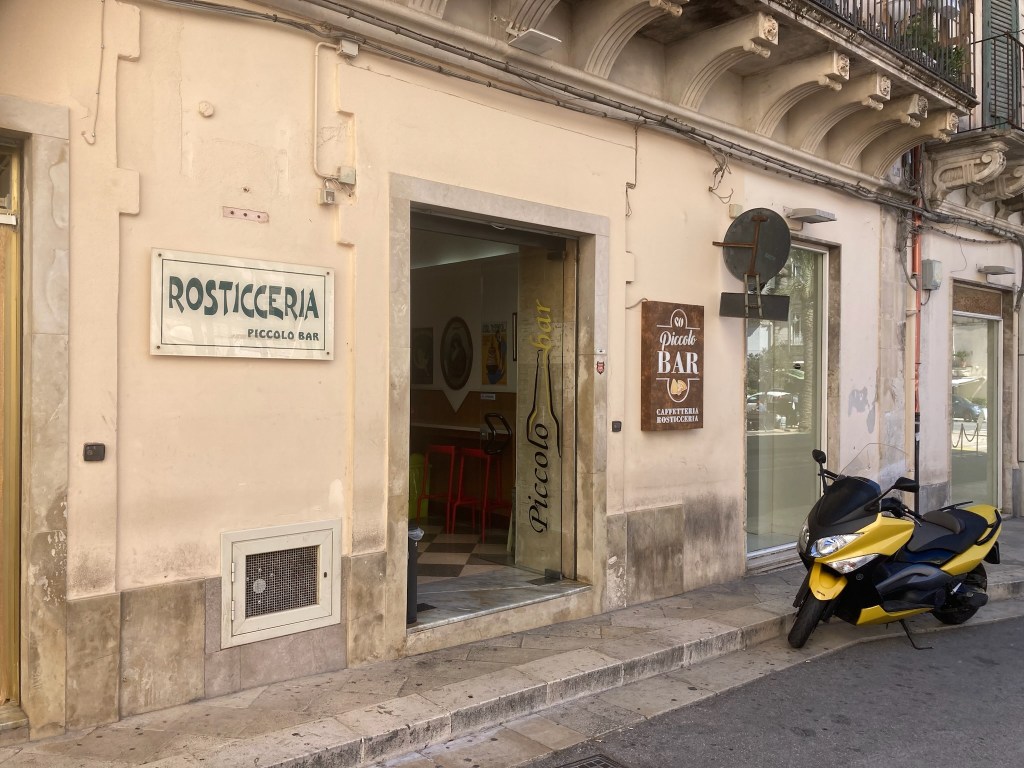
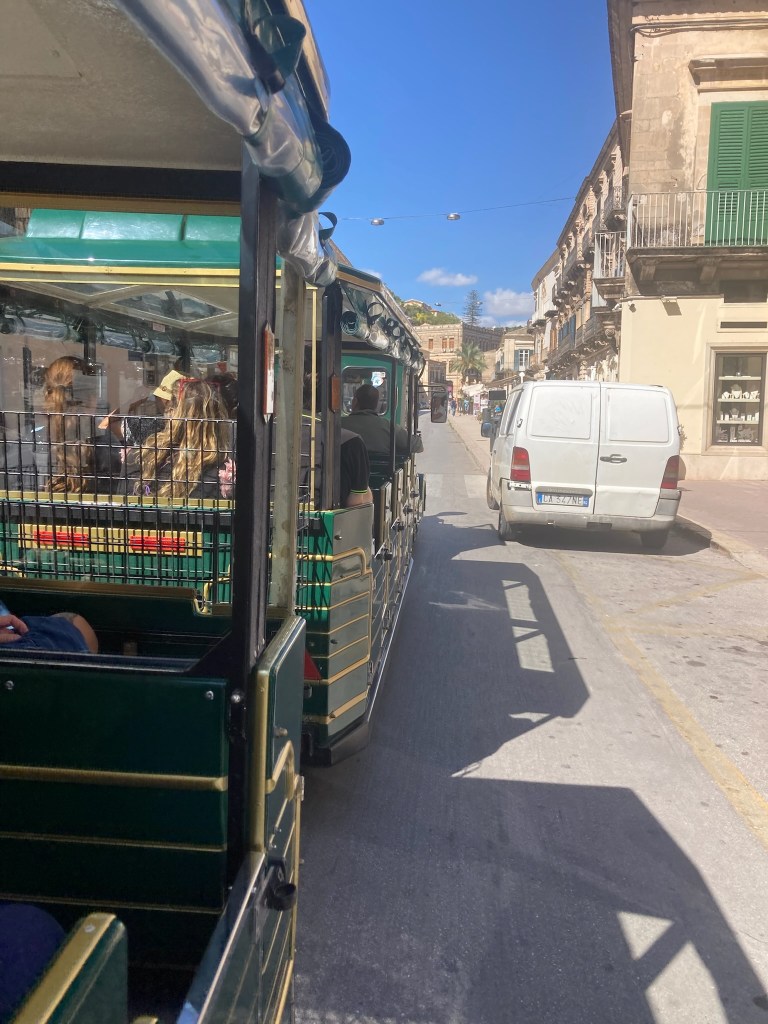
Up on the limestone escarpment and 50 mins drive north west of us, lies in a gorge in the escarpment the town of Modica – famous for chocolate we find, and Ragusa a neighbour up on the hillside above. We found Modica super hilly, so the “tourist train” was just the ticket – 5 euros each for an hours tour up the hills and down again – great value. When we arrived at Modica we had just missed a train tour, but both coffee/tea/ snack and toilet required. A neat little family run bar was most welcoming for all of our needs and we even met “Mama in the Kitchen” making a “Modica Fold” pastry/tomato/herb snack – which we then sampled – delicious, together with an Arancini – volcano shaped rice/beef/vegetable- excellent!! Modica clearly a very friendly town with great pride in its appearance as so many in Sicily seem to be.
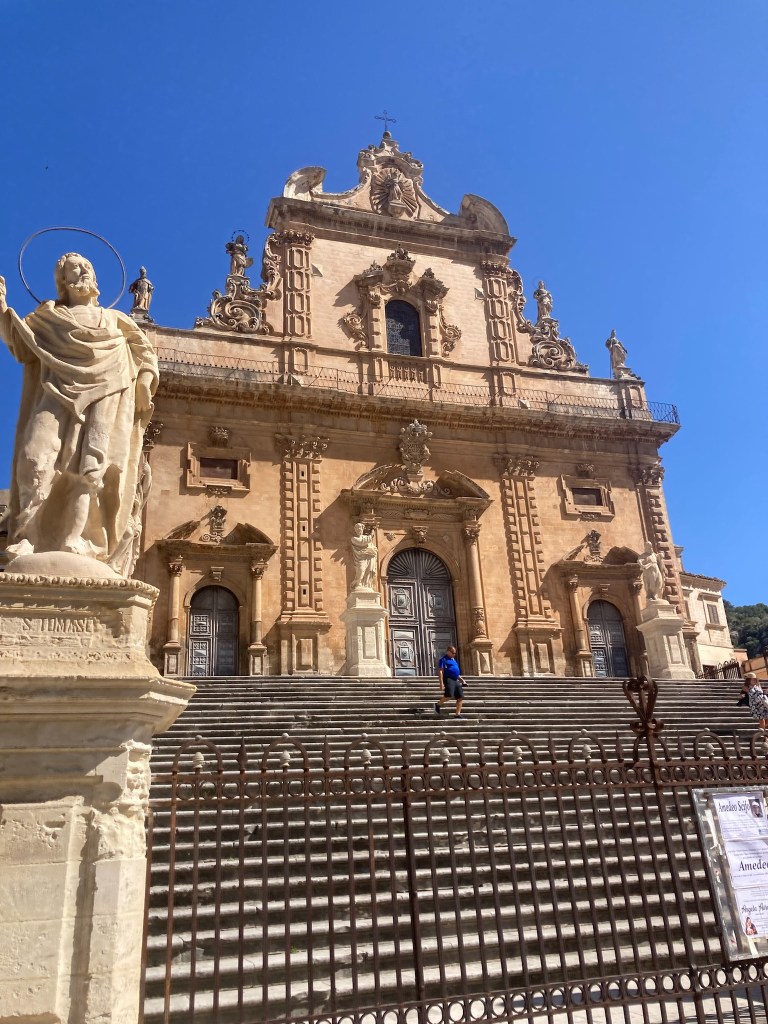
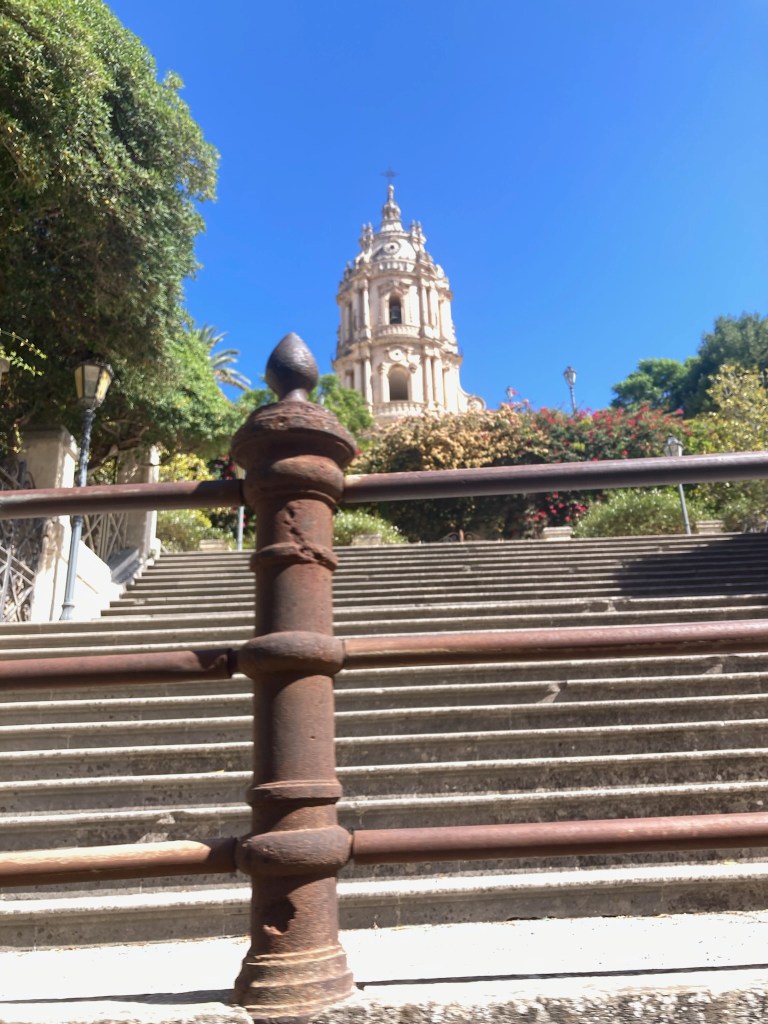
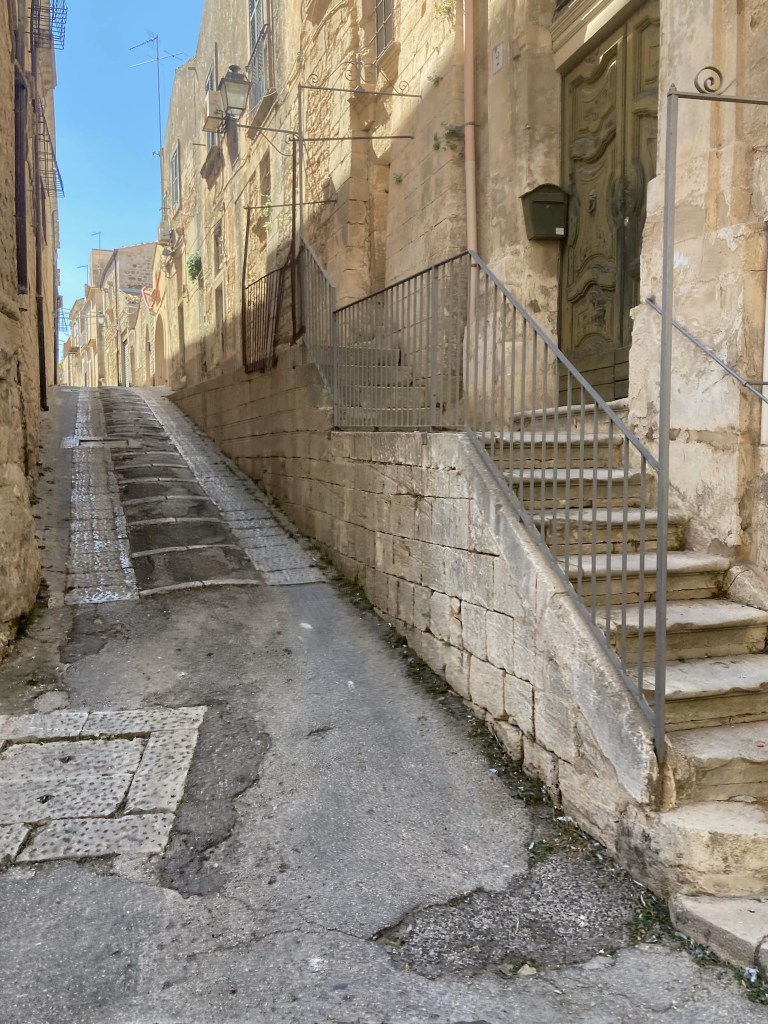
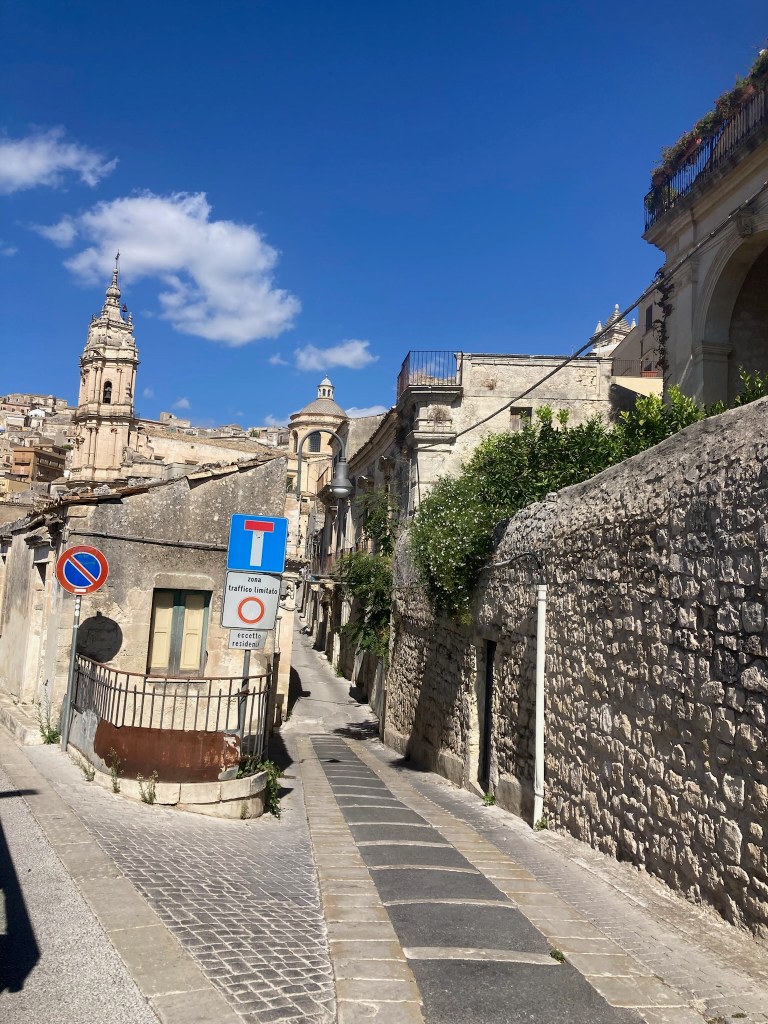
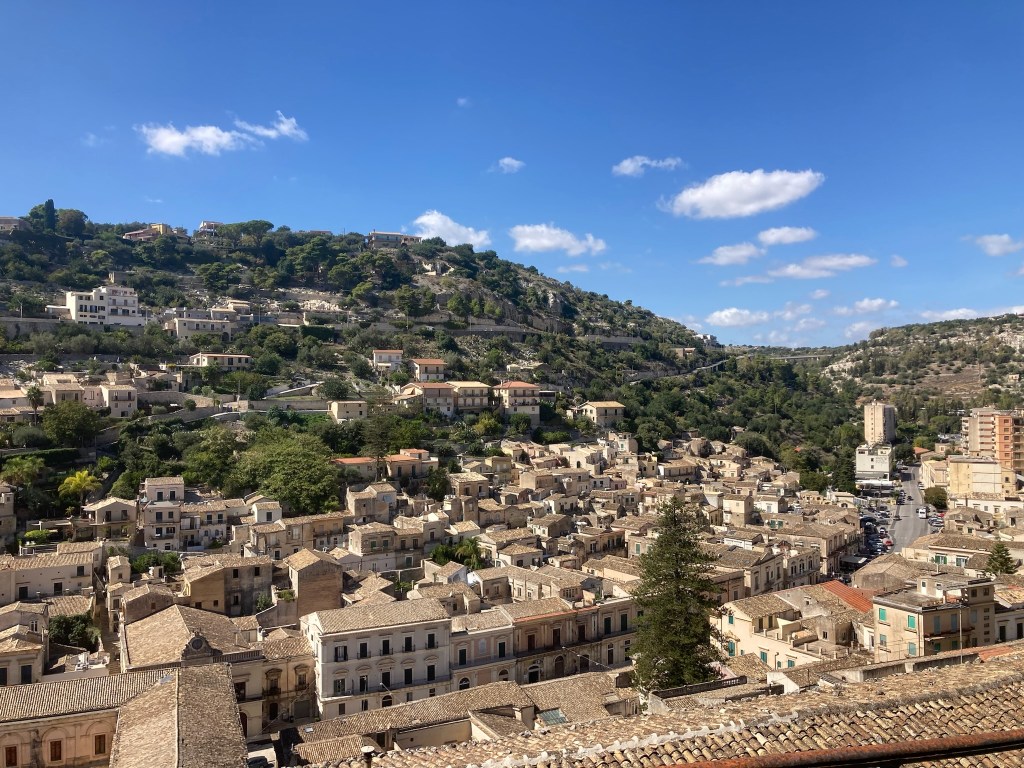
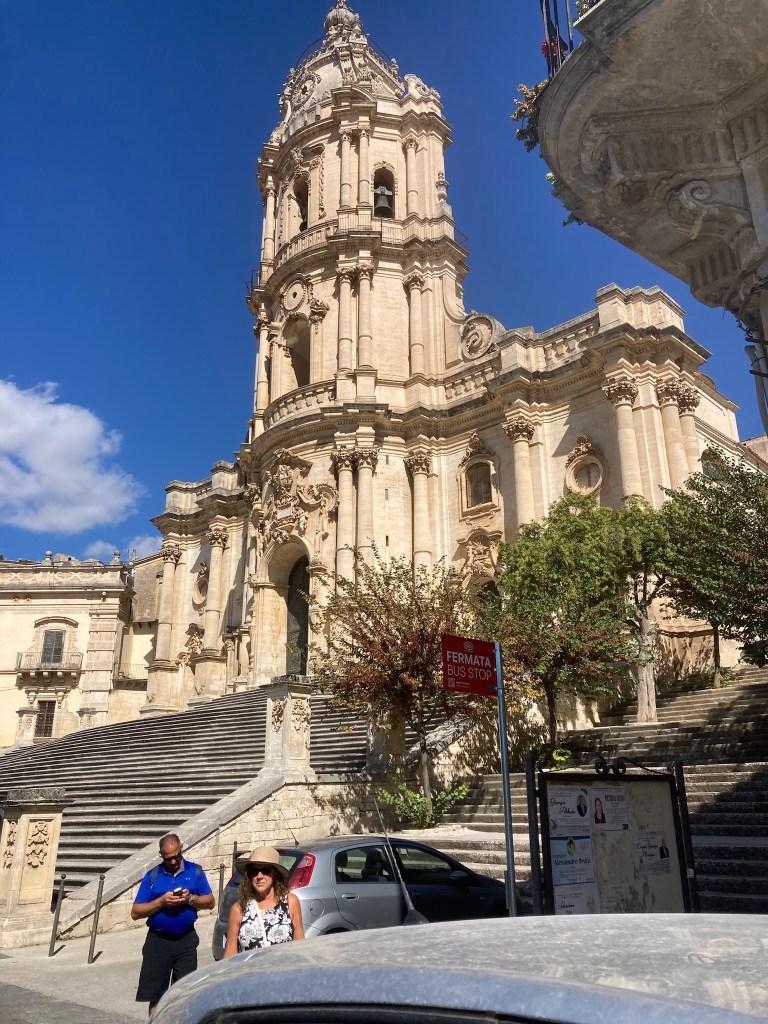
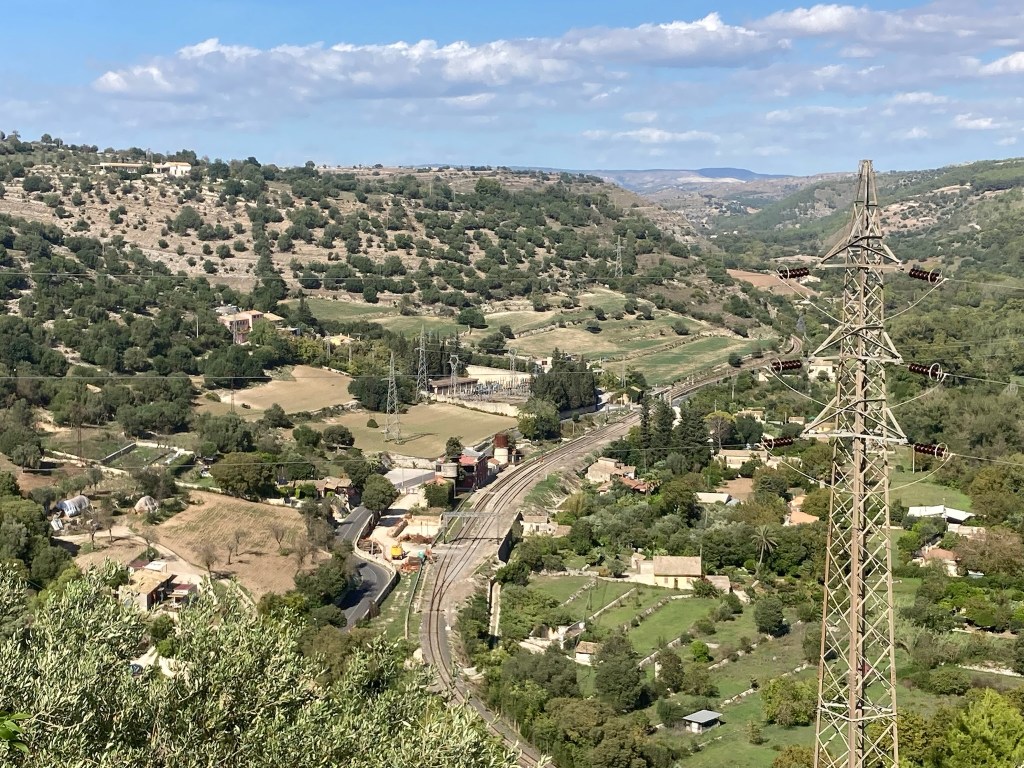
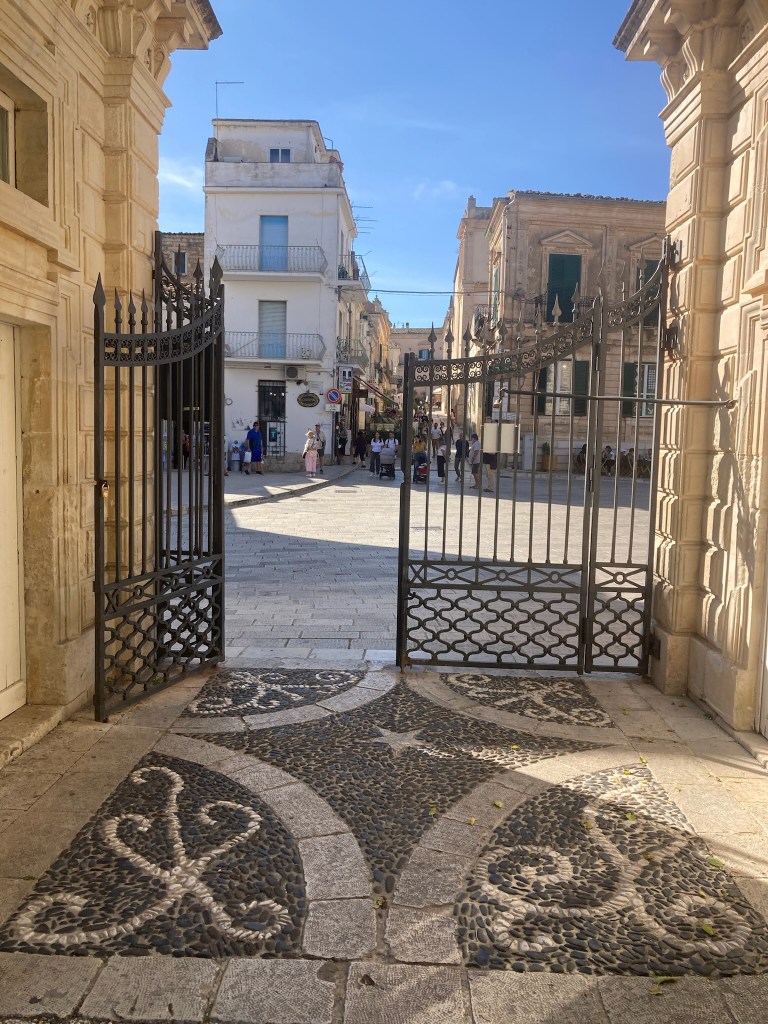
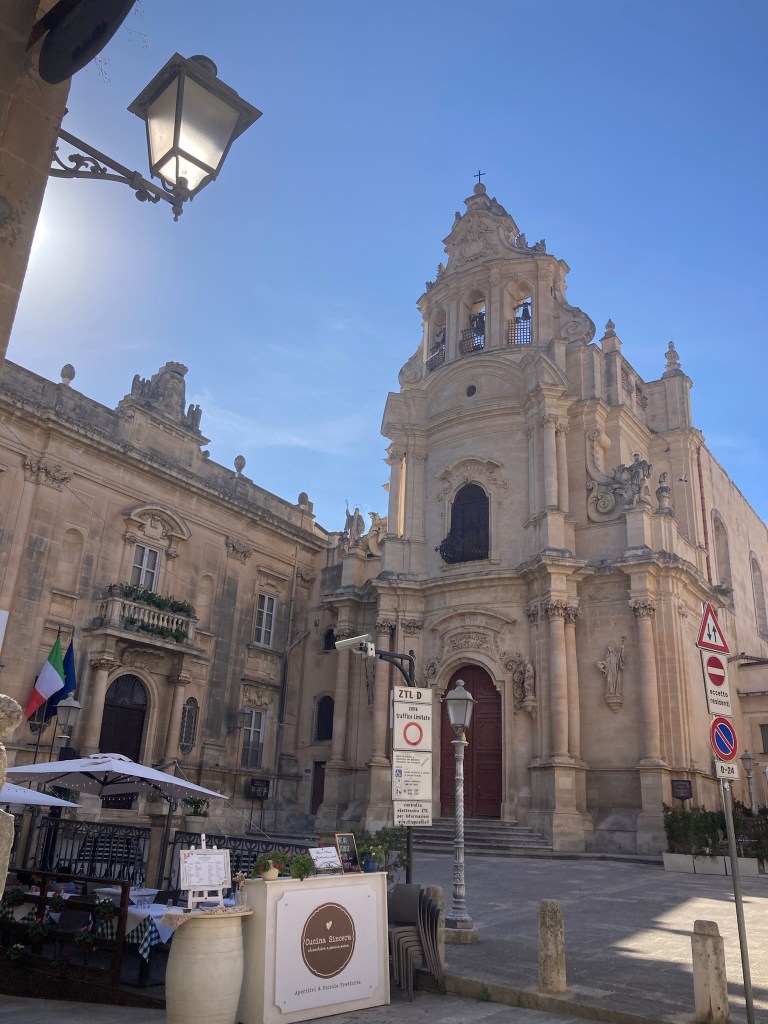
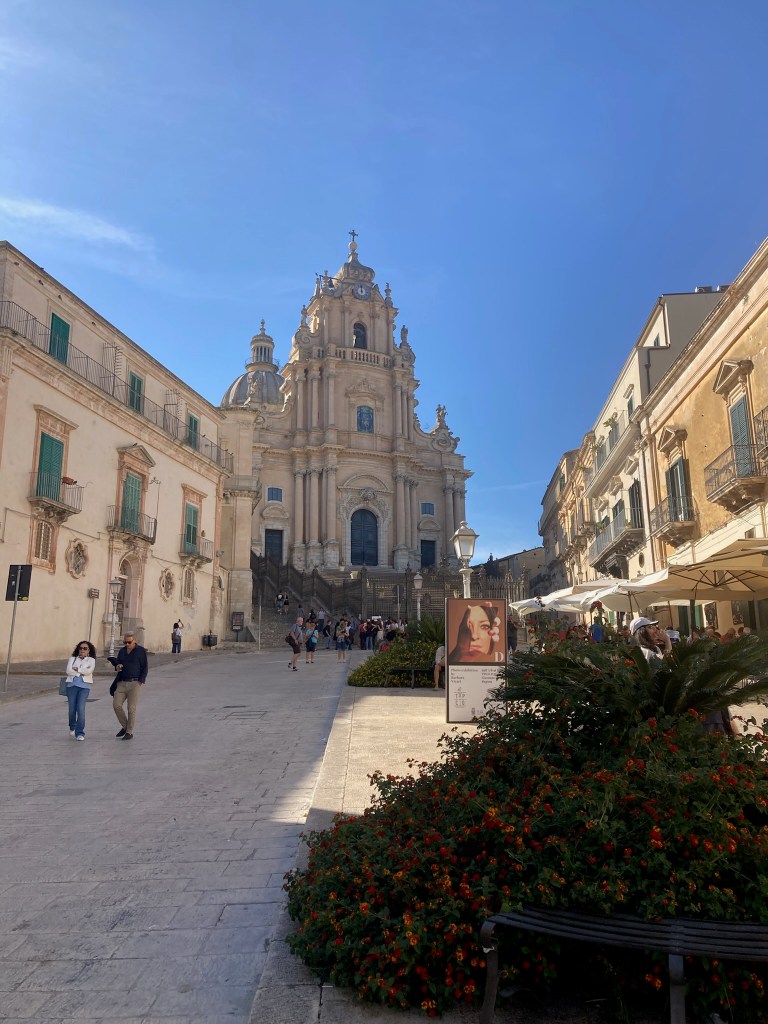
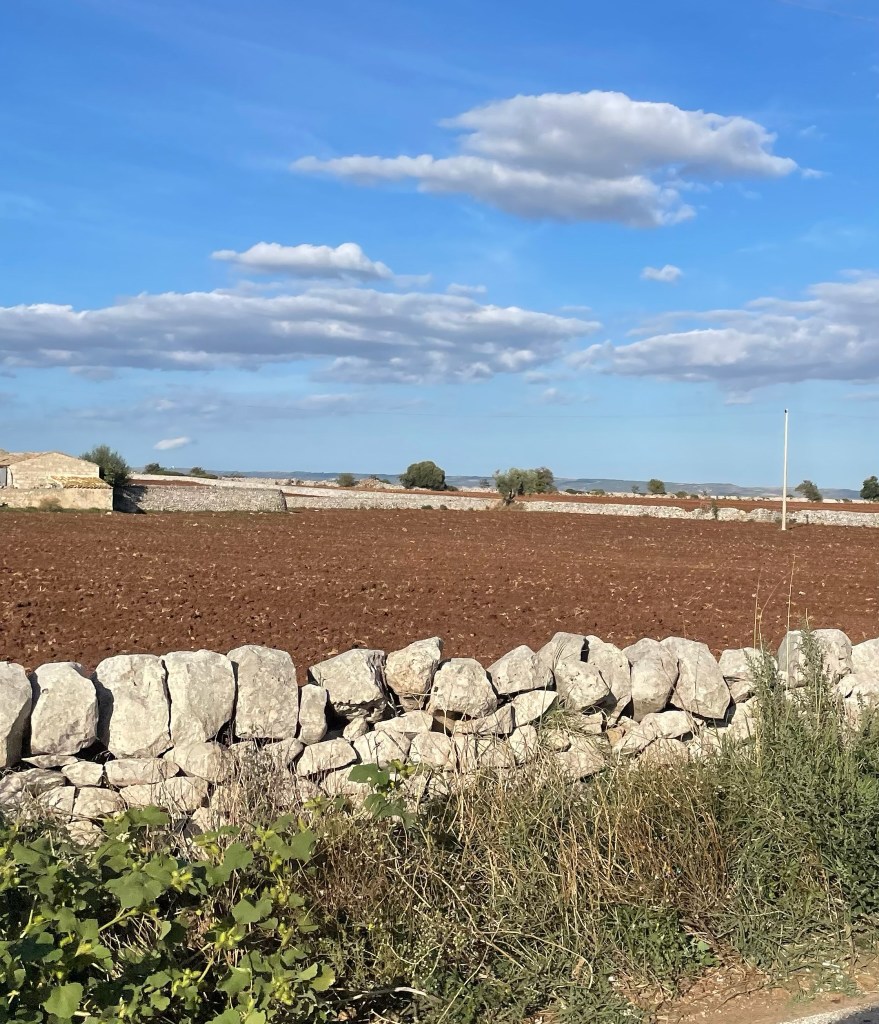
Ragusa sits up on the escarpment, more Baroque architecture, yet another town that is clean, lovely, with history everywhere. We spent a couple of hours there having a wander before returning to our villa. Heading back across the hills we found little areas of the rich ‘Terra Rossa’ soils which underscores Sicily’s place as a food store since Roman times.
Taormina
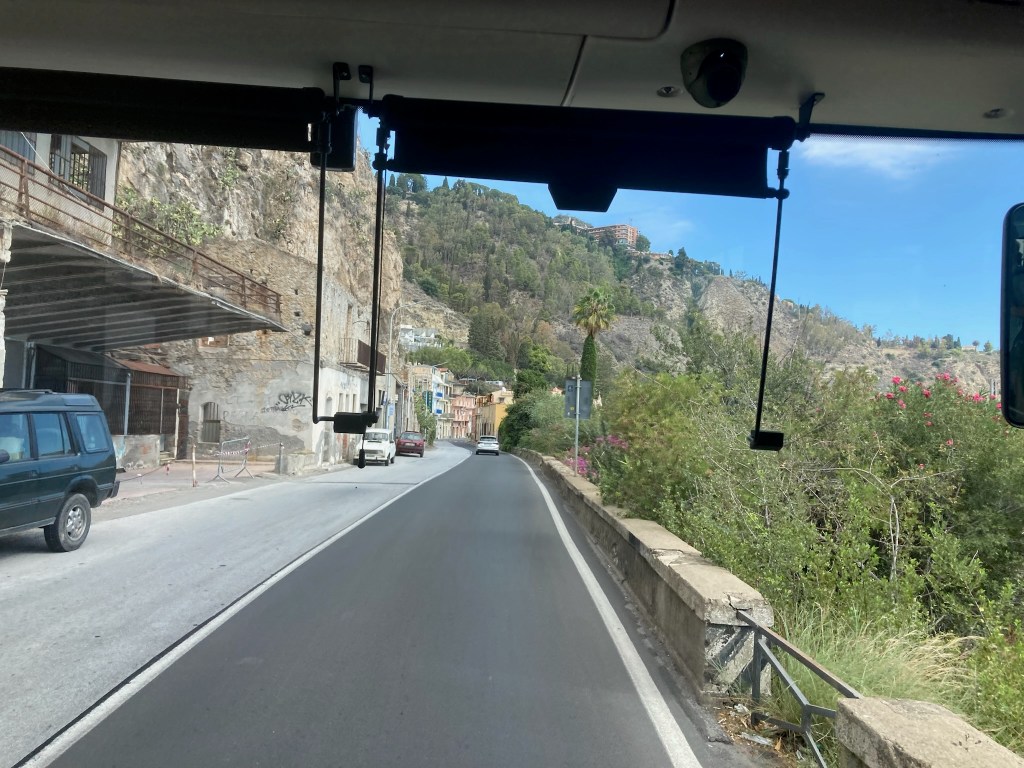
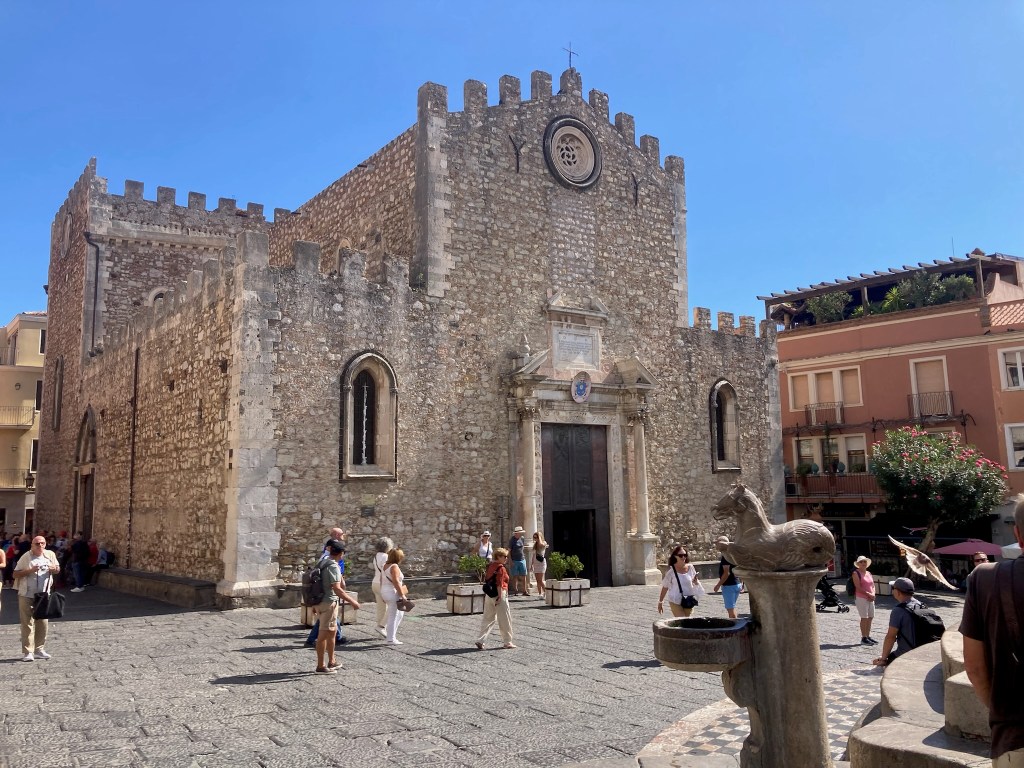
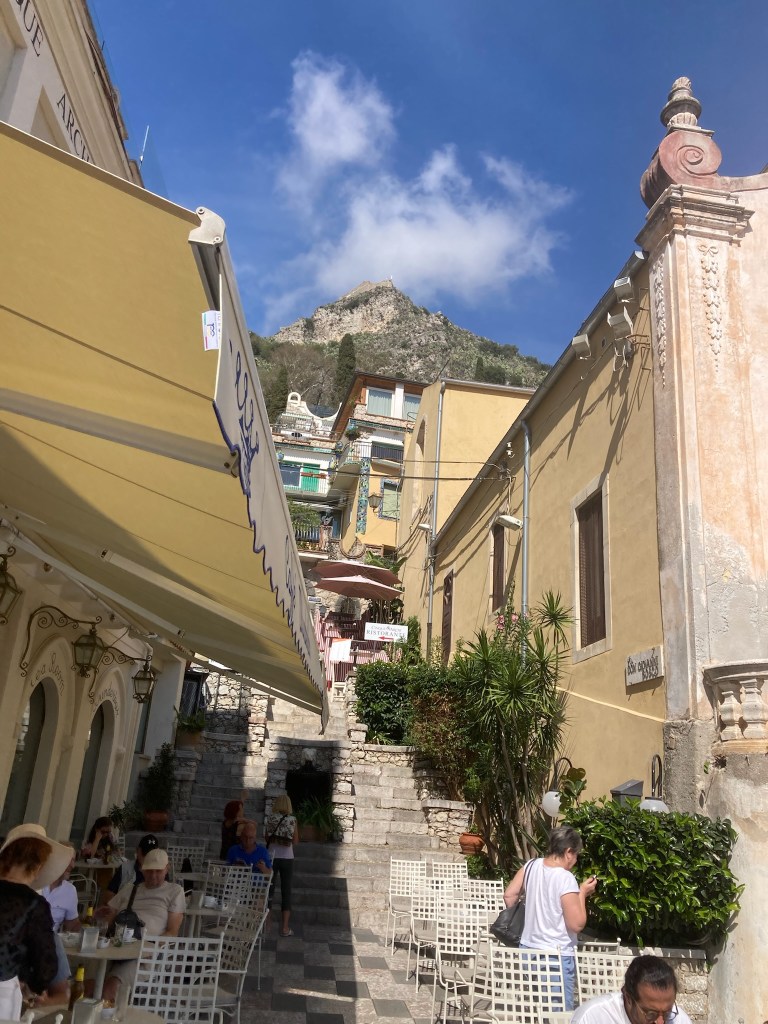
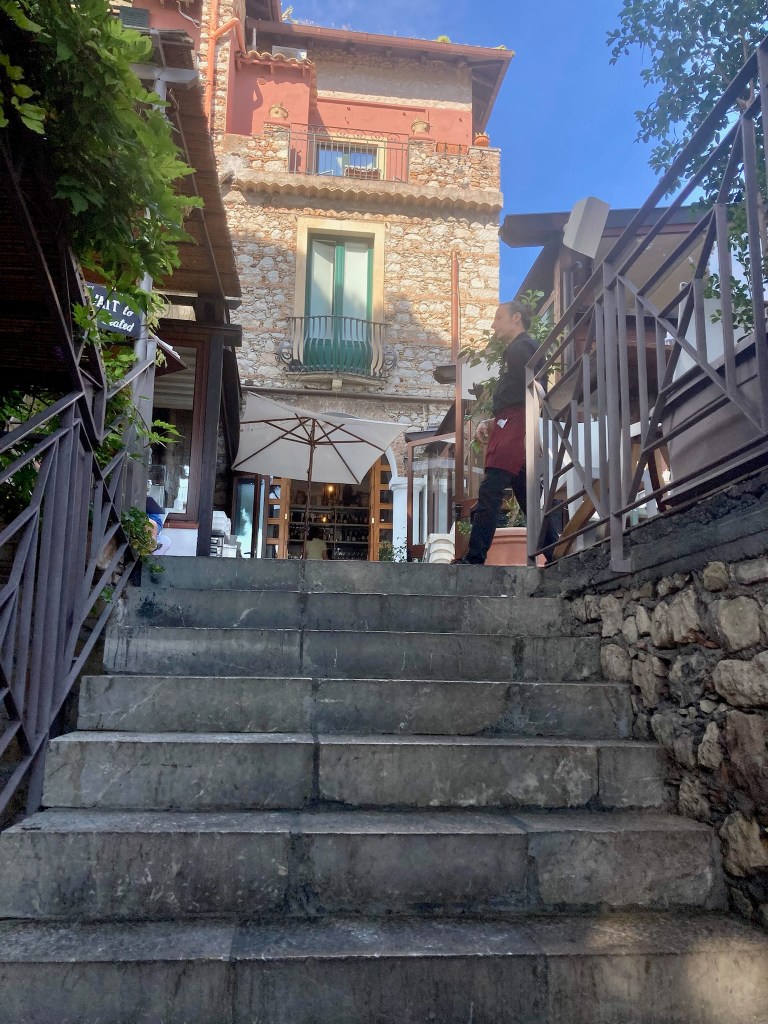
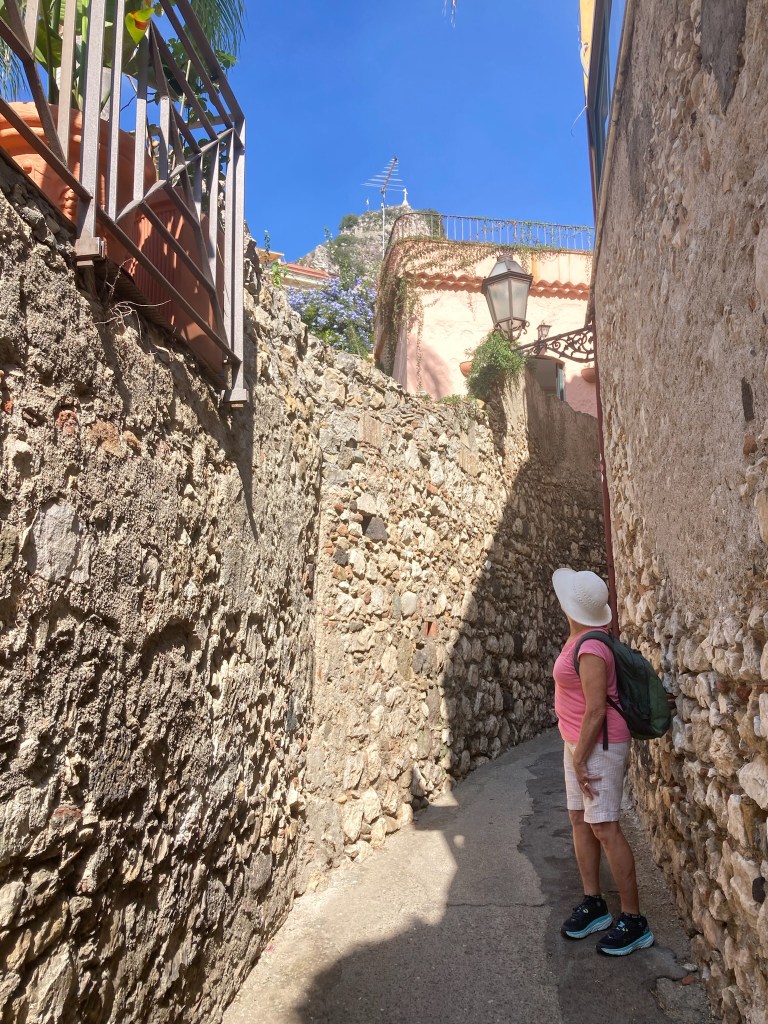
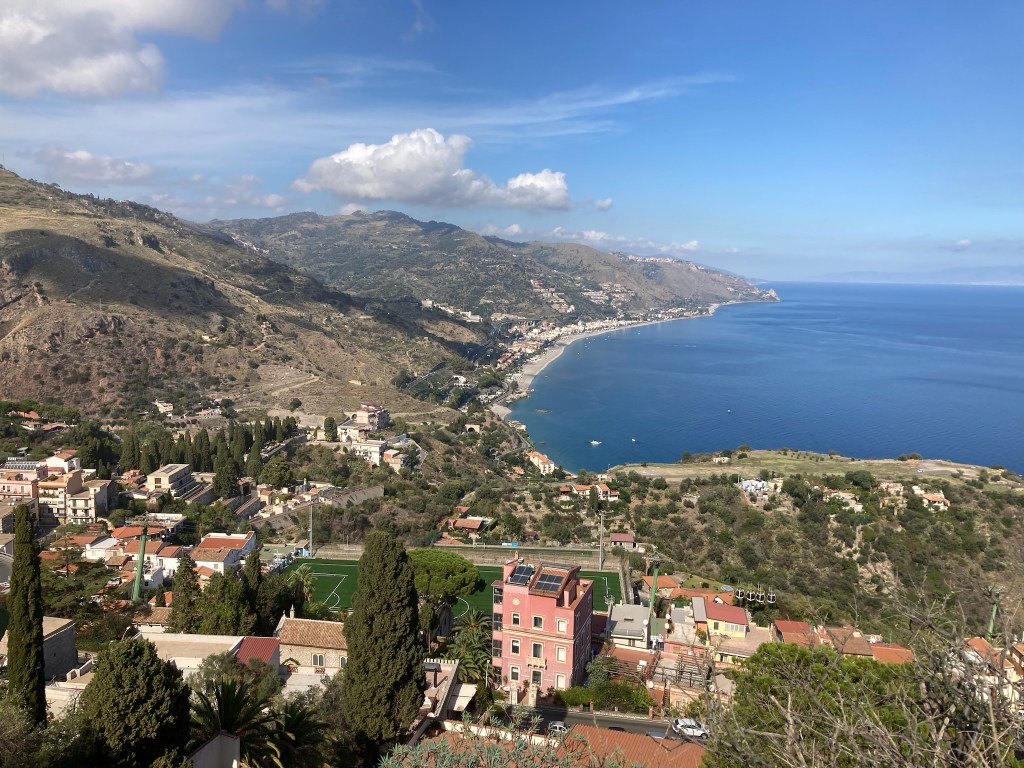
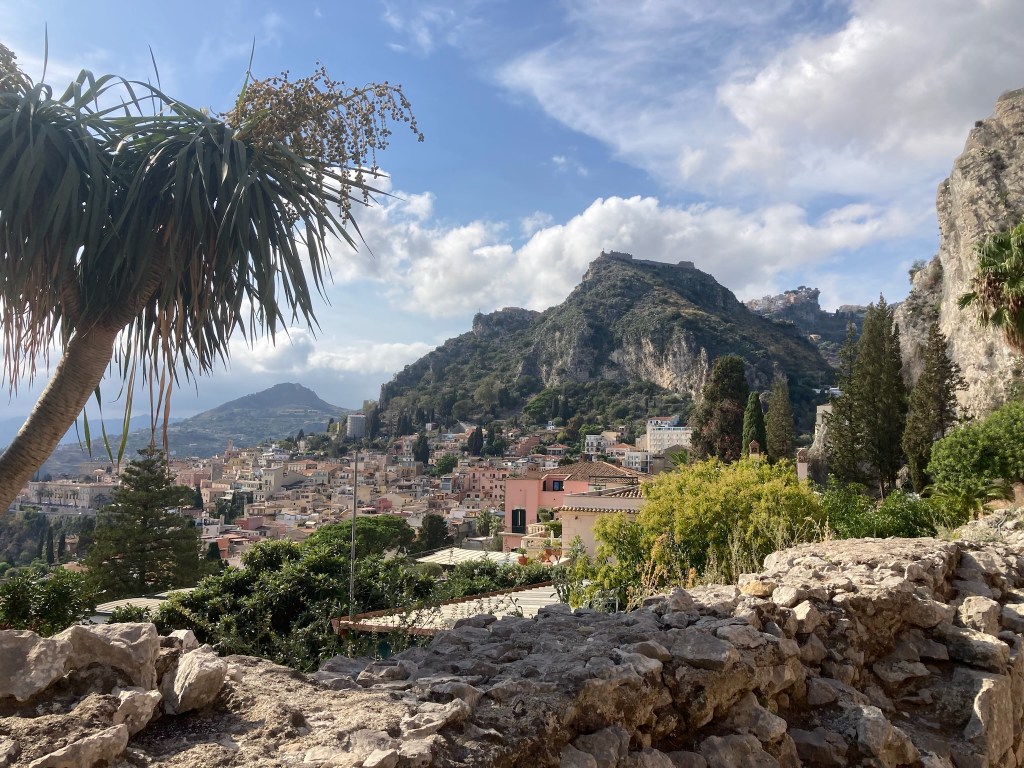
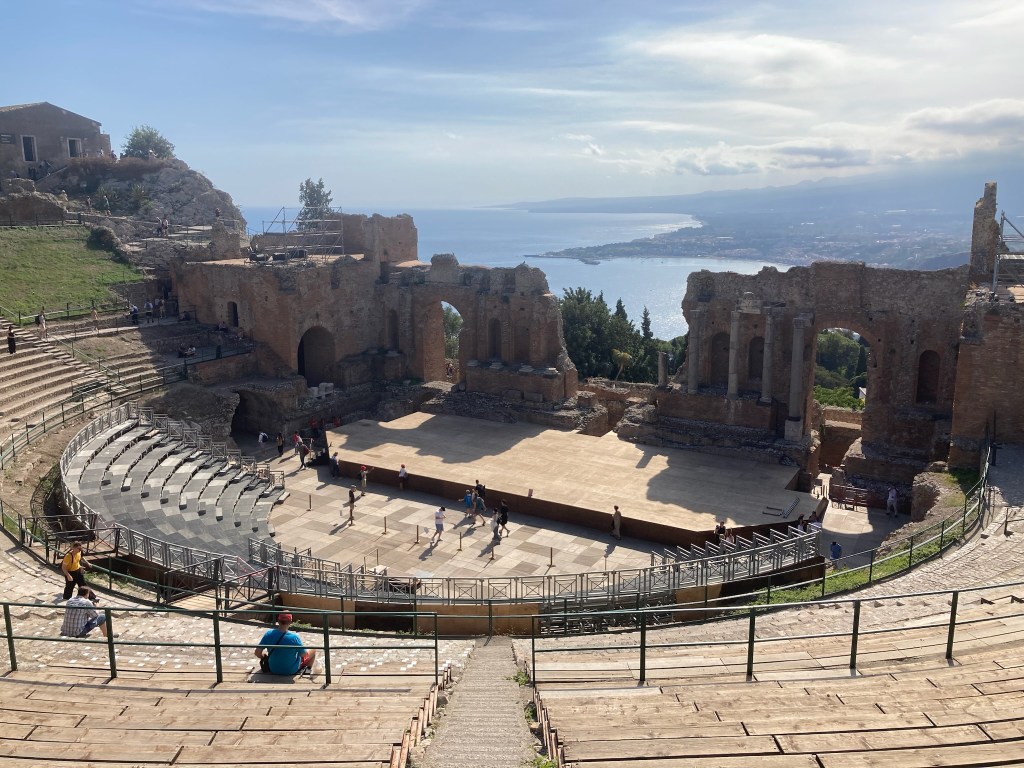
About a 2 hour drive north of us, past Catania and up the east coast of Sicily towards Messina, we found the hill side village of Taormina, something of a tourist Mecca, as we discovered. Many family members and friends had recommended we visit, so we did. Taormina has a magnificent location perched up high above the Ionian Sea, complete with Graeco Roman Amphitheatre & smaller Odeon theatre, amazing views and heaps of gift shops & restaurants to satisfy the insatiable tourist demand. However, get away from the main thoroughfare and there is a maze of side streets that are lovely to wander through, that are quiet and a delight. We parked our rental car at the railway station by the beach – Taormina Giardini – then took the local bus up the hill to Taormina Centro, and then reversed the process.
Mt Etna – Sunset Tour
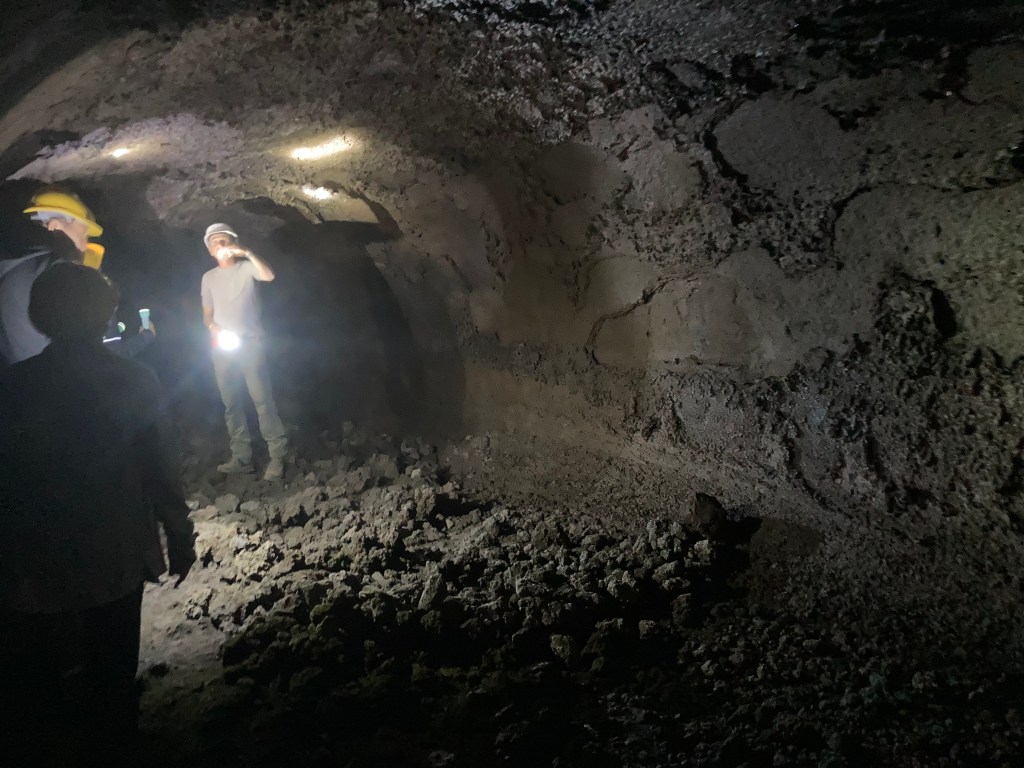
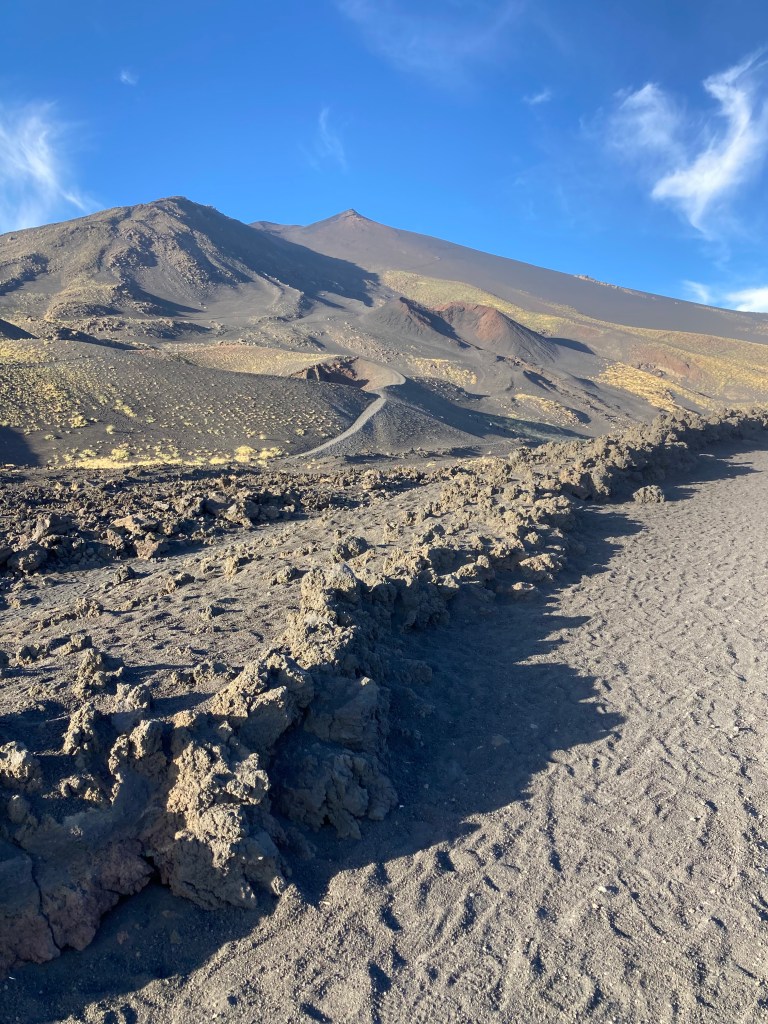
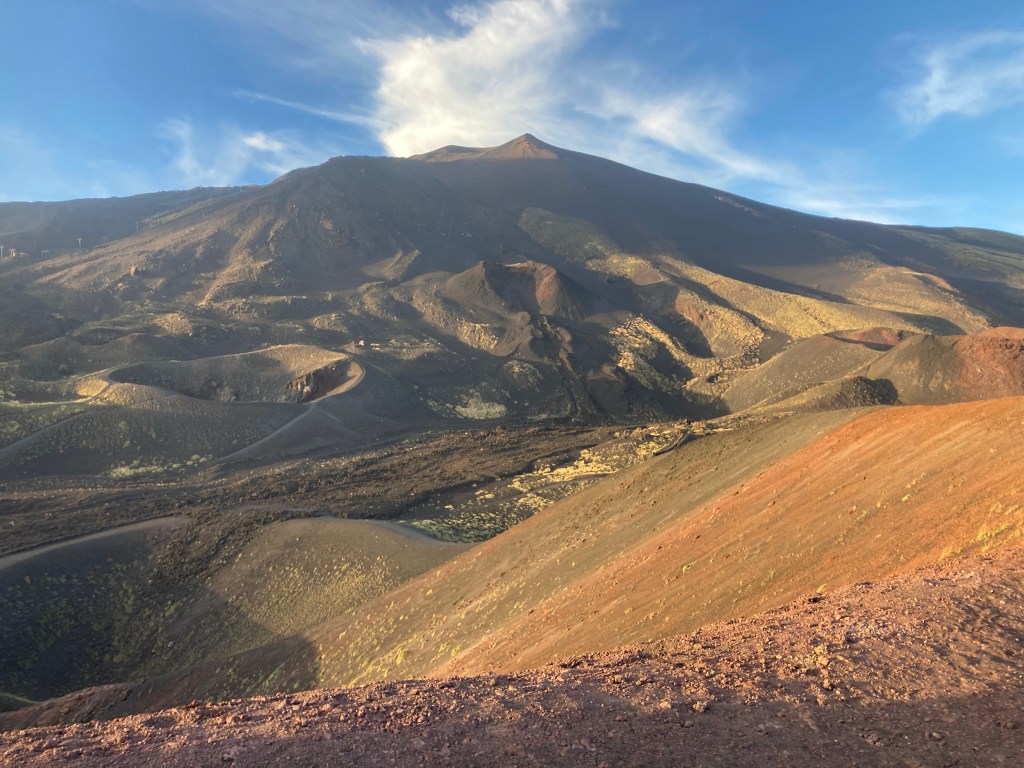
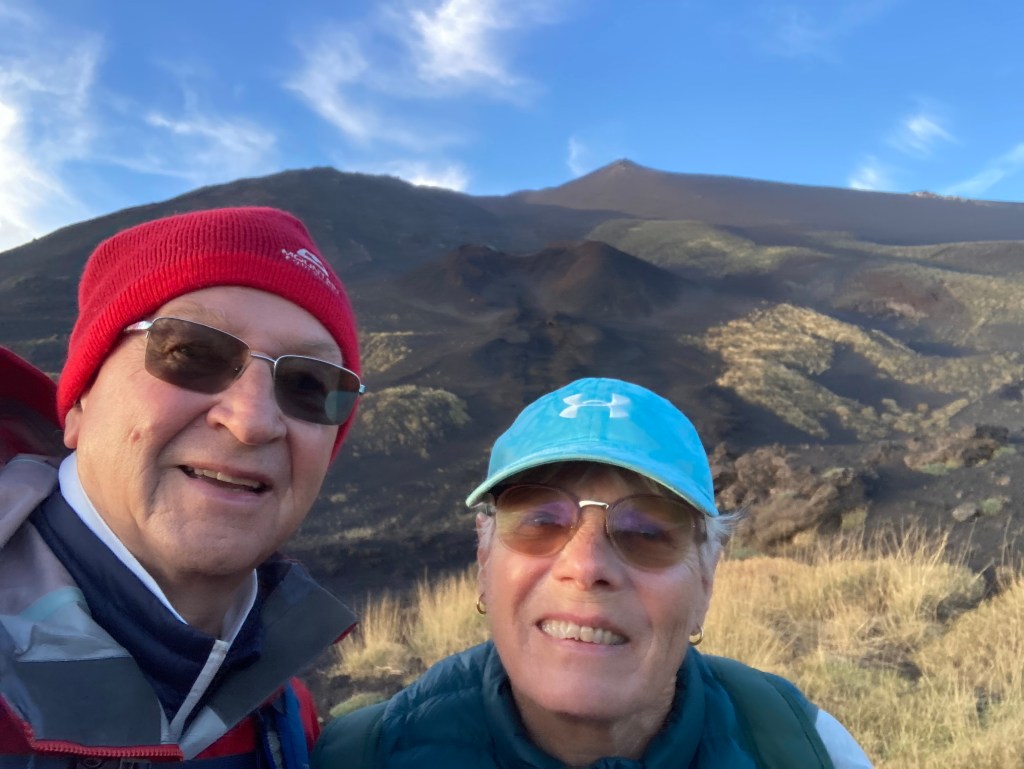
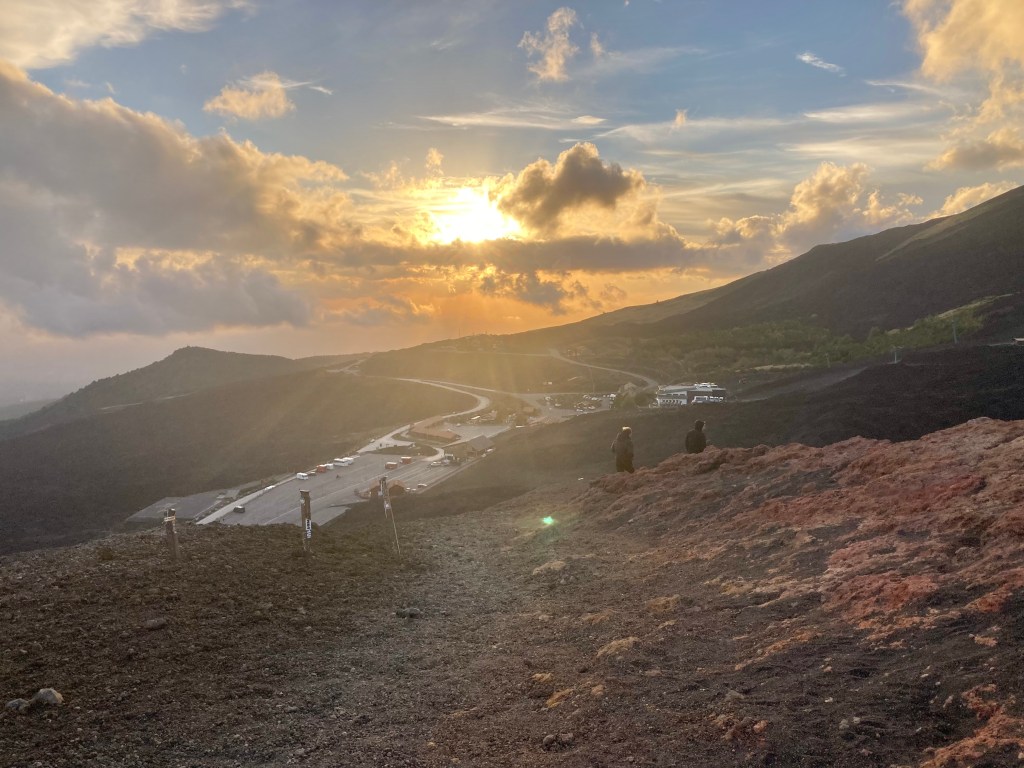
When we decided to go to Sicily, having witnessed so much volcanic activity at home in NZ, it was surely time to visit our first European Volcano. At 3400 metres in height Etna is massive and extremely active – August 14, 2024 an ash cloud 9.5 km high, closed Catania Airport!! We decided to take a small group tour which picked us up at a “safe car park” in Catania. There were 7 of us in total, 5 Italians (incl the Guide/Driver) and us 2 Kiwis. We did get quite a bit of English translated information en route and up the mountain, as our Guide, Simon, clearly knew his volcano. He lives in a village on the slopes of the mountain and is regularly sweeping ash off his property, off his vehicle and when earthquakes strike – as they do regularly, taking shelter. Etna originally came from offshore out in the Ionian Sea as a small submerged marine volcano that then expanded and “filled in” an existing big bay in the island of Sicily and grew and grew, to what we see today.
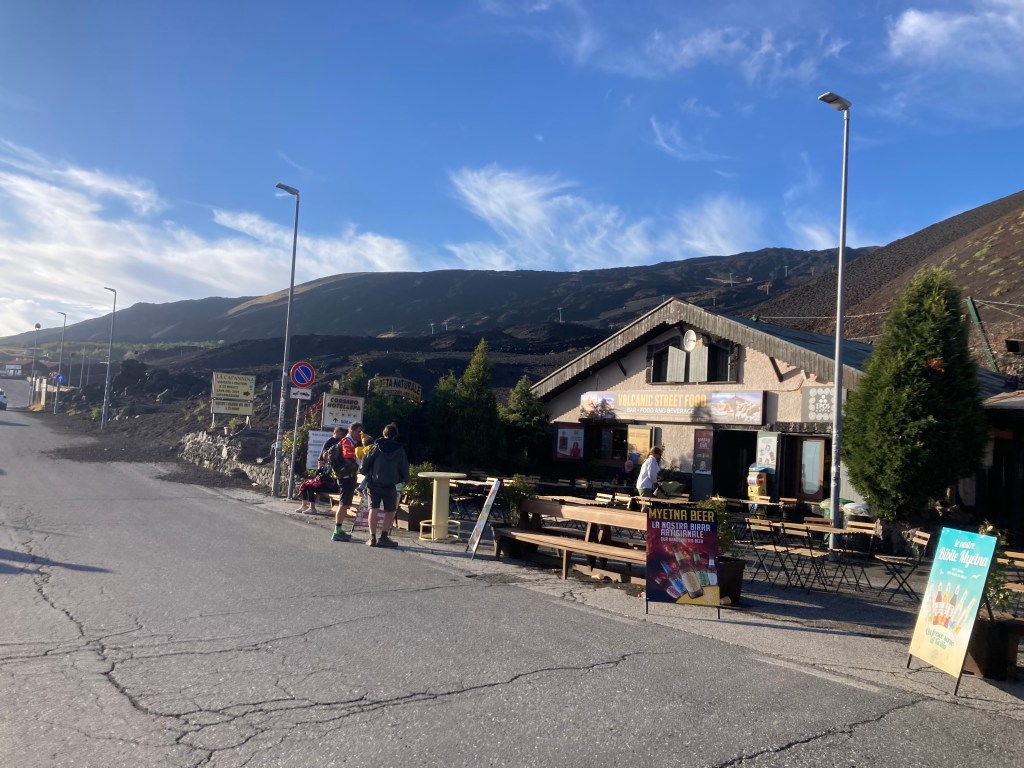
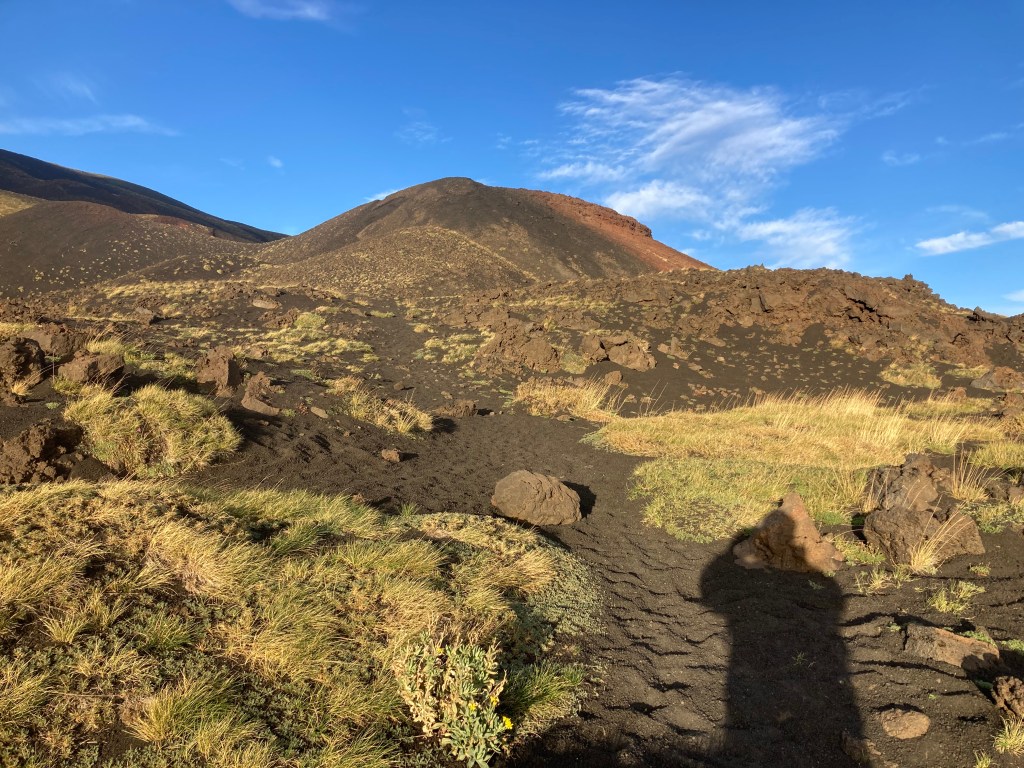
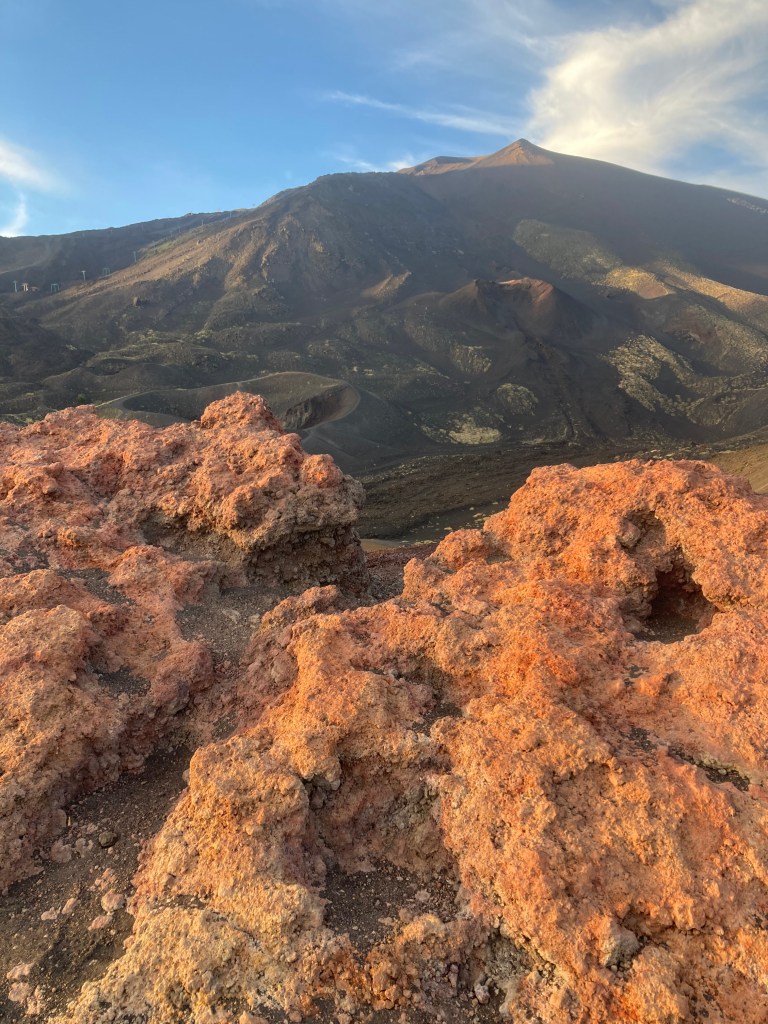
I first saw Etna back in 1979 from a BA VC10 flying from Jeddah to London to take my final Insurance Exams. It was covered in snow with a black plume of smoke rising languidly into the sky – 45 years later we are back and it’s as impressive from the ground as from the air. Thankfully it was very quiet on our visit, which involved quite a “switch back” drive up from Catania – the road itself is generally in good condition and Italian drivers do drive quite quickly! At 2500 metres we arrived at Crateri Silvestri with compulsory cafe/restaurant/bar/gift shops and car parking for the tourist who then decides their next steps. There is a cable car up the mountainside or one can get walking up hill and around the lower landscape to investigate and maybe catch a good sunset – as our tour offered – (weather allowing).
Next stop Cefalu on the northern Sicilian coast.
 Travels with My Wife
Well done. Great photos and a great story.
LikeLike