
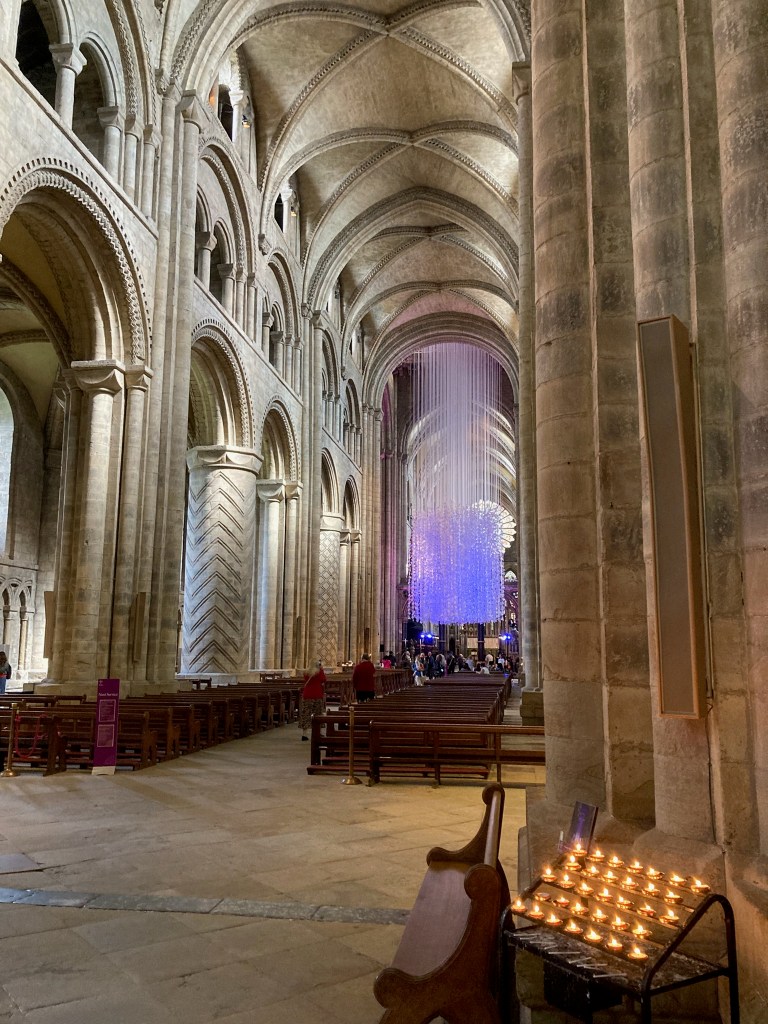
An absolute delight from our time in the North- East of England has been the listening to accents around the region. I had an opportunity to chat with our Northumbrian friend’s next door neighbour in his back garden – a keen golfer and master cabinet maker. Born over 70 years ago in the Red Lion Pub in the nearby village of Millfield, as he explained, he had a wonderful soft but strong Northumbrian accent. I had to really concentrate on what he was saying to comprehend it. Now the UK has many accents and different languages but this region I think is special. These accents and the words used themselves reflect the historical influences of the Vikings, Anglo Saxons & others who have made this region their home.
The City of Durham is defined by the horseshoe of land that the River Wear has carved out on its way to the North Sea. Within that horseshoe sit the University, Cathedral and Castle, itself originally a Norman Motte and Bailey, all standing high above the River Wear.
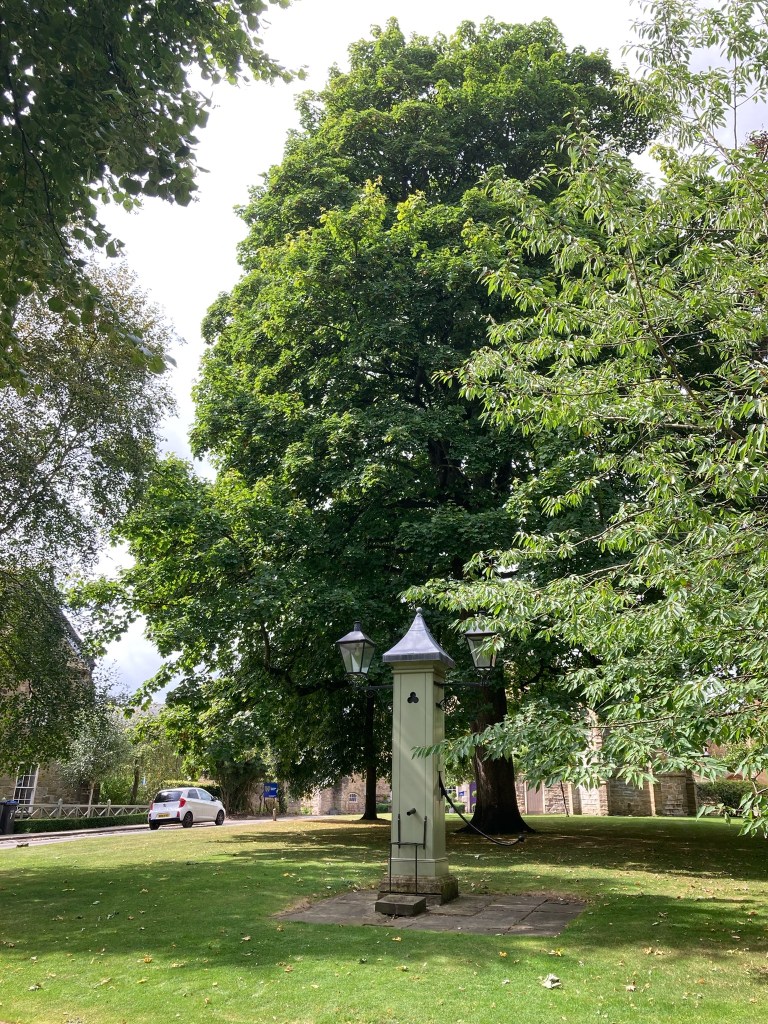
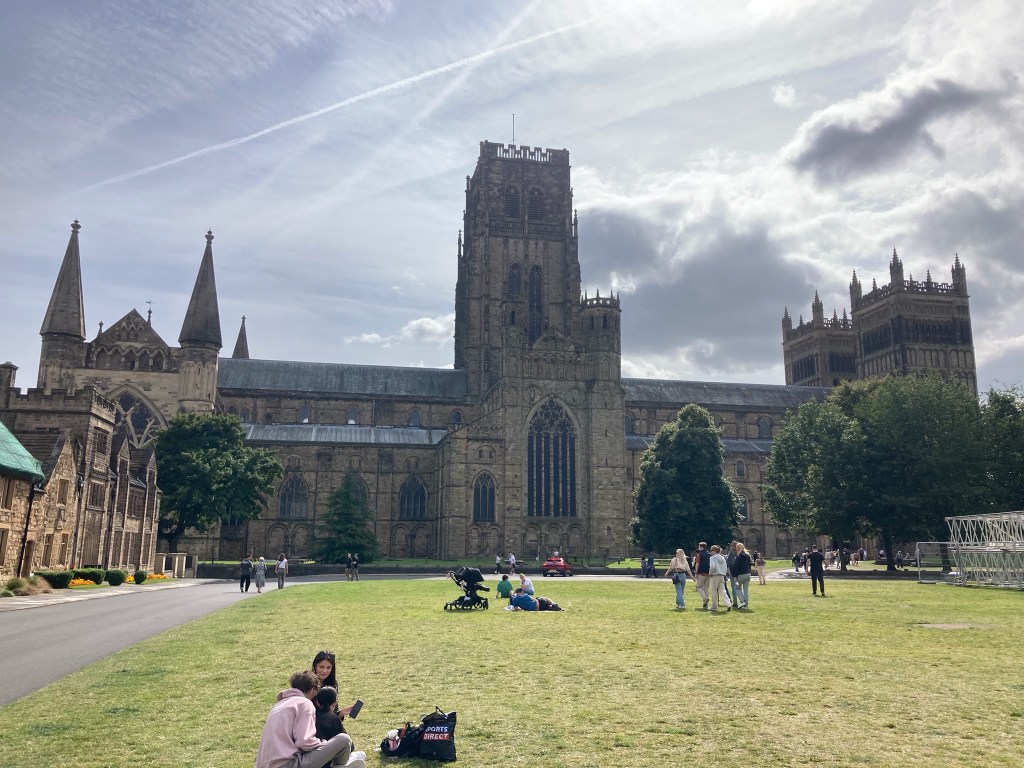
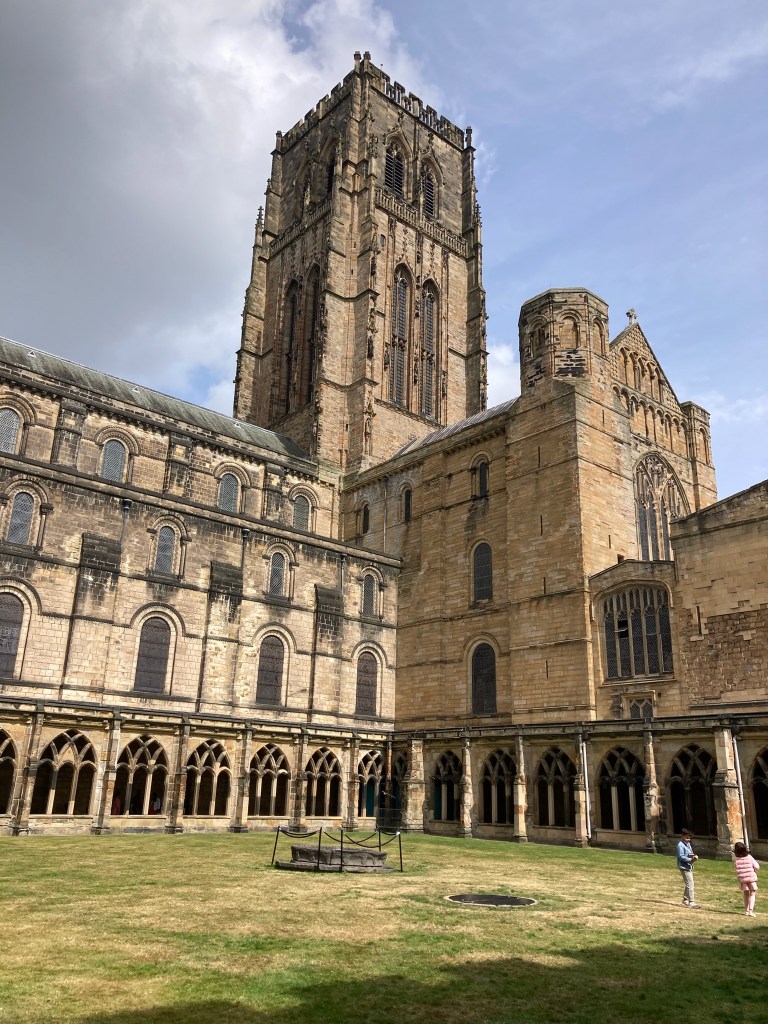
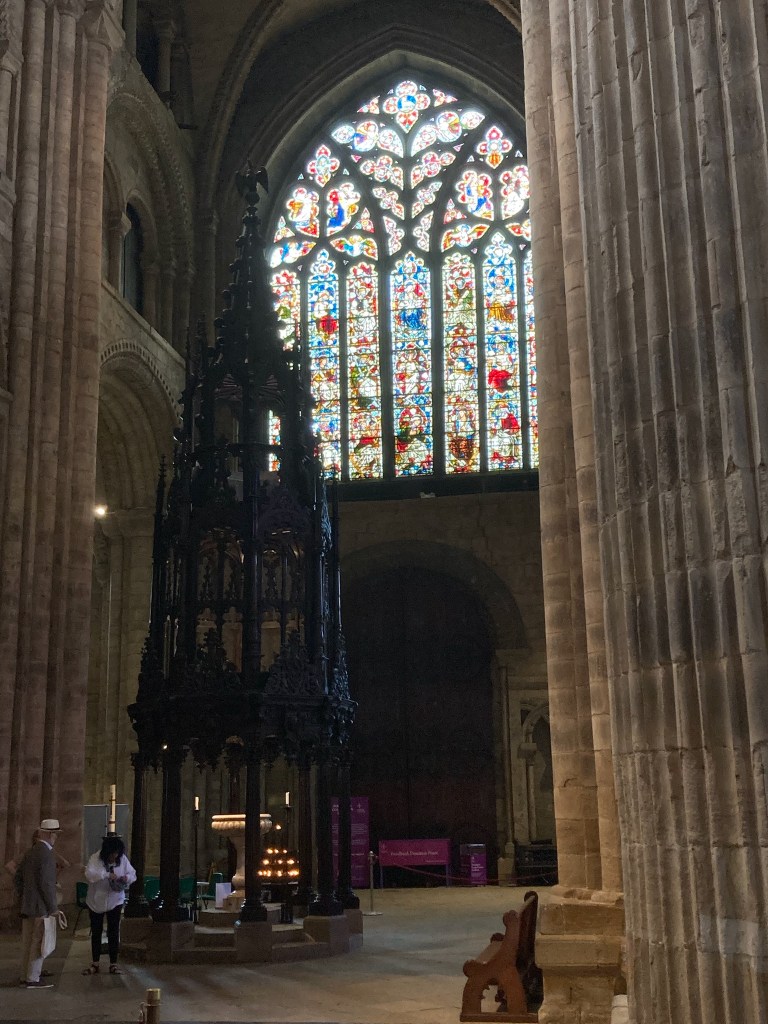
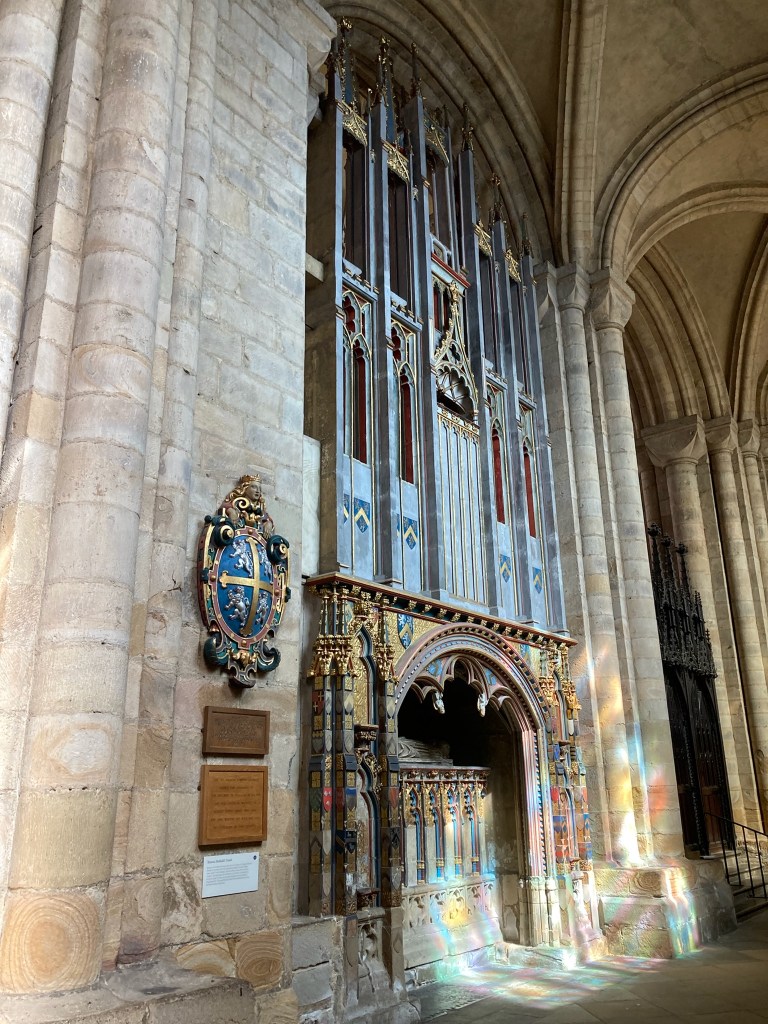
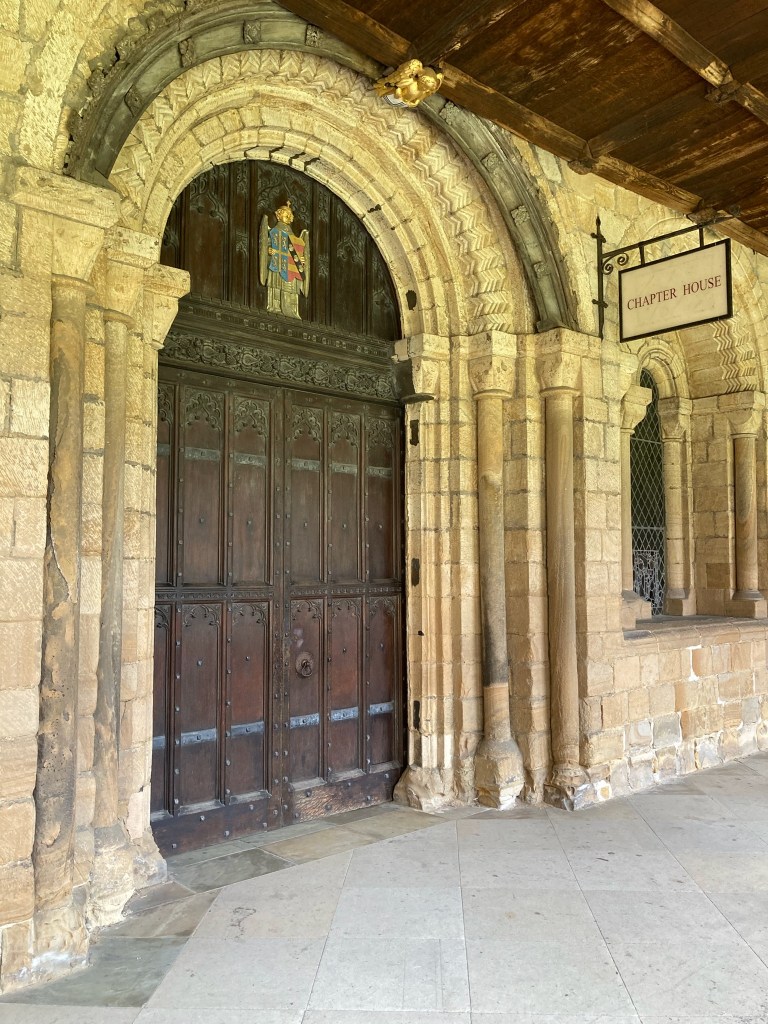
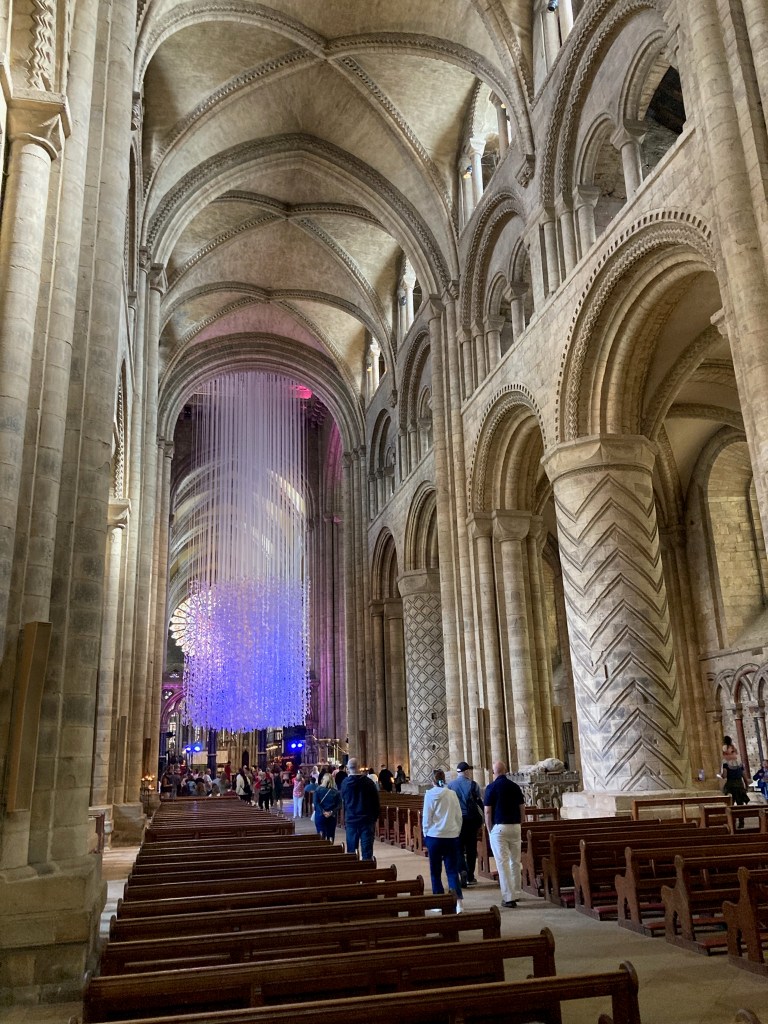
Entering the Cathedral and moving into the nave , I was fascinated by the stone columns with their “stonemason carved chevrons”- see below and up on the first pic of the blog. I had never seen anything like this, and buttonholed a passing clergyman, to find out the reason for the intricate chevron patterns.
The clergyman was a fountain of knowledge, hailing from Chester Le Street, and informing me that his accent was very distinctive, but I found it understandable, maybe my ears were getting used to the local accents!. He explained that the carved pillars in the nave are a very deliberate design to focus the eye on its journey from the back of the Cathedral towards the alter and one’s eventual death. There is only one other place, he said, with the same look, and that is an Abbey in Dunfermline Scotland. Anyway, it looks stunningly beautiful as do the stained glass windows throughout the Cathedral.
I shared that that my own descendants came from South Shields at the mouth of the Tyne River and the clergyman explained that in fact I was not of a Geordie heritage but a “Sand Dancers” one, so named after the quality sands mined in S. Shields , that were used by industry- we live and learn!!
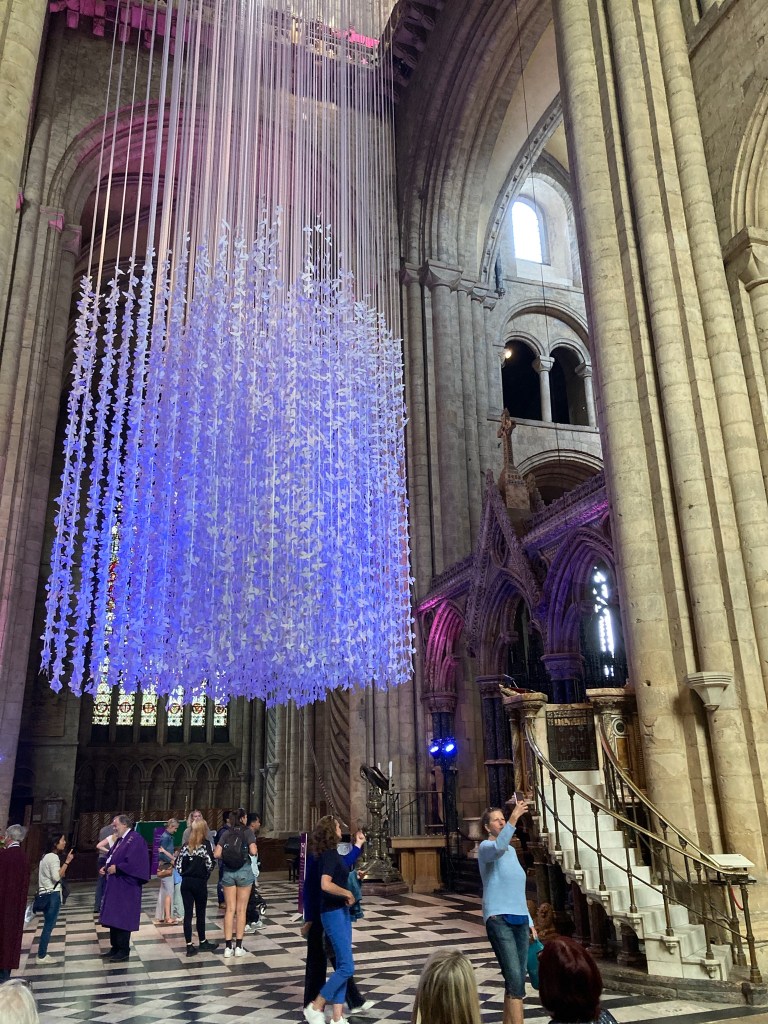

As you can see from the above pics there are some more modern influences in the Cathedral, the “waterfall of purple light” is in fact over 15,000 individual paper doves suspended to create a waterfall of sculpture. Each dove has a handwritten message of peace, love & hope – very effective from all angles.
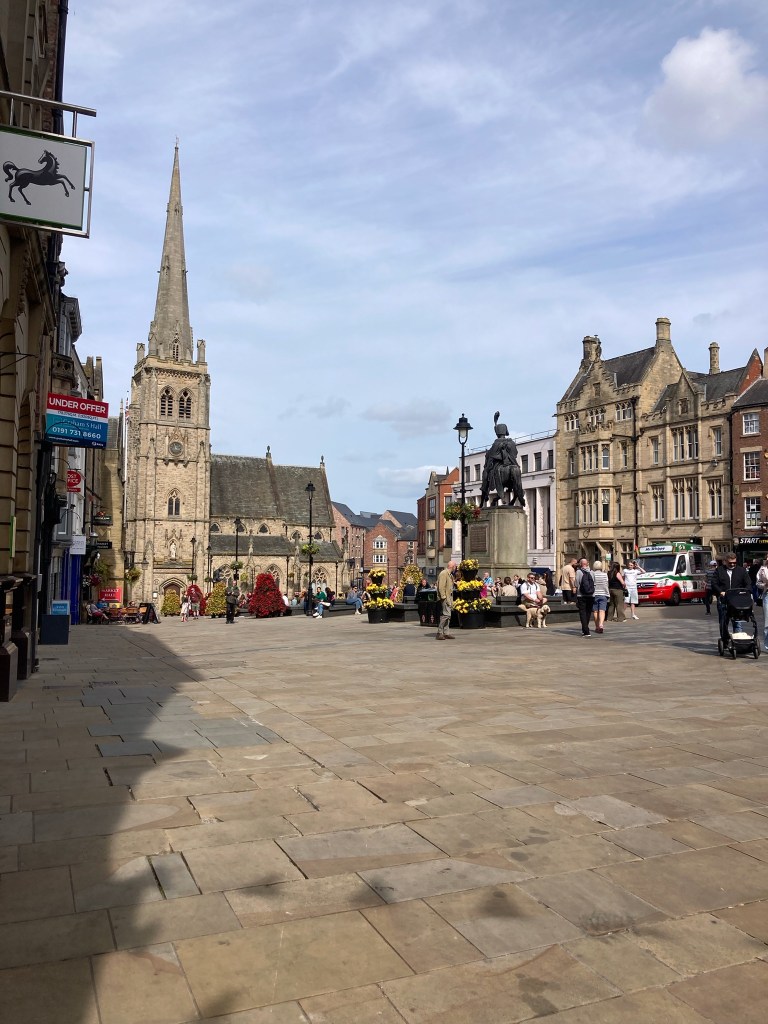
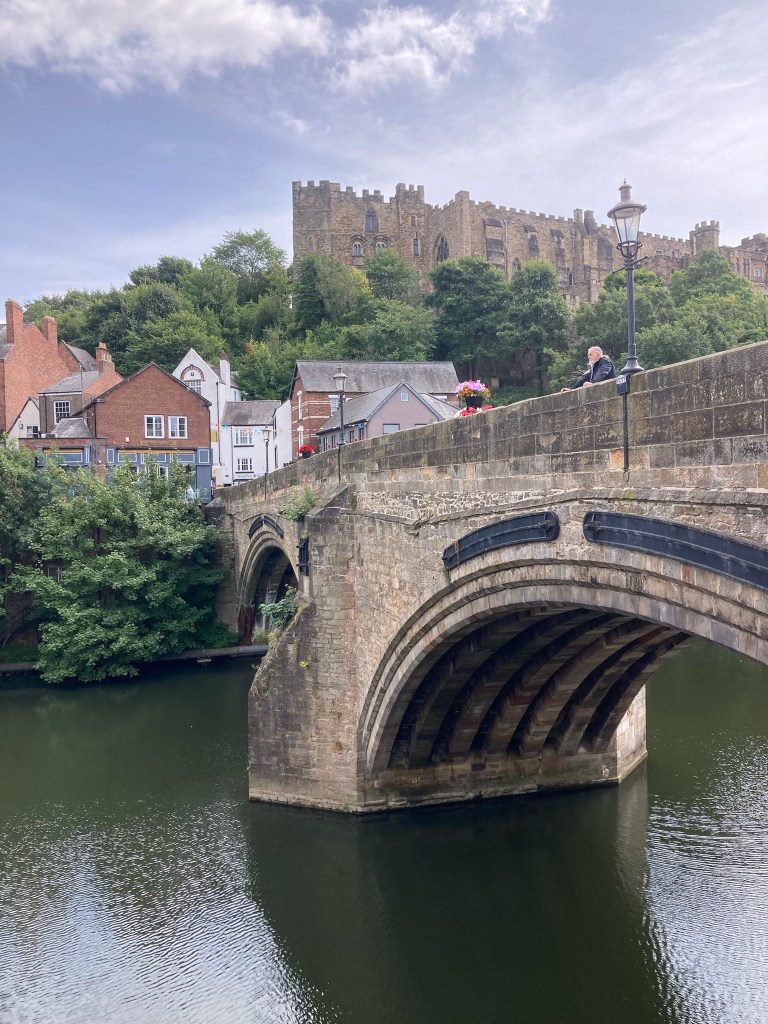
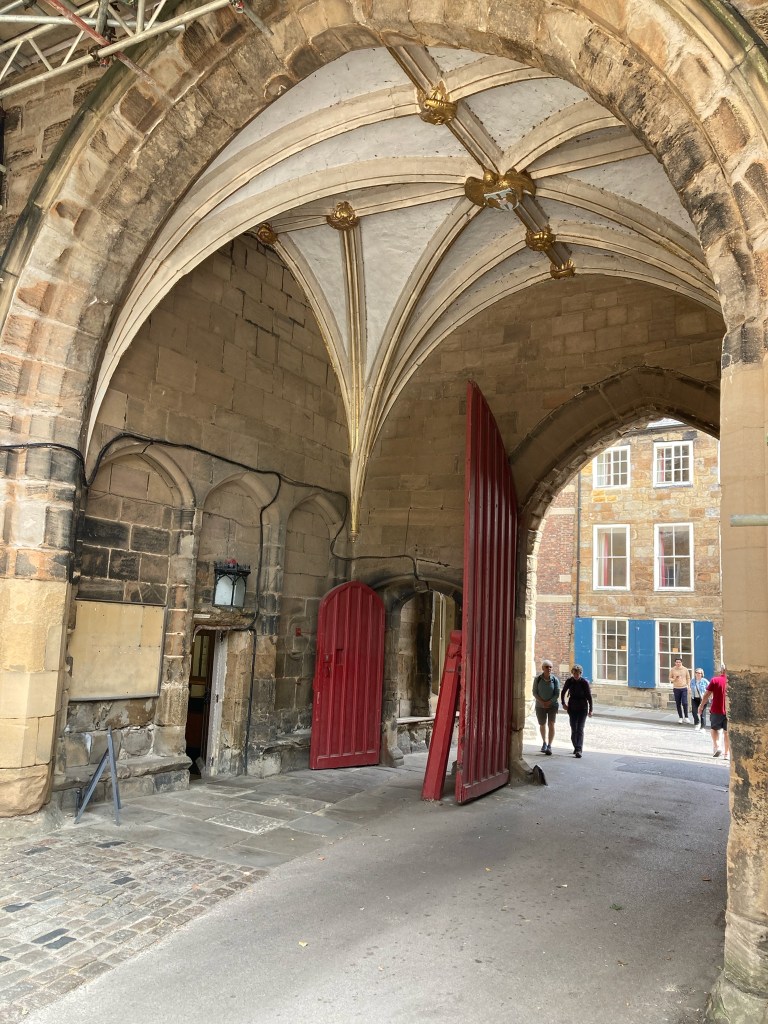
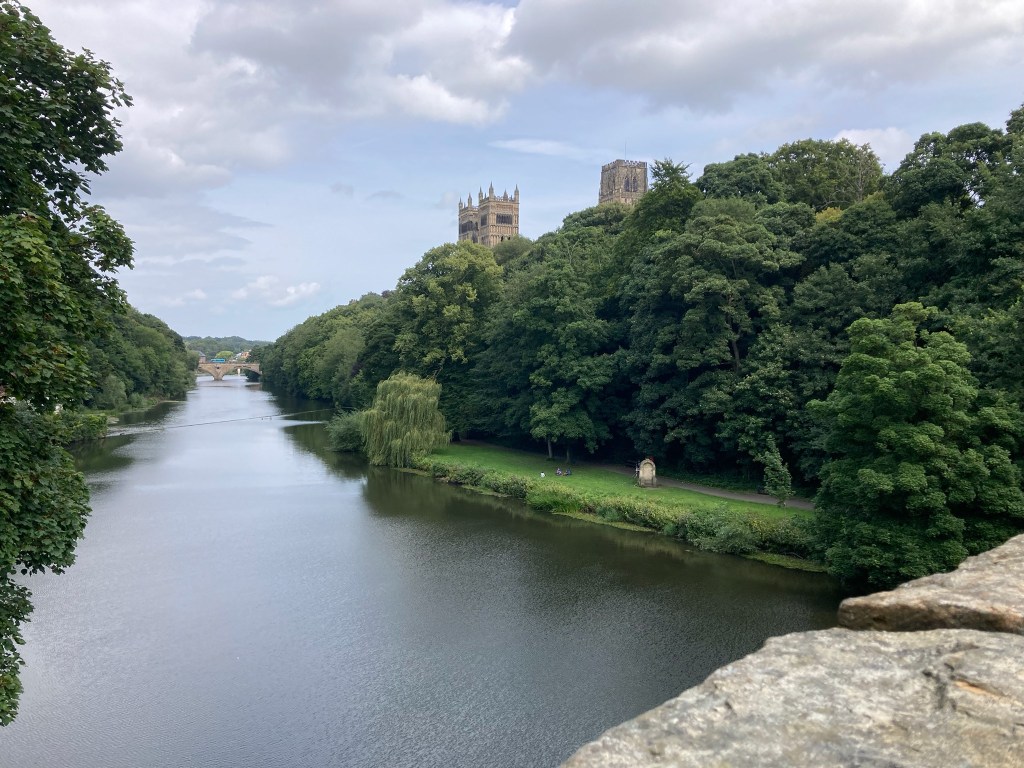
Durham has great history. You see it everywhere around the centre, the Castle, Cathedral and University show signs of both 11th/12th century, but also the Georgian influences in the buildings around. We visited on a Sunday – although it was busy with locals and tourists, it was fun and so well worth the visit.
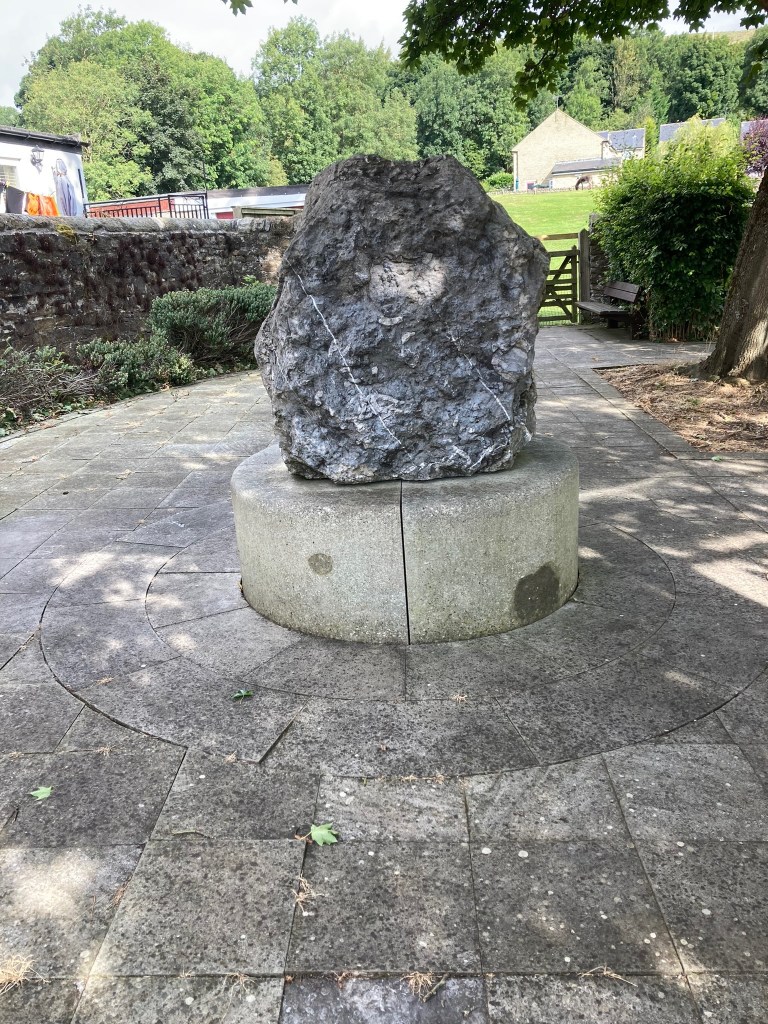
Weardale was another new part of the North-East for us to visit. We had our base in the village of Frosterly, initially for our ‘Kynren pageant’ evening out, but then to explore Weardale on its own. There is a history of quarry mining in the valley, including Frosterly Marble which is a layer of dark grey limestone containing amazing fossils of extinct corals. It has long been prized and worked as an ornamental stone – as is seen on display in some of the columns and flooring of Durham Cathedral.
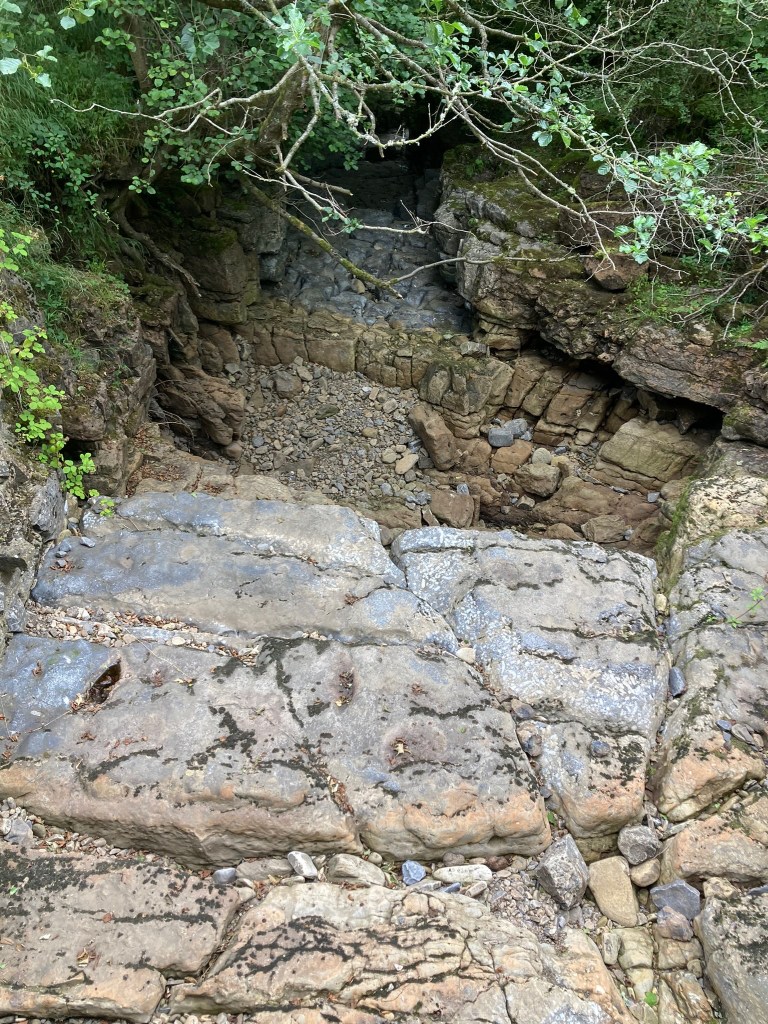
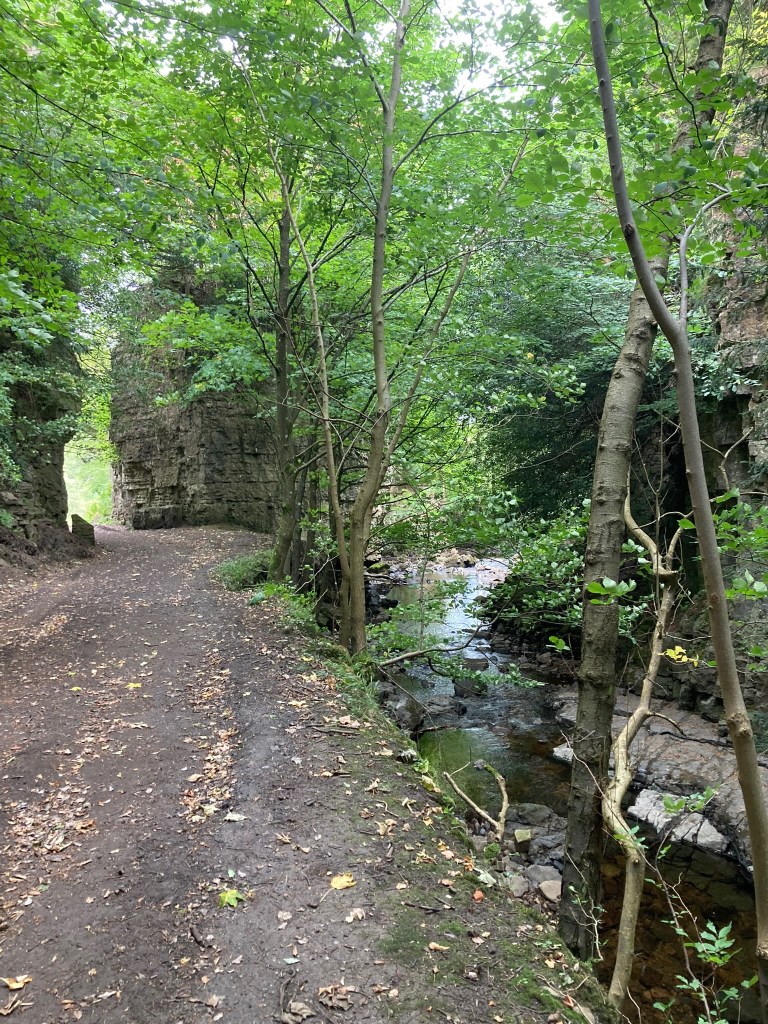
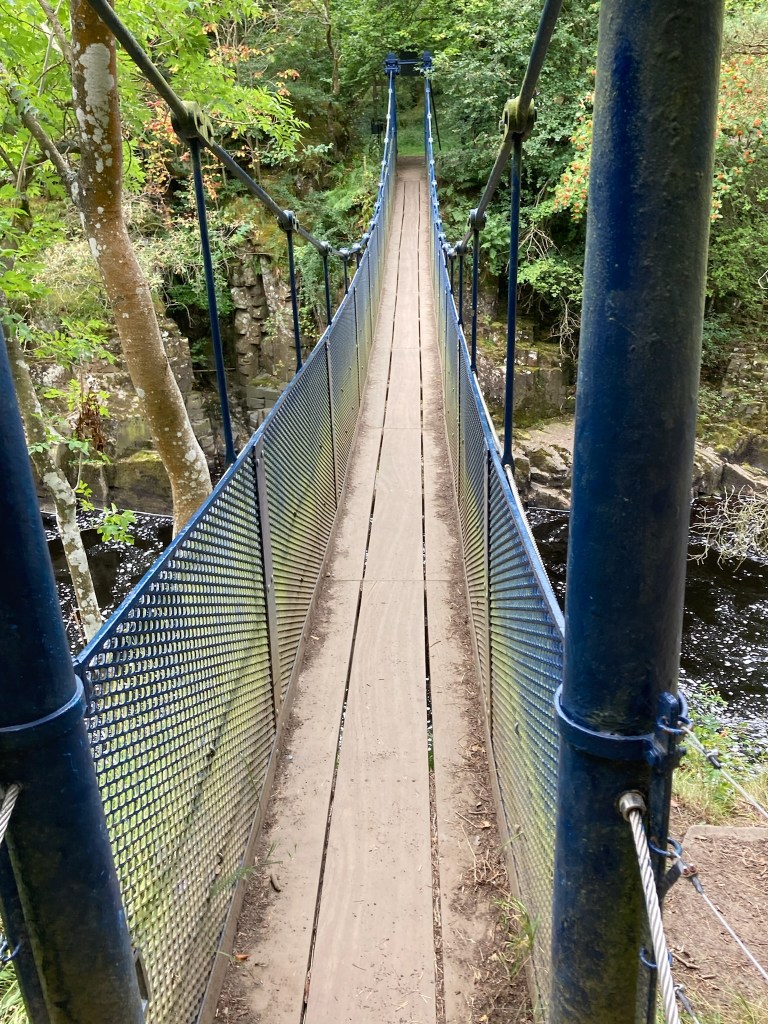
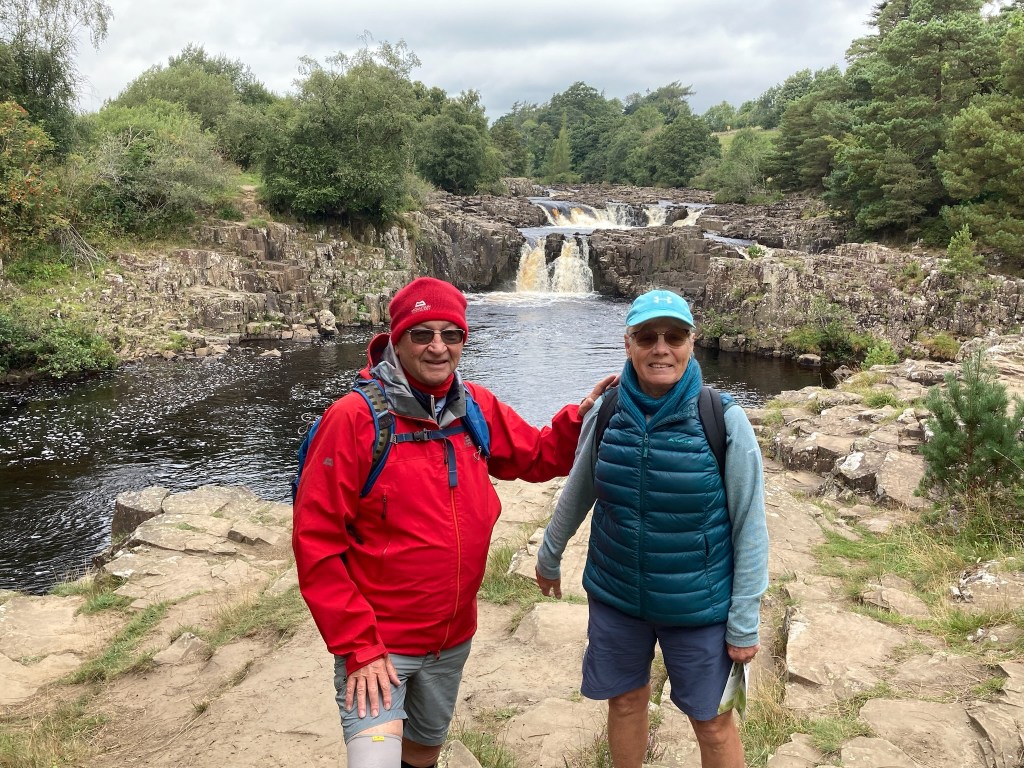
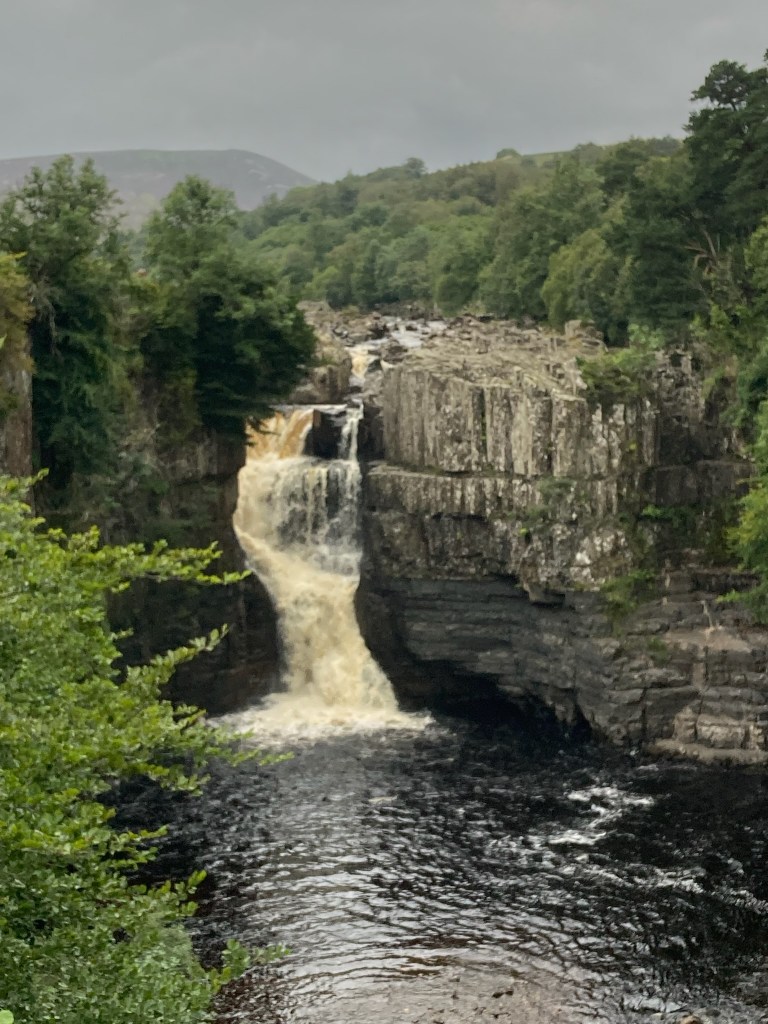
Other limestone quarried here was valuable to the coal and steel industries of the North-East, when railway lines, now long gone, pushed up the valleys to more easily transport the raw materials to their destinations. And up from the valleys, wild stunning moorland covered in purple heather with beautiful waterfalls on display for us to enjoy on our walks.
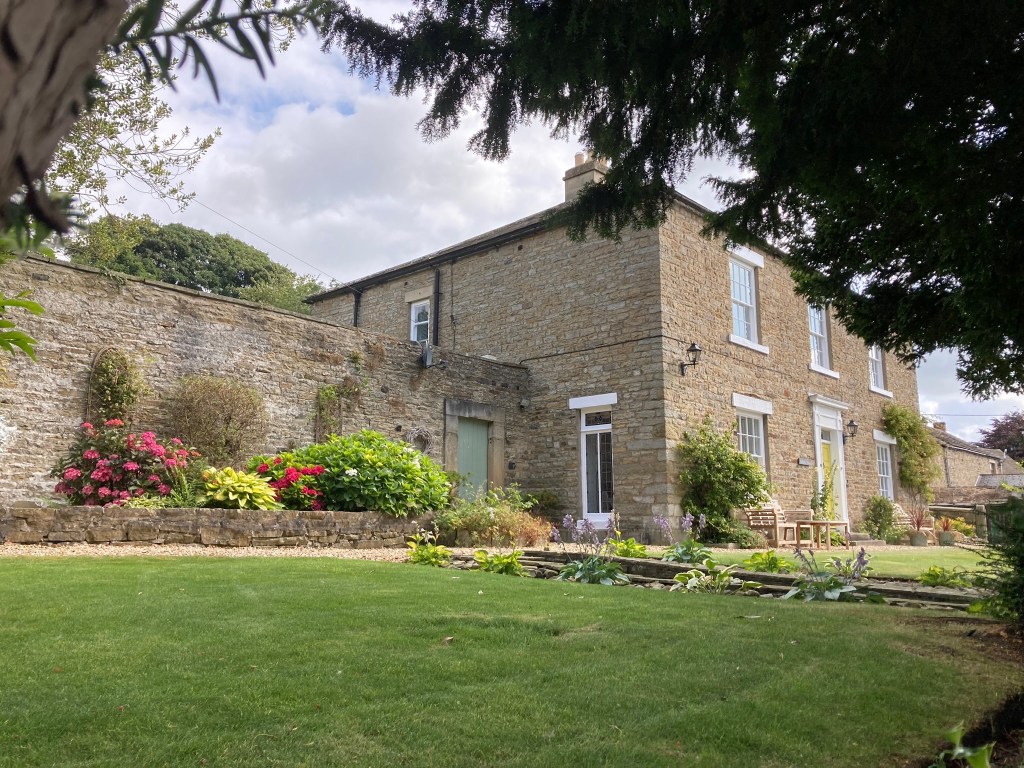
Again this part of Northern England is built of wonderful local limestone. The dry walls encompassing the fields, the houses, farm buildings , the bridges – the lot!! Its gorgeous.
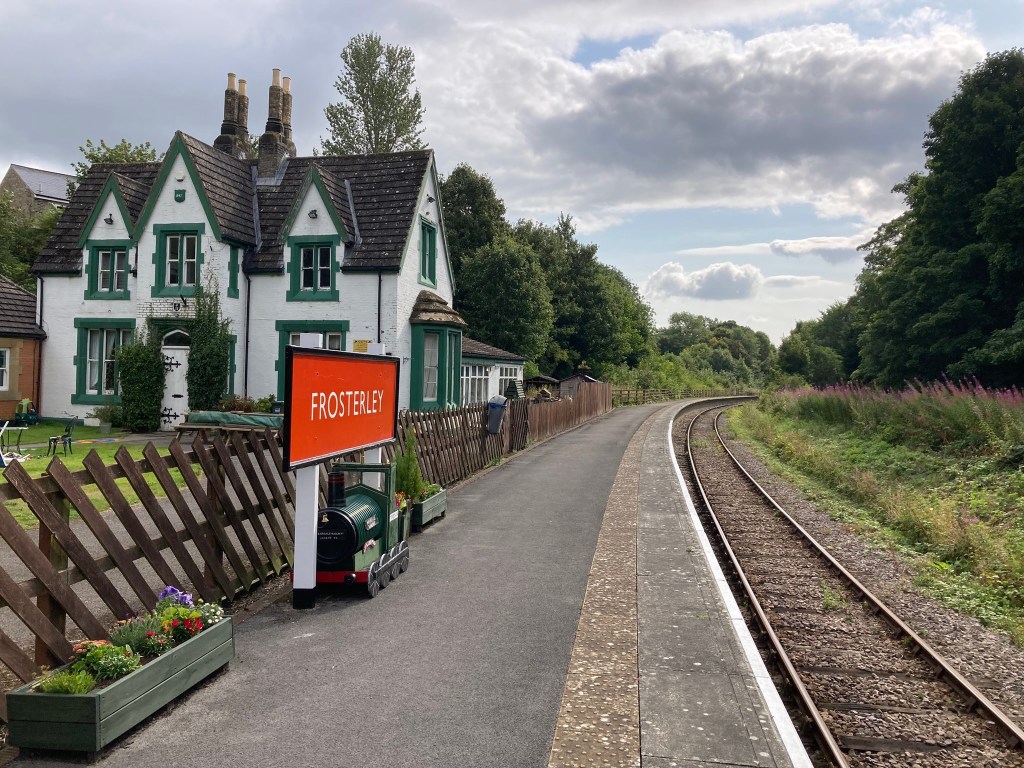
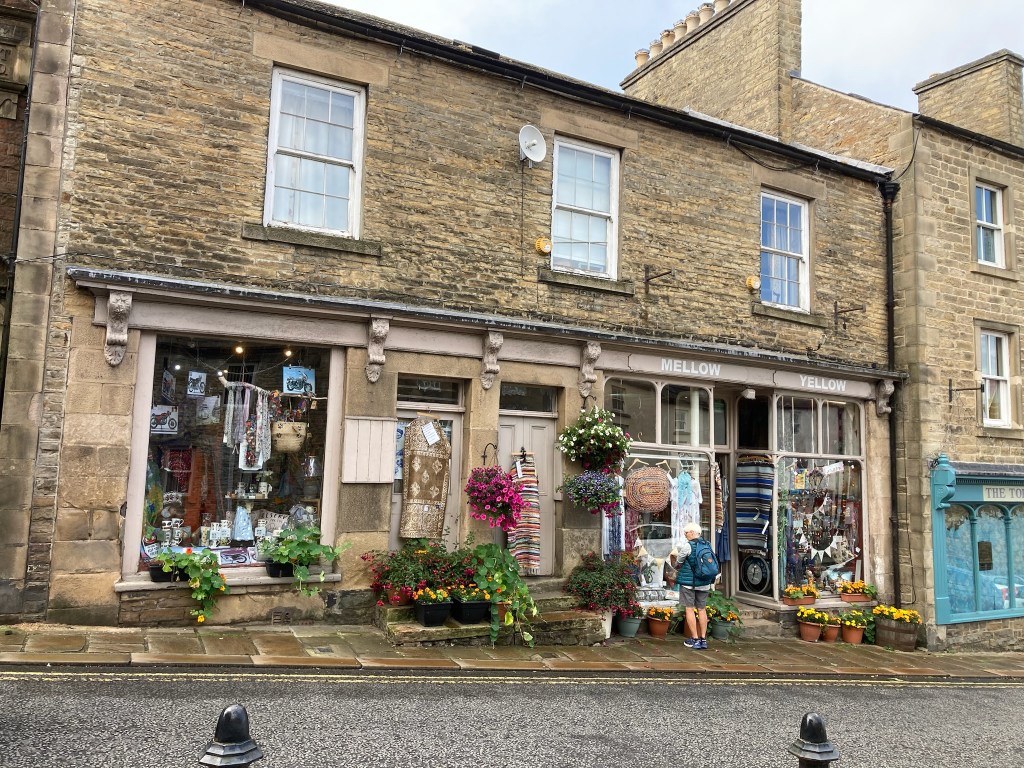
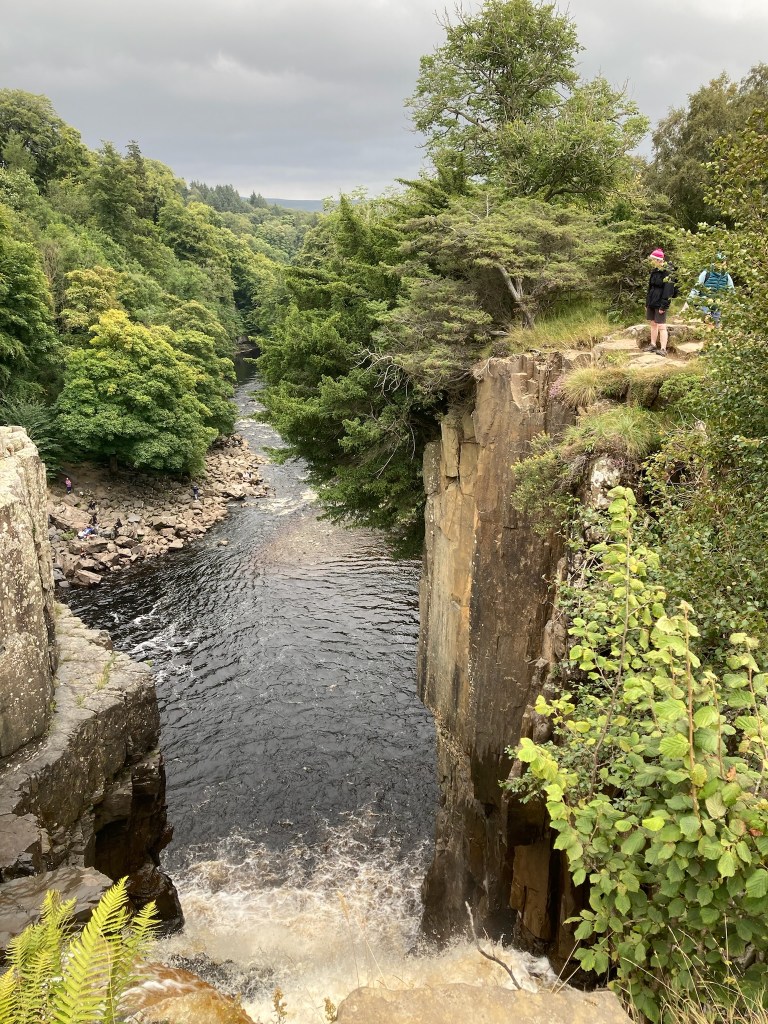
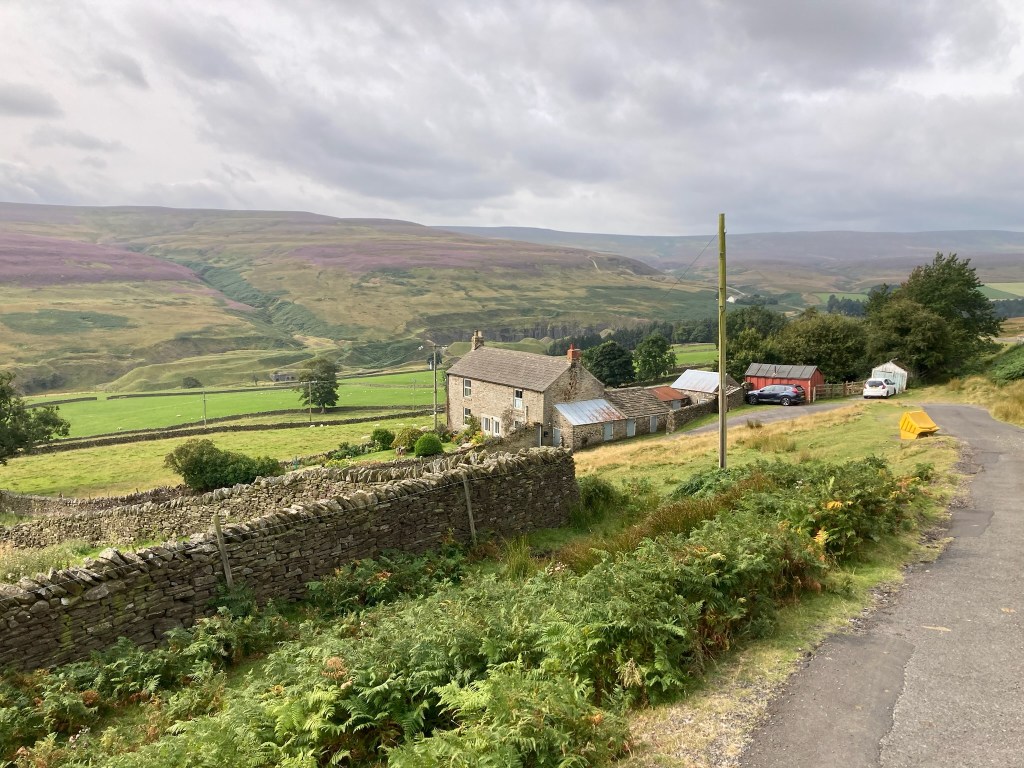
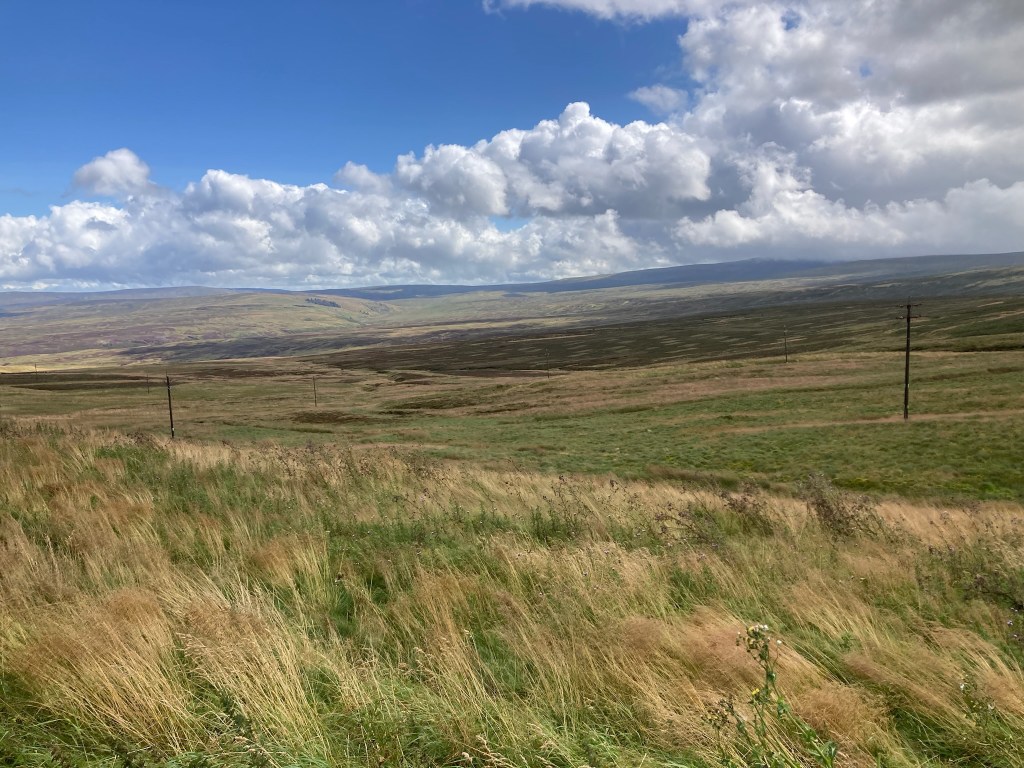
I feel an attachment to this region, and it is because my ancestors on my fathers side are from here. And I feel an inadequacy as I have not done more research into where I am from, my “Cynren”- work in progress!!
In a couple of weeks we will be back in the English Lake District based in the village of Threlkeld, more from there, but in the meantime a big thanks for all the lovely comments in your feedback on these travel blogs it is really appreciated.
 Travels with My Wife
We have to move the sand on Oriental Bay with a bulldozer each year to get it back to where to should be, but will make sure we have some sand for you to dance on.
LikeLike