
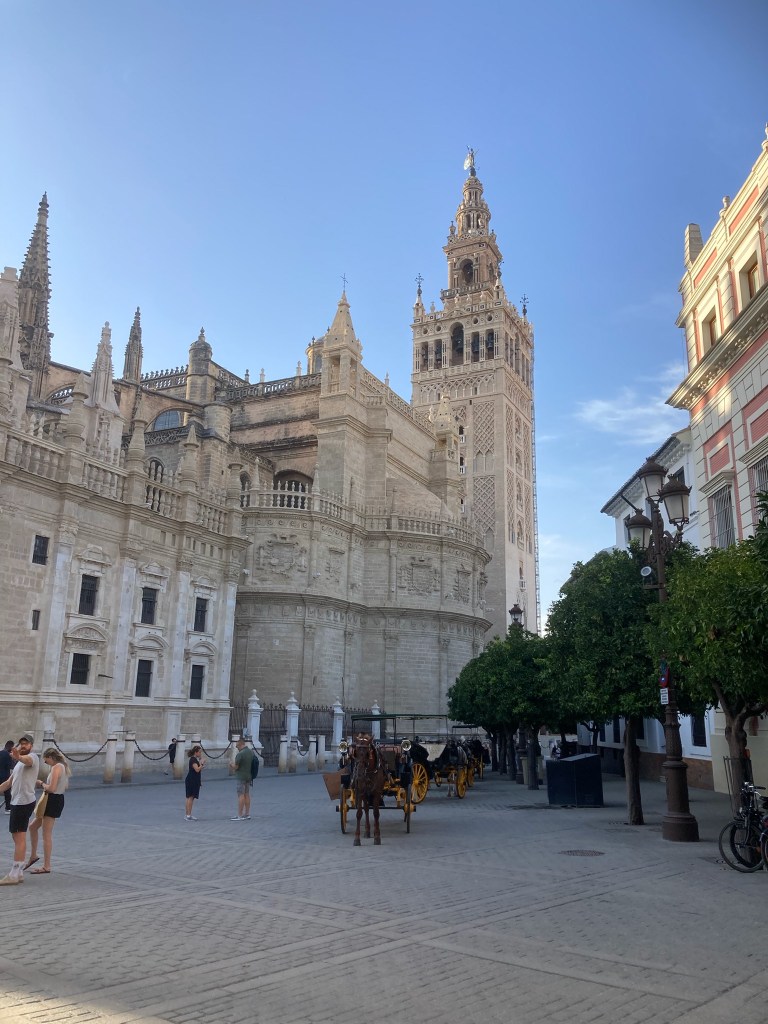
Seville Cathedral and the Giraldo Tower + horse drawn carriages awaiting customers
Seville – in Spanish, Sevilla – is the capital of the Spanish southernmost region of Andalusia. We visited in mid September by when we had hoped that the worst of the searing summer heat was behind us. We arrived In Seville by Flixbus from Faro in Portugal, where Sue had been playing tennis. Having settled into our Airbnb apartment, we headed for the Tourist Office and then armed with maps and brochures had a slow wander around the centre of the city . It was 35c at 7pm – phew!!!
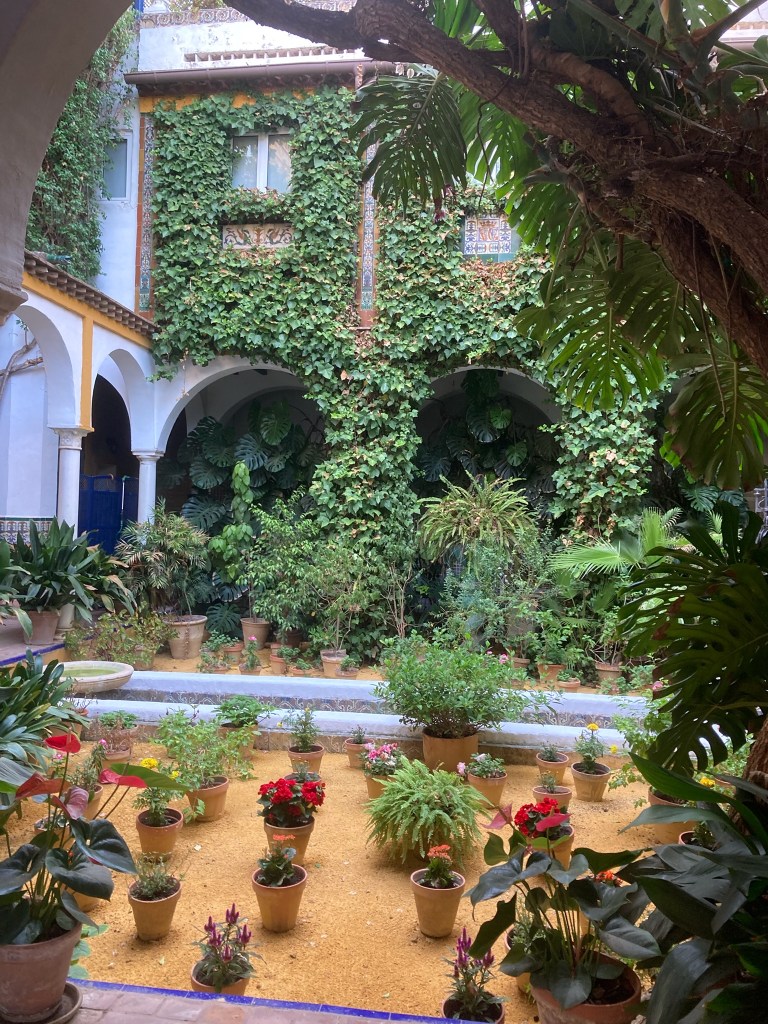
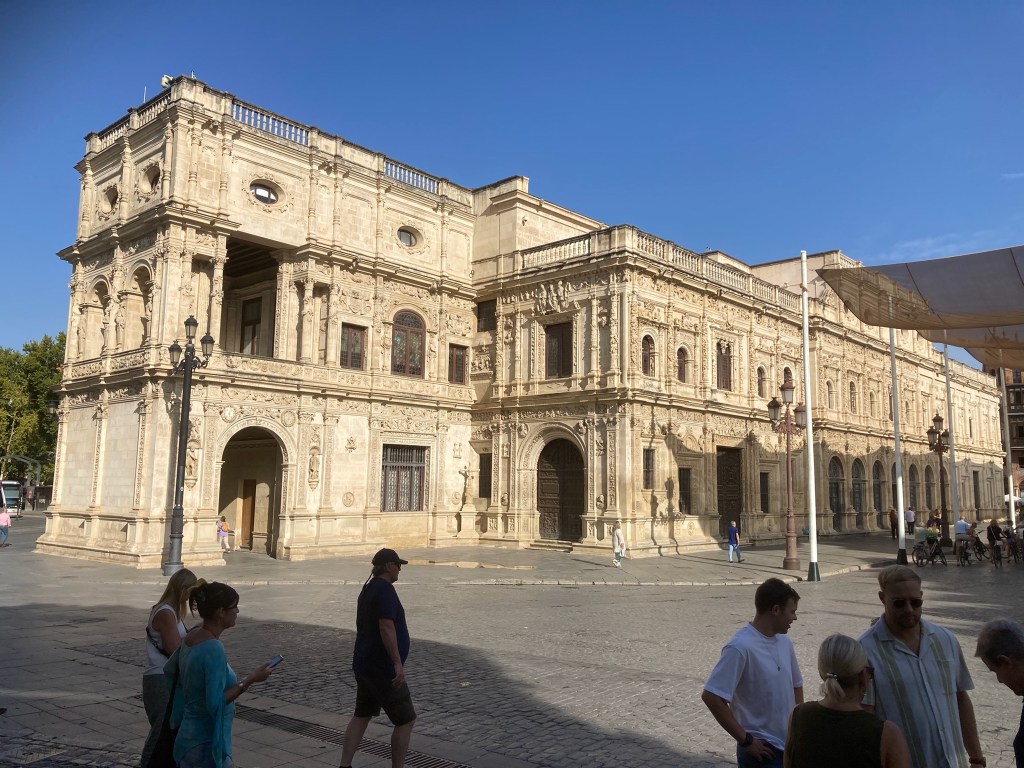
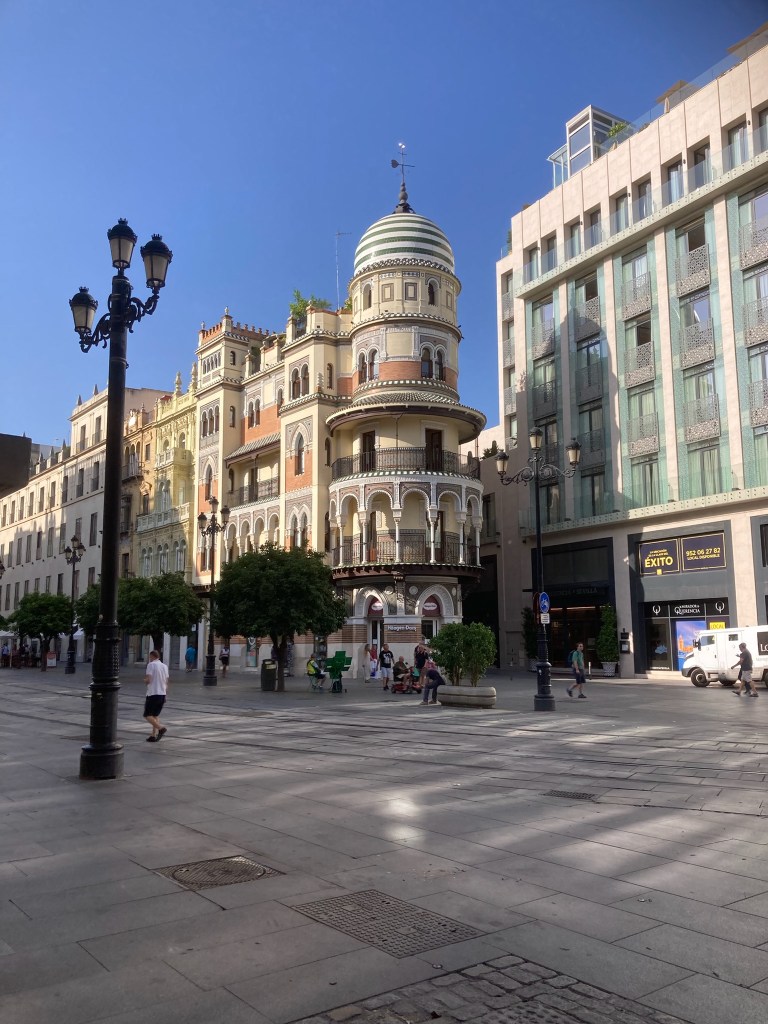
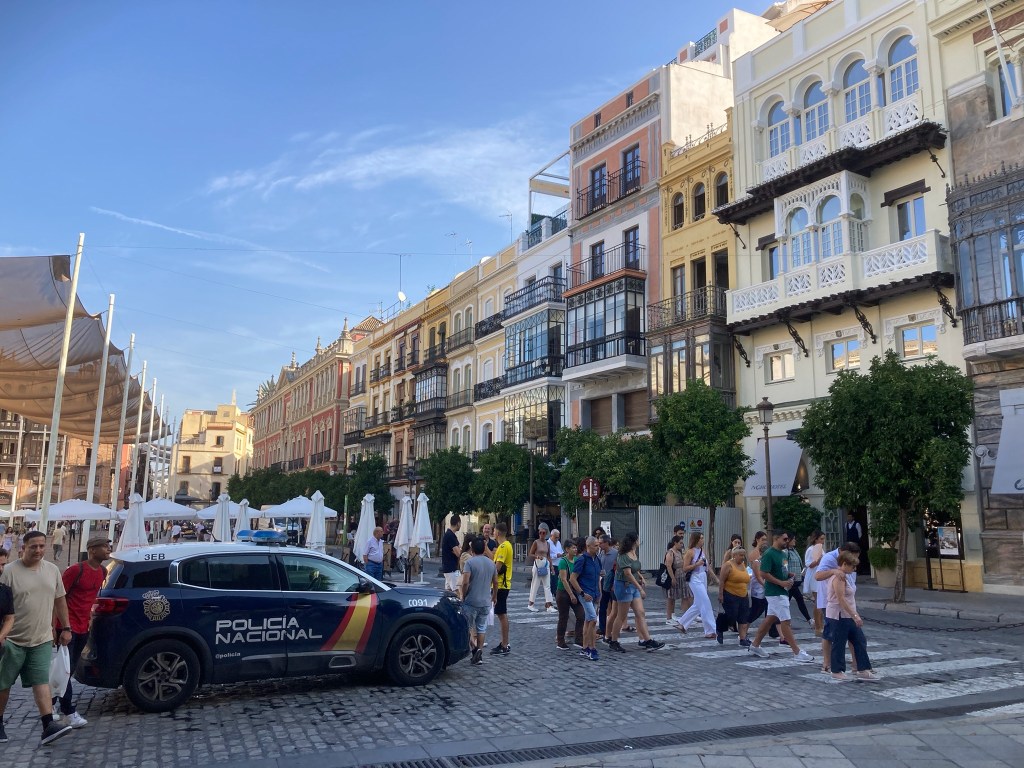
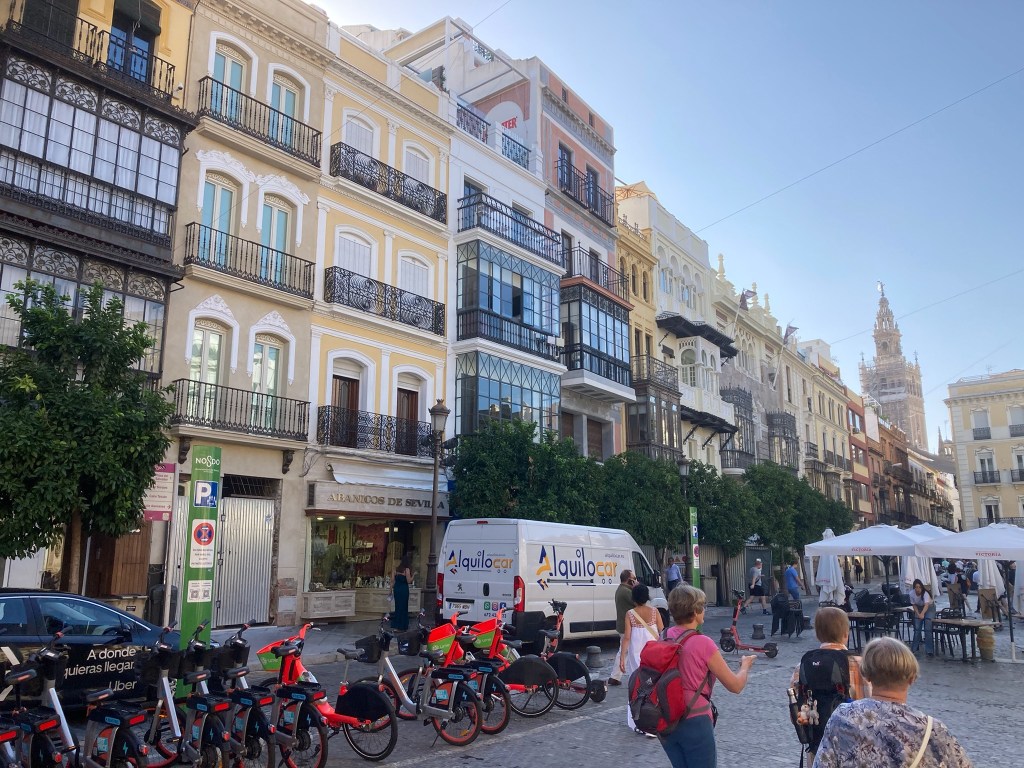
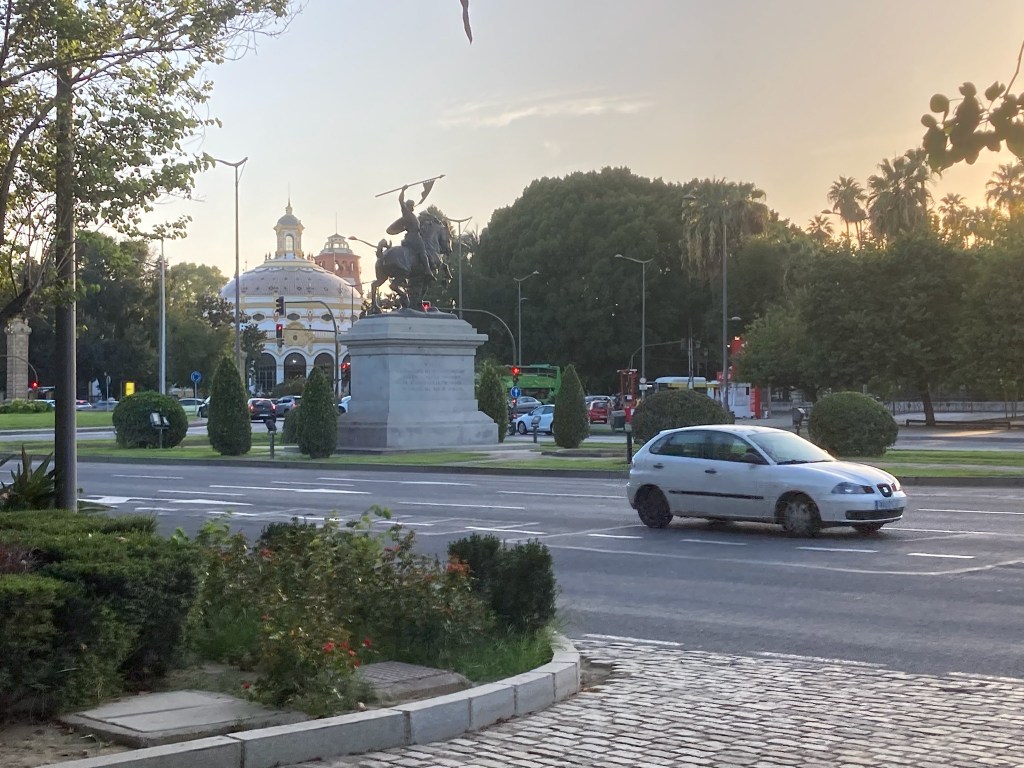
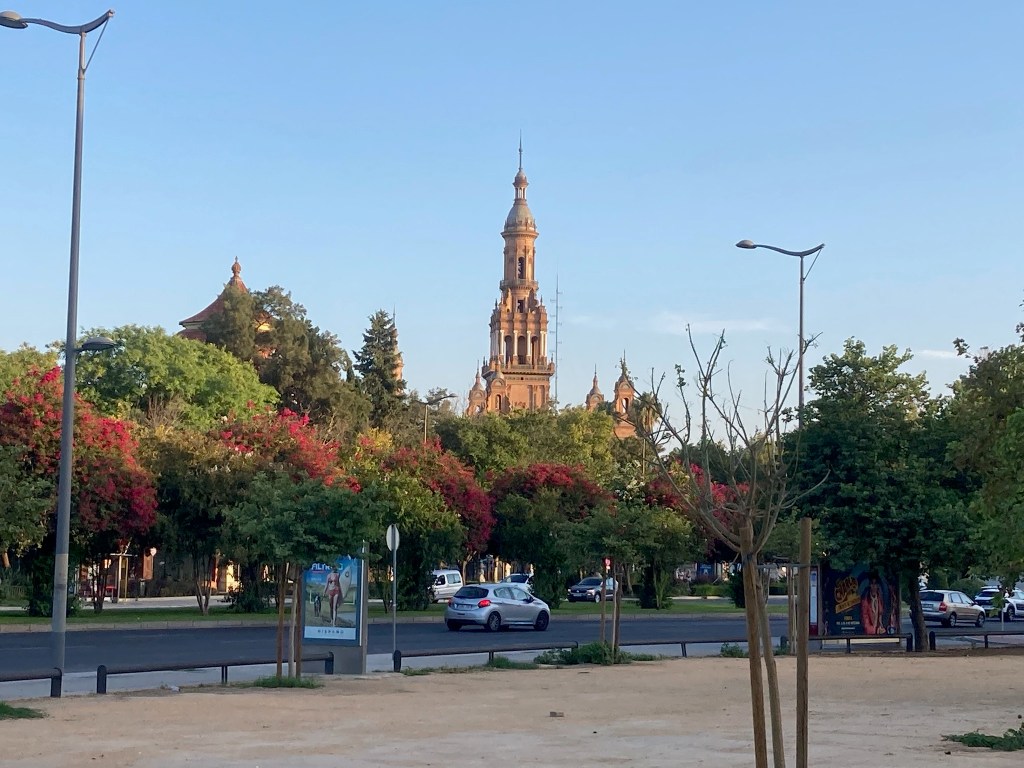
Our immediate very positive impressions of Seville were of broad avenues, big beautiful parks, historical monuments and statues at every turn and cleanliness – no rubbish or obvious graffiti. There were also lovely old back street areas, with cobbled roading, narrow or non existent pavements, churches on many corners and beautiful cafe / restaurant filled plazas. Occasionally a street door would be open and one could peer into an inner courtyard, with stunning mosaic tiles and beautiful tranquil internal gardens
We had 5 nights in Sevilla, with one of the days earmarked for a day trip to the nearby city of Cordoba. From Seville we would then journey on to Granada for some more historical explorations. So overall quite a quick trip but enough to give us a taste for some key historical sights, and to enjoy a little of the local food and wine.
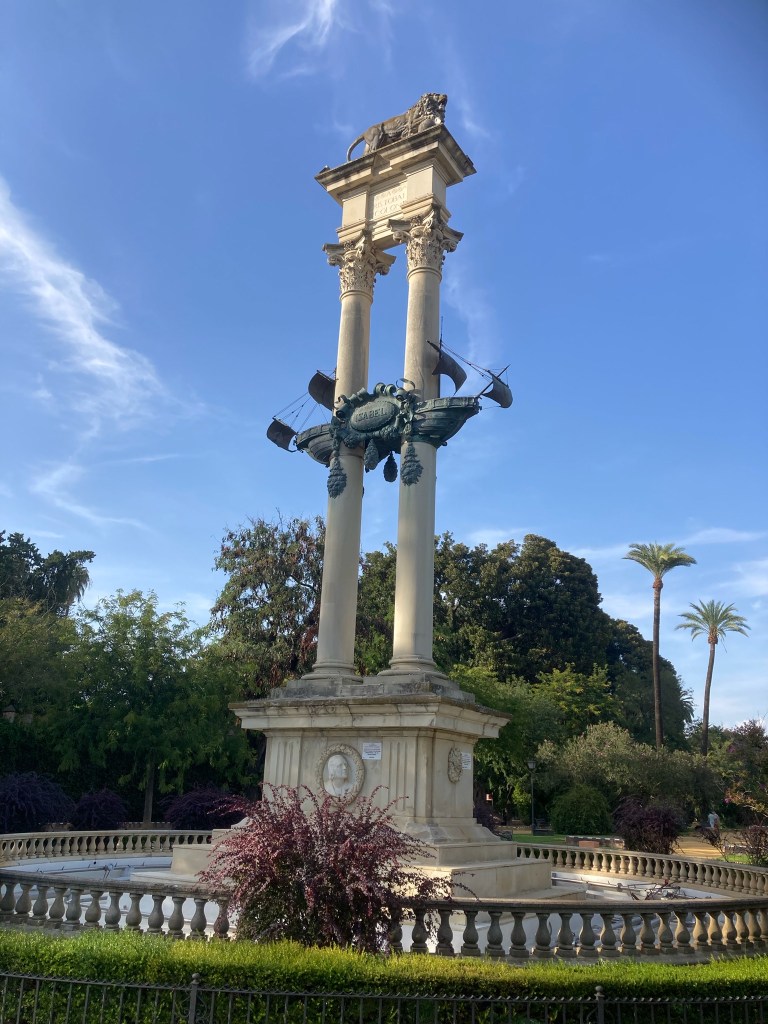
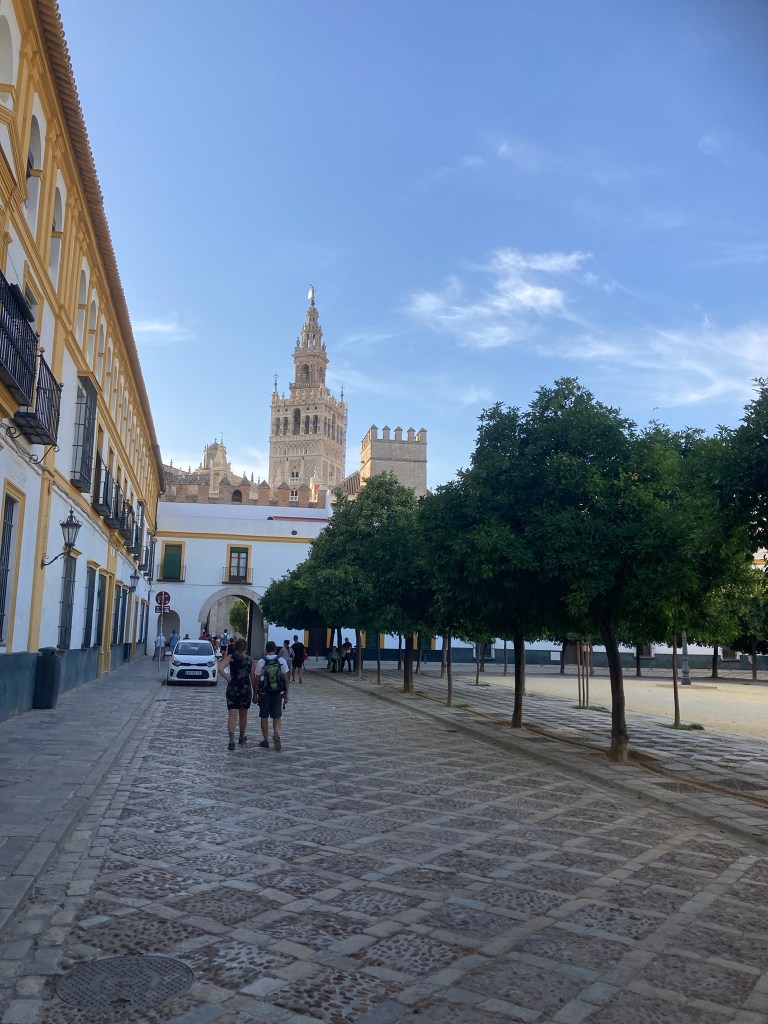
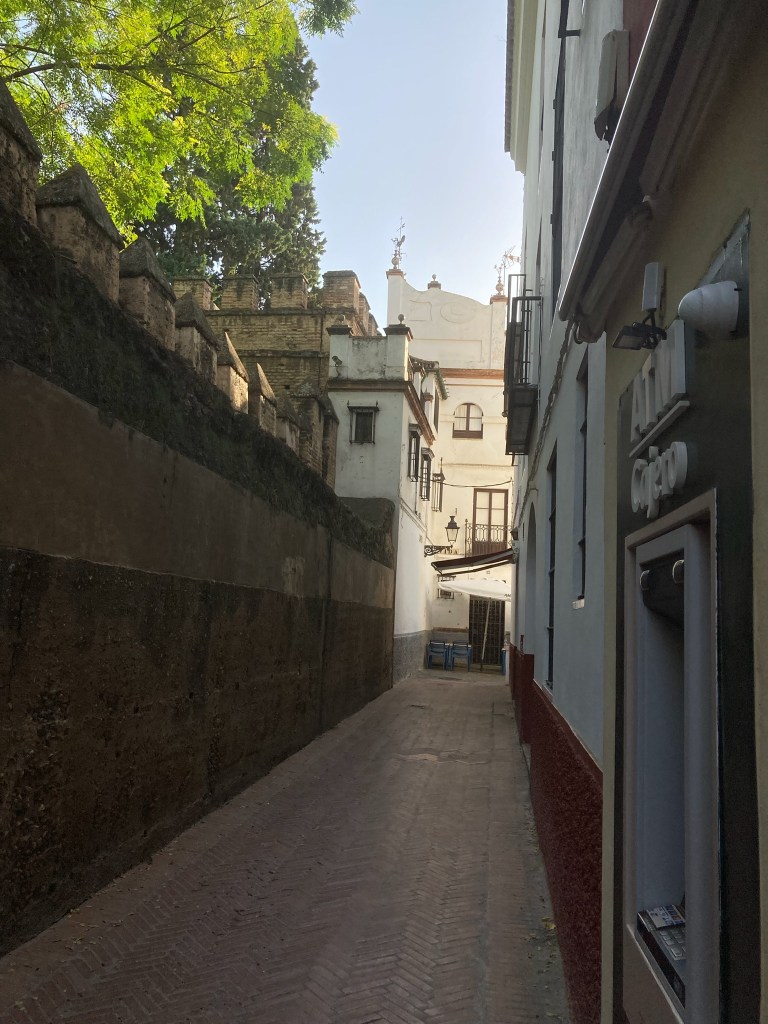
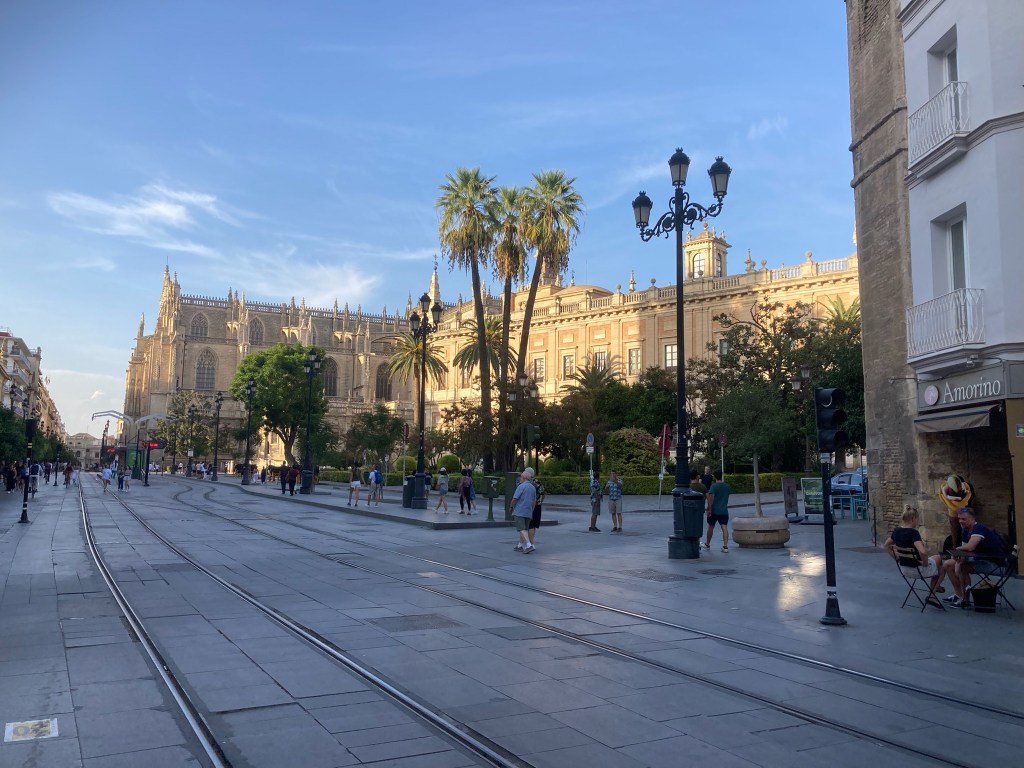
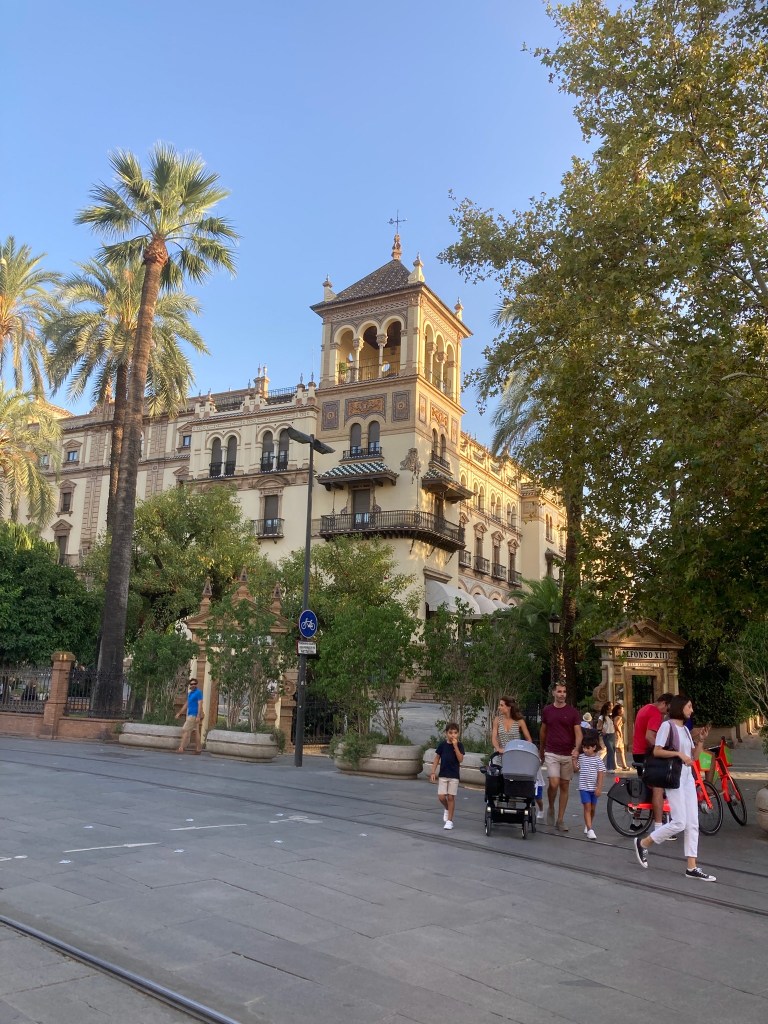
On our first full day in Sevilla we set out on a 2 hour “free” Walking Tour of Sevilles Monuments . Getting this sort of tour at the start of a visit like this suits our purpose well, as we get a good overview and briefing, plus a focus on what are the key things we do need to see further. We joined about another 20 tourists and walked with our guide around Seville, starting in the old quarter and the San Salvador Plaza, journeying past the Cathedral & Giraldo Tower & skirted the Real Alcazar ( Royal Palace of Seville). We heard all about the luxurious Alfonso 13th Hotel, the University of Seville which had been a cigar making factory originally and finally the magnificent Plaza Espagne .
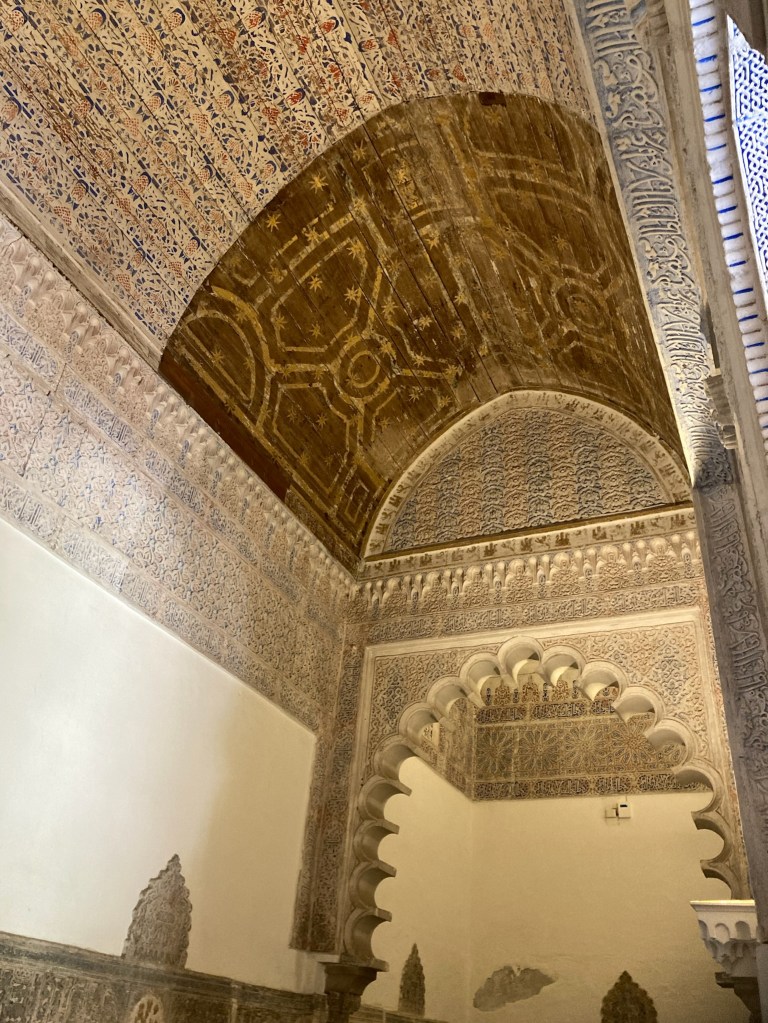
The main historical monuments have had a history that can include influence from Rome, the Visigoths, then the Moors from North Africa followed by the Christians all of whom then built upon or adapted the buildings they found to suit their own purposes. We see this everywhere to some extent and the Spanish language still has visible Arabic influences. The best example of this building adaptation we found was the Mesquita in Cordoba , but the Real Alcazar in Seville is delightfully Moorish, and that influence extends to the little tiled courtyard gardens to be found in lots of the houses in the back streets of Seville.
The principle of these “Free Walking Tours” is that one pays the Guide at the end of the tour based upon how good one thought it was and then what one thinks is appropriate. Typically EUR 10 to 15 seems to be about the mark, and we paid EUR 15 each, as we found the tour excellent. From this we then decided to do separate guided tours of the Cathedral & Giraldo Tower, and then on another day a tour of the Real Alcazar.
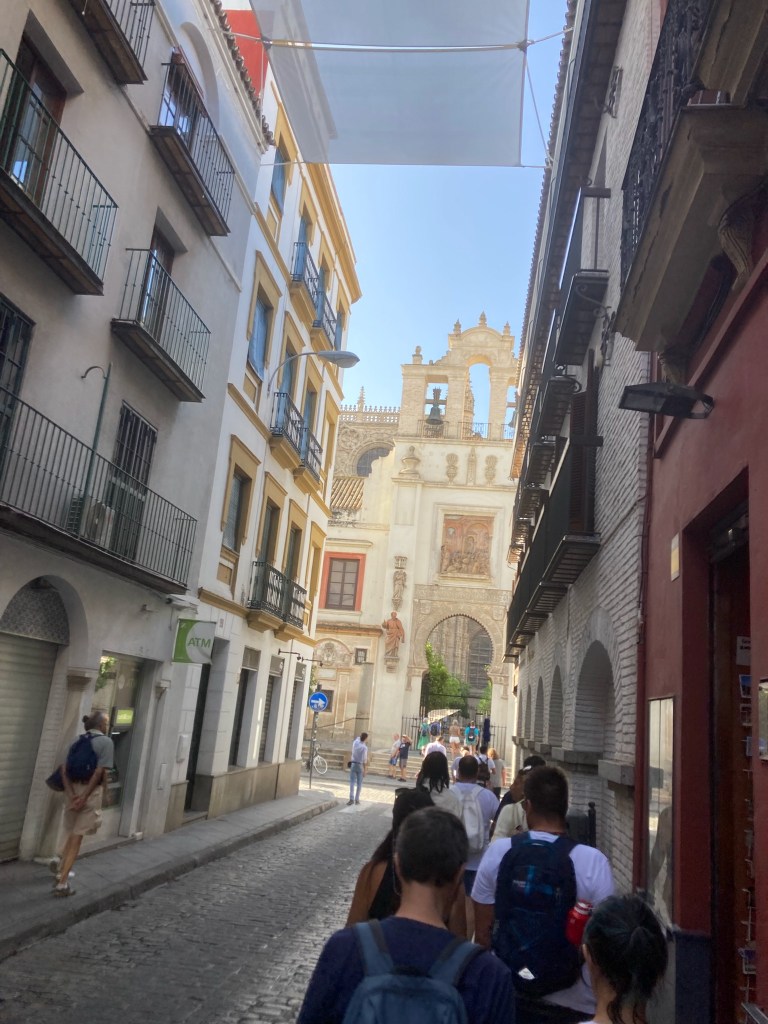
The Cathedral of Seville and attached Giraldo Tower are impressive both externally and internally. Like most of the historical buildings in the city they are beautifully clean and in super condition. Our Tour Guide met us in the square outside, handed out the audio head sets and sent us through security with instructions to head up the Giraldo Tower first.
Due to cleaning of the Towers exterior, the top of the Tower was not accessible but one could ascend up to the bell tower and this entailed walking up 36+ Narrow ramps. Actually we walked up about 30 ramps and then came to a complete standstill, which was followed by a slow shuffle up to the bell tower. Views were very limited due to the press of visitors and the wire mesh on the look out viewpoints. Fair to say that some younger tourists seemed to think that they could occupy the viewpoints and not share them with other tourists, rather selfish in fact. There were a few viewpoints on the ramps going up, that did offer interesting Cathedral roof views.
The Cathedral is magnificent, sadly too many altars and chapels were sectioned off by ornate grills that spoilt the effect but were possibly good security? There is a real opulence to the Seville Cathedral.
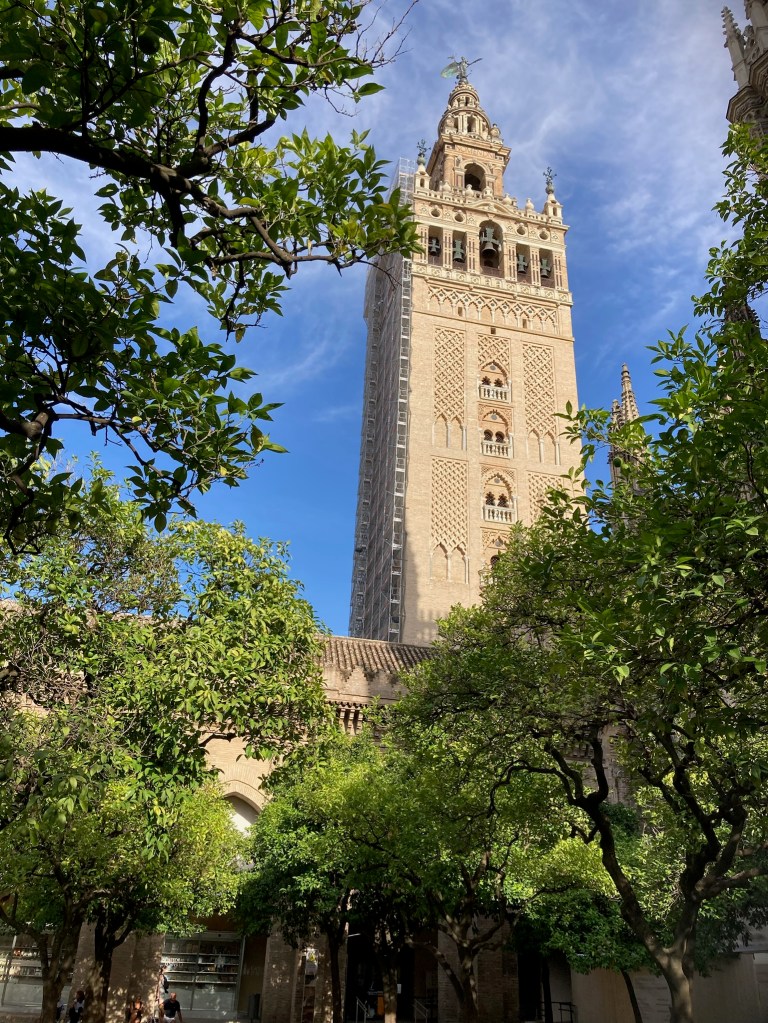

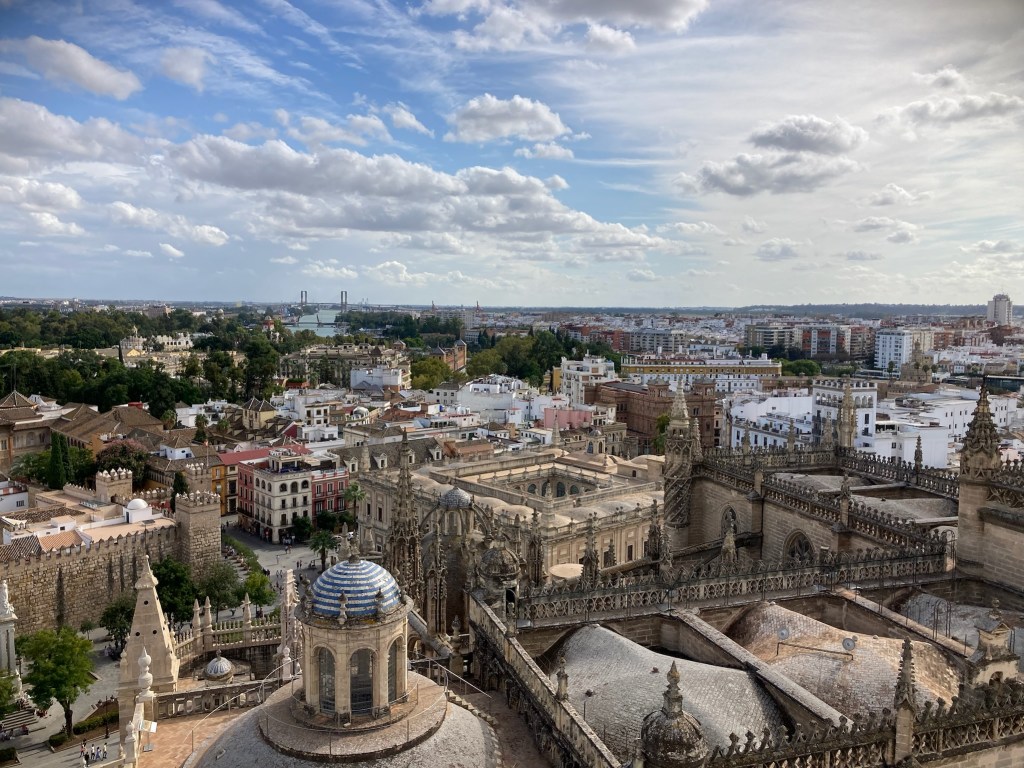
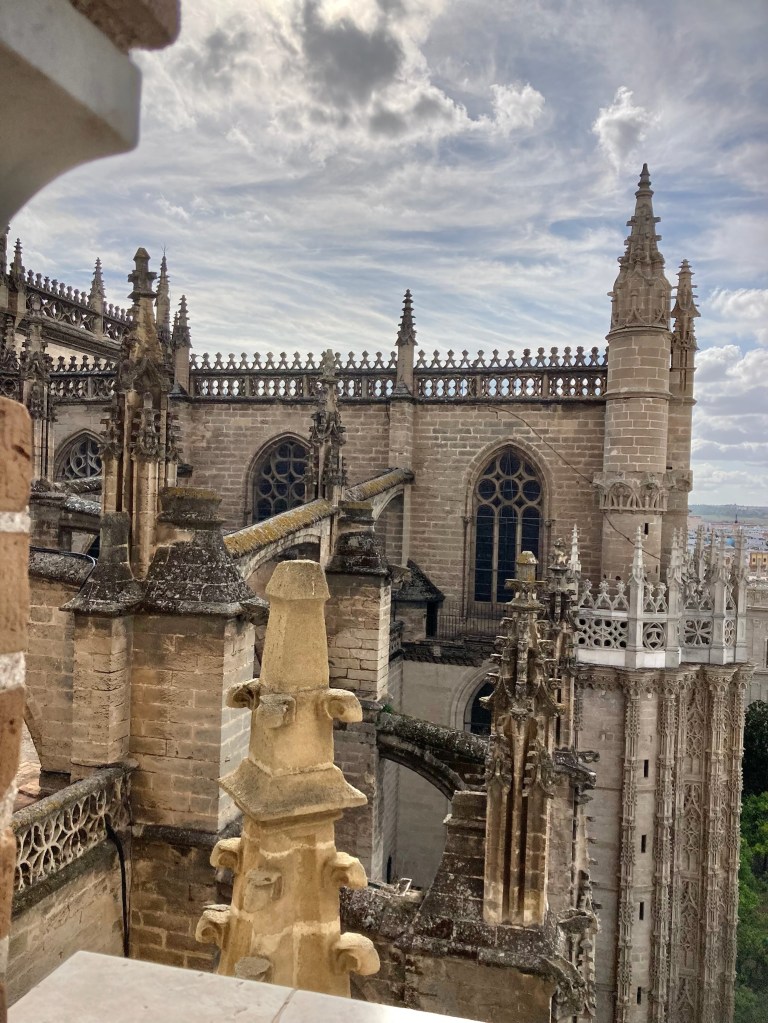
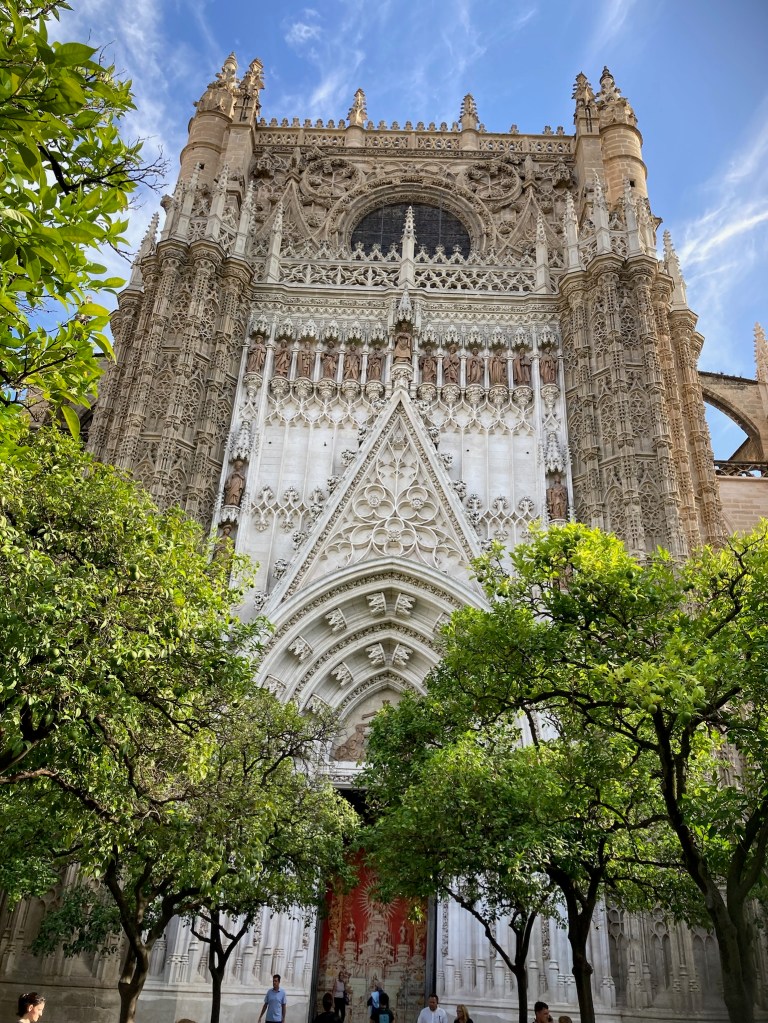
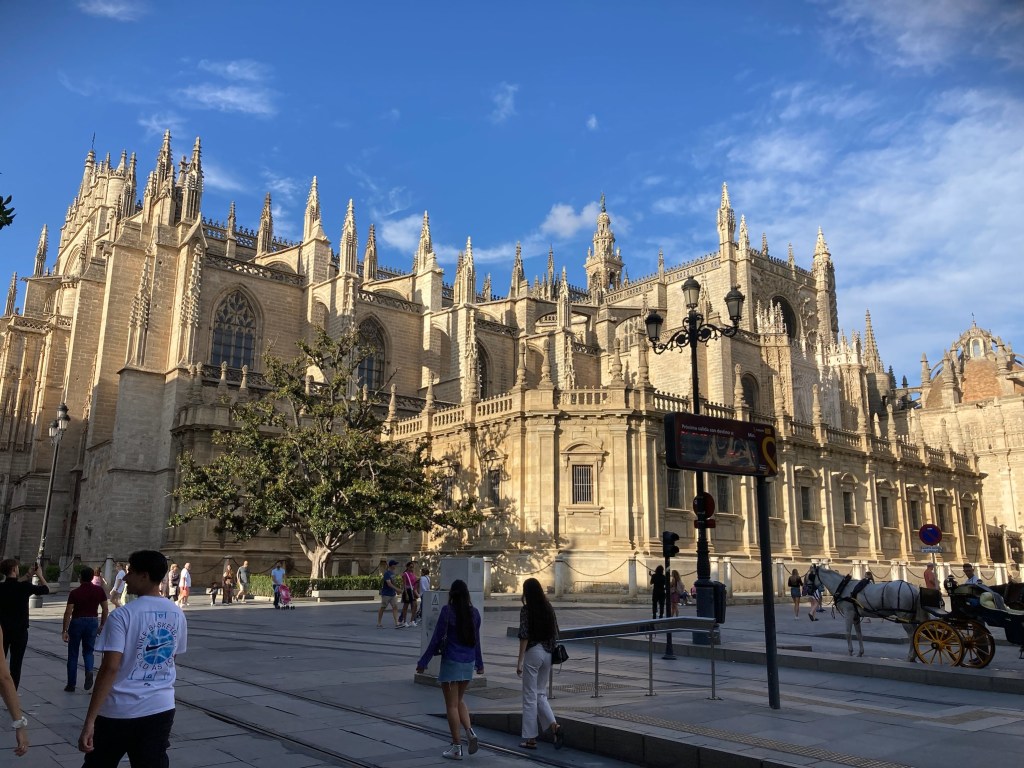
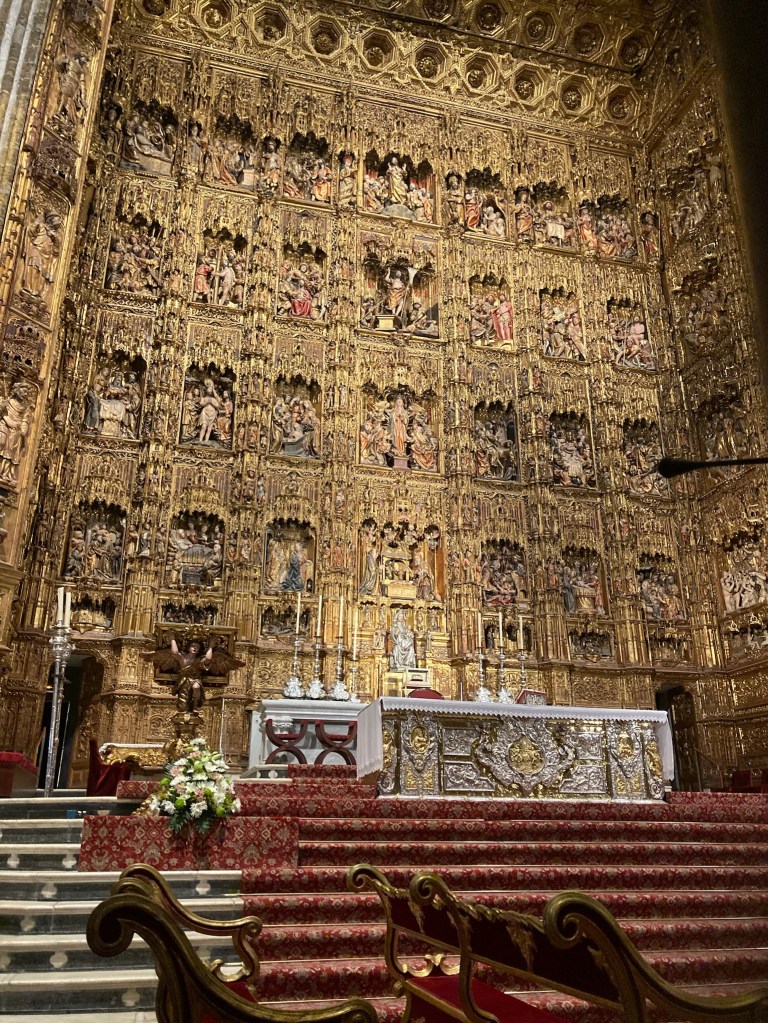
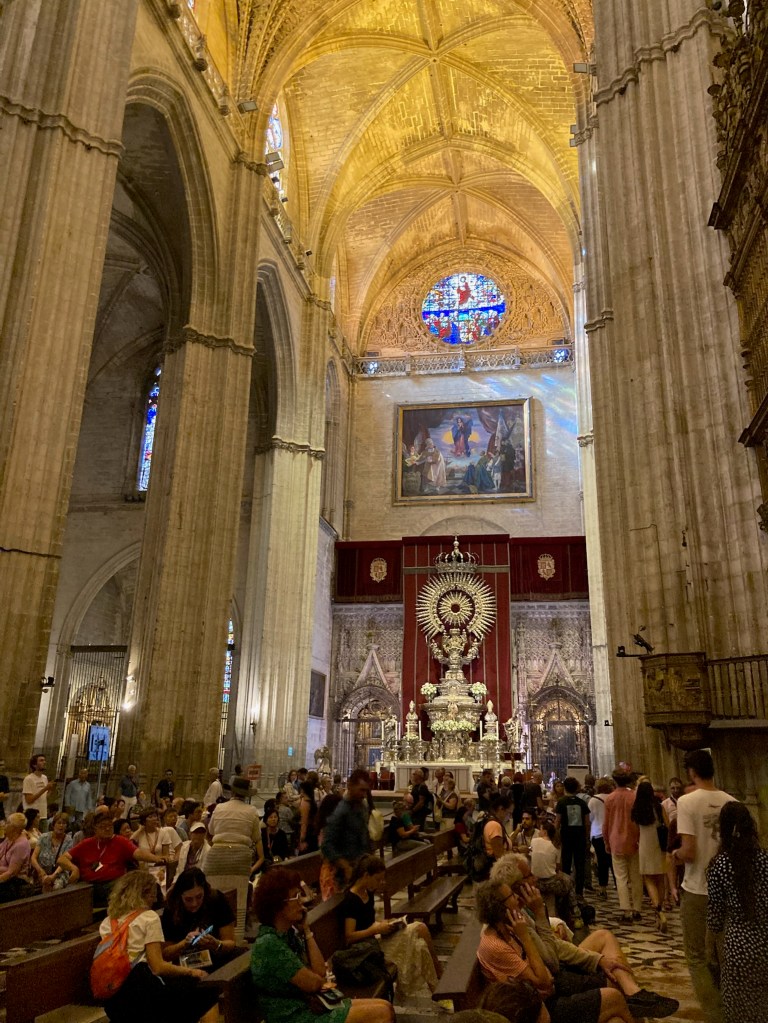
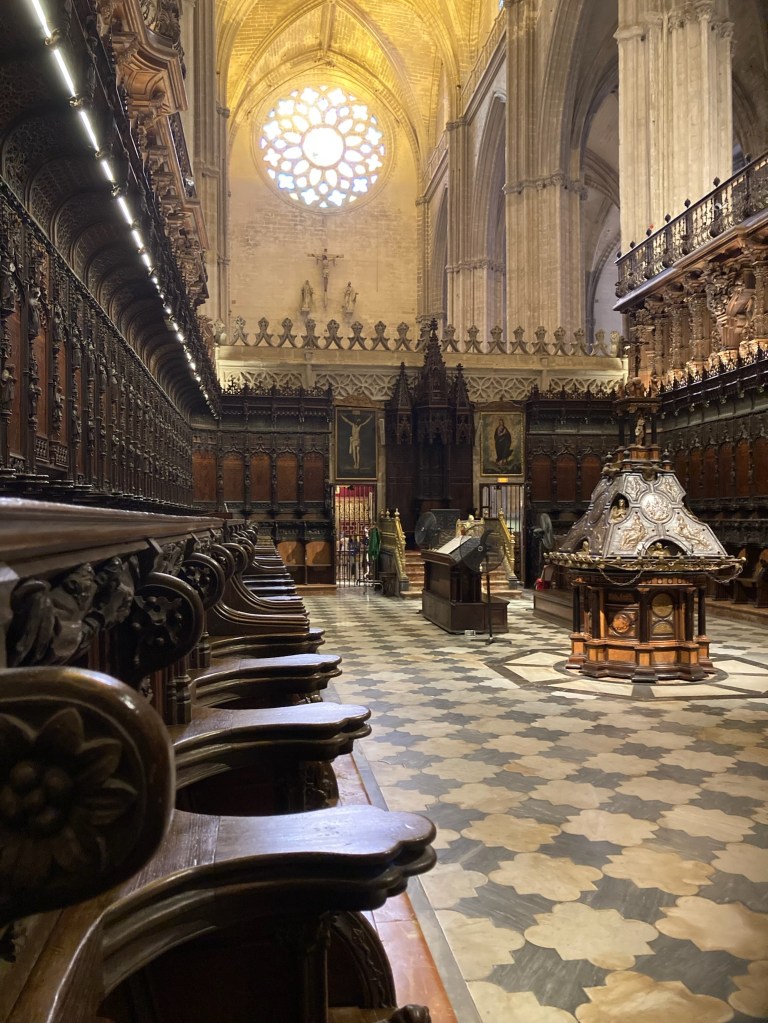
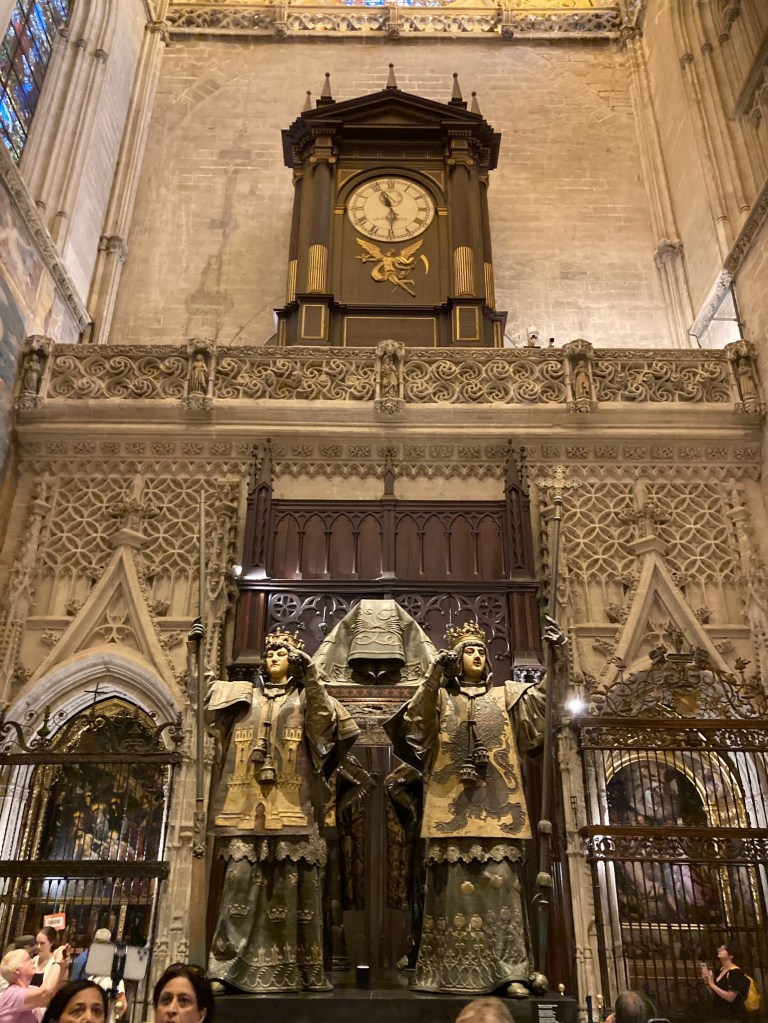
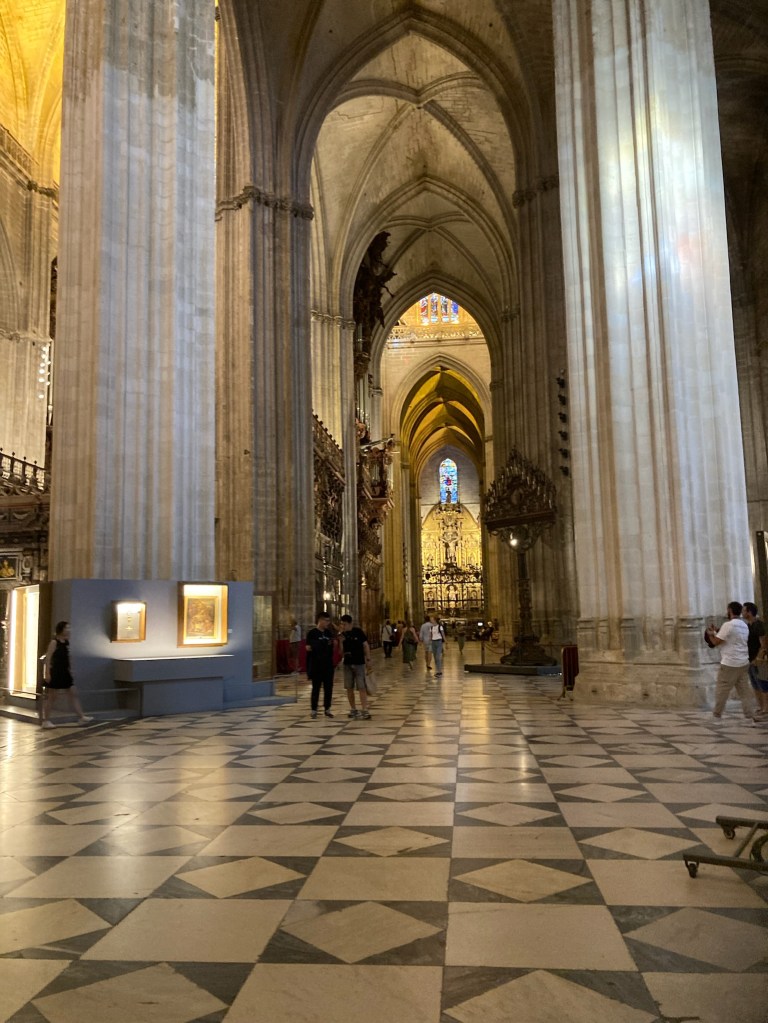
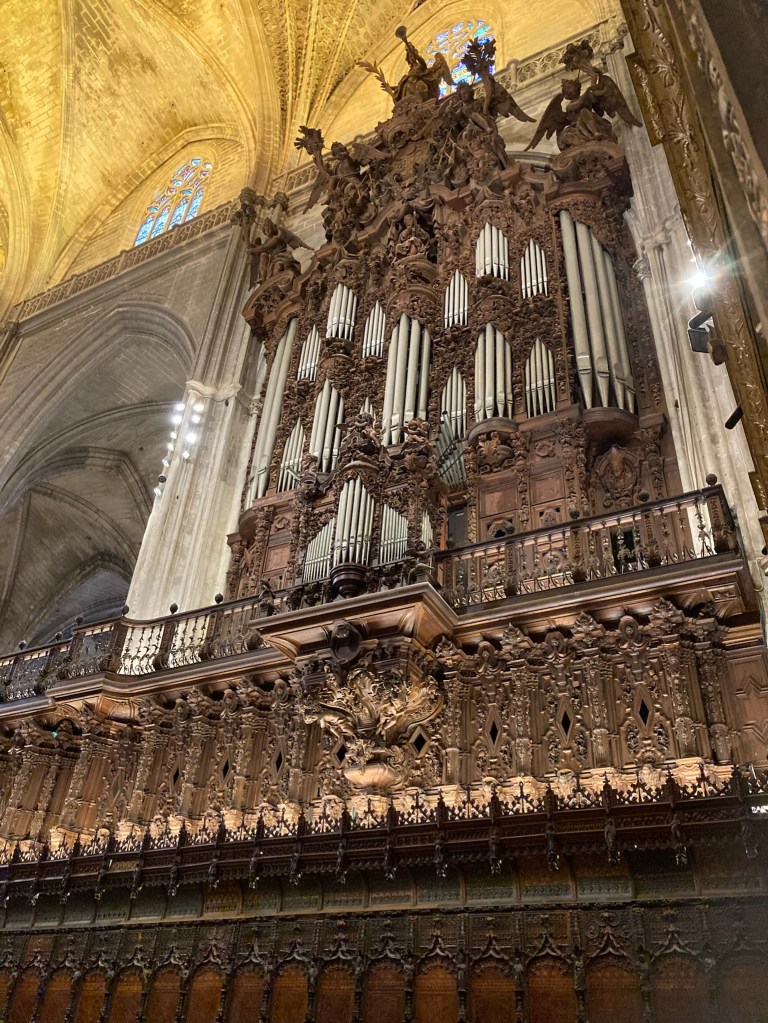
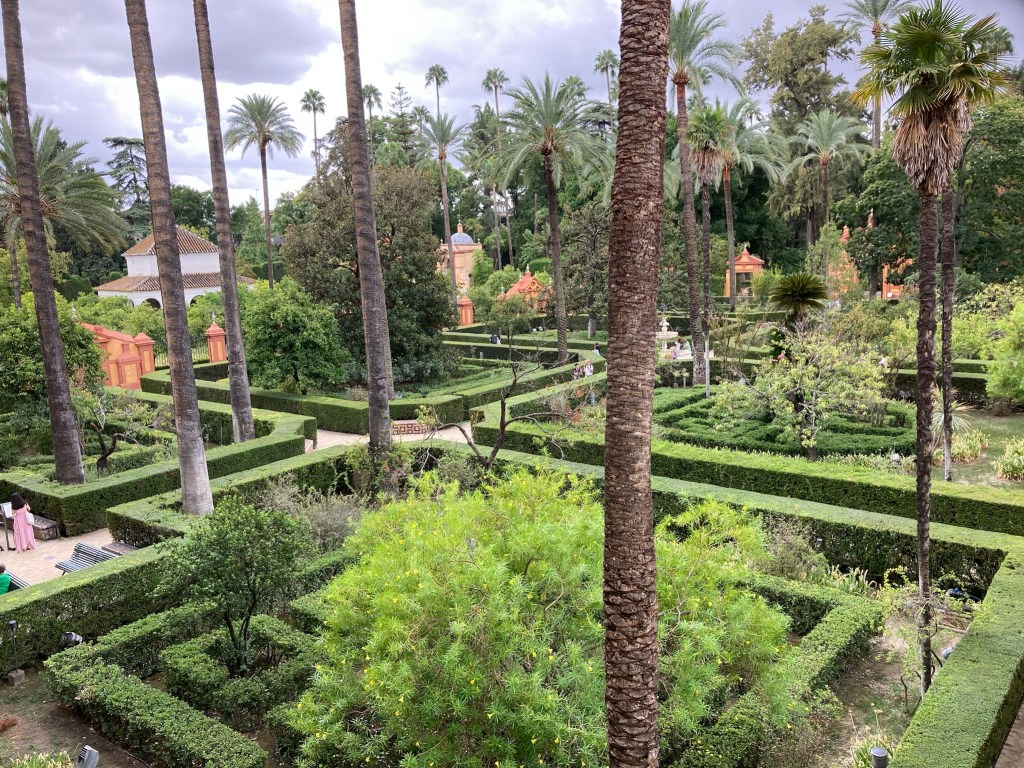
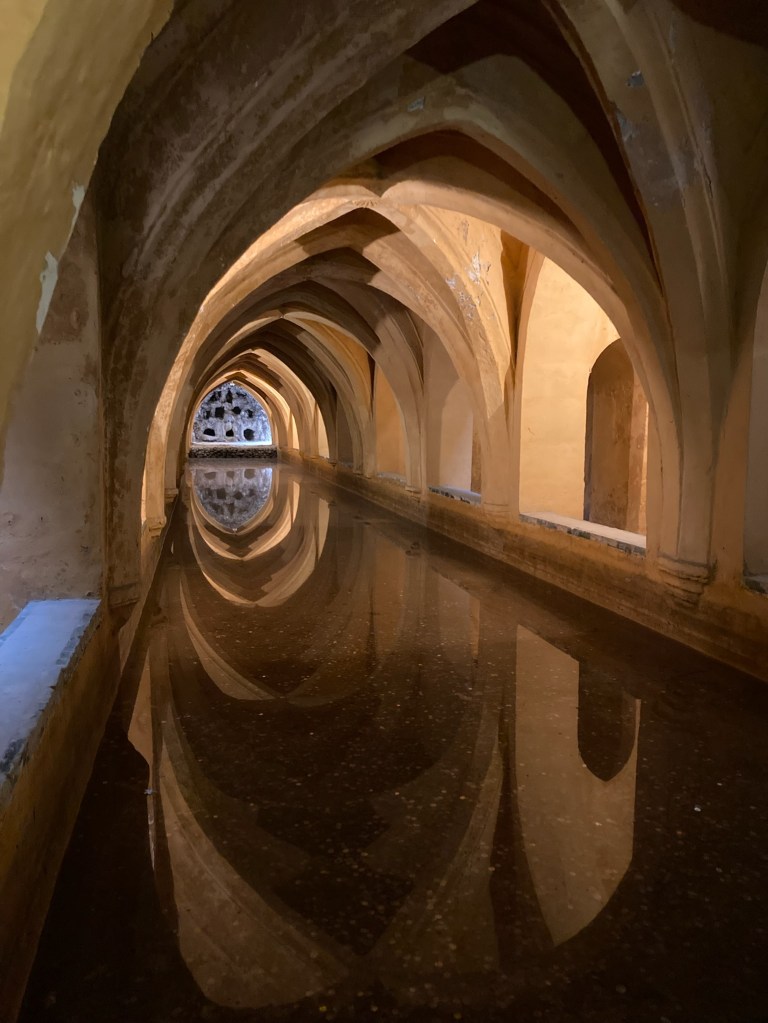
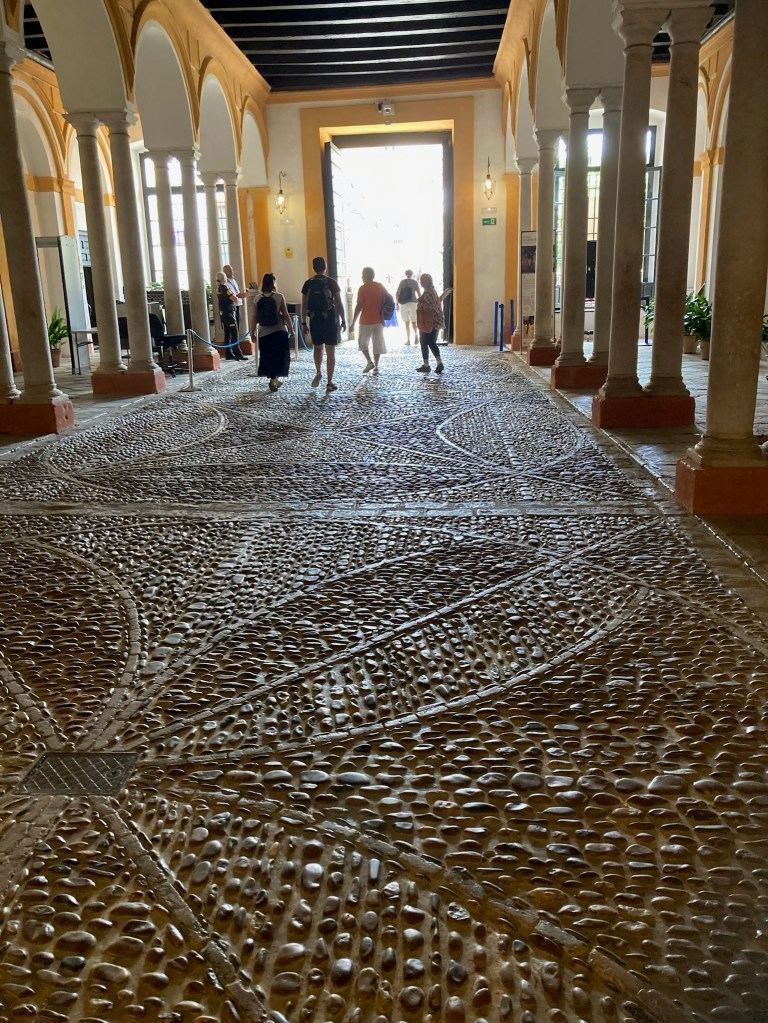
Our guided tour of the Real Alcazar was impressive, as the guide himself was a bit of a character, with a great knowledge of the history of the Alcazar which he shared really well. But it was in the Alcazar that the Queen of Spain – not long having taken control of Seville from the Moors, used some of the spoils to fund Christopher Columbus’s voyages to the Americas. Some of him is buried in the Cathedral -see pic above – some paintings have been positioned in the Alcazar that refer to the Christian takeover and activities thereafter, but the buildings ( palaces) and gardens are still very much Moorish in decoration and design.
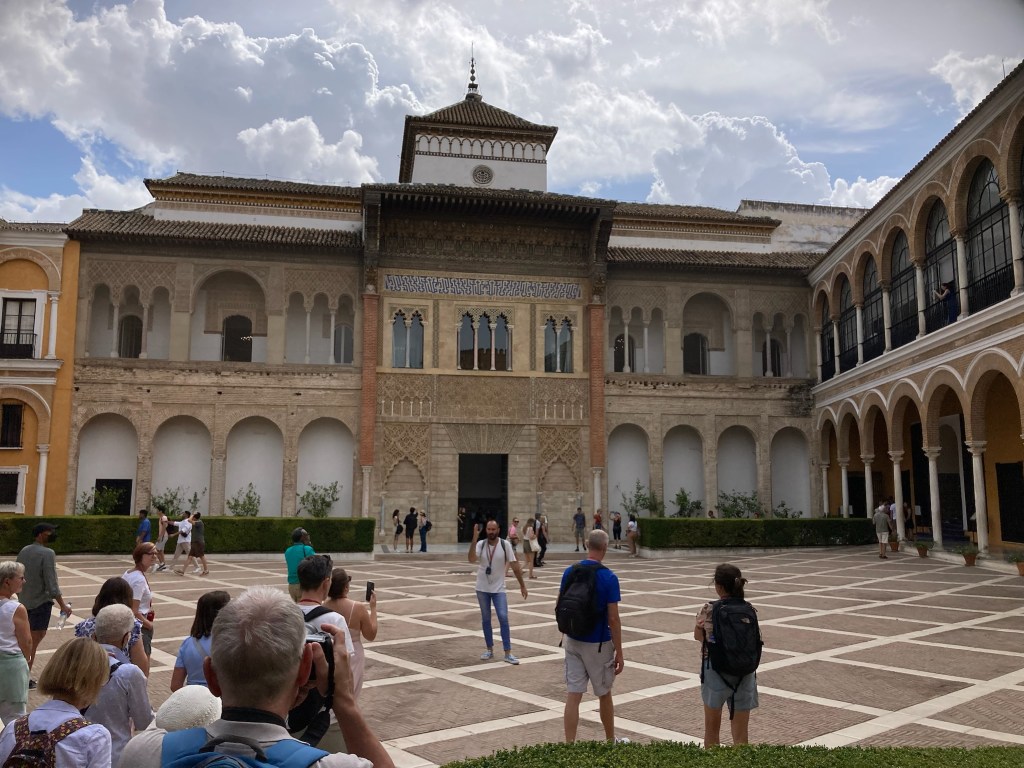
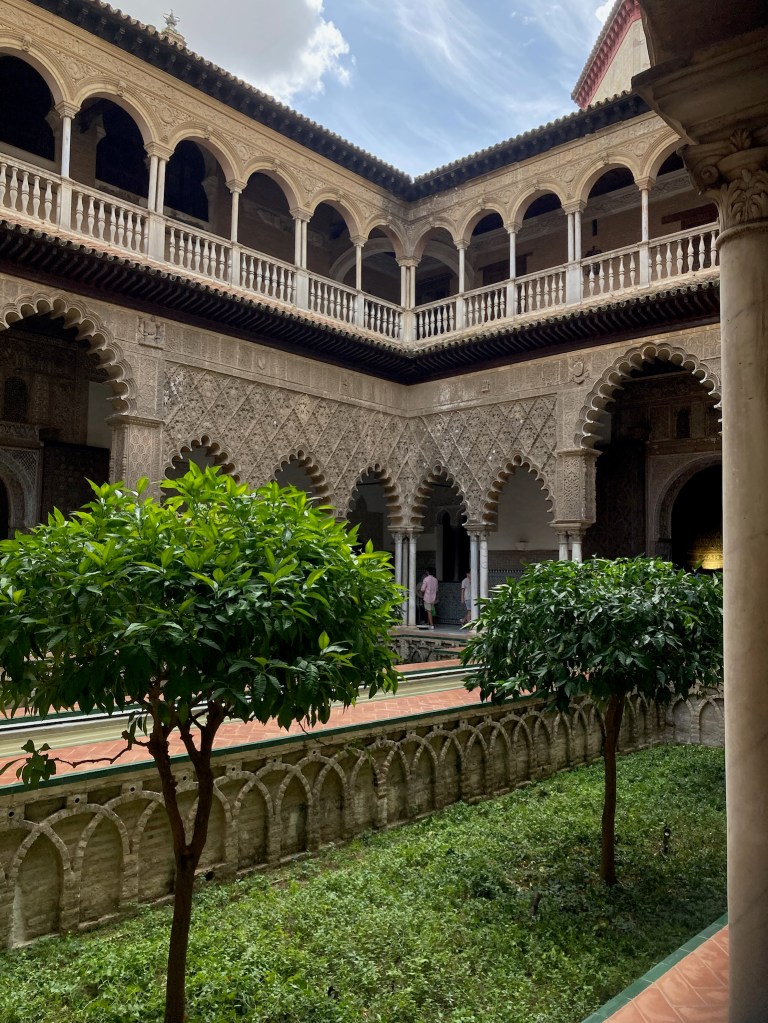
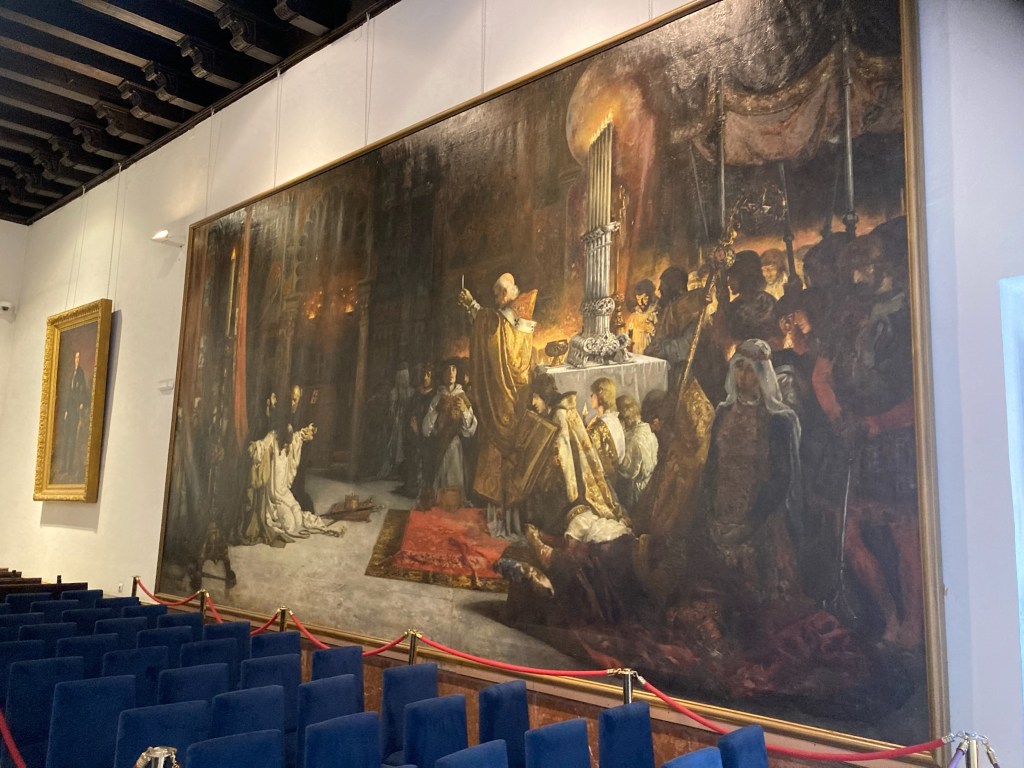
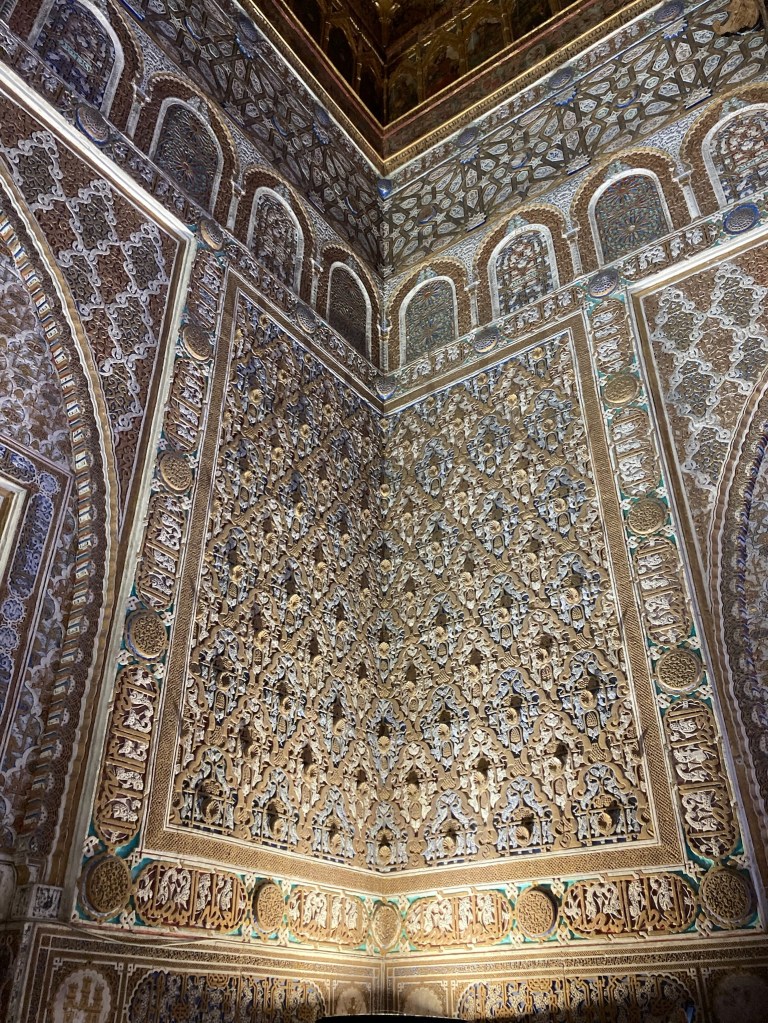
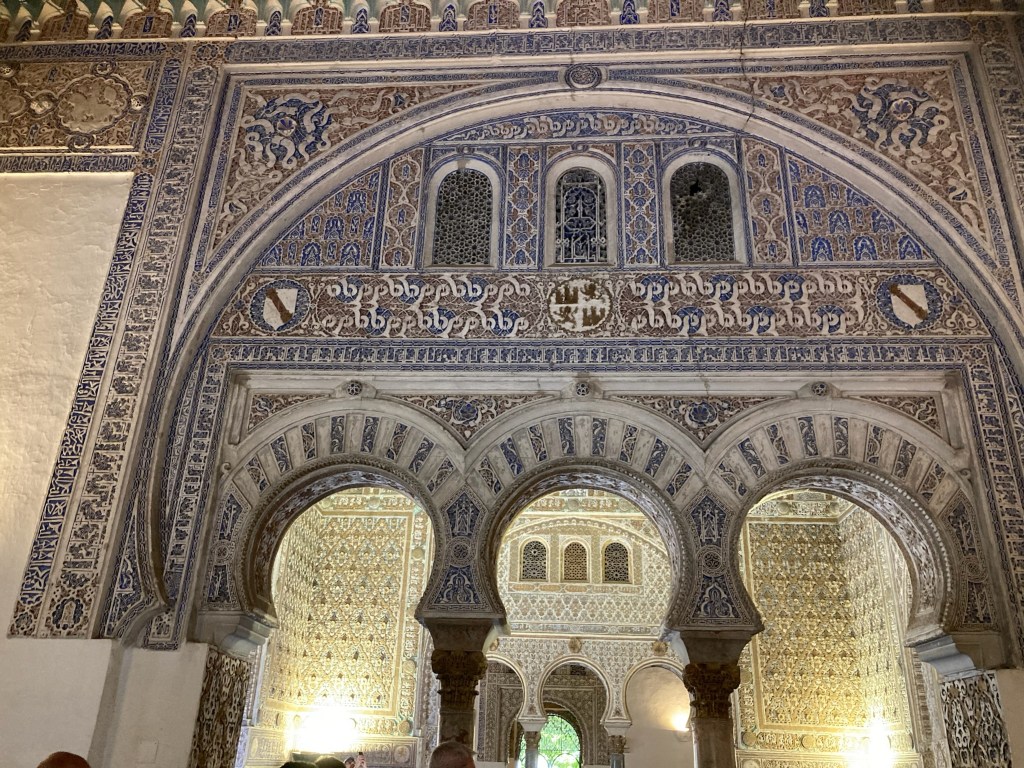
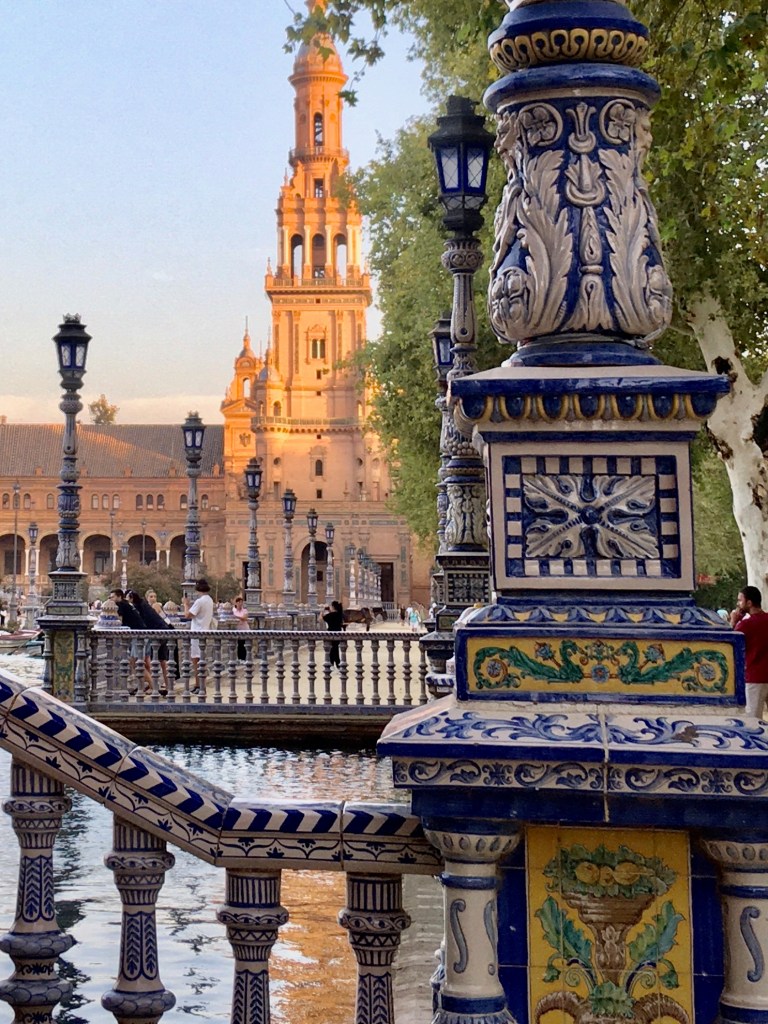
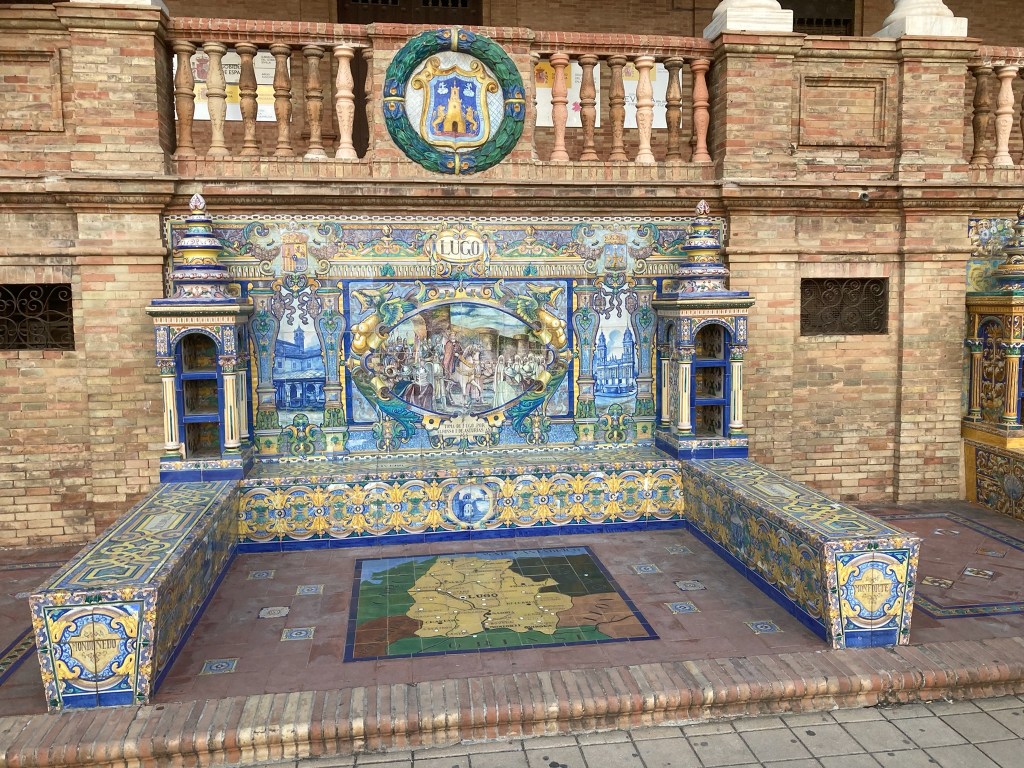
Some of our neatest memories of Seville are of the Plaza de Espagne, which was actually built for the 1929 Exhibition that celebrated the ancient links between Spain and the Americas. The Plaza was built in the Andalusian Regional architectural style. Interestingly for Sue and i we saw evidence of this same architectural style when we visited our friends in St.Augustine in Florida. Their city was founded in the 16th century by the Spanish, and the Flagler family that created a college, art gallery and more in the city in the early 20th century, did so in this same Andalusian regional style.
We saw the Plaza in the early evening, at midday and in the later evening when flood lit. Its very impressive at all hours (see pics below) and is a real gathering place for locals and tourists alike- impromptu music, flamenco and more.
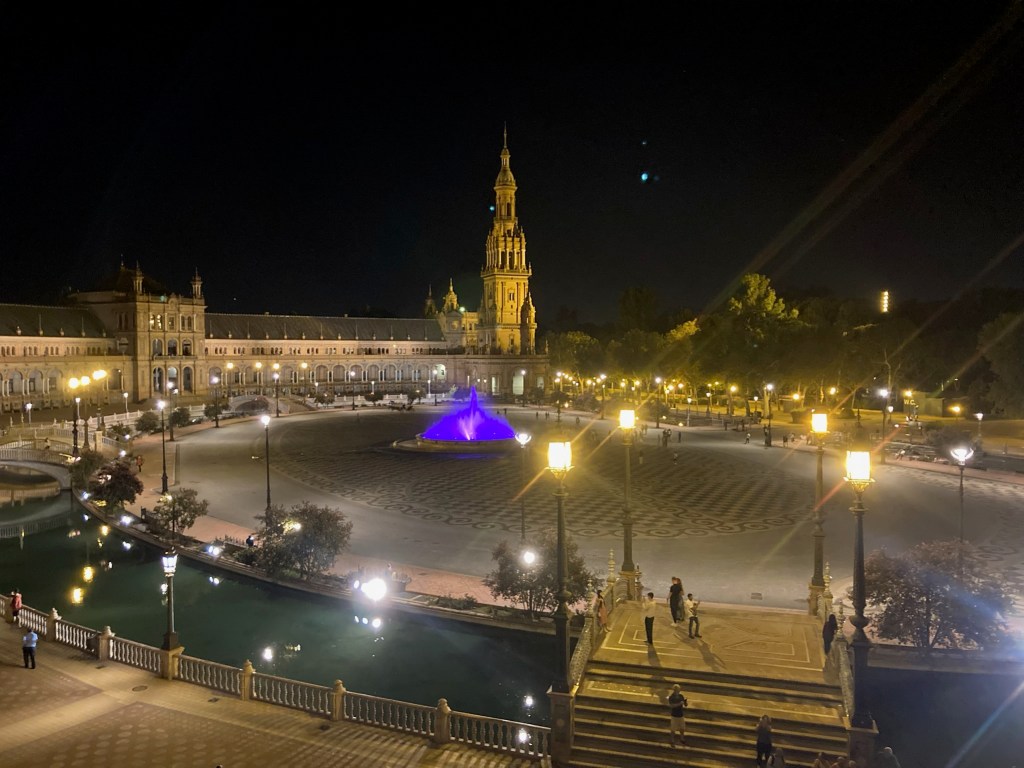
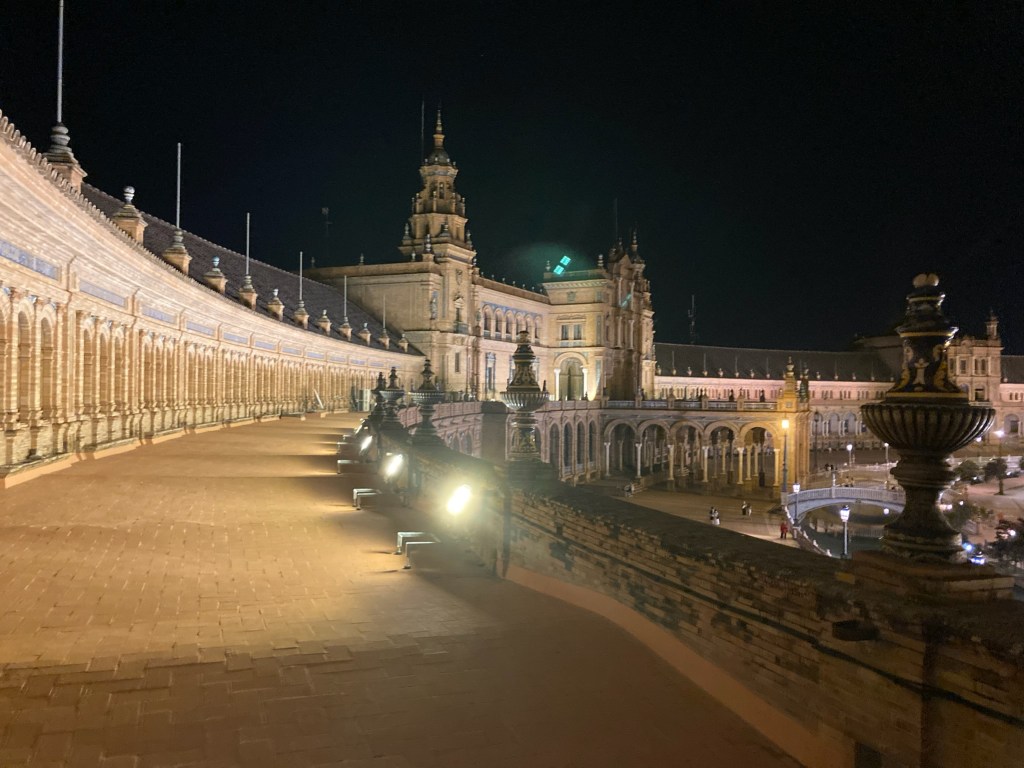
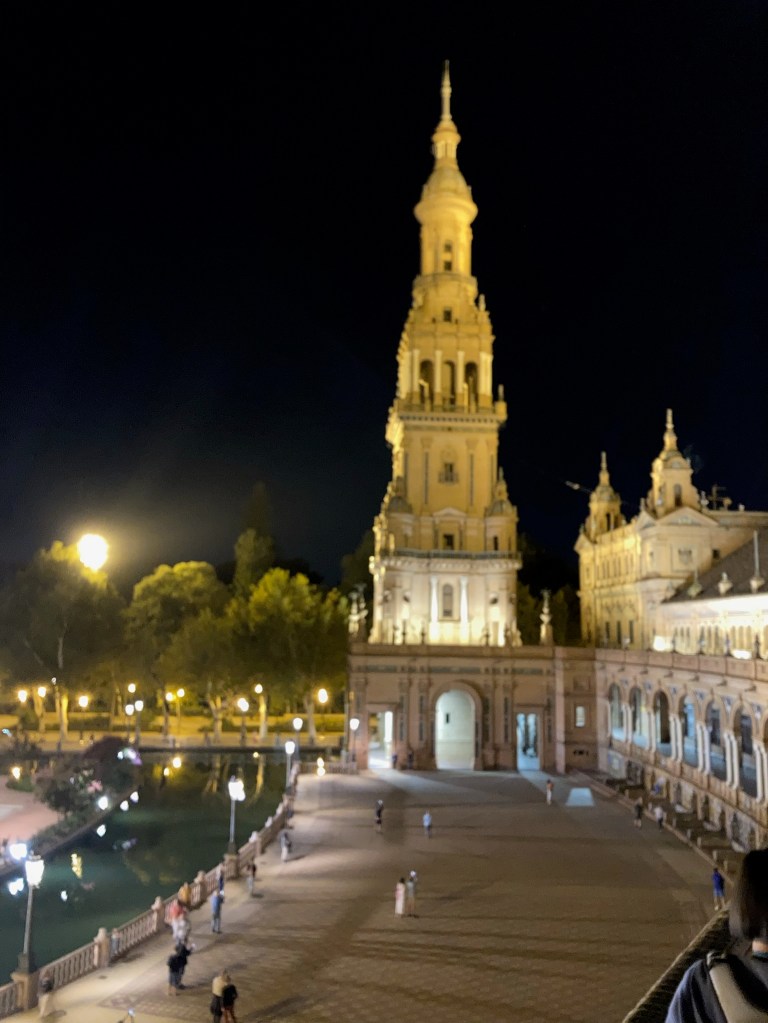
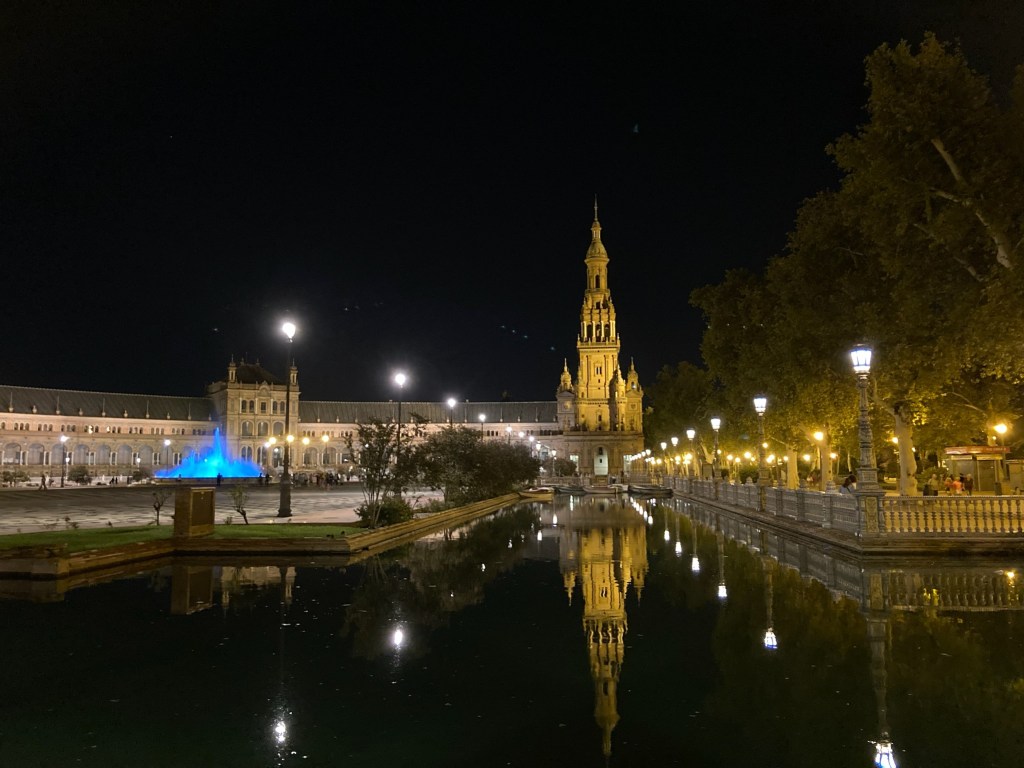
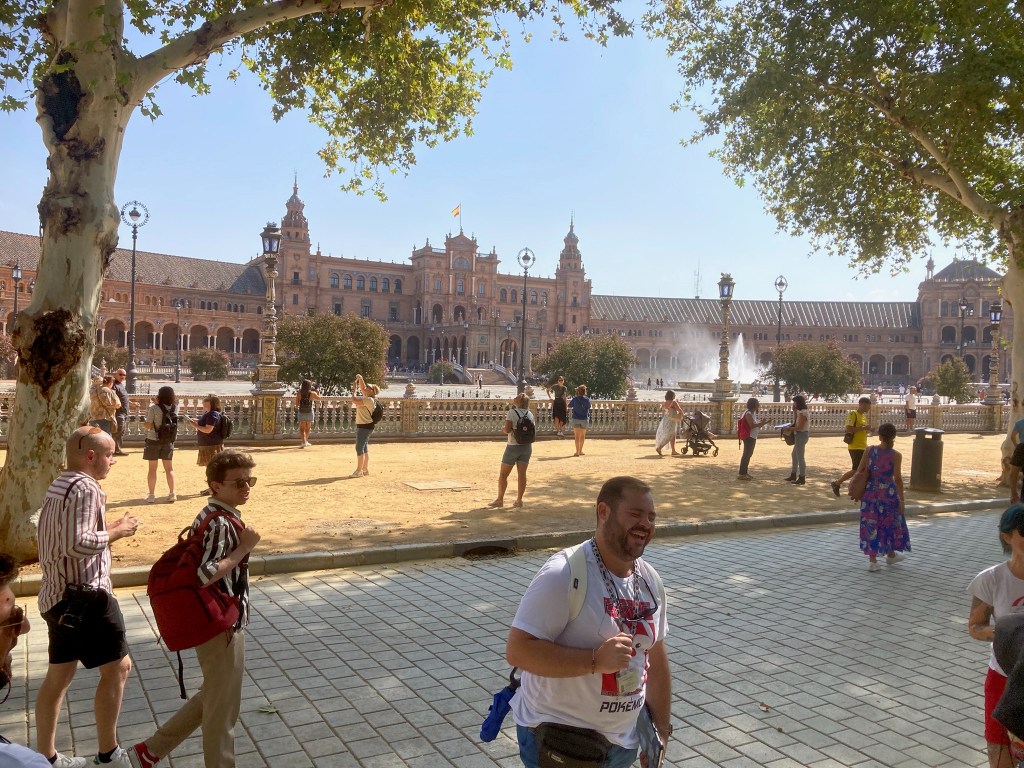
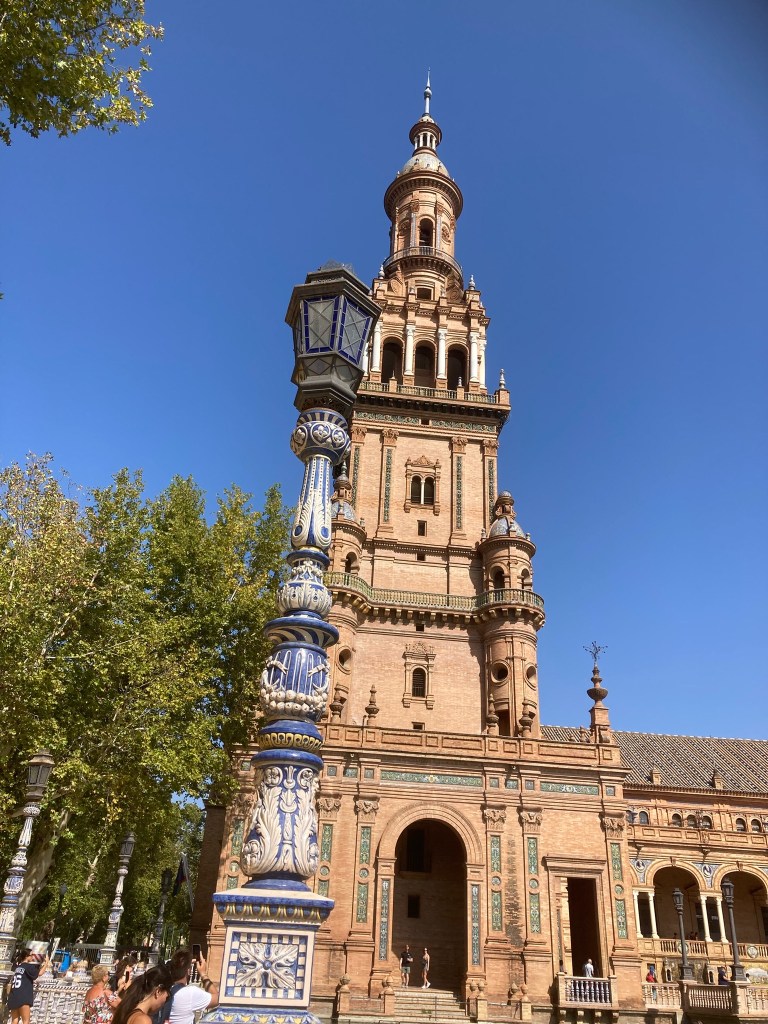
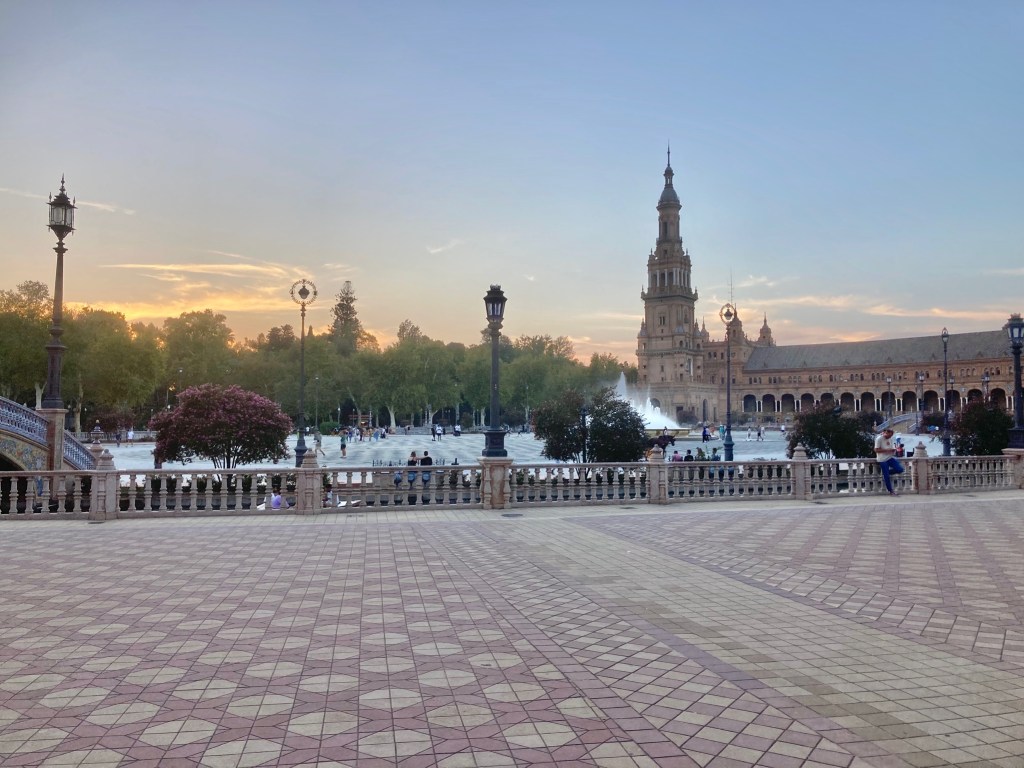
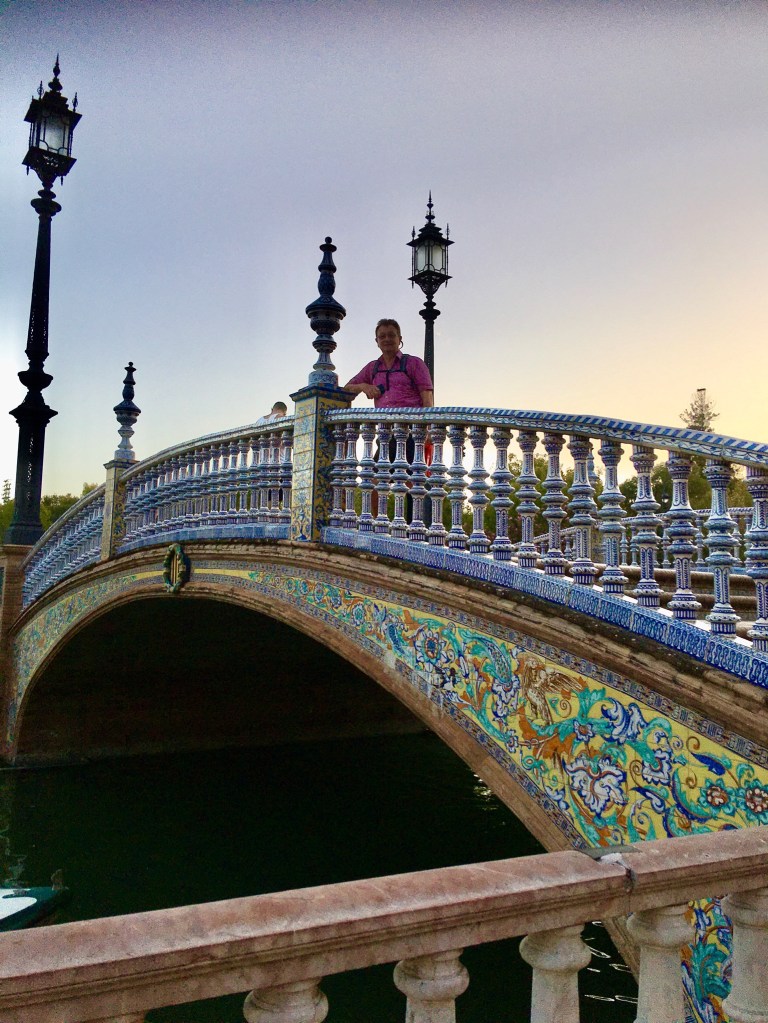
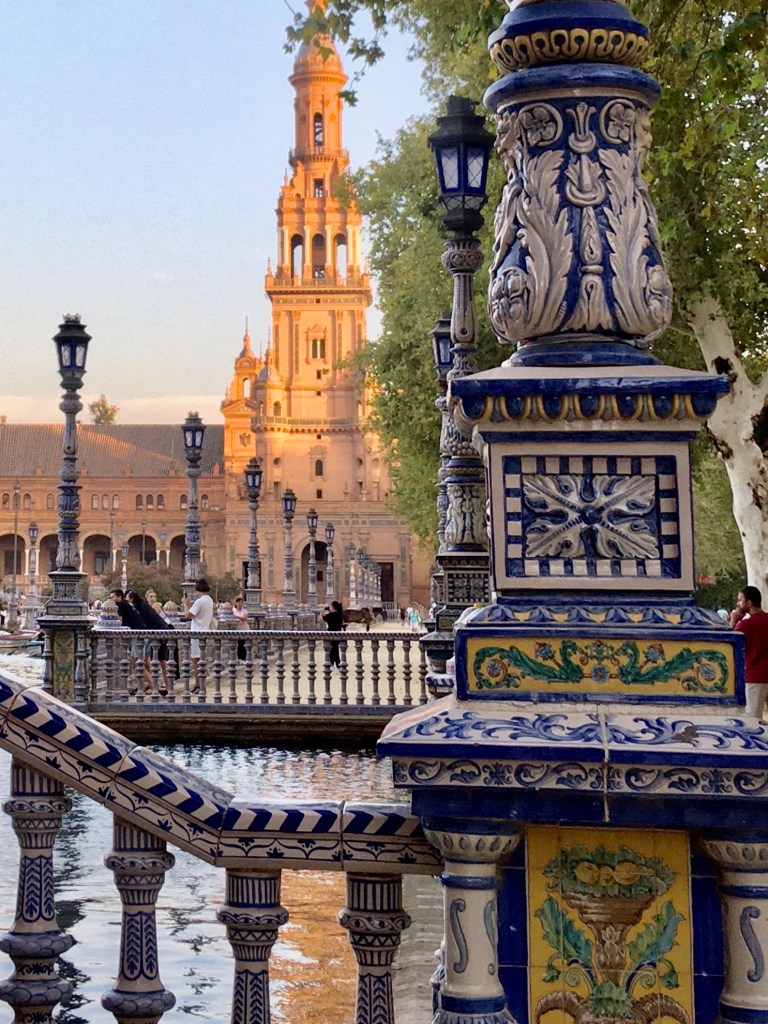
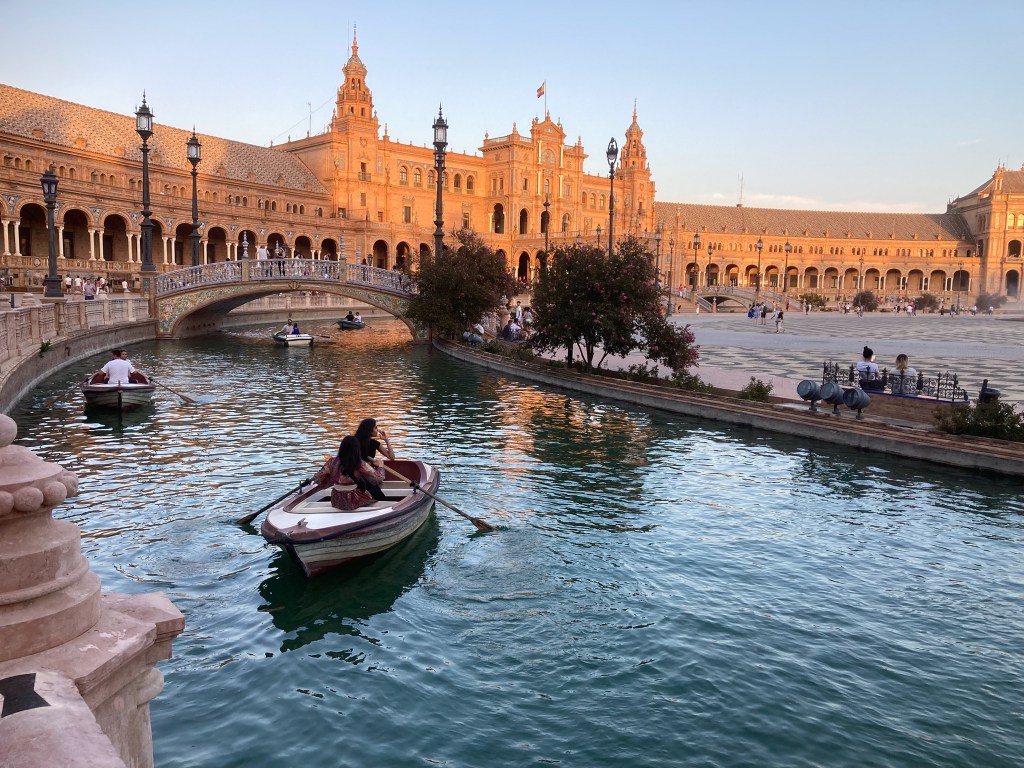
Plaza Espagne
And that was Seville, we walked many times around and through the city, never feeling unsafe or insecure the four days we had exploring the city. We had a great time getting to know Seville and our apartment was ideally placed, a 15 to 20 minute walk to most of the areas we wanted to explore.
But it would be remiss not to mention the food and wine at the tapas restaurants that we ate at. Not every item on the menu was available as a “tapas” rather than a “full course” option, but usually at least 80% were. In each case we came upon the restaurant, liked the look of it and dined there. We speak very little Spanish and chose what we felt were “local” not “tourist” restaurants – there were menus in English but mainly the restaurant staff did not speak English. In spite of that we dined well and inexpensively with most tapas being between EUR 3 and 5 each, and lovely local wine & beers – oh and an occasional glass of sangria!!
We had a super time in Seville and highly recommend a visit, if you can.
 Travels with My Wife
Excellent reporting n pics. All received in good order Travel well n safe. Cheers
David & Judy Weston
+64 21 426 302
Sent from my Samsung Galaxy smartphone.
LikeLike