
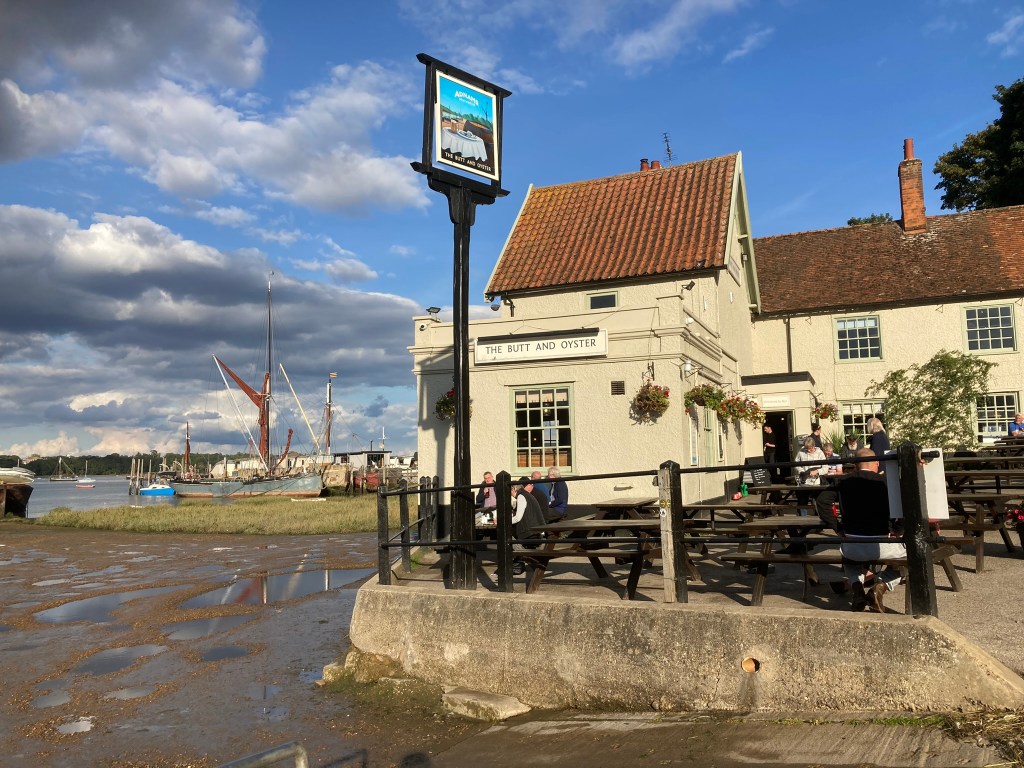
Its a sunny day in late September and we are heading to the Suffolk coast for a dose of extended English History at Heritage UK’s Landguard Fort . Originally built by Henry VIII + 1667 Dutch attempted Invasion of England + on to WW1 / WW2 . And then to a late lunch at the Butt & Oyster up the River Orwell at Pin Mill, much loved by Arthur Ransome and featuring in his childrens books, “We Did Not Mean To Go To Sea” – WDNMTGTS – and “Secret Water”.
Landguard Fort
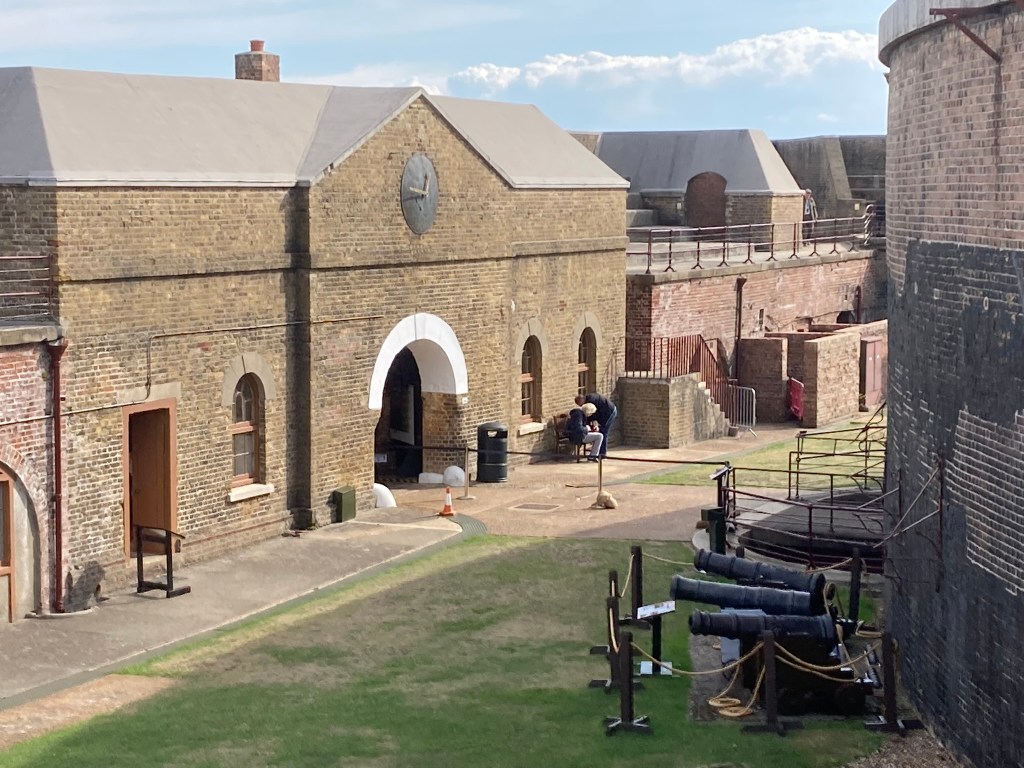
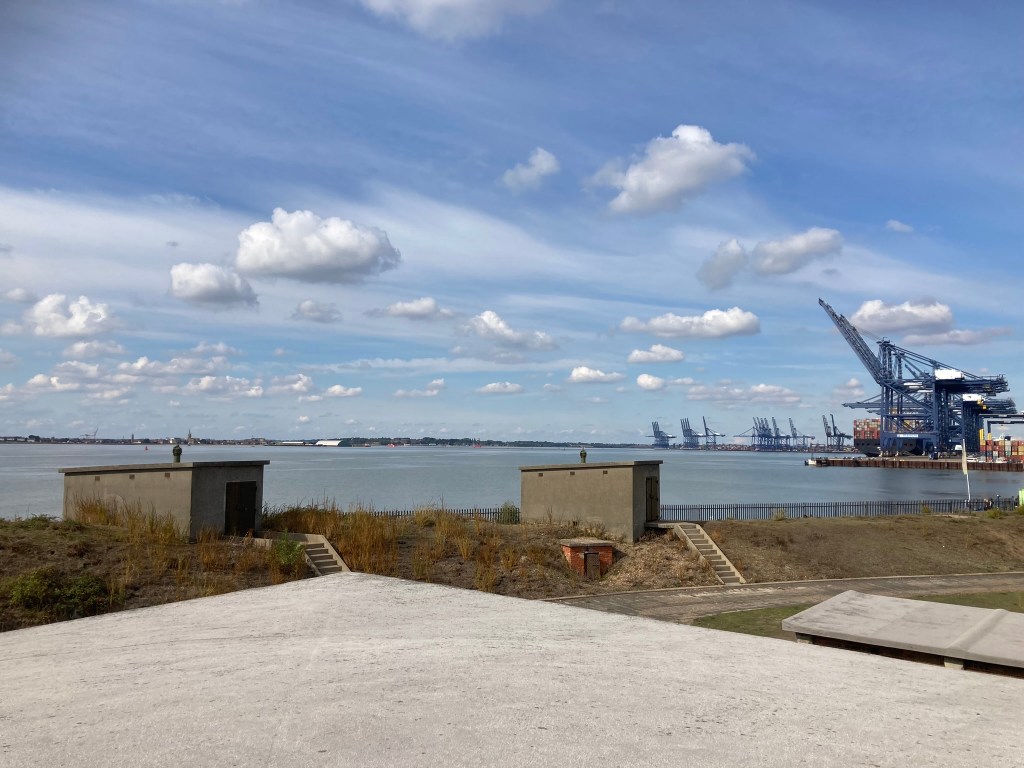
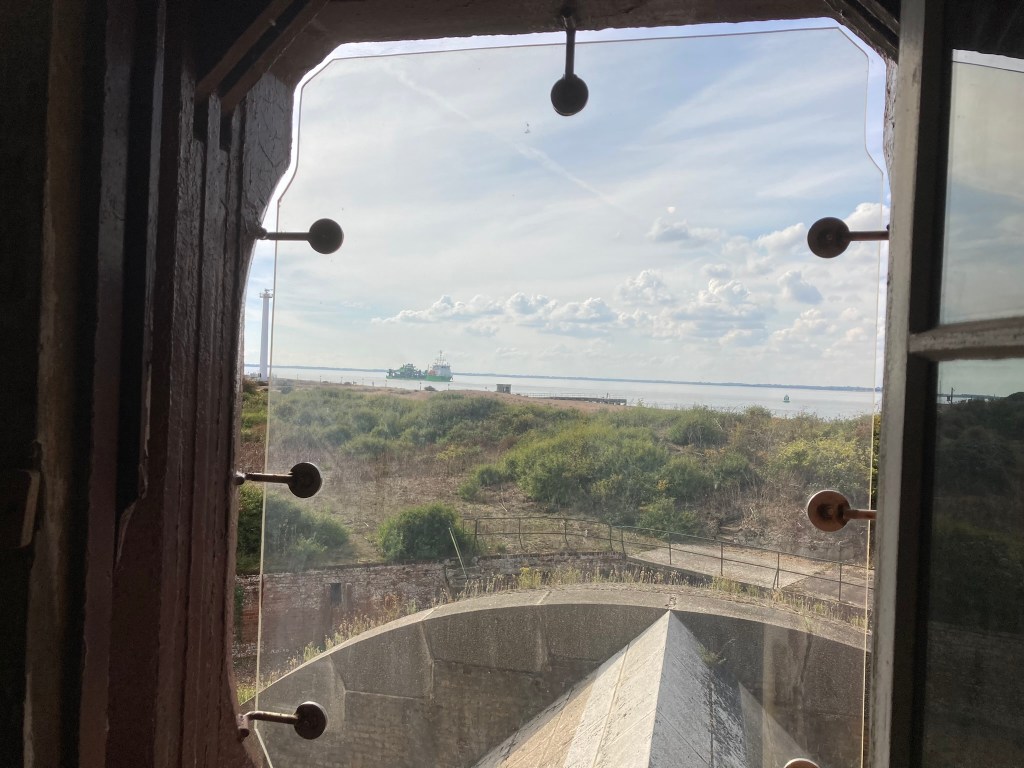
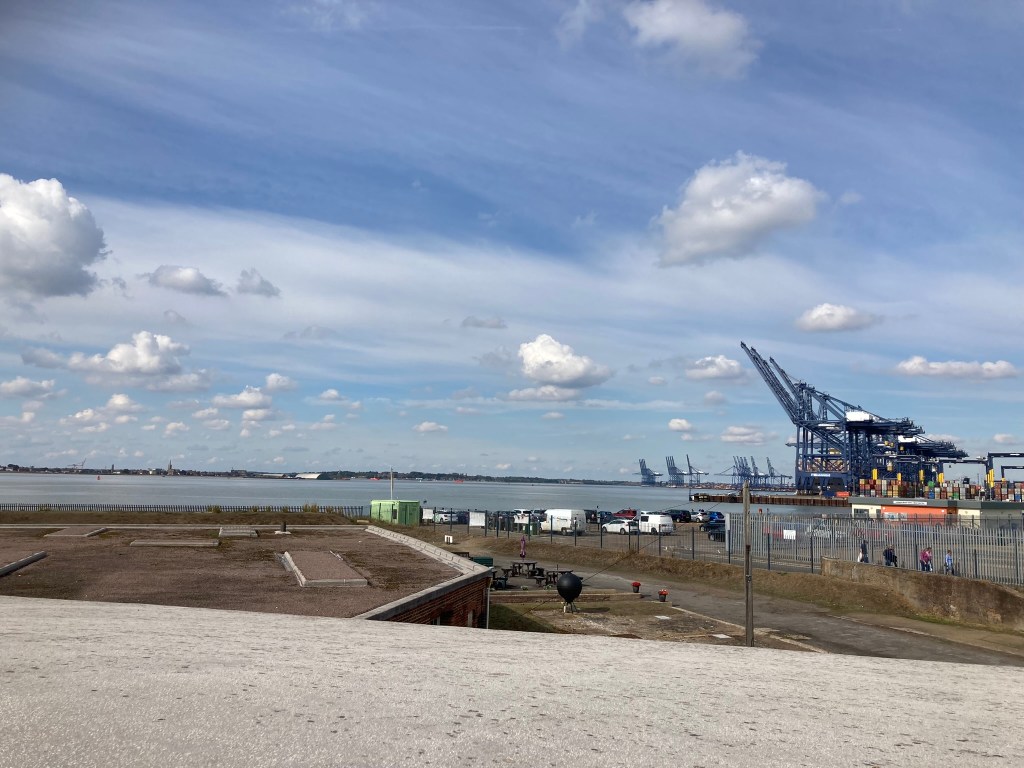

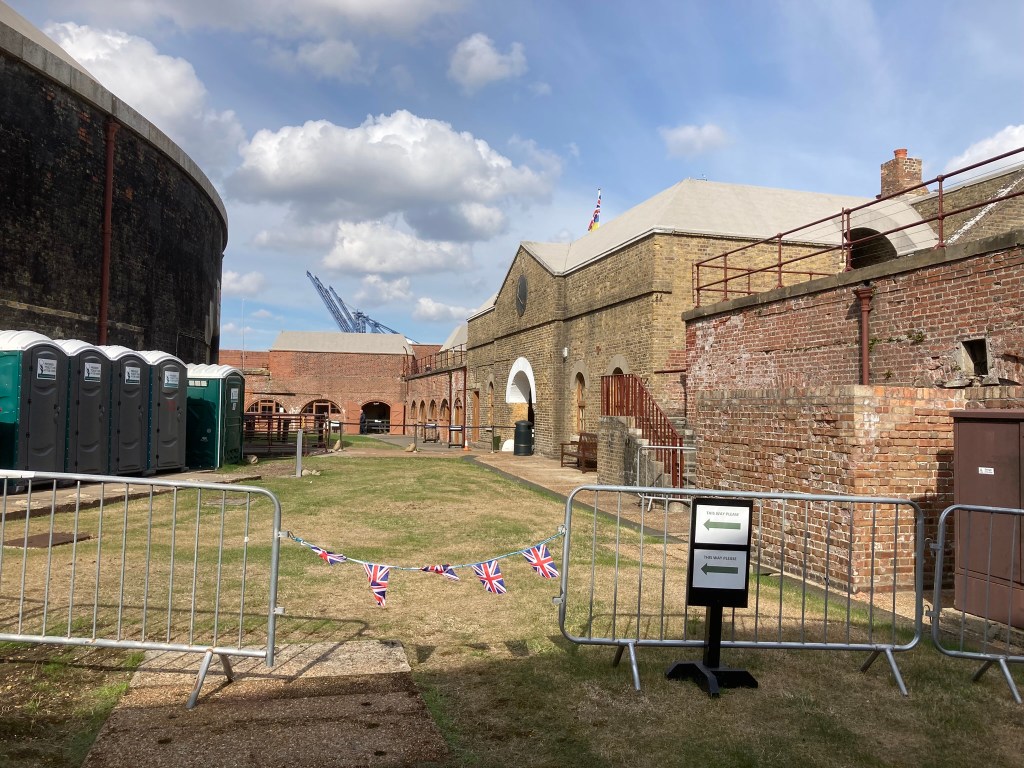
Originally built by Henry V111 at a time when Roman Catholic Europe was very anti his “Defender of the Faith” policy, Landguard Fort sits on the north side of the Orwell Estuary, across from Harwich and adjacent to the Felixstowe Container Port. With danger from Europe in Tudor times, forts at river mouths such as the Orwell and the Thames ( at Tilbury), were a most important front line defence against attack.
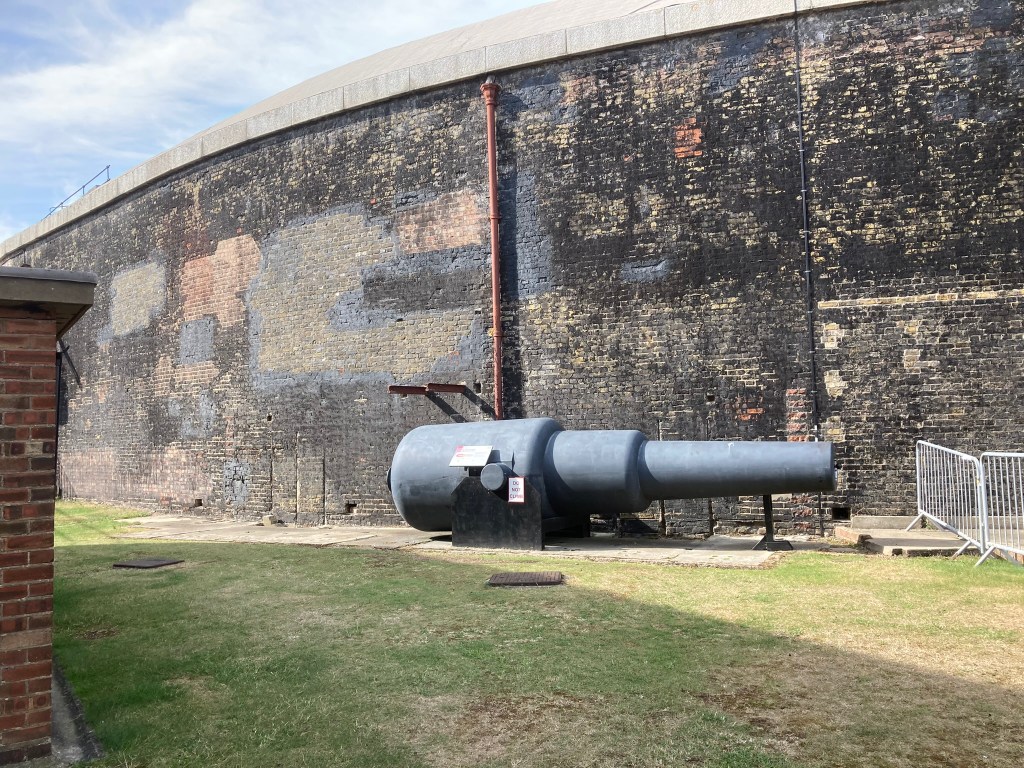
In 1667, fresh from smacking the Royal Navy off Sheerness in the English Channel, the Dutch Navy led by Admiral de Rutter landed 1500 troops to attack the Landguard Fort. With the aid of Royal Navy vessels the garrison of 500 at the Fort repulsed the invasion task force. I had never heard beforeof either of these military actions. In Victorian times the Fort was repurposed with bigger guns like the one in the pics, added and later in the 19th century a submarine netting and mining capability was added.
At the end of WW1 a German submarine fleet Commander surrendered at the Fort. For WW2 it was both an anti aircraft base plus RAF Control base. English Heritage now run the Fort and have completed extensive restoration. What they have not needed to do is to just allow the magnificent defensive location to speak for itself.
Overall fascinating for the Fort itself and its location, which we have sailed past a number of times without appreciating at all what was there. As an aside we have NZ Heritage membership which gives us “free entry” into English Heritage properties such as this.
Pin Mill on the Orwell River and the Butt & Oyster Pub
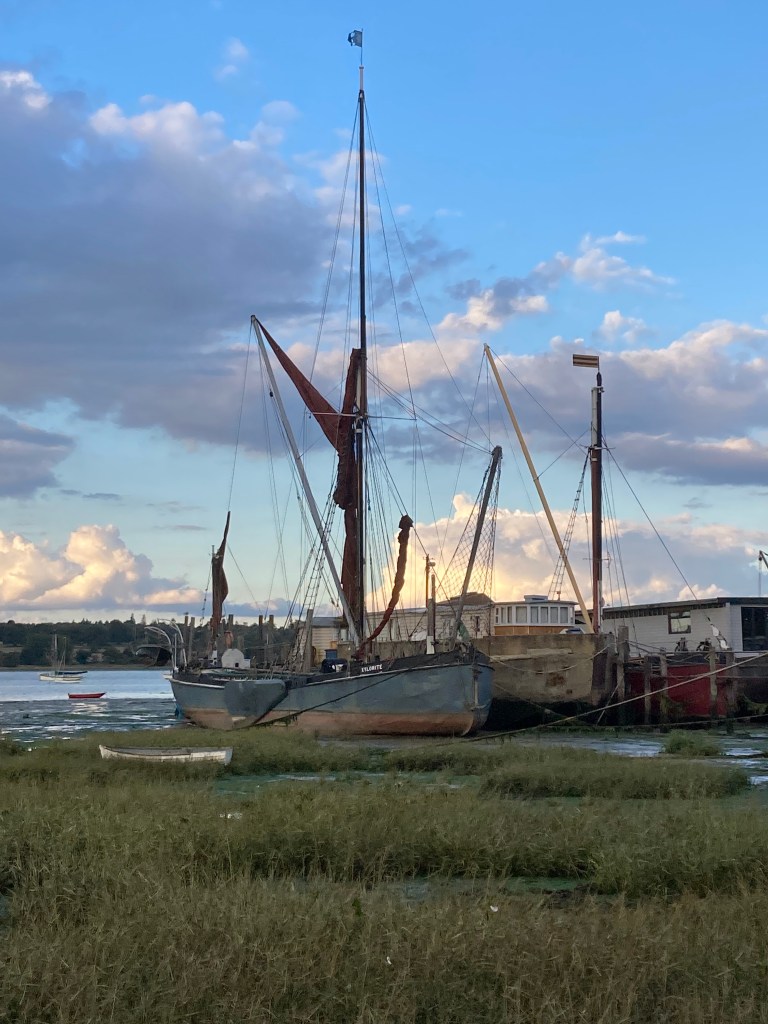
The Orwell drains out of rural Suffolk through Ipswich and down to the North Sea at Harwich/Felixstowe where it joins with the River Stour. Tidal flows are strong all along the east coast, used by sailors through the centuries to speed their journeys. Thames Barges like the XYLONITE in the pic below would carry cargoes like hay, bricks, gun powder and much more to London and across the North Sea. At high tide the River Orwell was lapping upside the wall of the pub as we arrived for lunch, but the river mud was soon revealed for our post lunch stroll, and with it the decaying bones of boats , left to the mercy of the elements.
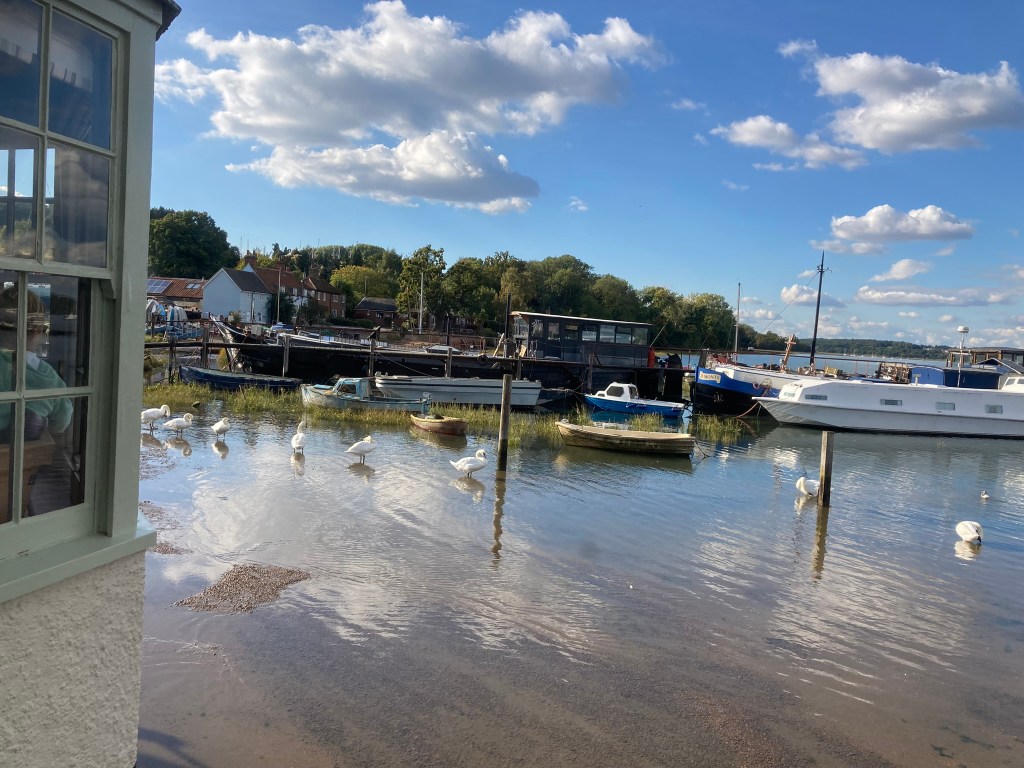
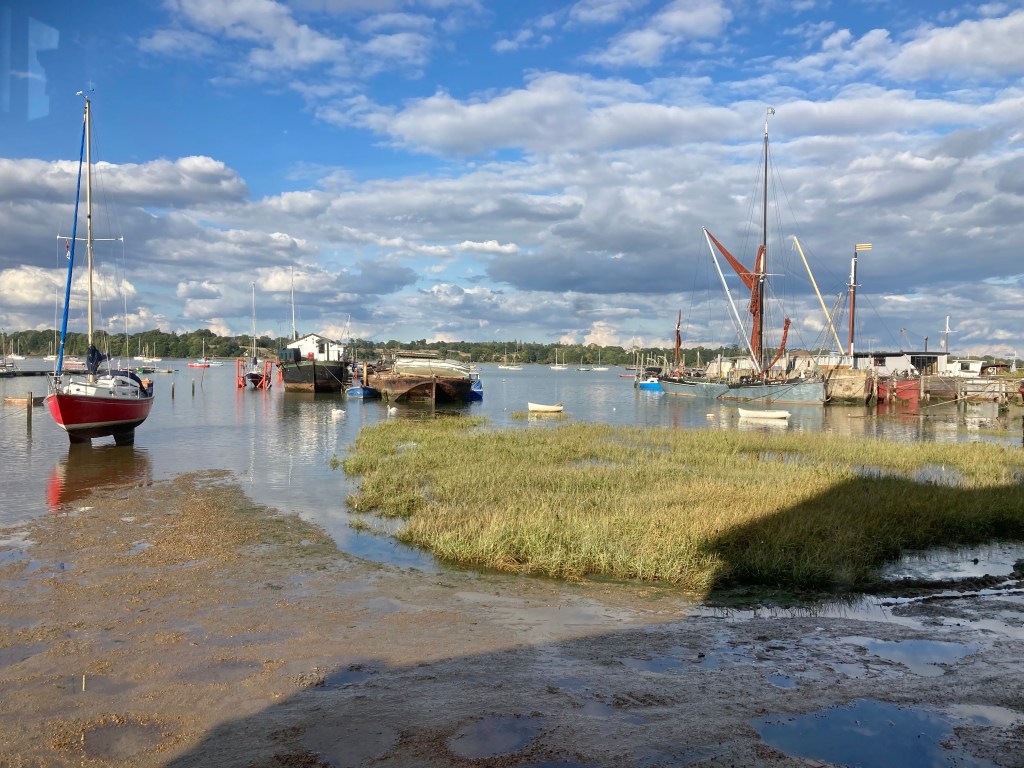
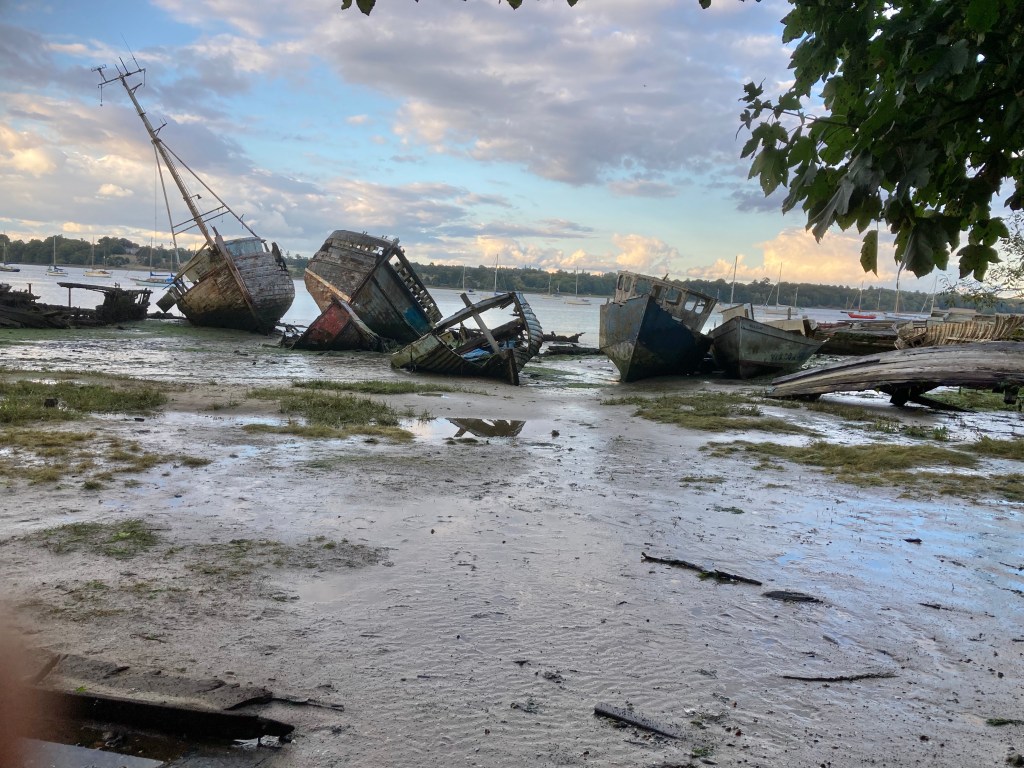
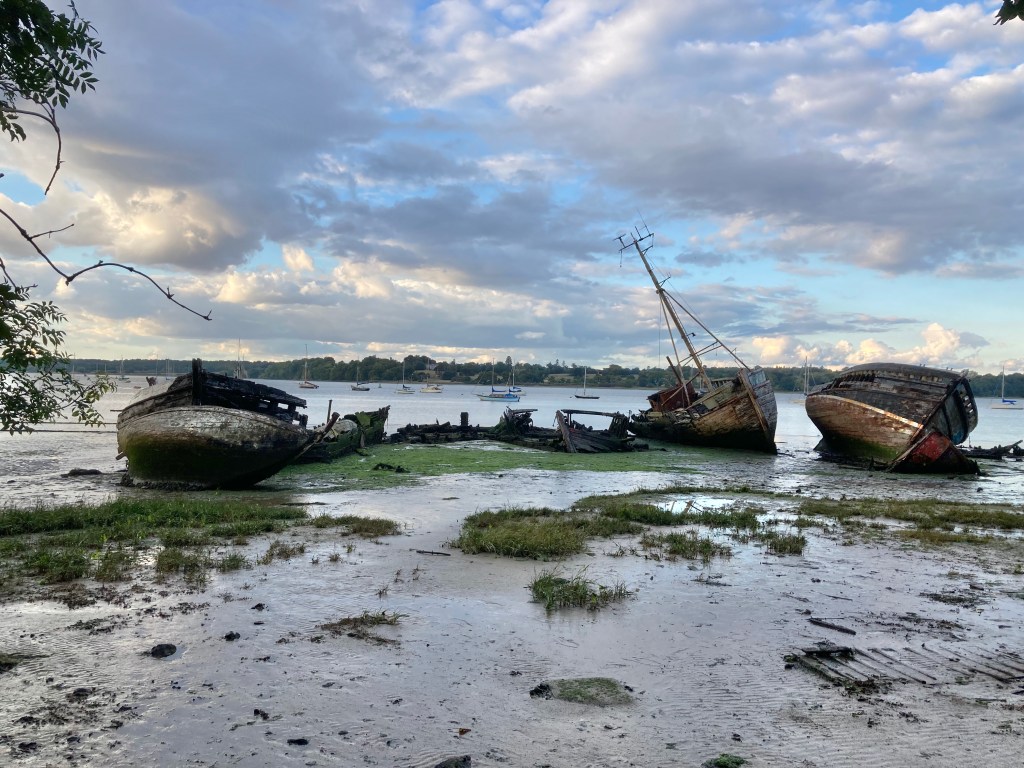
As mentioned above, Pin Mill has featured in a couple of Arthur Ransome childrens books, that I loved as a child and still do, today. The area is great for sailors but also for the Royal Navy and its training establishment at Shotley at the confluence of the Orwell and Stour . This holds strong memories for our family as our Dad – Geoff Harland – trained there at the outbreak of WW2, before heading off on Murmansk convoy duties and latterly to warmer climes in the Mediterranean.
Below a pic of a car park signboard, showing where we have been on our day out, and a picture of the Nancy Blackett , Ransome’s own boat, that is still moored and sailed from Pin Mill

 Travels with My Wife