
Some of the best of the South Island in 18 Days!!
It’s February 1st and we are leaving New Zealand’s capital, Wellington, on a Cook Strait Ferry for the 3.5 hour crossing to the Port of Picton. Wellington lies at the southern end of New Zealand’s North Island and Picton is the most northerly port in the South Island. To get across the Strait a 15 minute flight in a one engine Cessna is one option, but for four adults, an SUV and gear for a three week trip away from home in AUCKLAND the only and best option is the Cook Strait Ferry.
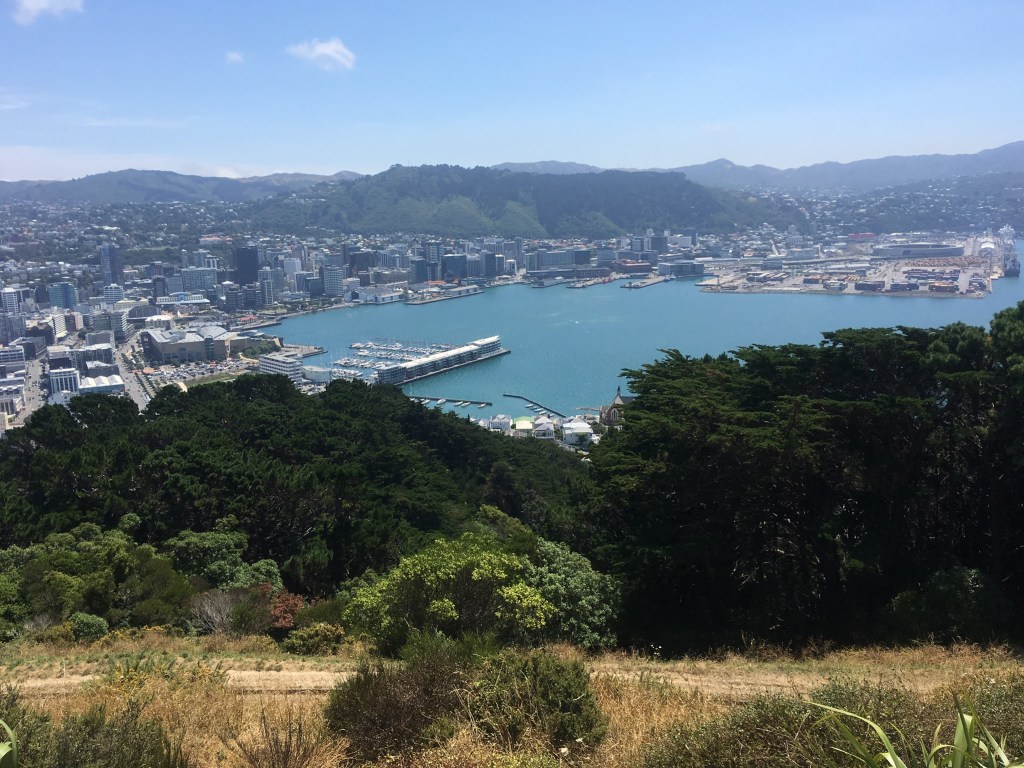
Wellington Harbour from Mt Victoria 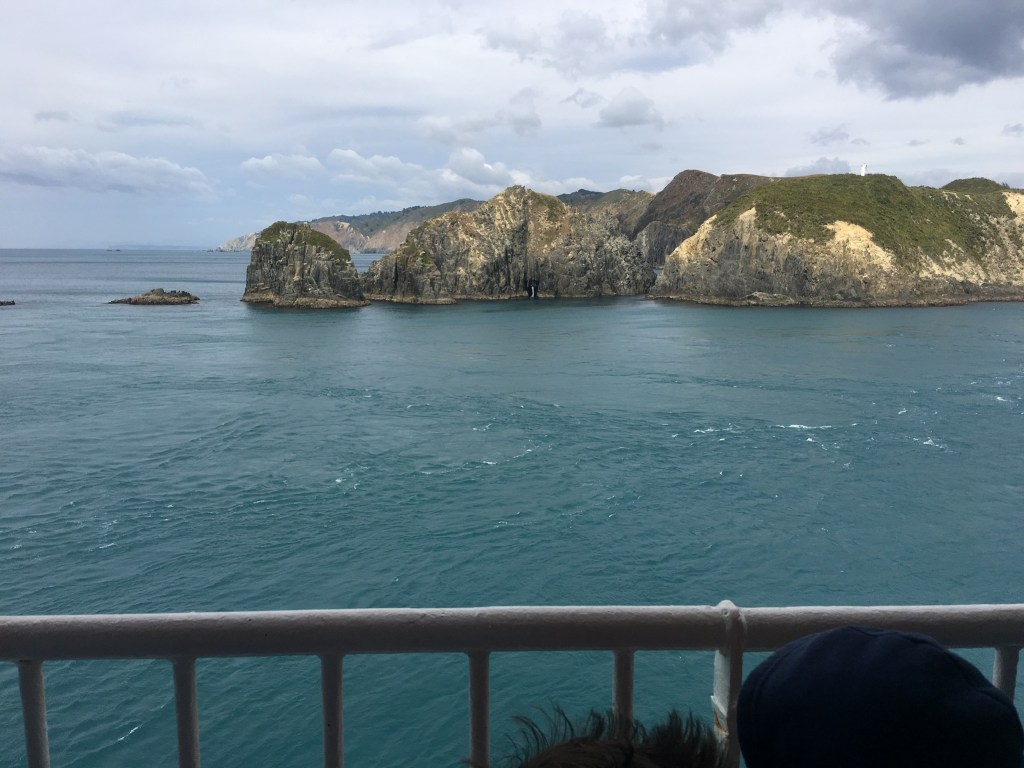
Cook Strait Ferry departing Wellington Harbour Heads 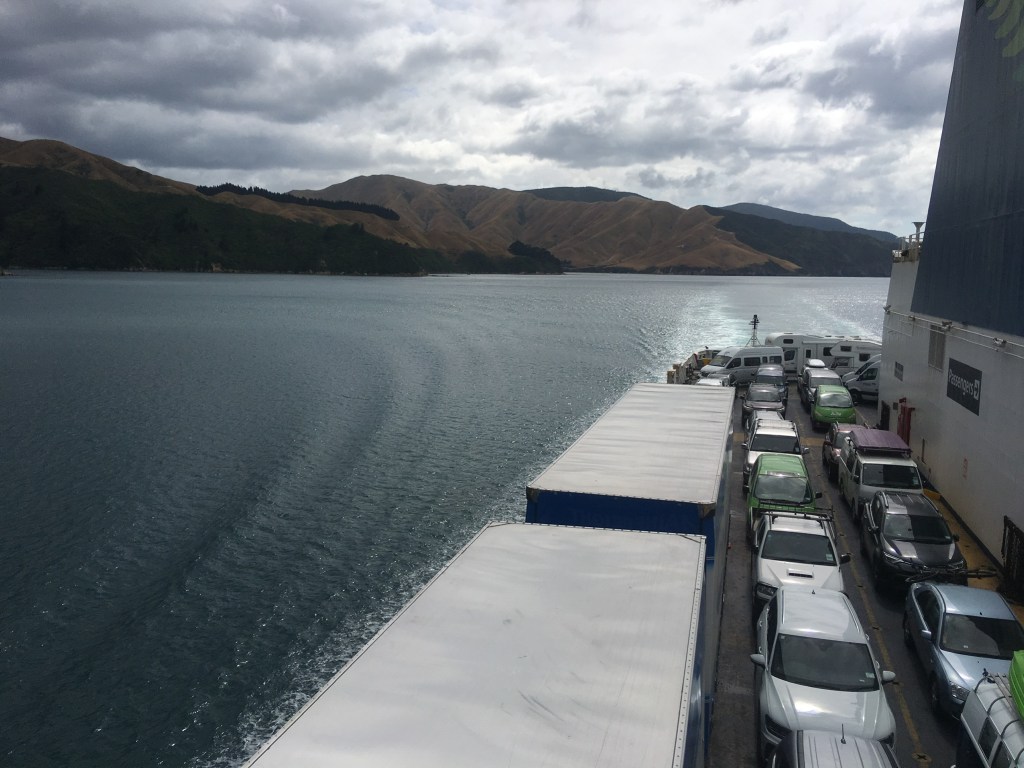
Leaving the N Island behind 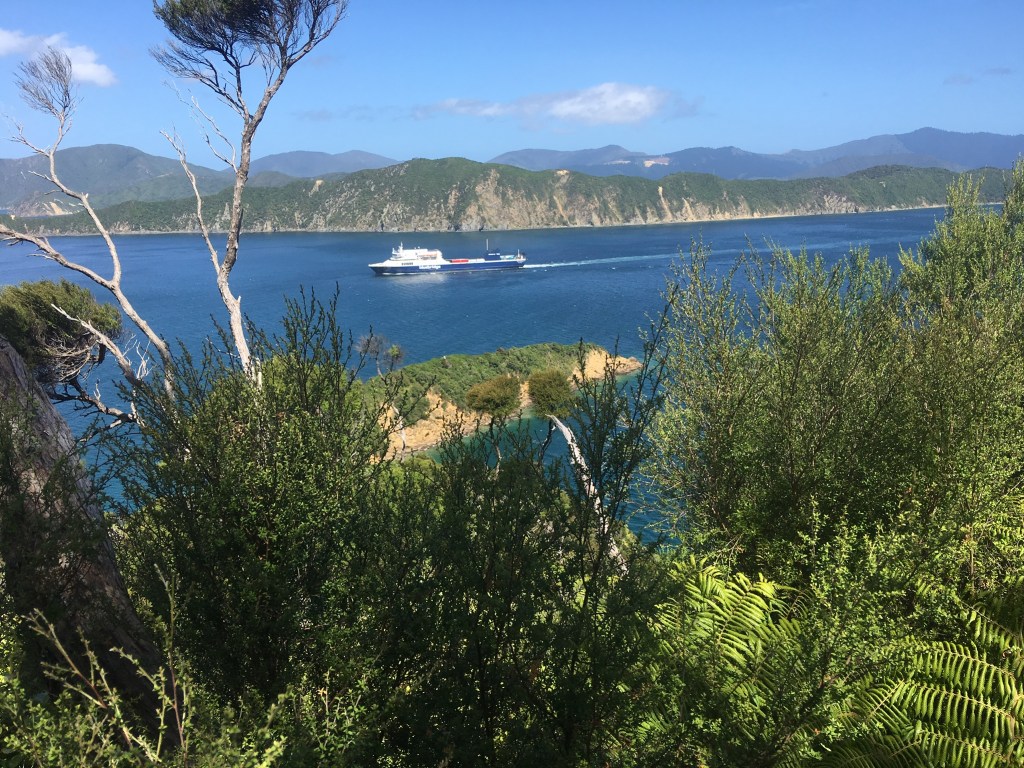
Blue Bridge Cook Strait Ferry in the Marlborough Sounds
Cook Strait
The Cook Strait is the dividing piece of water between New Zealand’s North and South Islands and named after the discoverer James Cook, who also has a Wellington Hotel named after him. The Strait Ferry crossing comes in three instalments, the first across Wellingtons beautiful harbour to the harbour Heads – with its rocky entrance ready for the unwary, and this takes about 45mins to an hour from leaving port. The second is the crossing of the Strait itself, again about an hours travel until one arrives at Tory Channel . Then a swift left then right then left turns( or port, starboard then port again), and we are into the tranquility of the Marlborough Sounds. We then enter Queen Charlotte Sound heading to Picton, just time for a coffee and to admire the views.
Marlborough Sounds, Picton and Blenheim
Picton is at the head of the Queen Charlotte Sound, a rail head, ferry port, tourist centre, marina and service centre for the aquaculture industry that has been such a big development for this area. The Sounds comprise an area of about 4000sq kms and were formed by a combination of sea inundation and land erosion.
Half an hour inland from Picton is the main regional centre of Blenheim, with it’s domestic airport literally surrounded by vineyards as far as the eye can see. This is Marlborough and the region is renowned for its wines and Sauvignon Blanc in particular. Blenheim is a great centre for visitors to stay and explore from. The township sits in the Wairau Valley and to the immediate south is the Awatere Valley, both with “ wall to wall grape vines”. Many wineries offer “ tastings”, and a number provide great food options too. A couple of favourites of ours, Wairau River – super wine and food (great coffee and breakfast scones too), and Yealands as a winery to tour around on your own, right out to the east coast – super views!
Marlborough is stunningly beautiful in any weather, but we were very fortunate for our visit to have blue skies and sunshine. We had rented a holiday cottage, these are called “ cribs” in the South Island and “ baches ”, in the North. The cottage was just outside the village of Havelock and had extensive views of the Sounds. We stayed there for 3 nights exploring the area, visiting and sampling some wineries and did a day trip eco boat tour into the Sounds from Picton, which was great fun , saw lots of bird life and learned much about the ecology of the region.
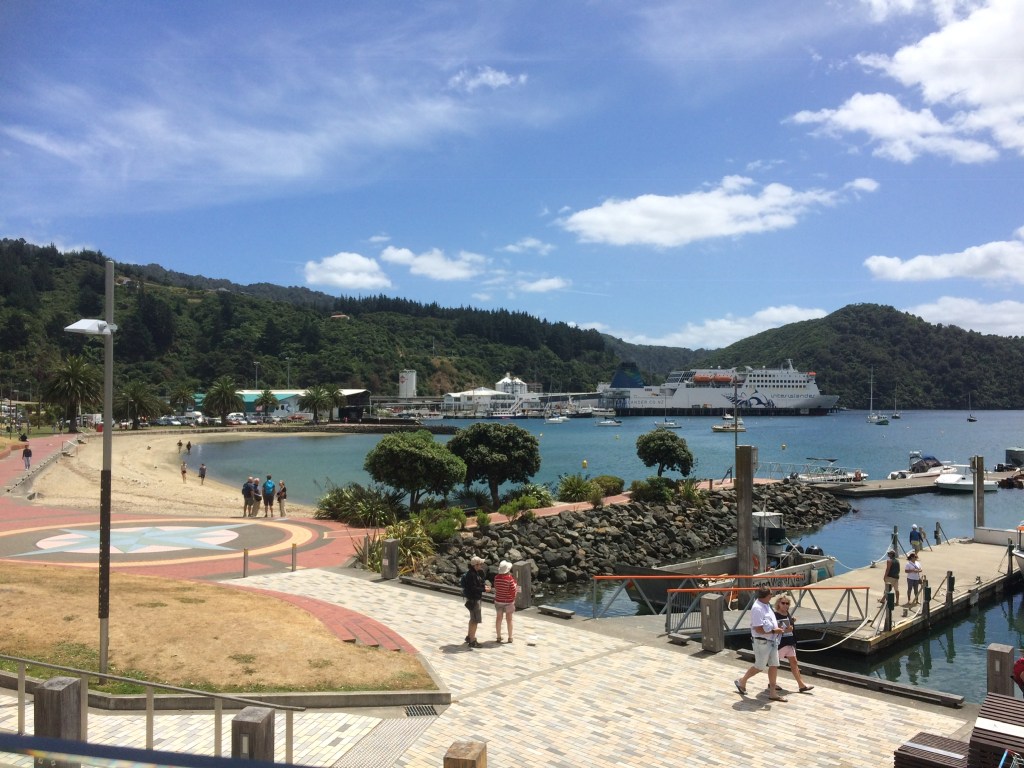
Ferry waiting at Port of Picton 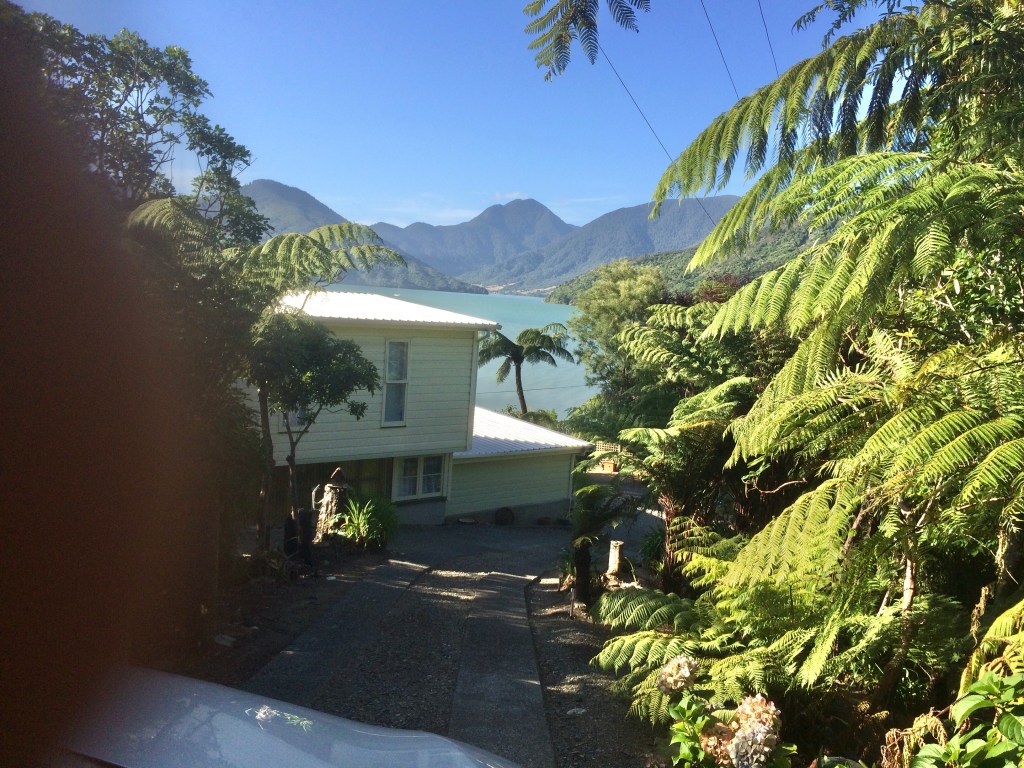
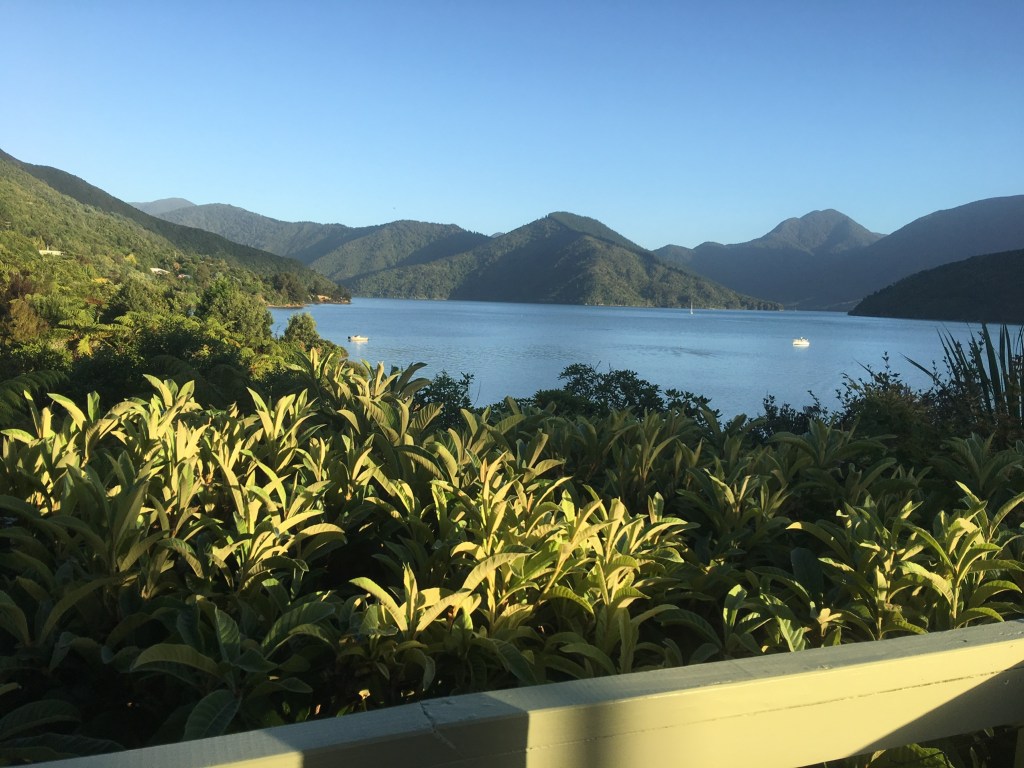
Marlborough Sounds from our Holiday Crib 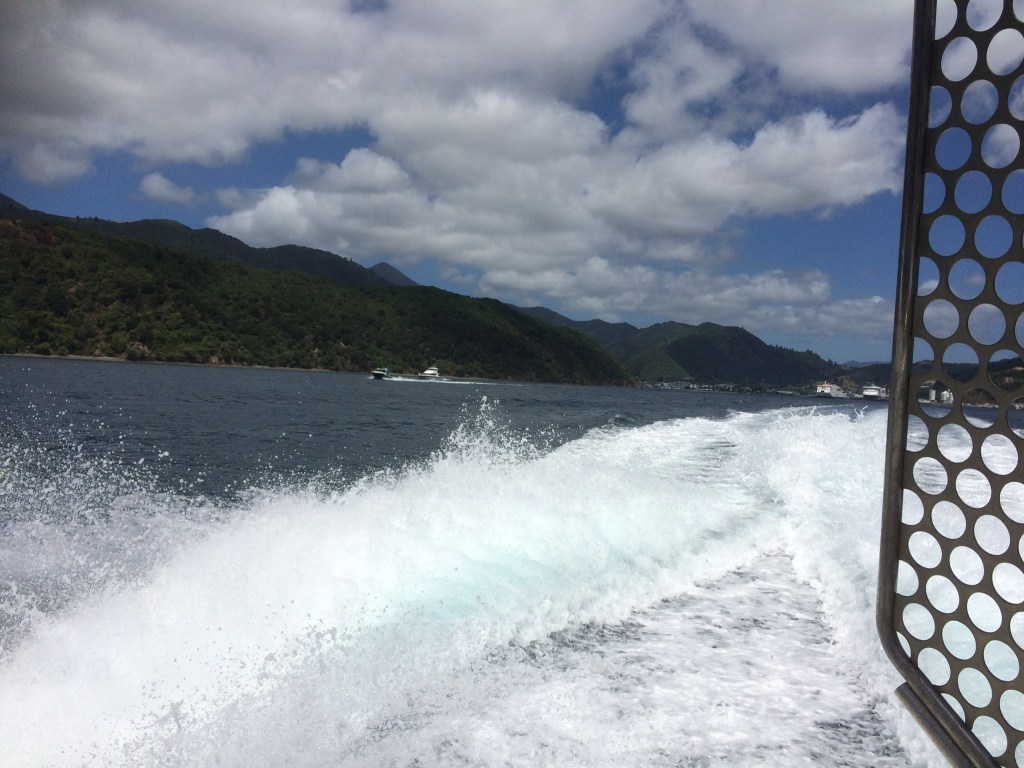
Eco boat trip from Picton 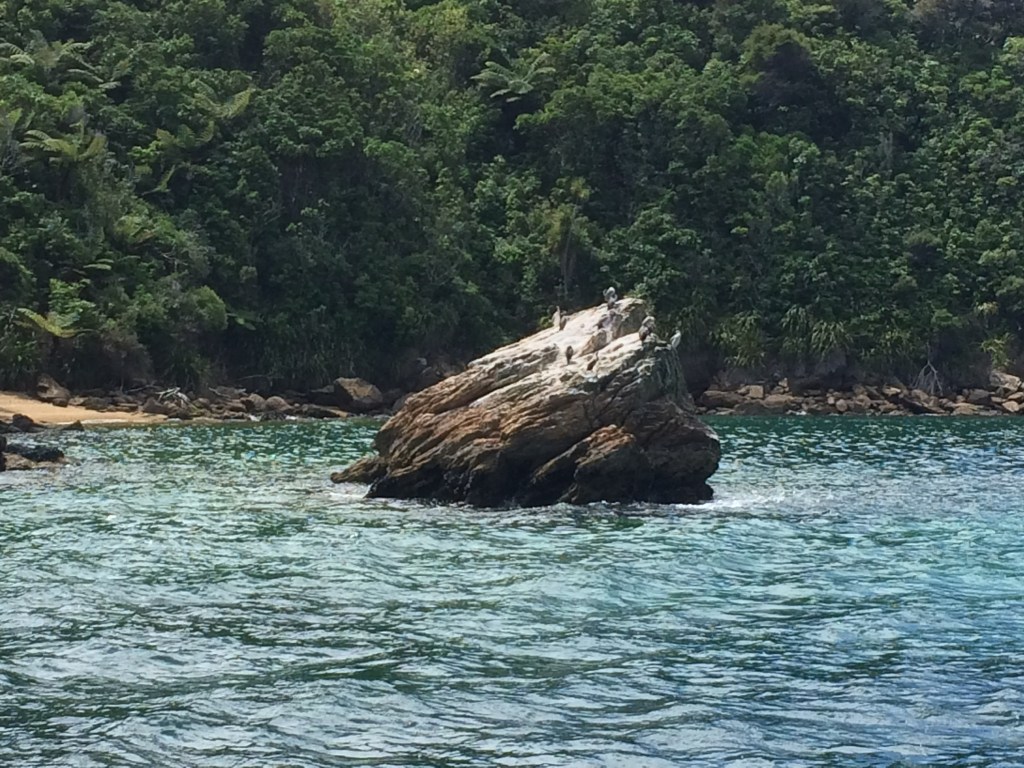
Seals on the rock 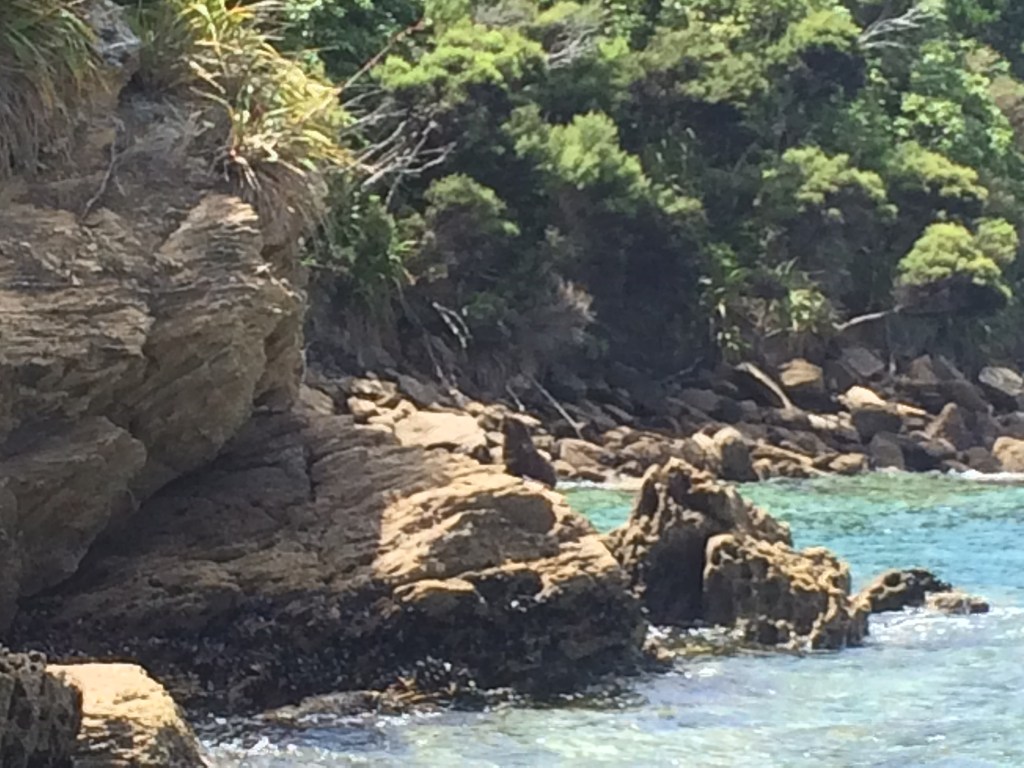
Seals basking 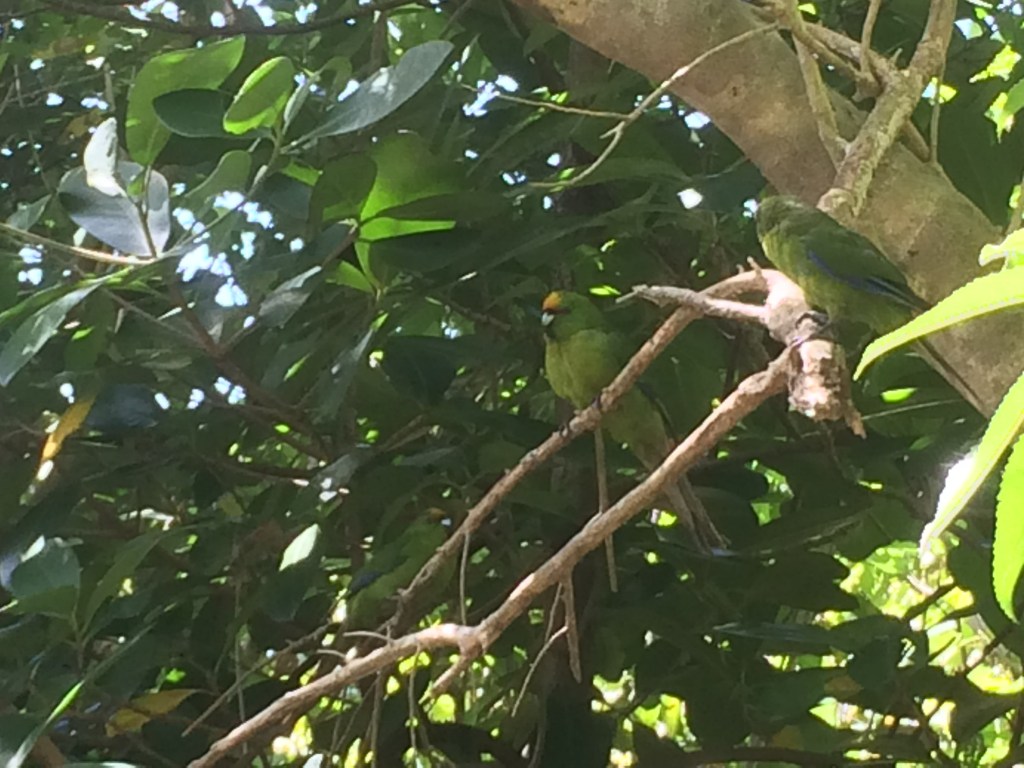
Island Birds 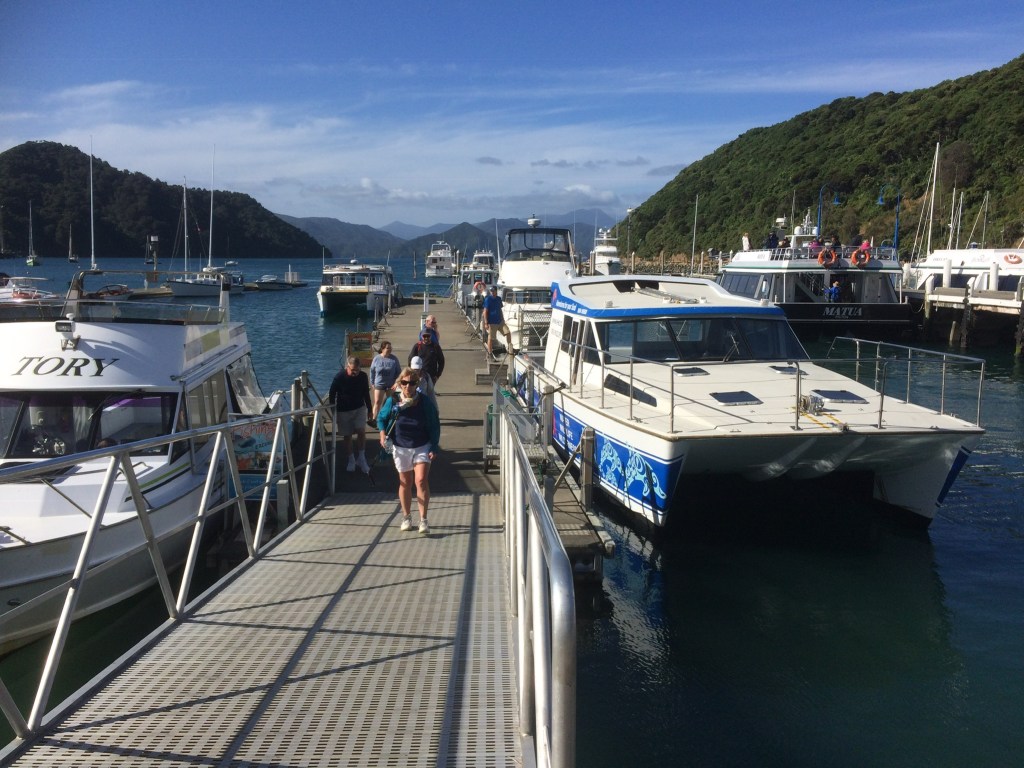
Eco boat returns 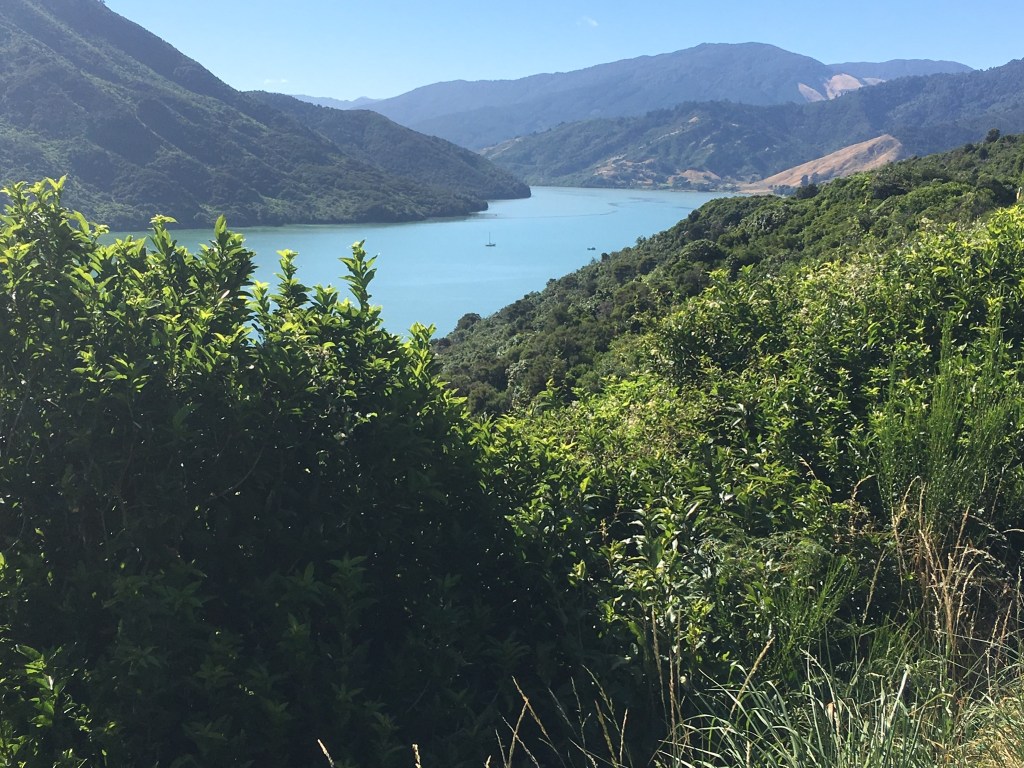
Lush green valleys and blue of the Sounds 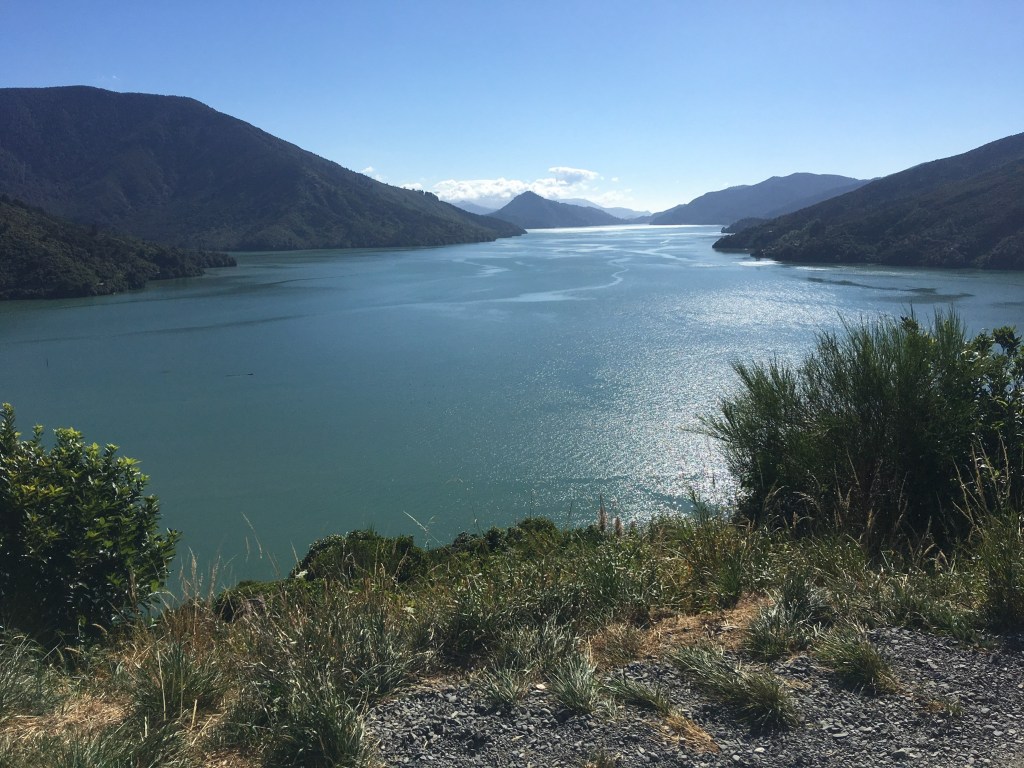
How restful is this view of the Marlborough Sounds? 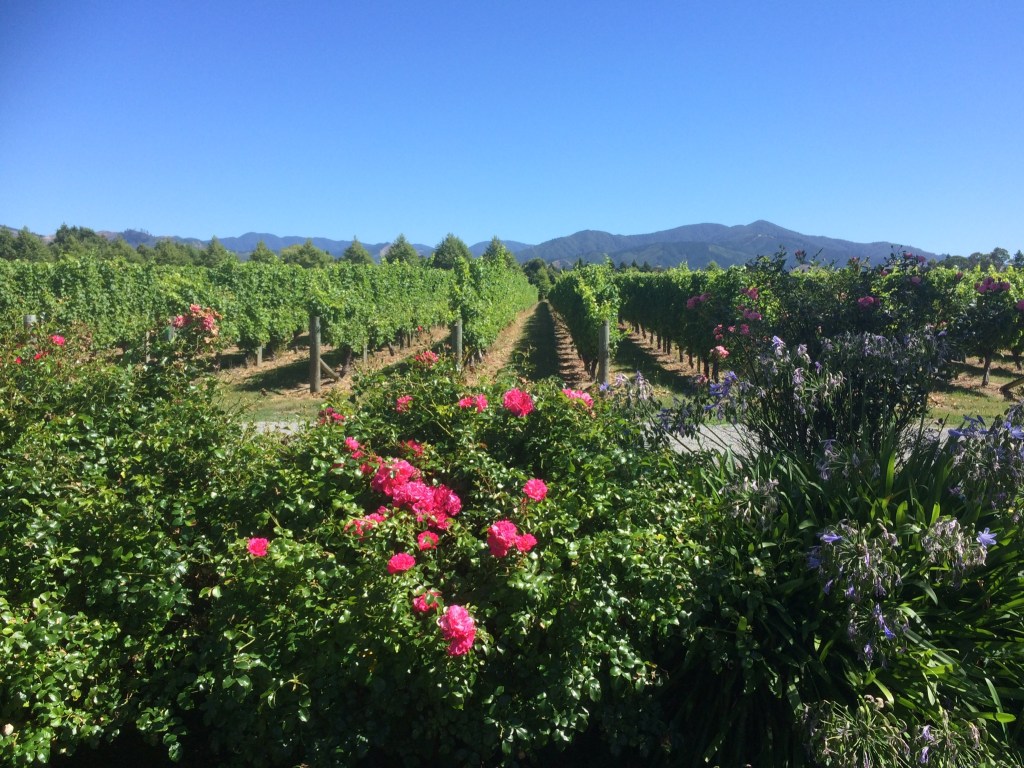
Rose garden overlooks Sauvignon Blanc vines near Blenheim
Kaikoura Coast to Christchurch
New Zealand with its position on the “ Pacific Ring of Fire”, is no stranger to earthquake and volcanic activity. But the November 2016 earthquake centred around the South Island township of Seddon smashed the South Islands eastern coastal road and rail connections, creating transportation nightmares. The town of Kaikoura was completely cut off for many weeks together with the tourist flow that is the lifeline of that community’s economy – whale watching and fishing in particular.
Today the road and rail links are restored, the civil engineering required has been immense and is work still in progress. The coastal highway looping down from Blenheim through Seddon, Kaikoura, Cheviot and on to Christchurch is a delight. Do take your time en route, stop at Oahu Point to admire the civil engineering and the seals who have re-occupied the raised sea bed. At Kaikoura drive down to the beach and enjoy the fish / lobster and chips and at Cheviot afternoon tea beckons.
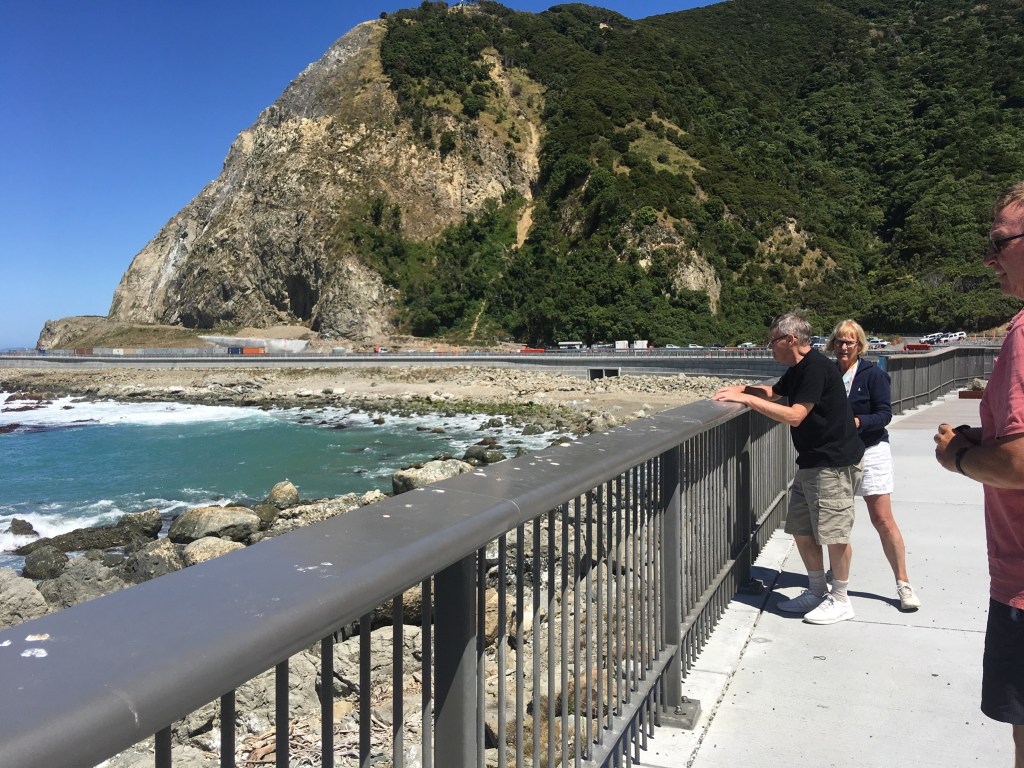
Oahu Point 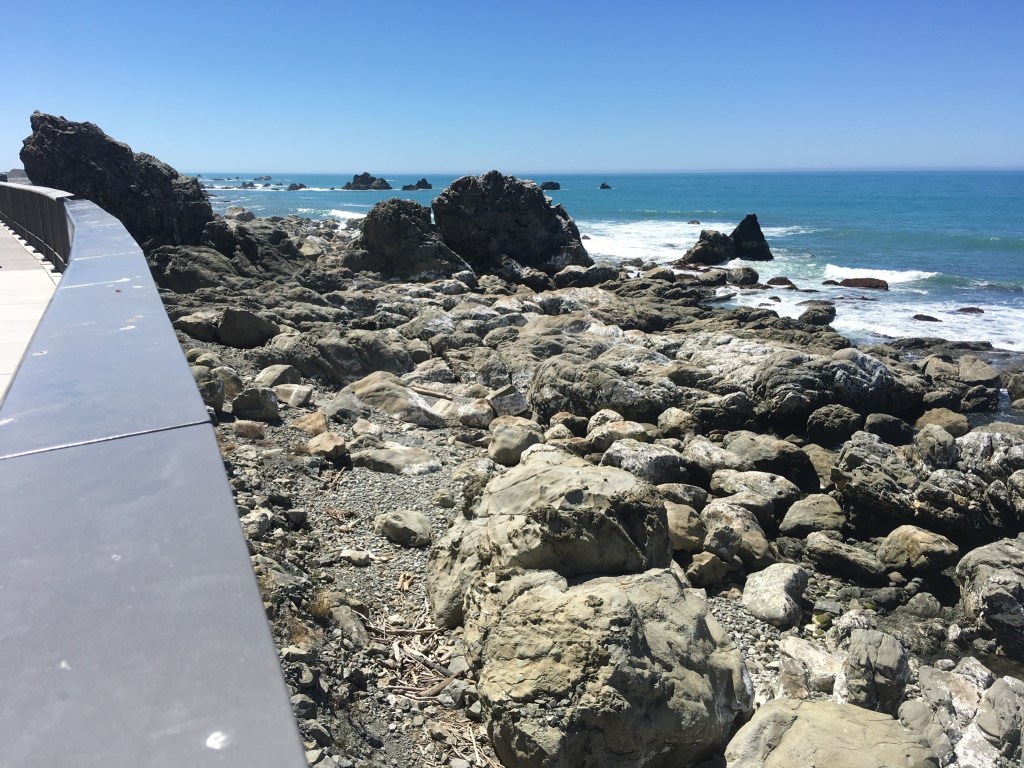
Sea raised in the earthquake 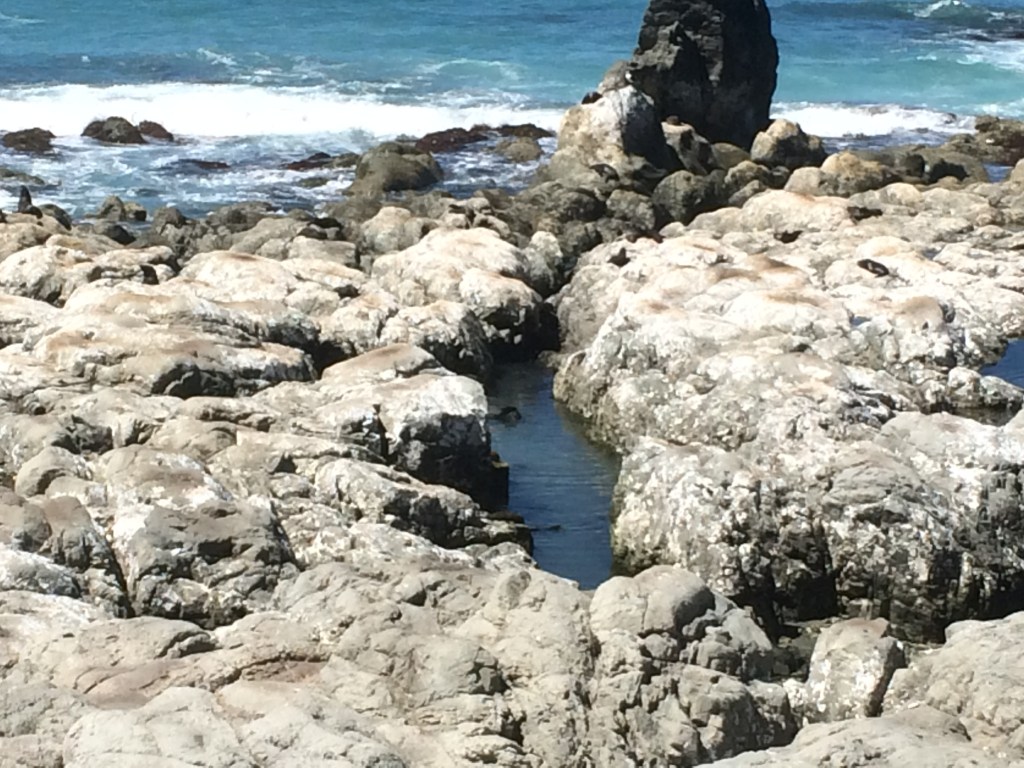
Seals bask by rock pools
Christchurch the Earthquake & Garden City
The city of Christchurch prior to 2010 would not have been a New Zealander’s first pick for the potential site of a major earthquake. But in September of 2010, fortuitously early in the morning, a major quake caused significant damage and disruption, but little injury or loss of life. The November 2011 quake regrettably struck at a busy midweek lunchtime, bringing buildings and sidewalk shades down and with that significant loss of life.
Since the mid 1980s I have been a regular visitor to Christchurch on business . For many months after the 2011 earthquake when resuming my visits, staff, friends and clients all needed to share their stories of the event, their survival and challenges faced. To their credit the people of Christchurch have huge resilience and it has stood them in good stead.
During our February 2019 visit we find the city is well on the road to recovery, but one with another 20 years plus to go. A visit to New Zealand’s South Island is incomplete without a visit to Christchurch, to witness the recovery so far and the sobering stories you can find in places like Quake City.
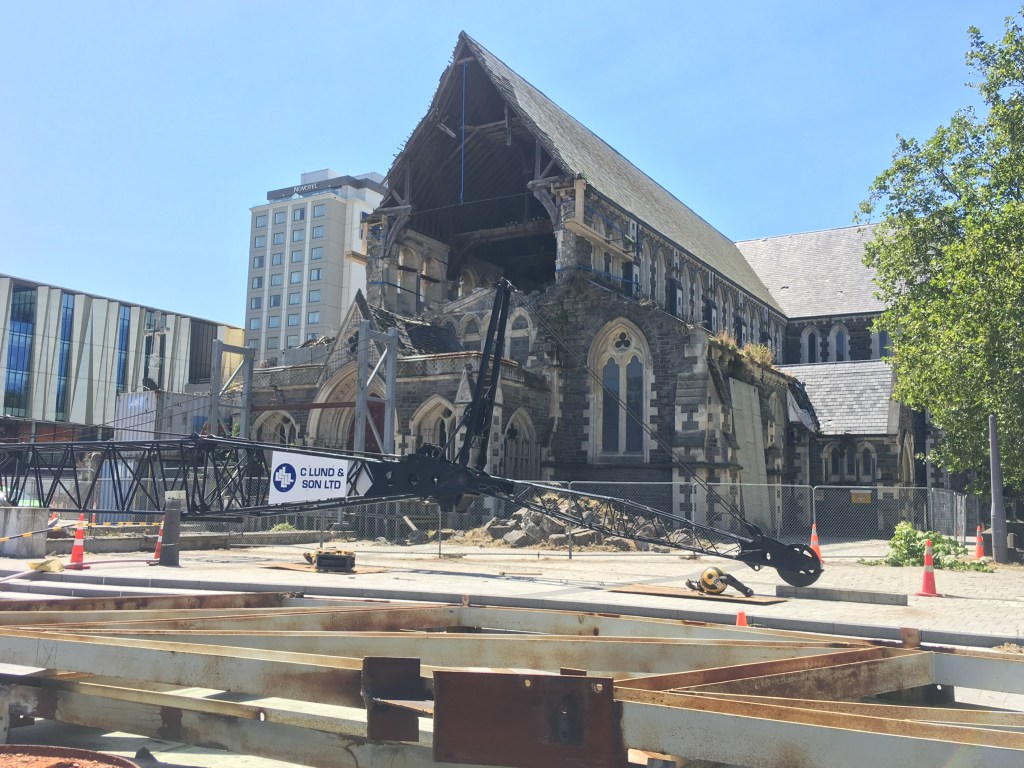
Original, now smashed Cathedral 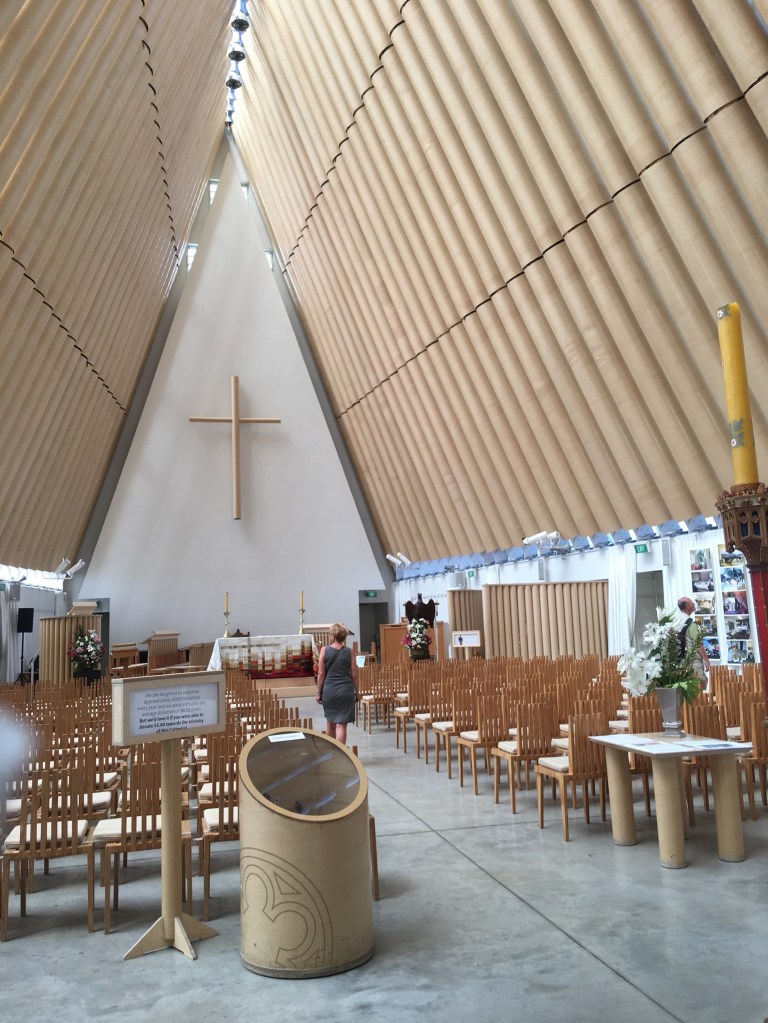
Transitional Japanese designed “Paper Cathedral” 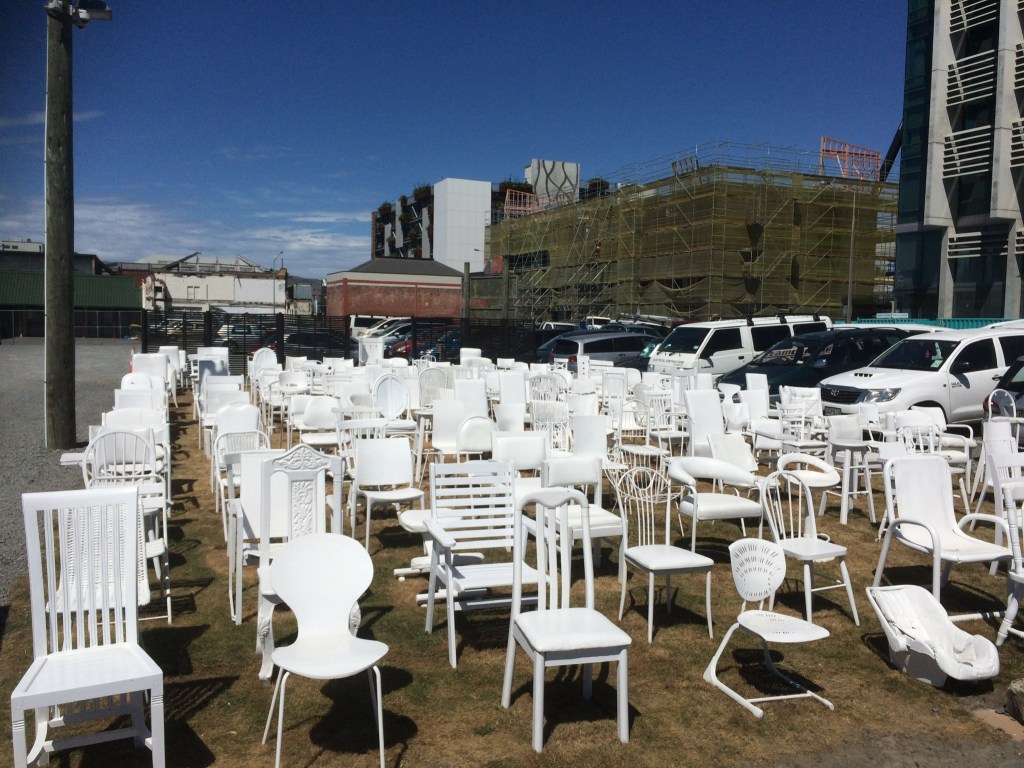
Memorial for every life lost in the earthquakes 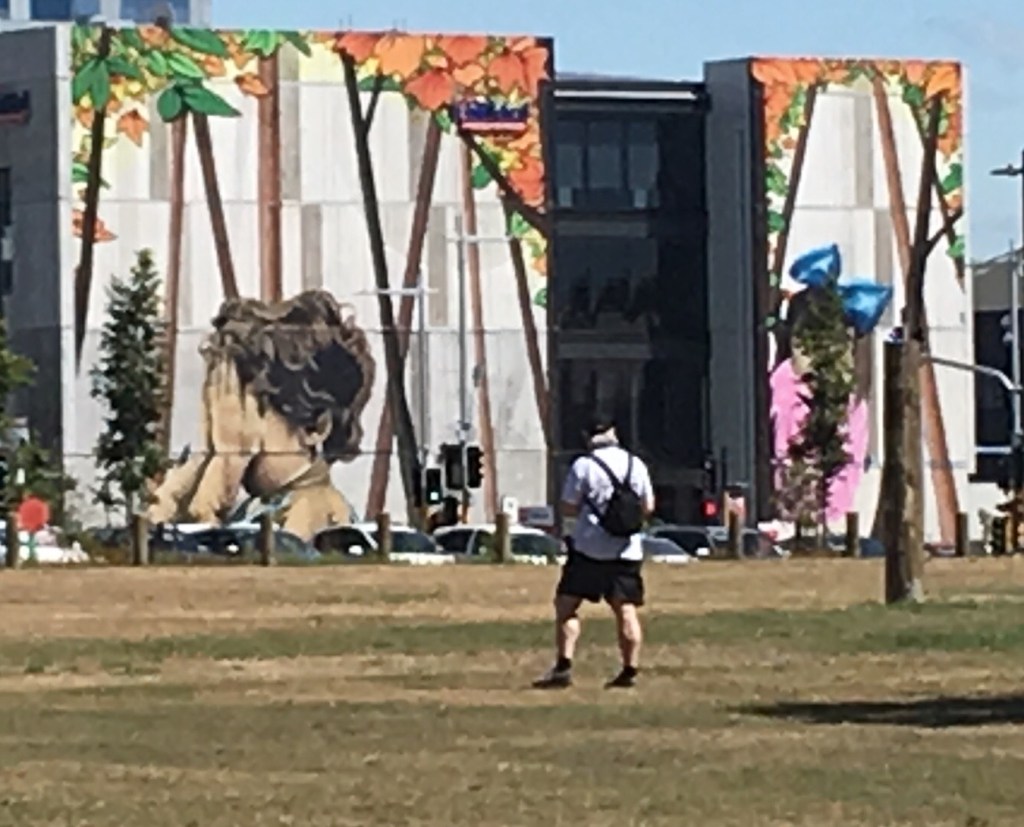
New buildings and art work 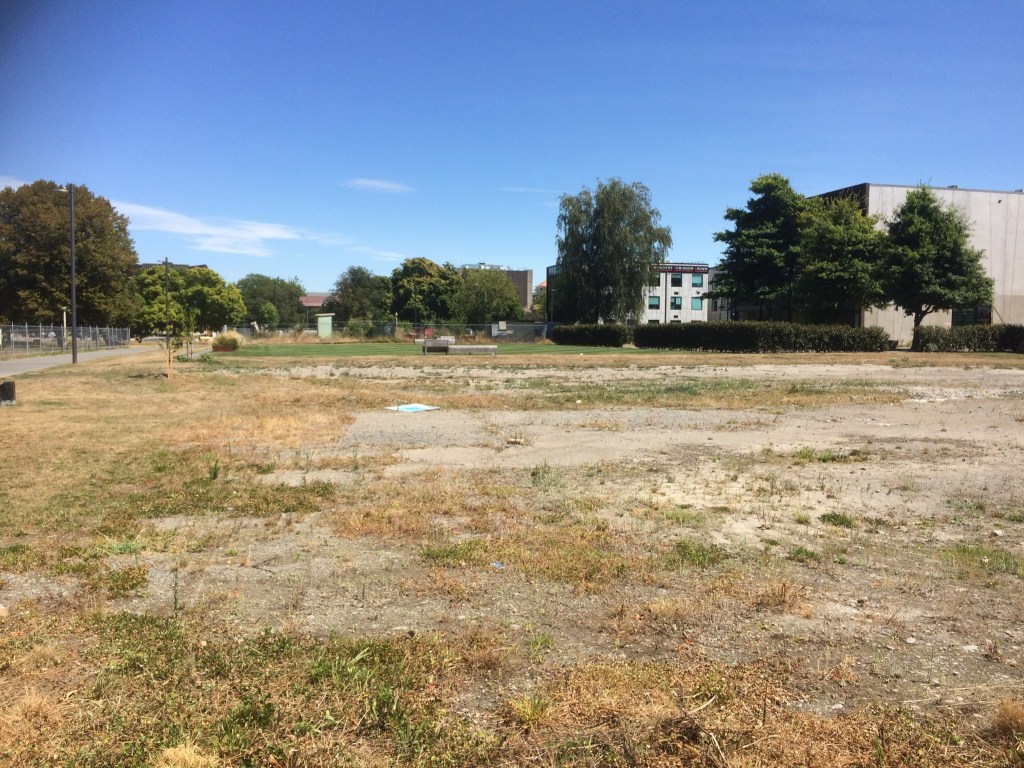
Empty spaces await 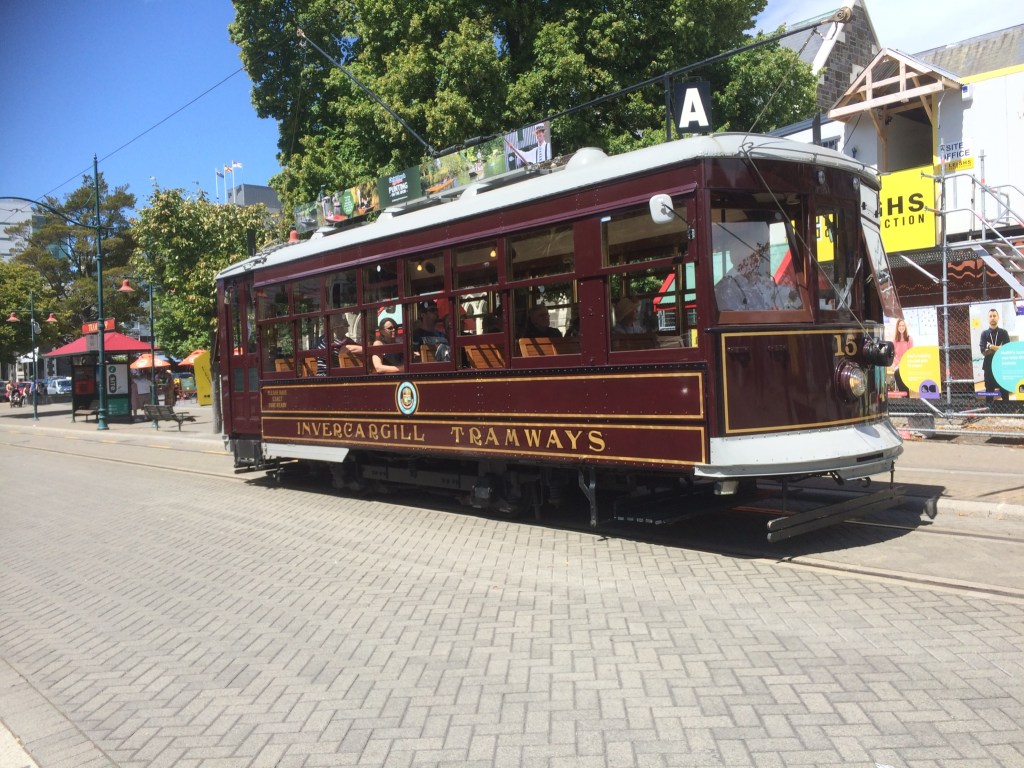
Tourist trams, great way to see the city 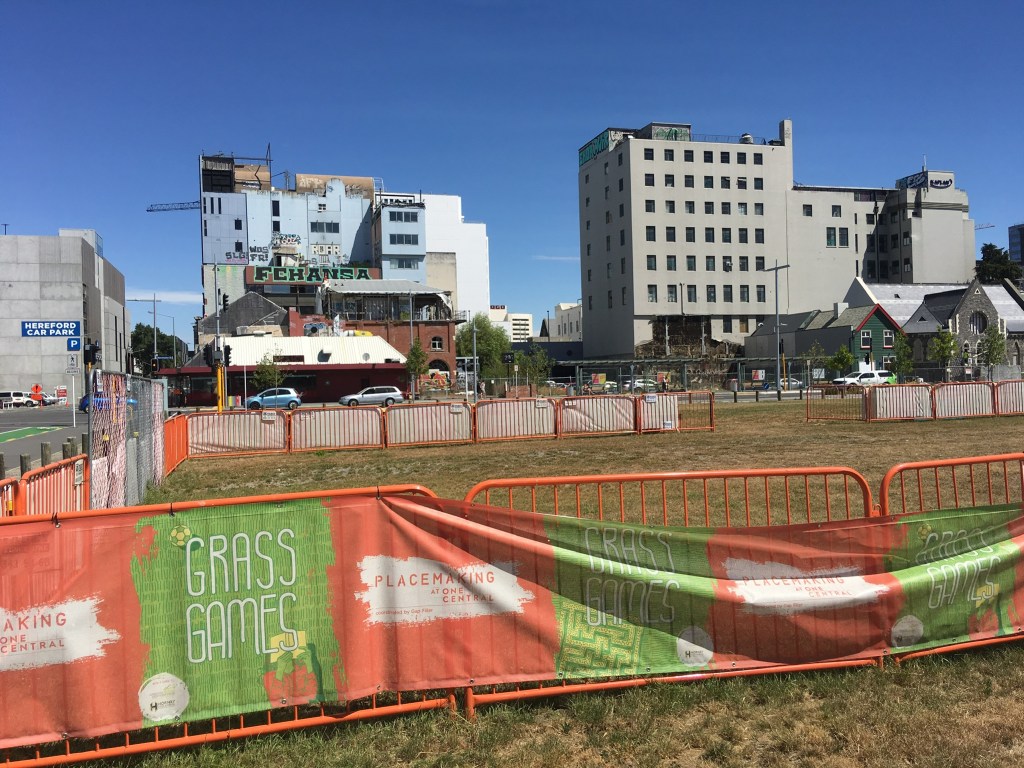
New city 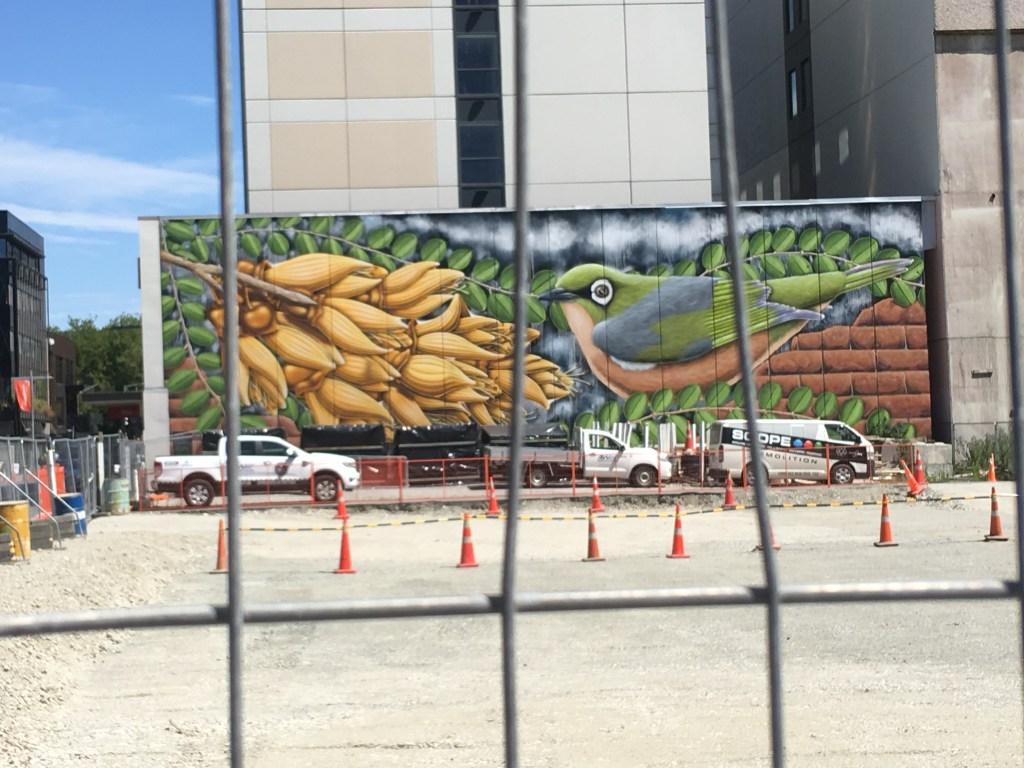
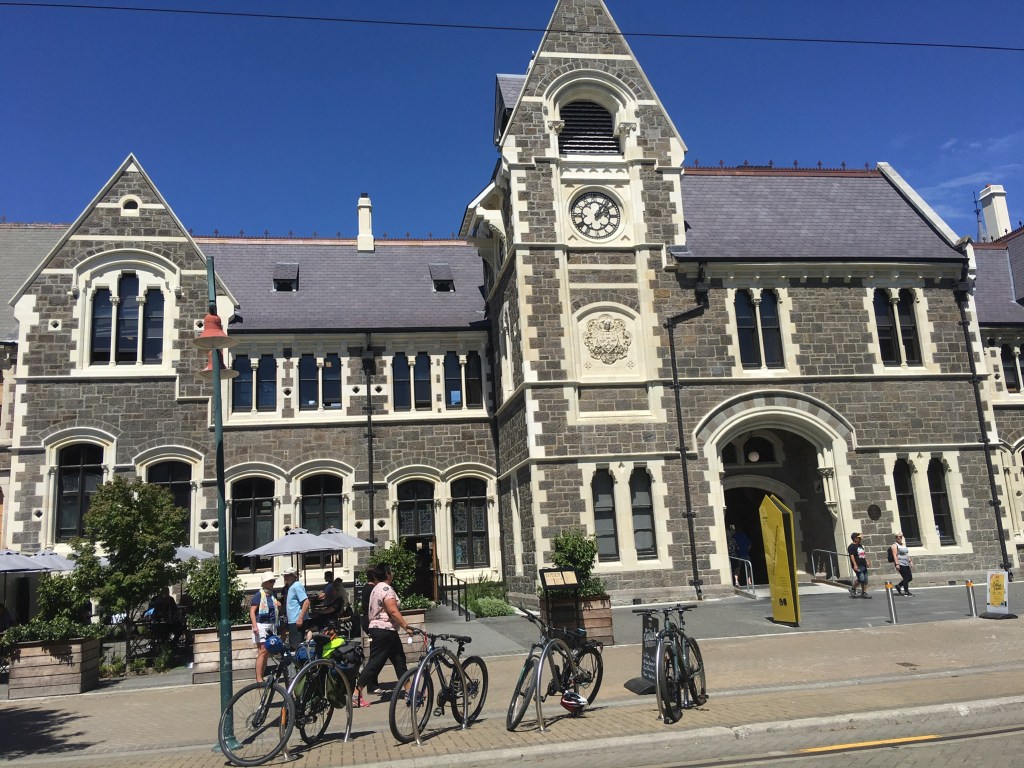
Arts Centre, damaged and repaired 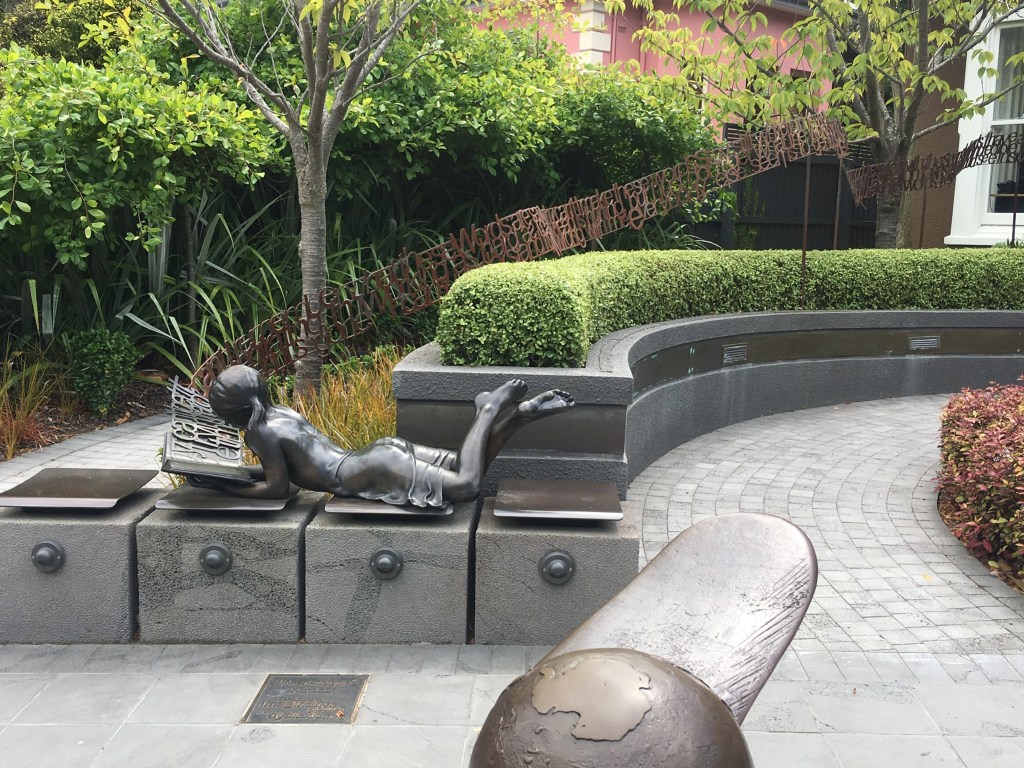
Renewal and remembrabce 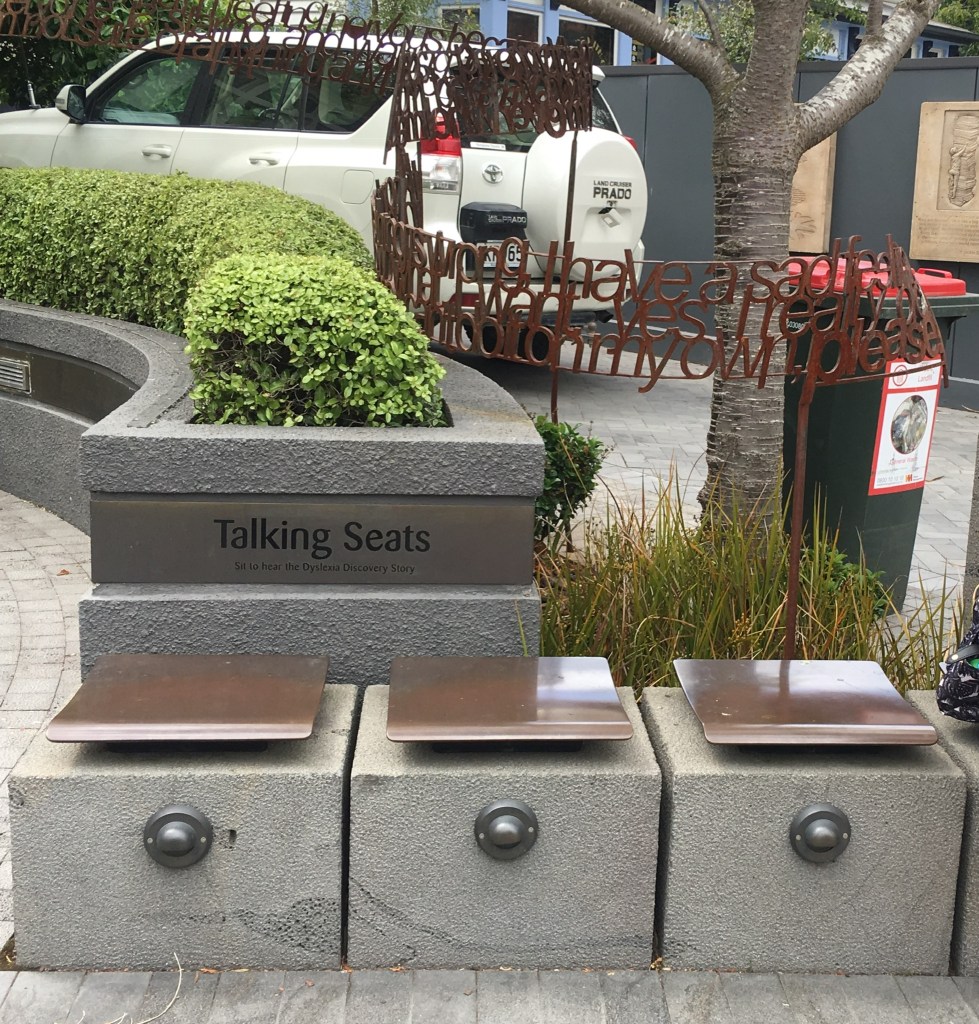
Stories of survival
Arthur’s Pass to the West Coast
If you have a choice, grab the Trans Alpine train from Christchurch up over the Southern Alps via Arthur’s Pass to the West Coast. If you have a vehicle and have to drive, then no problem it’s an equally spectacular journey but you will want to stop on the way to take in the scenery. On our trip in February, 3 members of the team took the train and the vehicle driver brought the SUV to meet the train at Moana Railway Station on other side of the Pass.
The Trans Alpine train service runs from Christchurch on the east coast to the end of the line at Greymouth on the west coast. This trip we decided to disembark prior to the end of the line, at the small settlement of Moana, permanent population 92, on the shores of Lake Brunner. It’s a truly beautiful part of the world and a stopover we would thoroughly recommend.
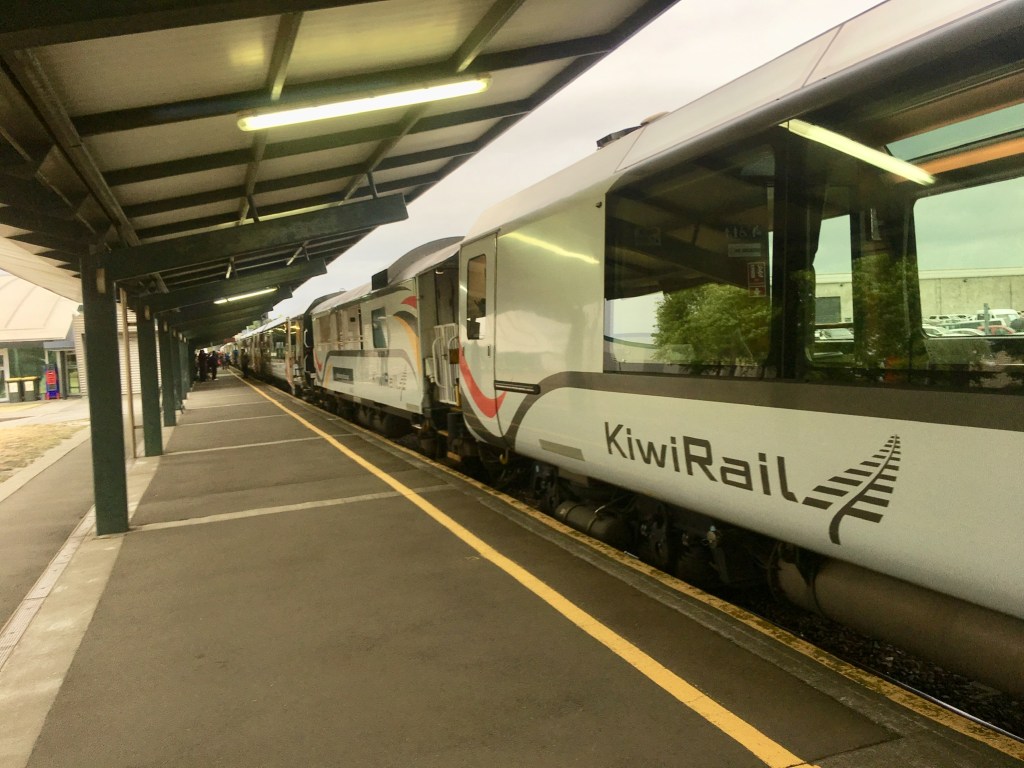
The New Christchurch Railway Station 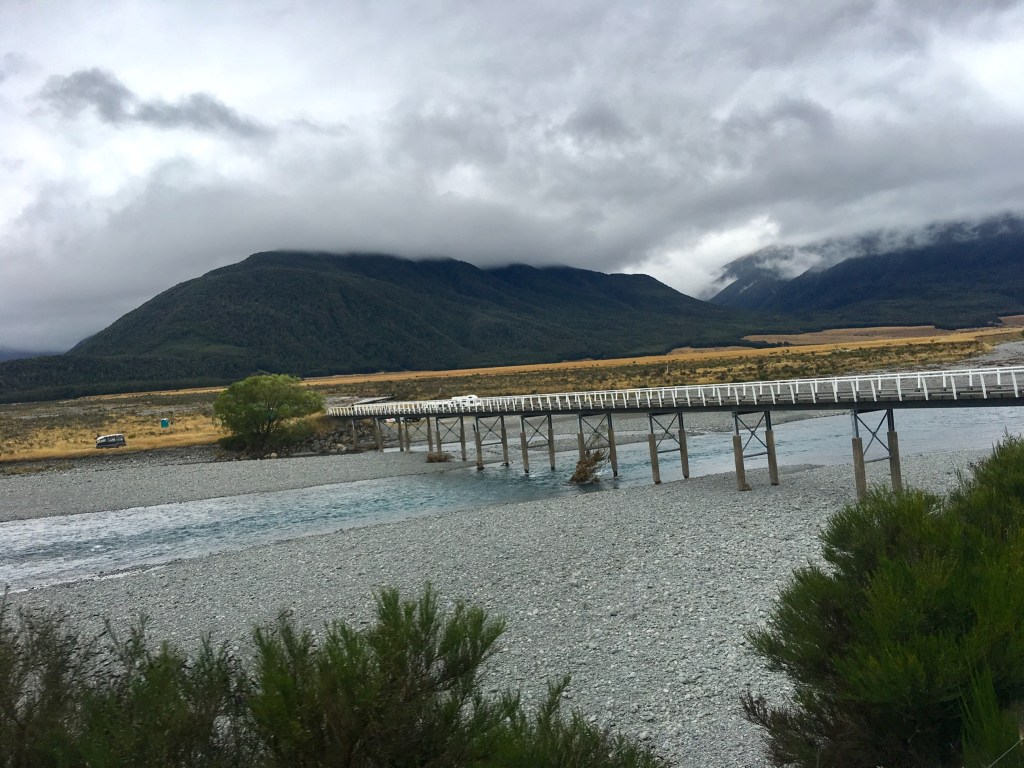
Before Arthur’s Pass 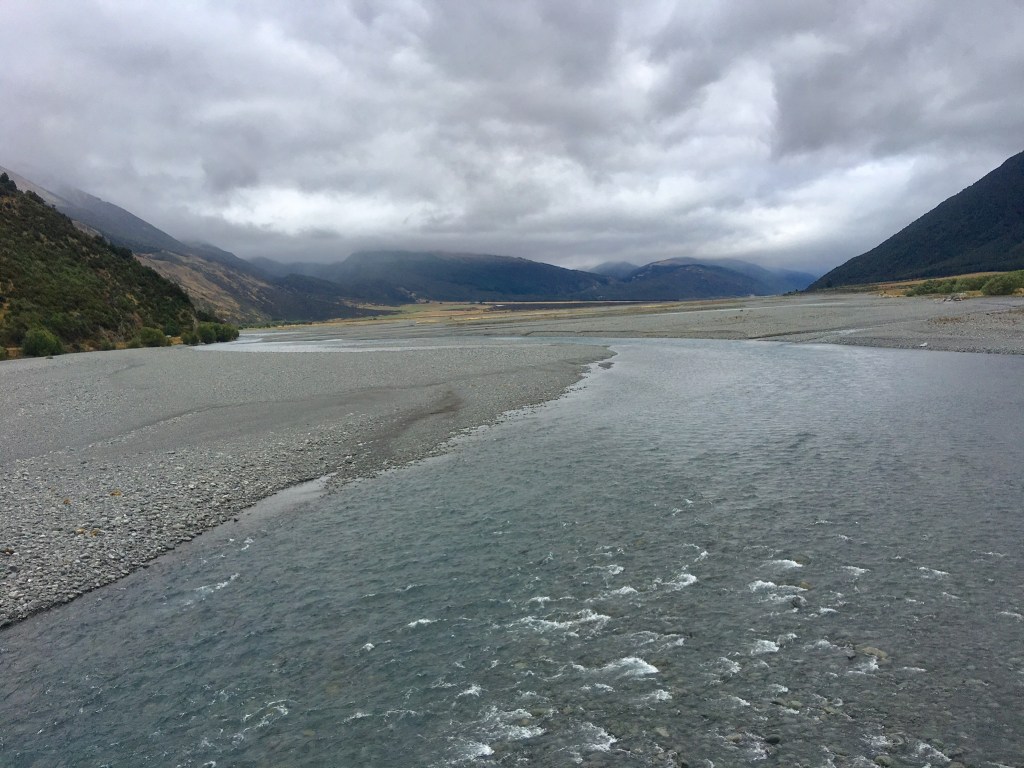
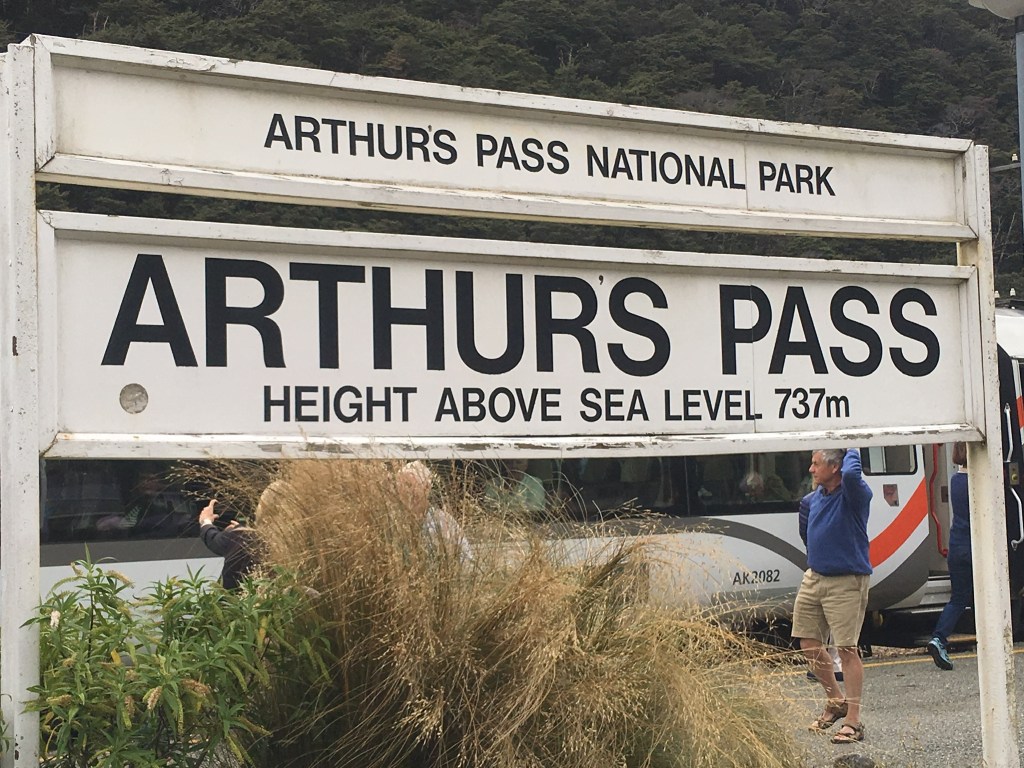
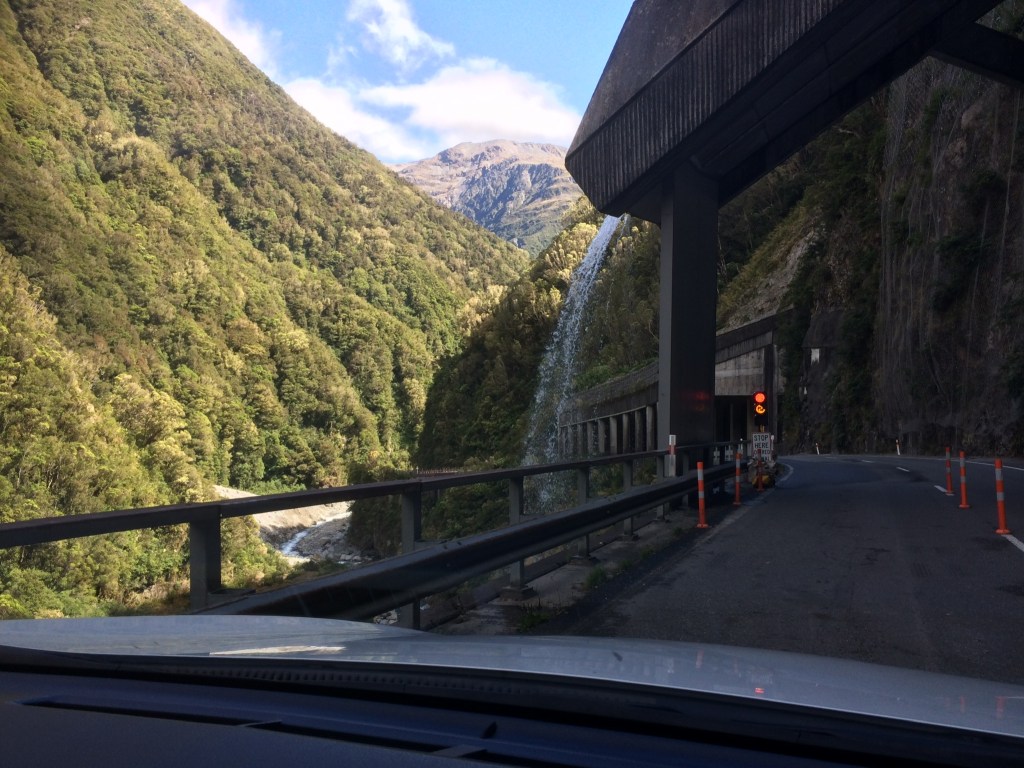
Over the divide, river diverted over road & instant waterfall 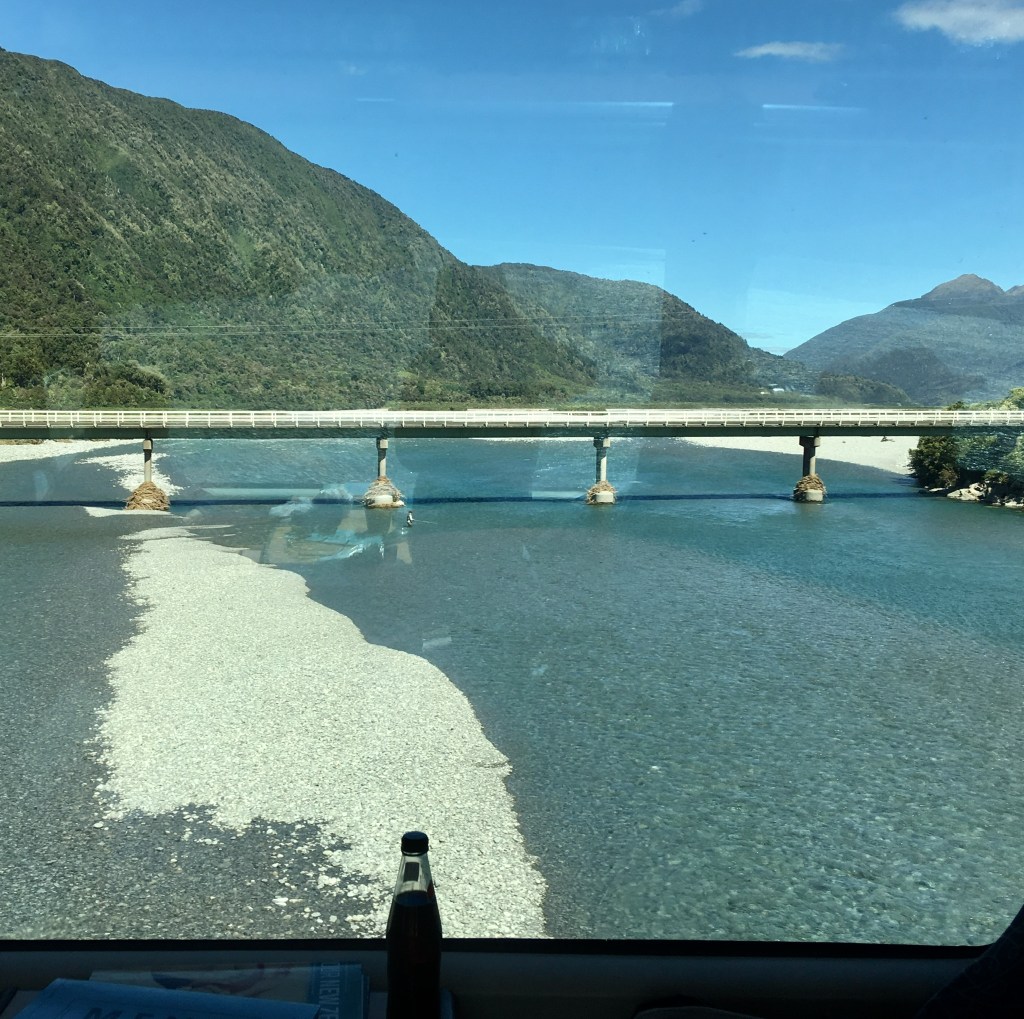
Road ridge taking us west 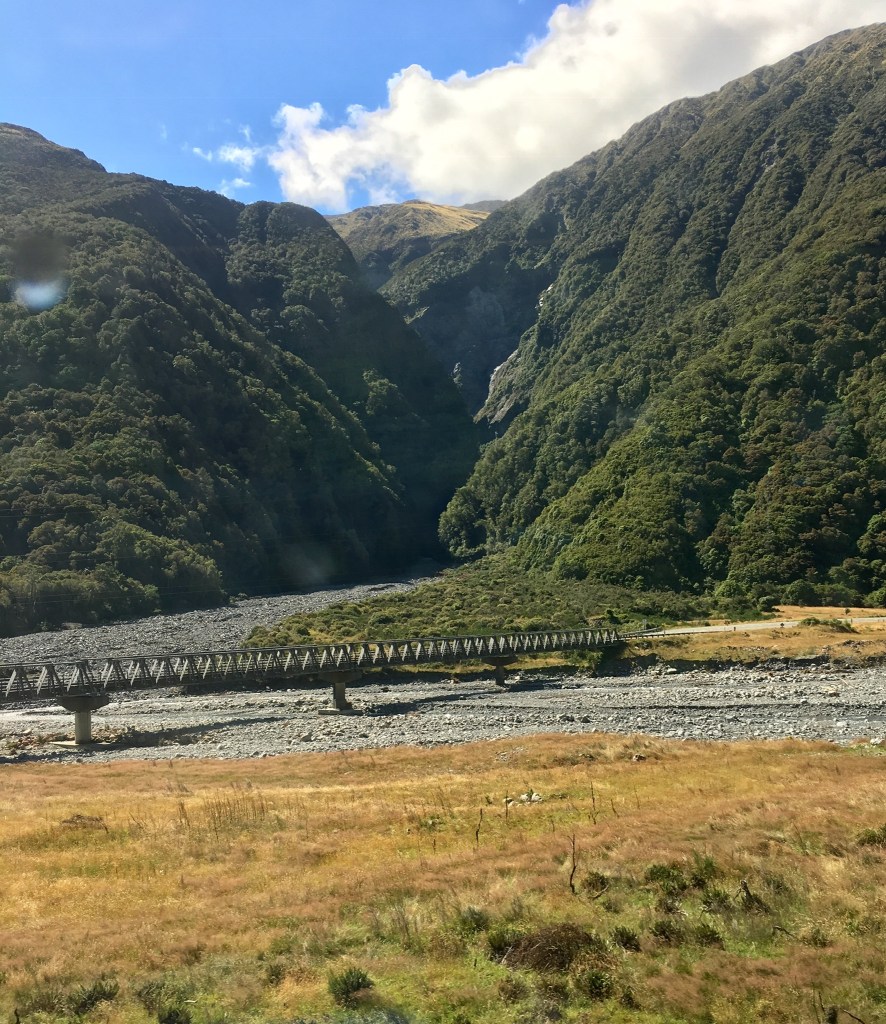
West coast, heavier rainfall and vegetation to match 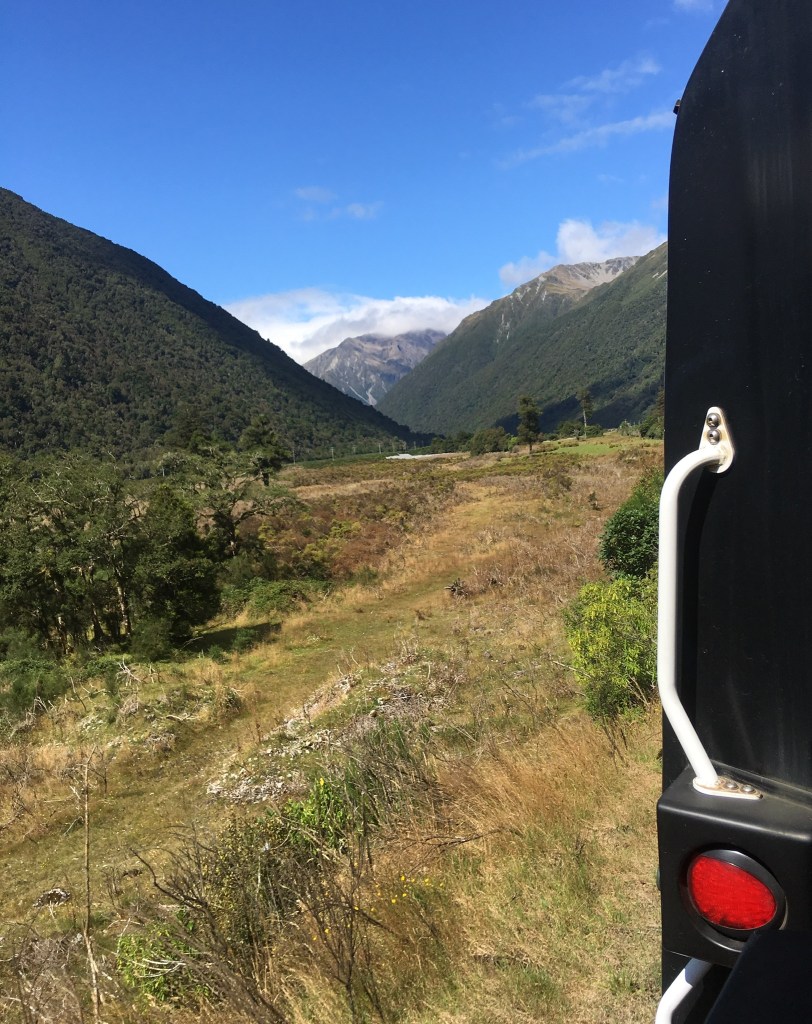
Views west from the train 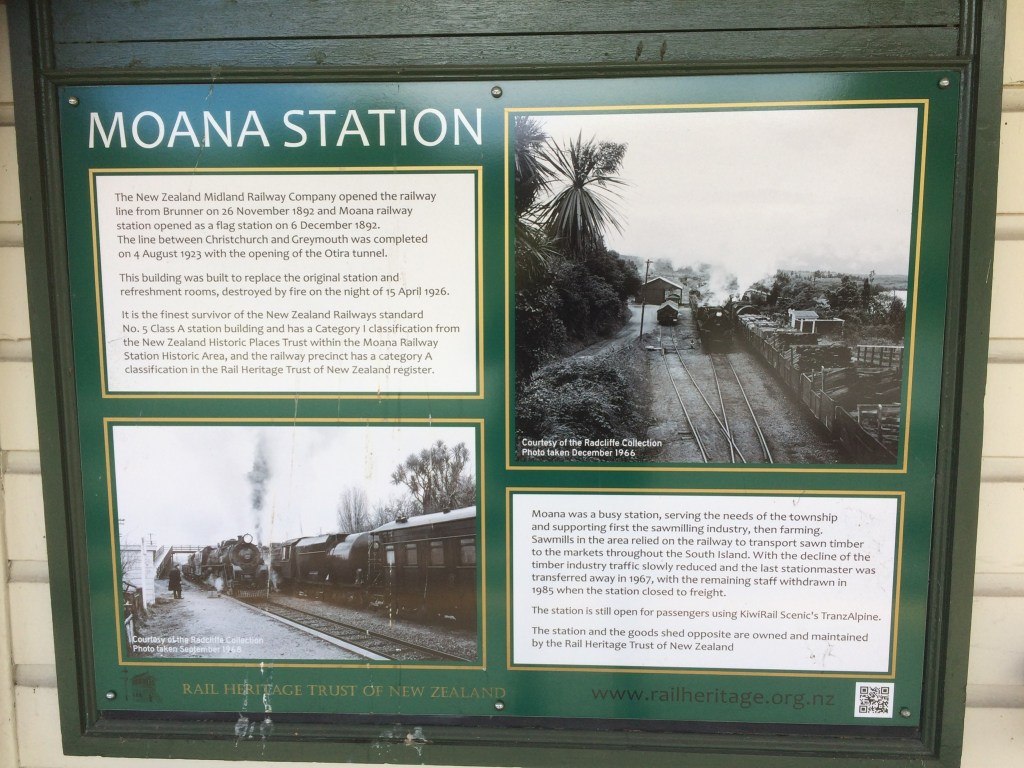
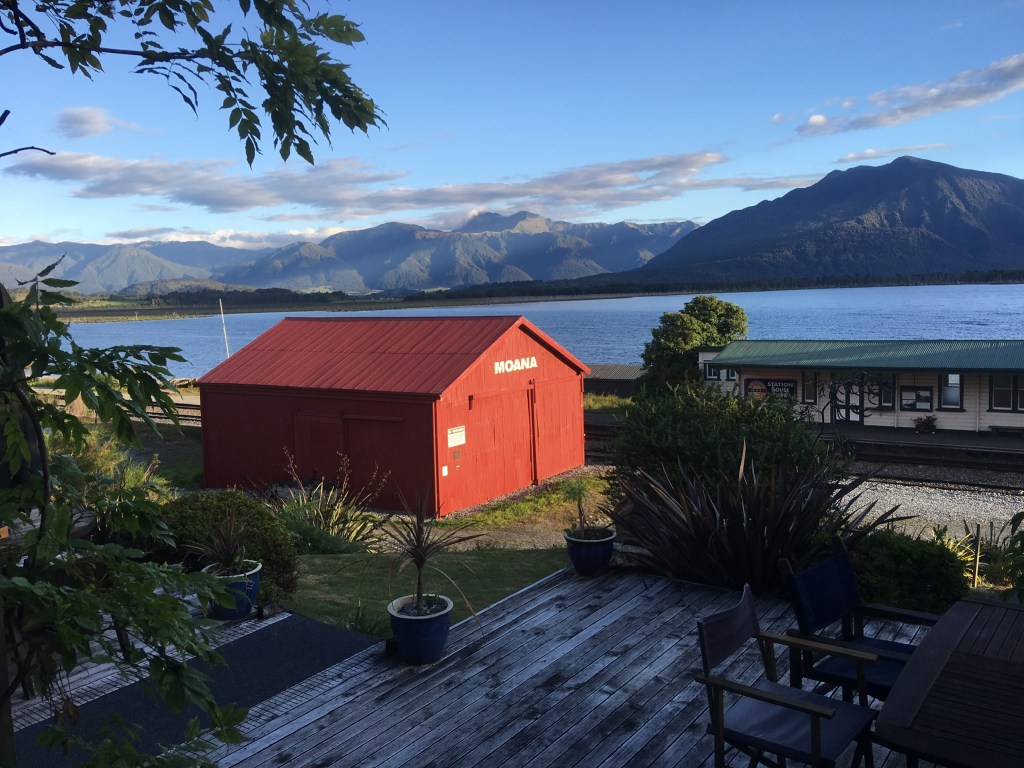
Lake Brunner & Moana Railway Station taken from a superb local restaurant
West Coast – Franz Josef & the Southern Alps from above
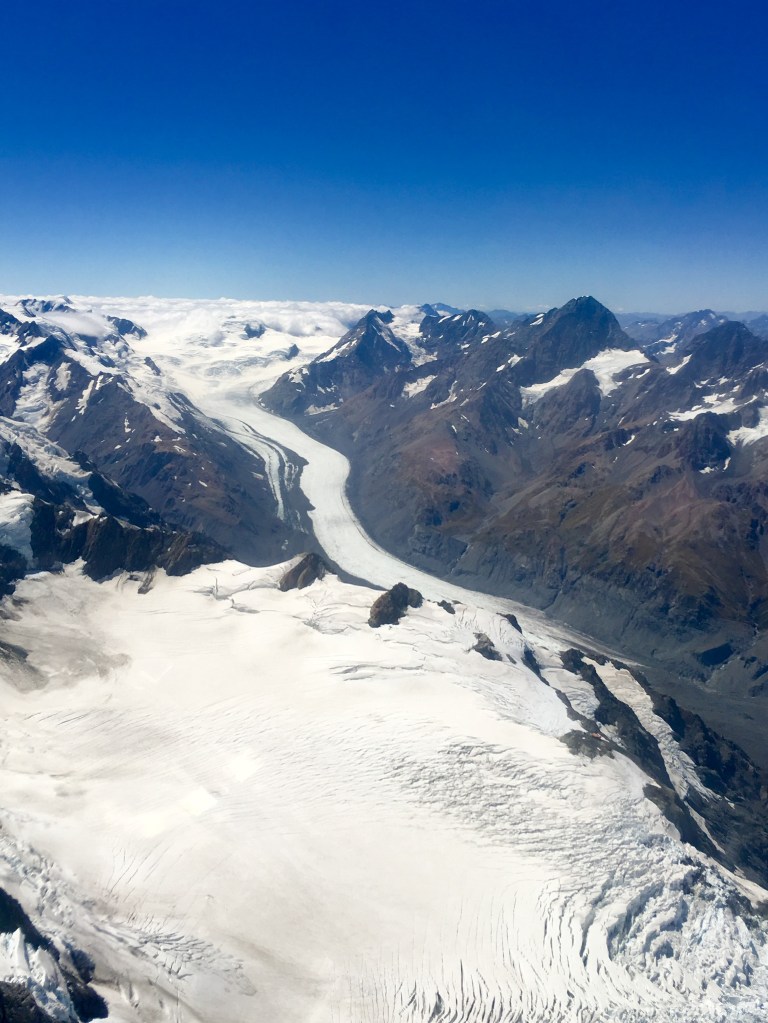
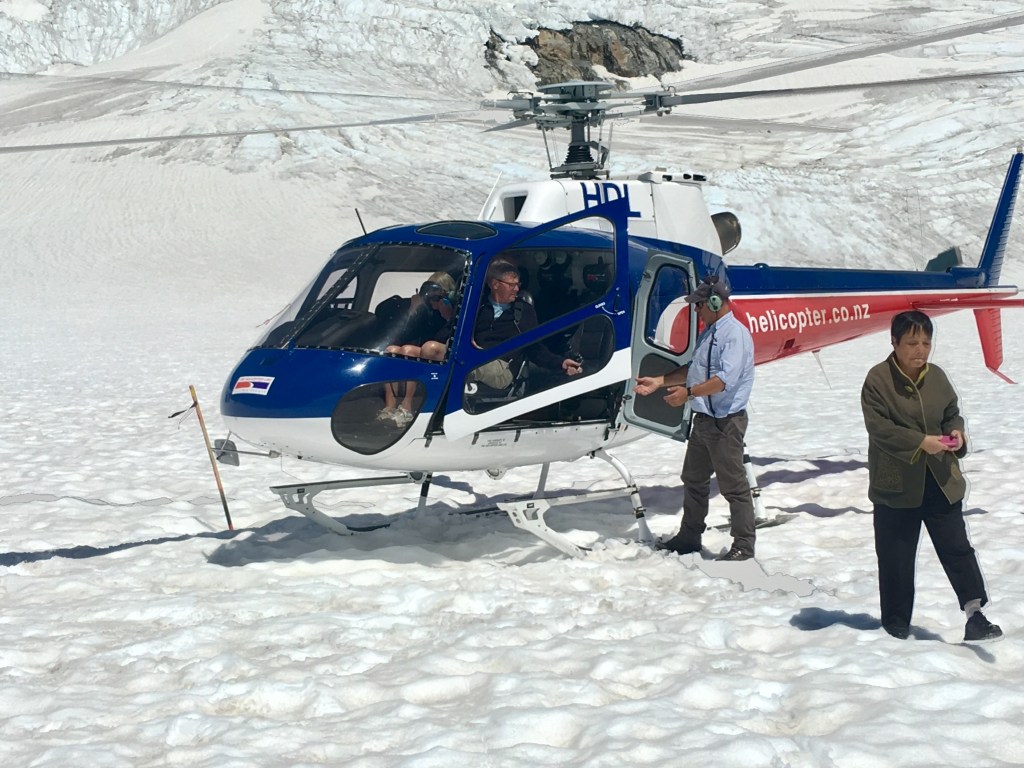
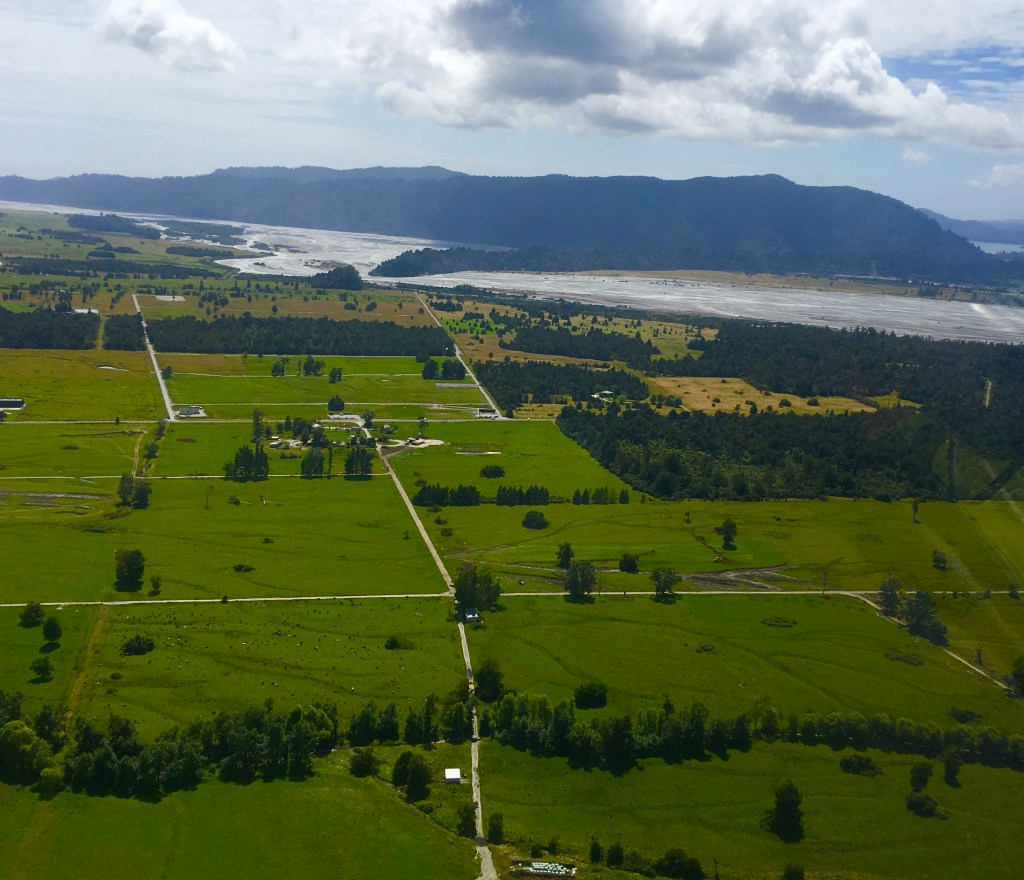
From Moana our South Island tour took us via Greymouth down to the township of Franz Josef, home to its famous glacier and a great place to explore the area from. If you like walking there are options from valley floor paths, to treks up onto the glacier. Or you may prefer to view the Southern Alps from the air and there are many helicopter options, one of which our tour party took advantage of, it was spectacular as you can see below.
We had booked an AirBNB house about five minutes drive north of Franz Josef which worked out very well. The township has a number of good restaurants, shops and plenty of tourist activities. About 30 mins drive south is the Fox Glacier and Lake Matheson both well worth a visit. Early morning walks to the Lake can reveal the Southern Alps glory and reflection in the mirror Lake, but be early when you visit as not many west coast days are breeze less.
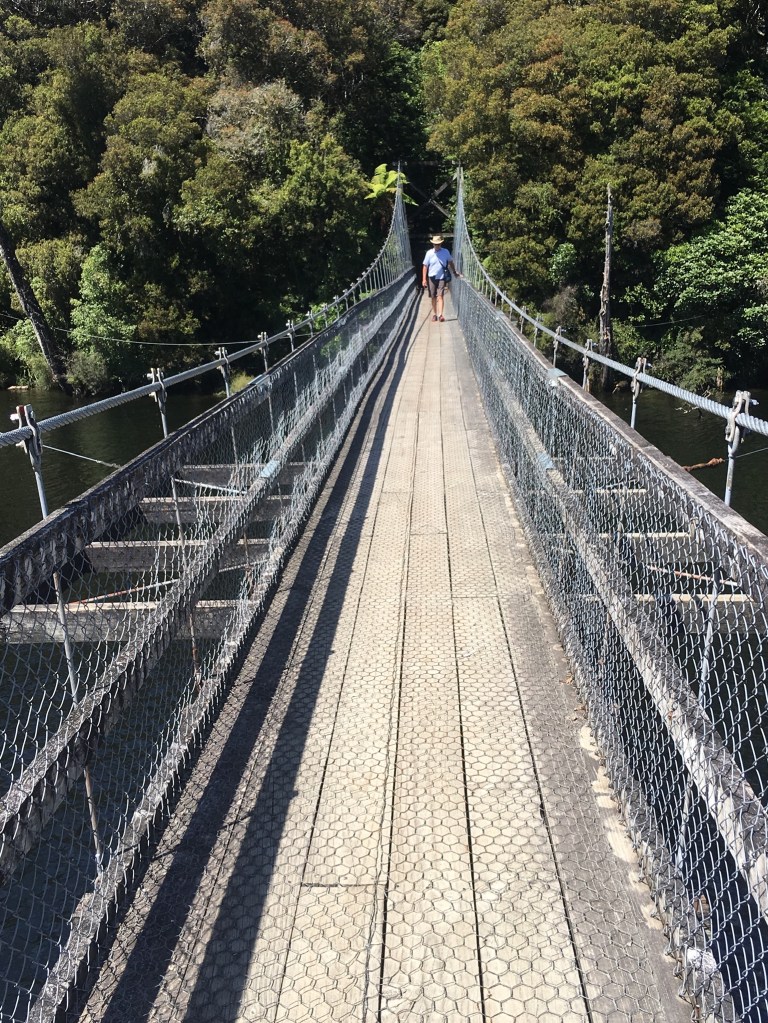
Bridge at Moana 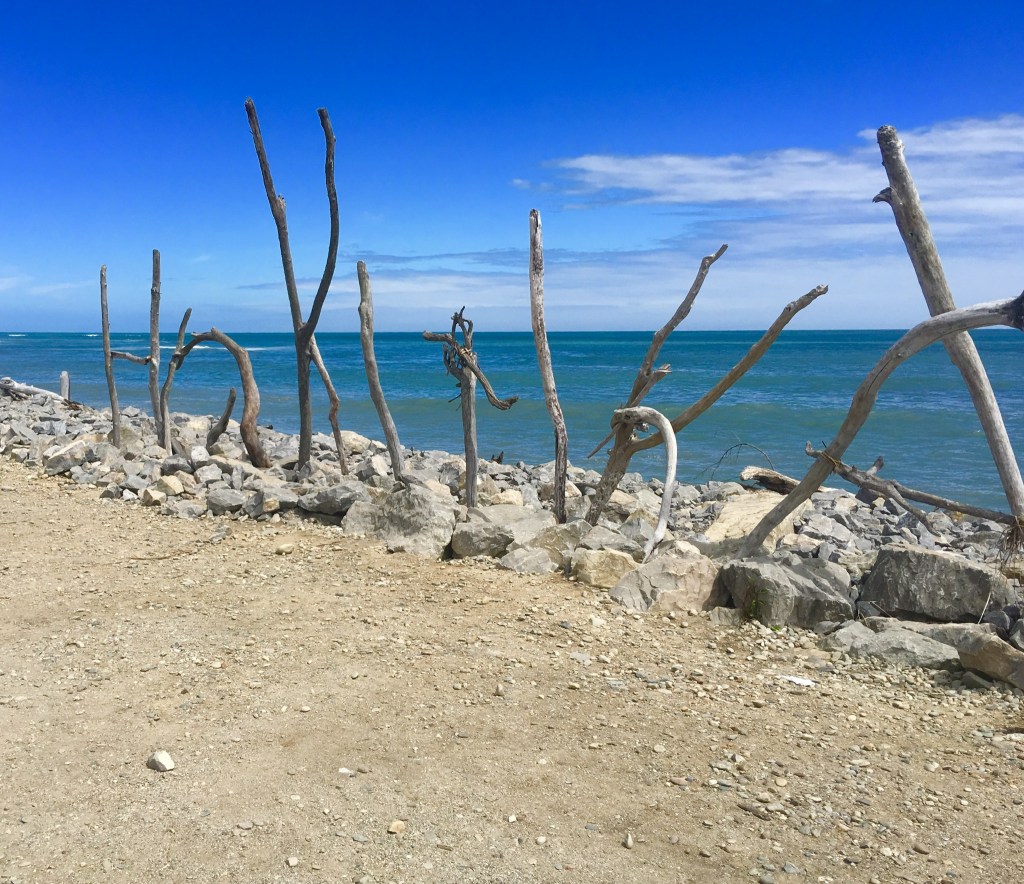
West Coast driftwood = art 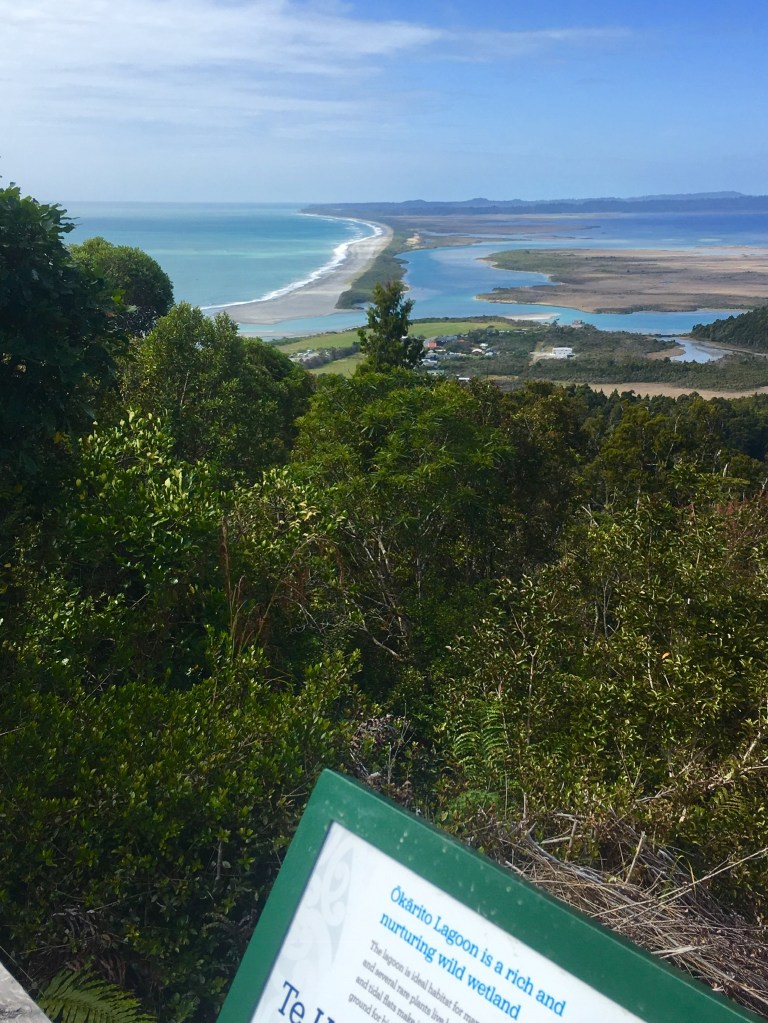
Okarito Lagoon Reserve & views north 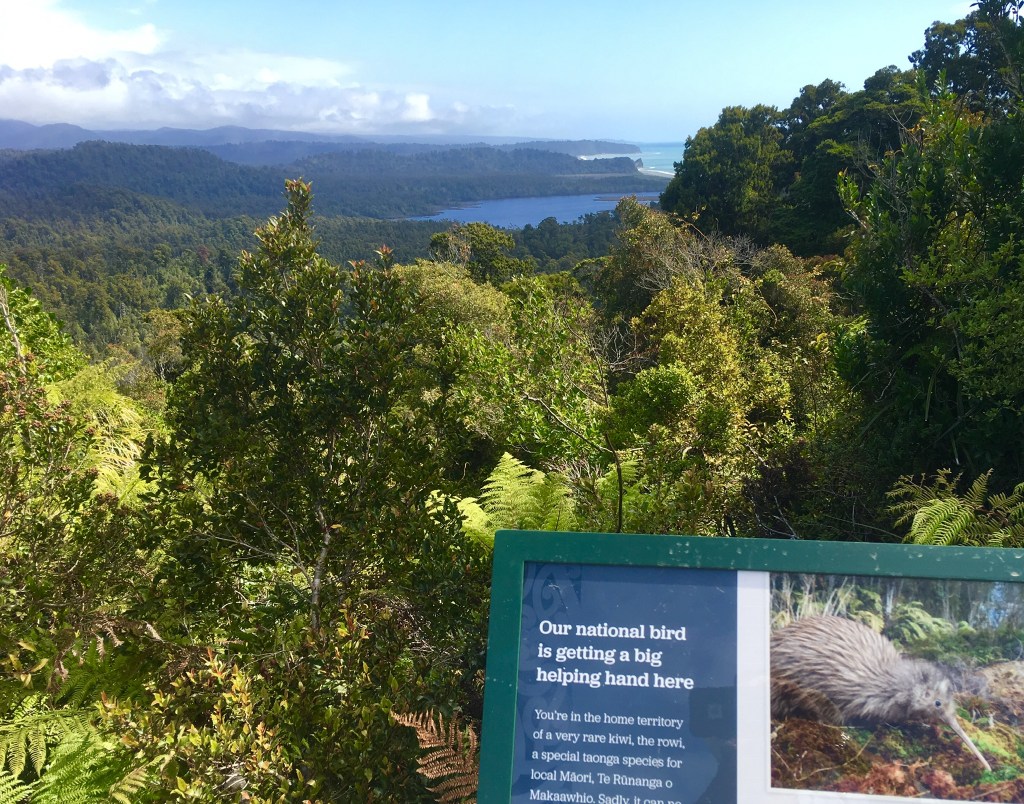
Lush west coast forest 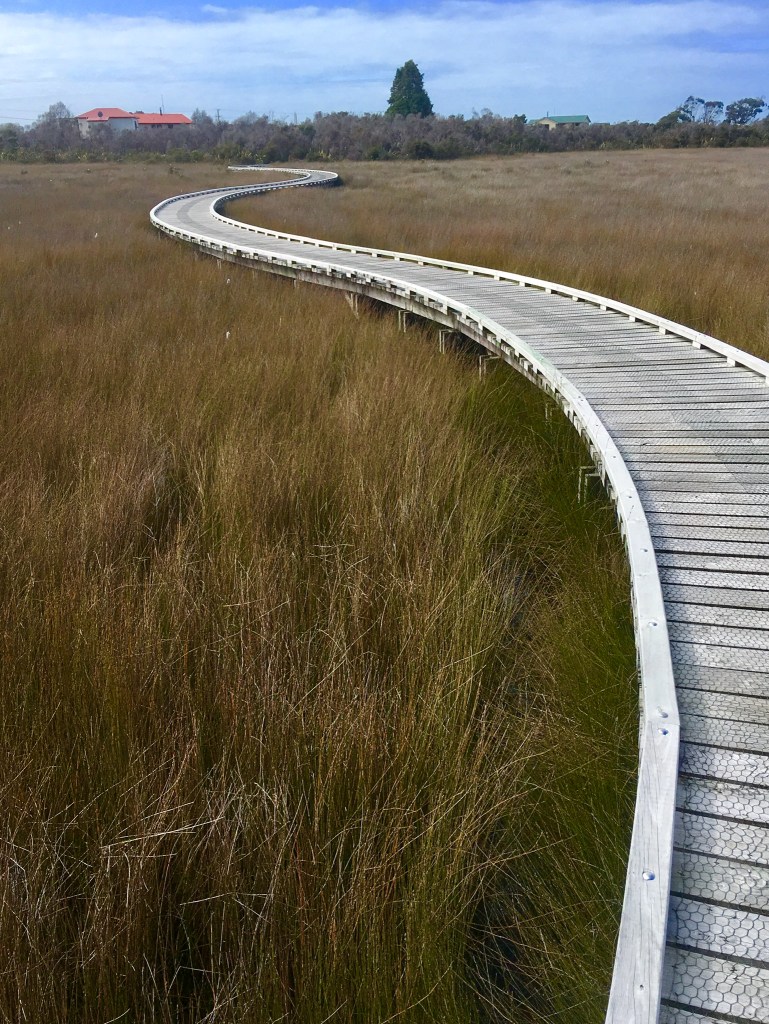
Pretty boardwalk at Okarito 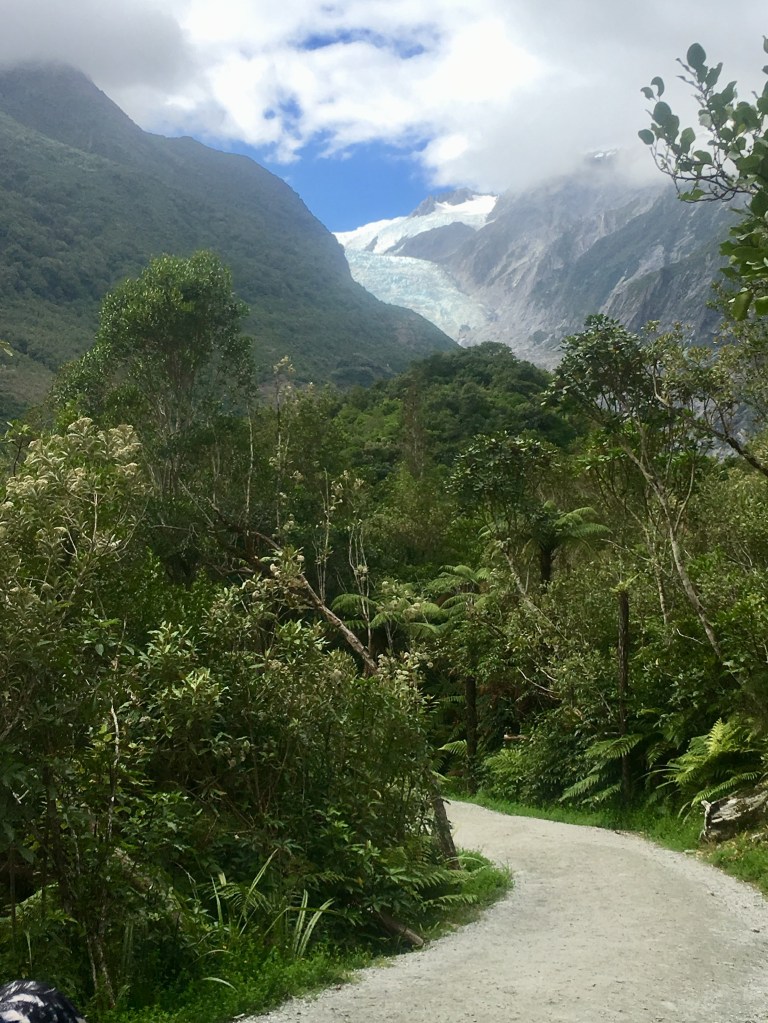
Valley road up to Franz Josef glacier 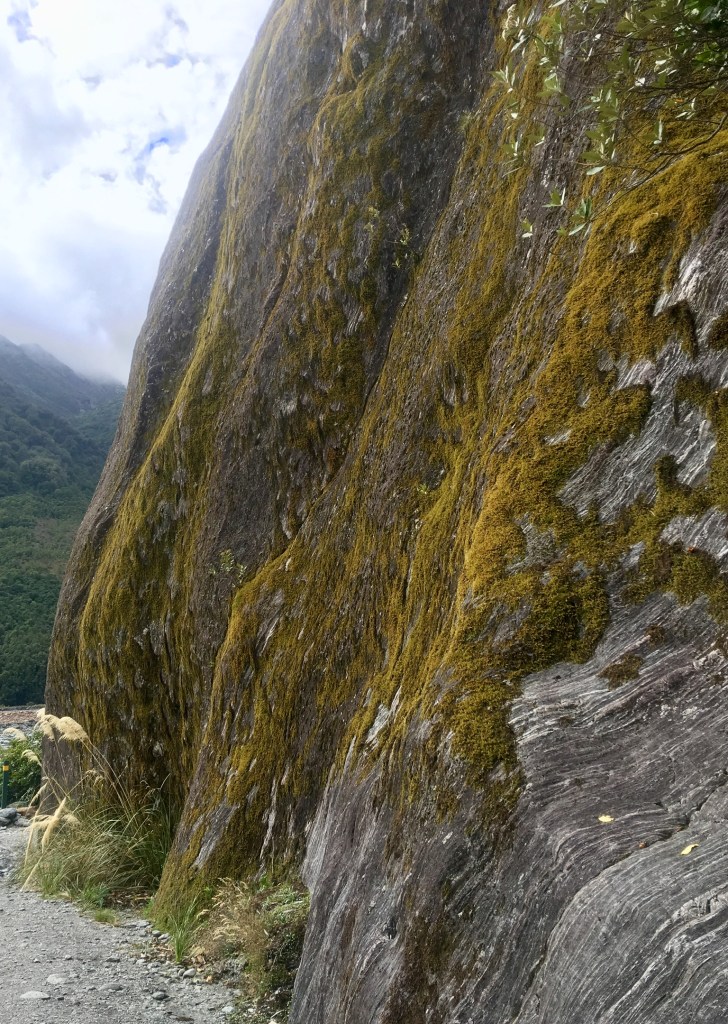
Franz Josef Valley walks … 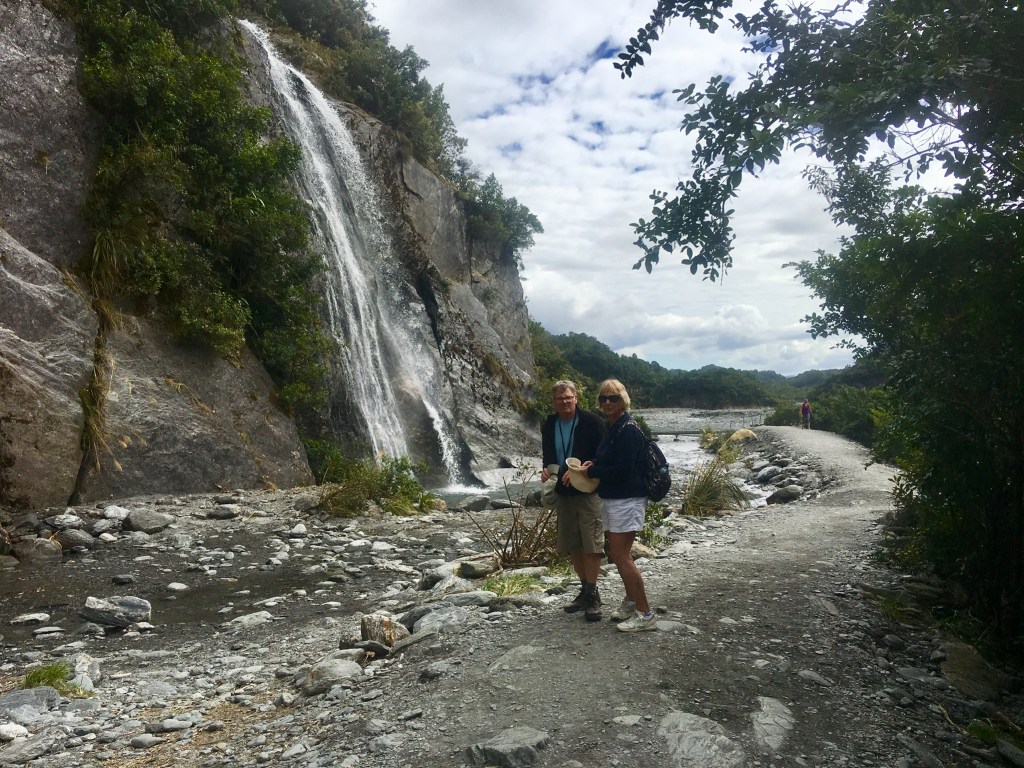
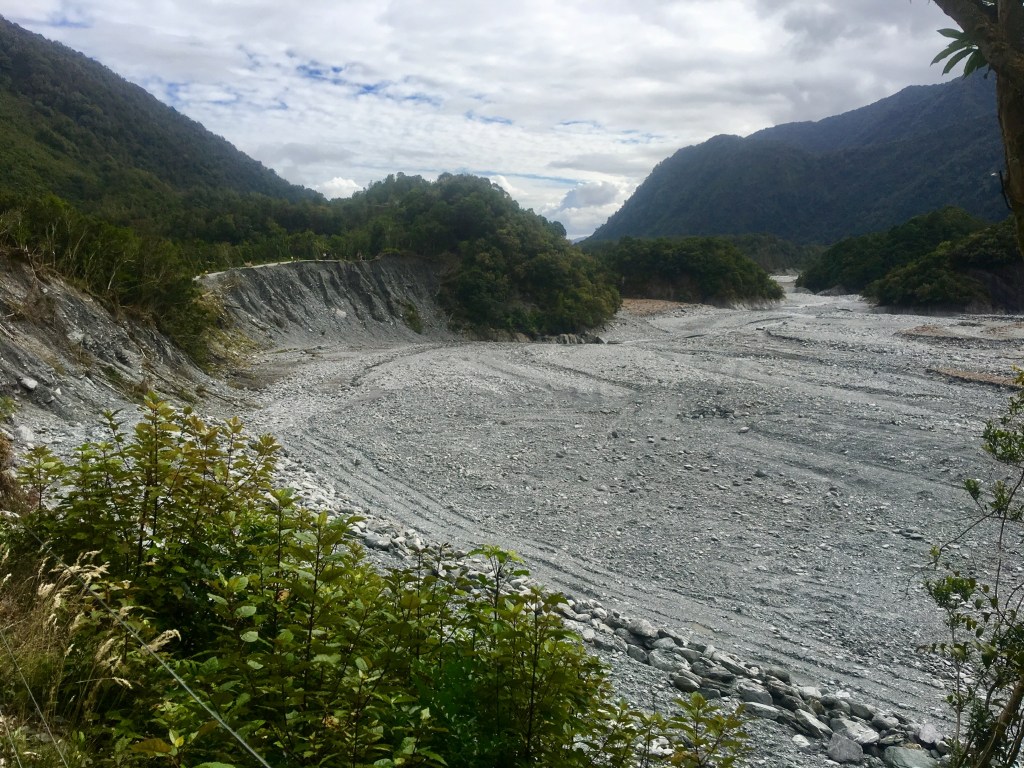
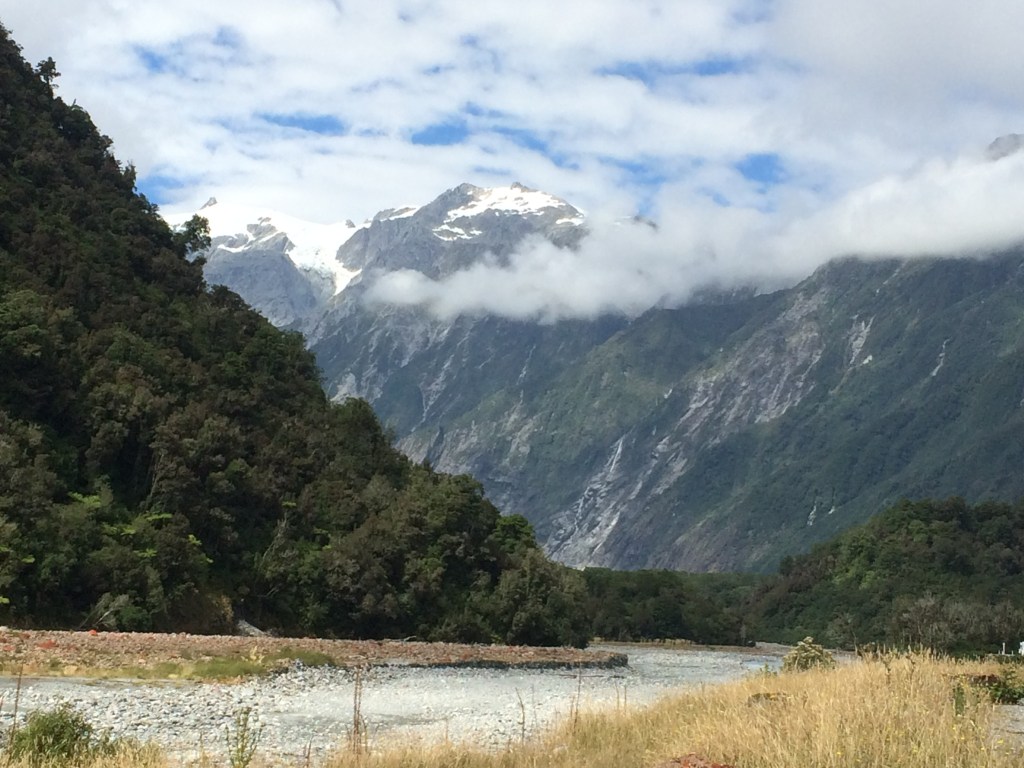
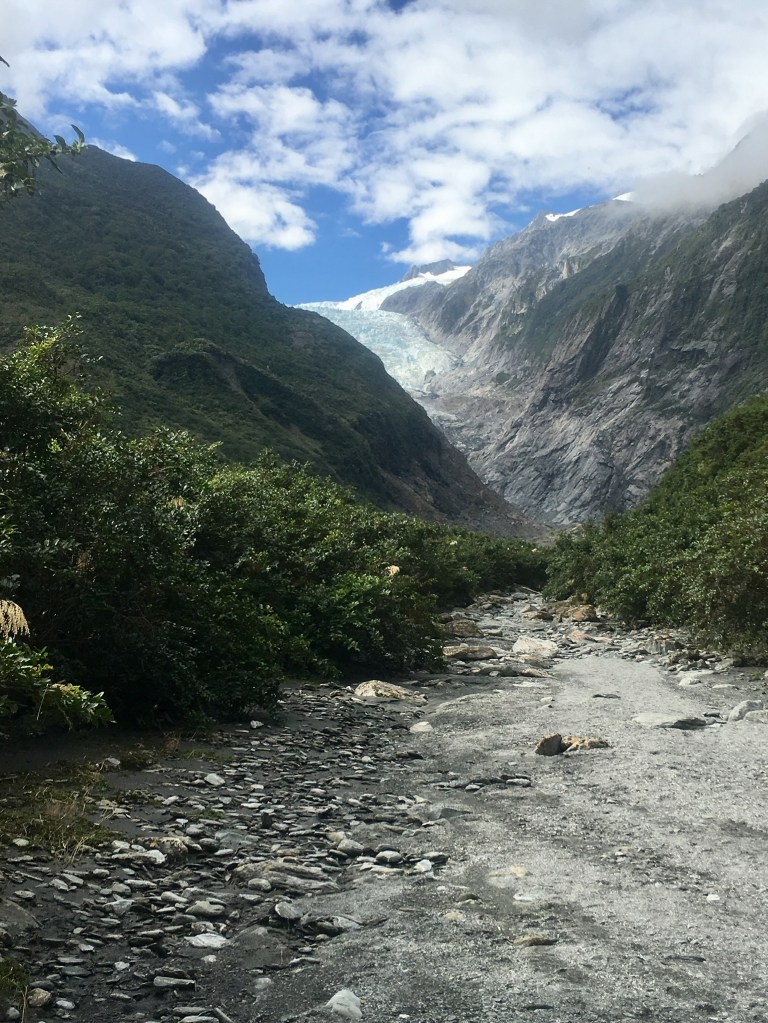
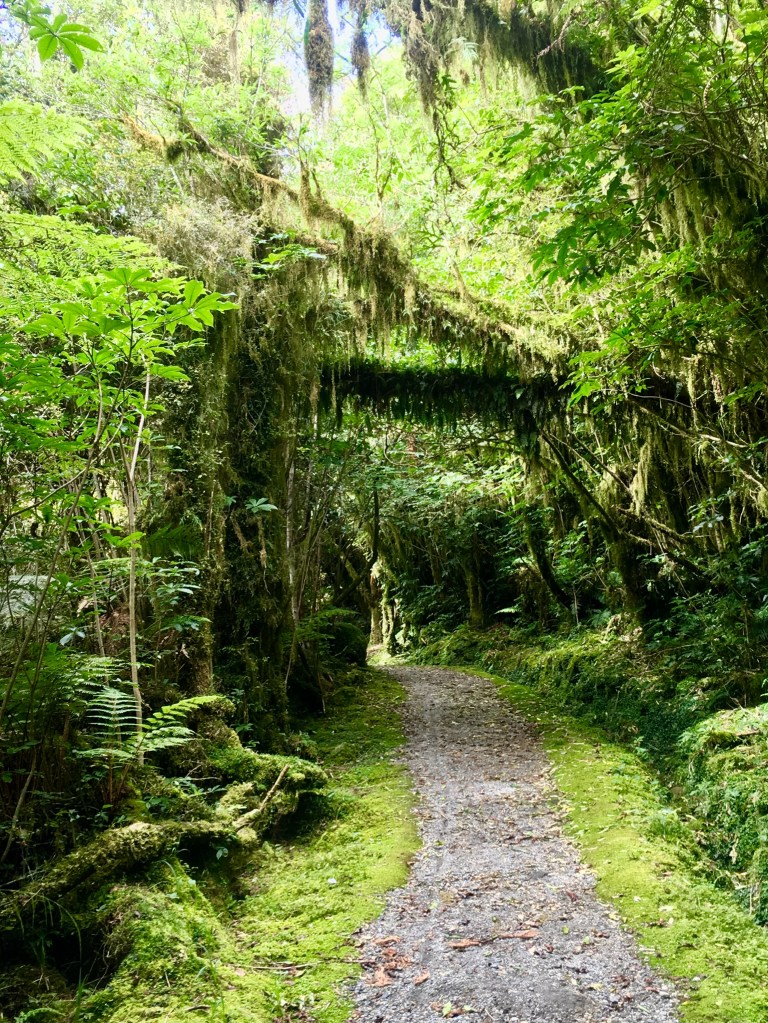
Franz Josef Valley Bush walk 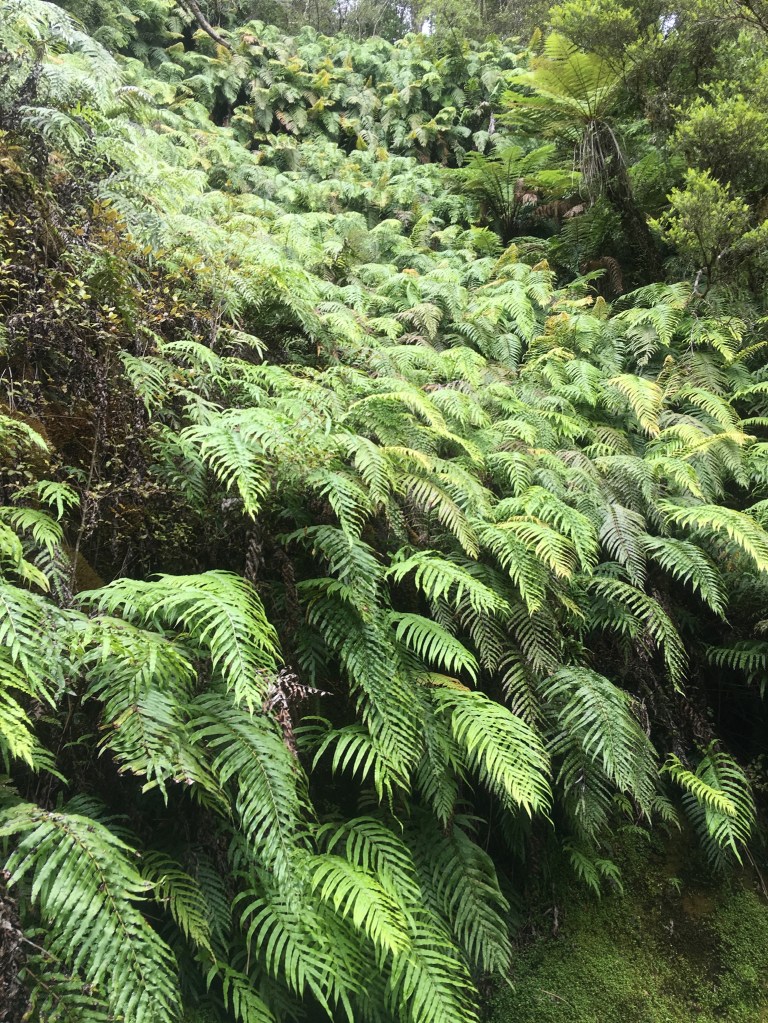
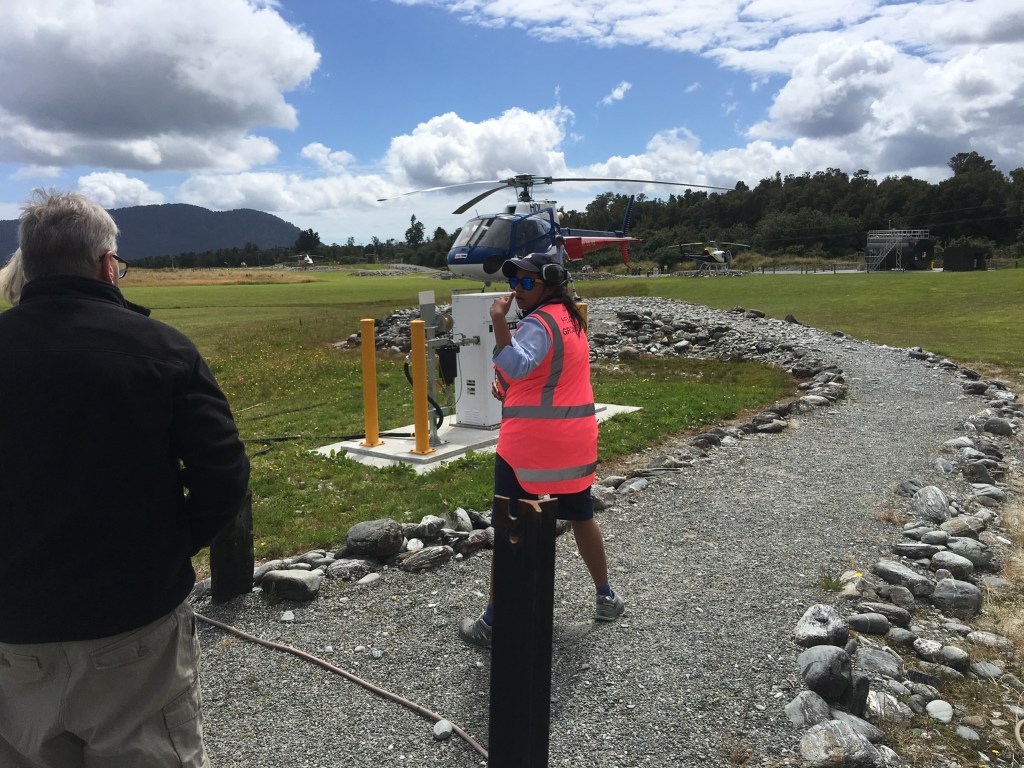
Pre flight check 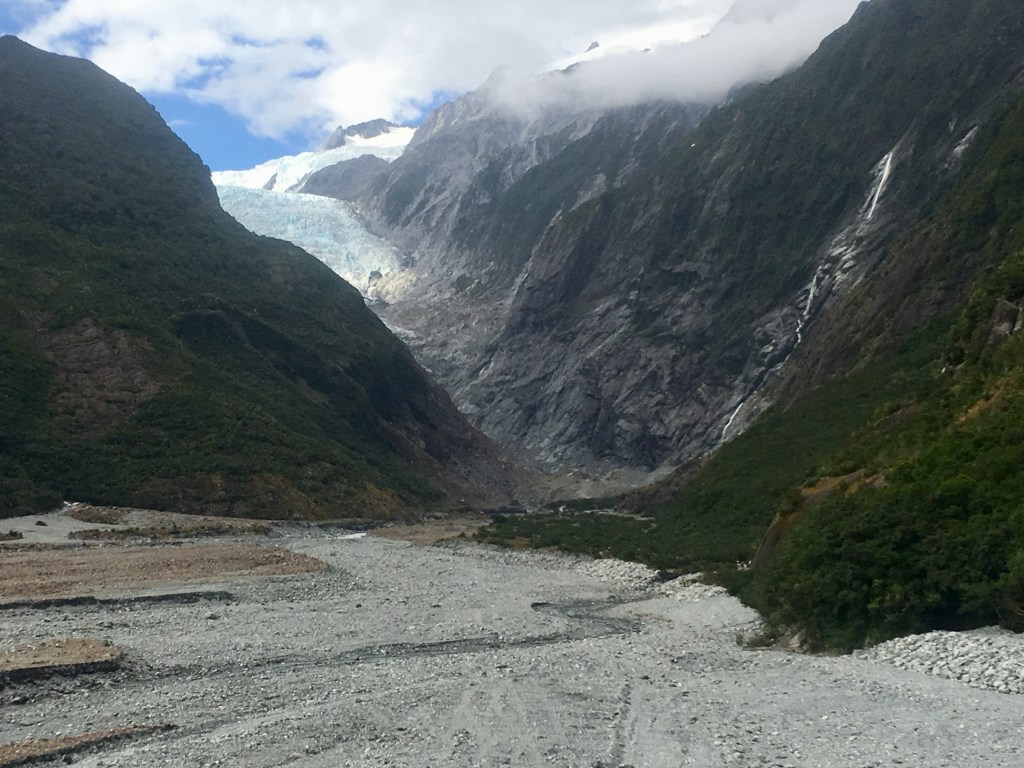
Airborne & glacier bound 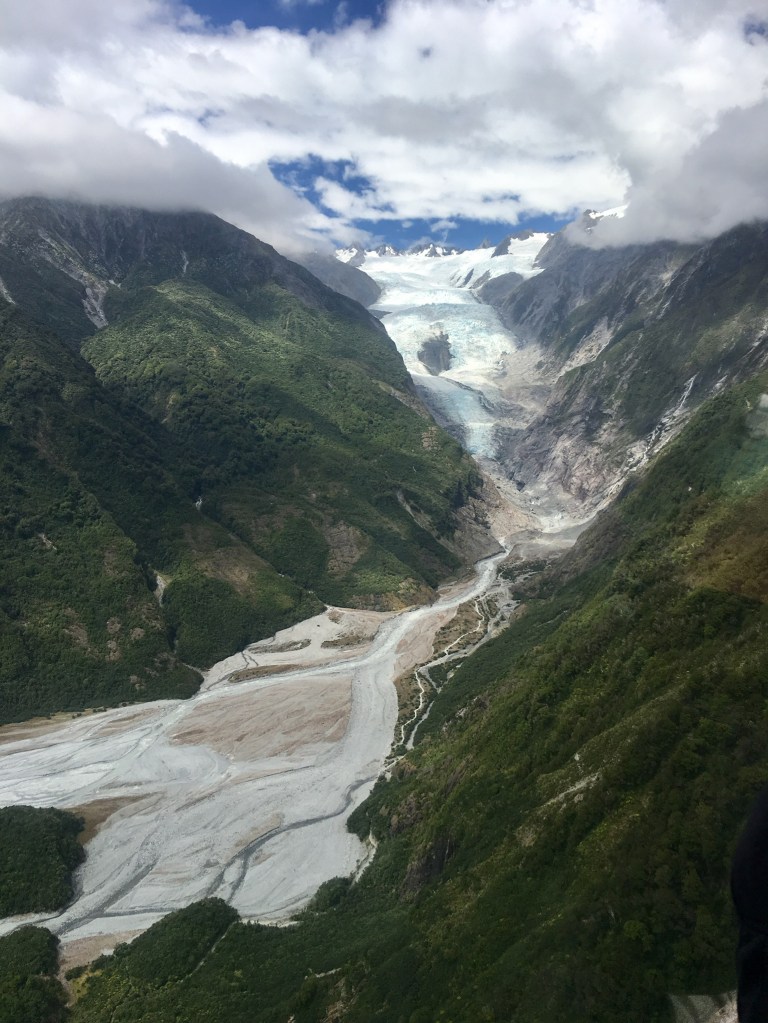
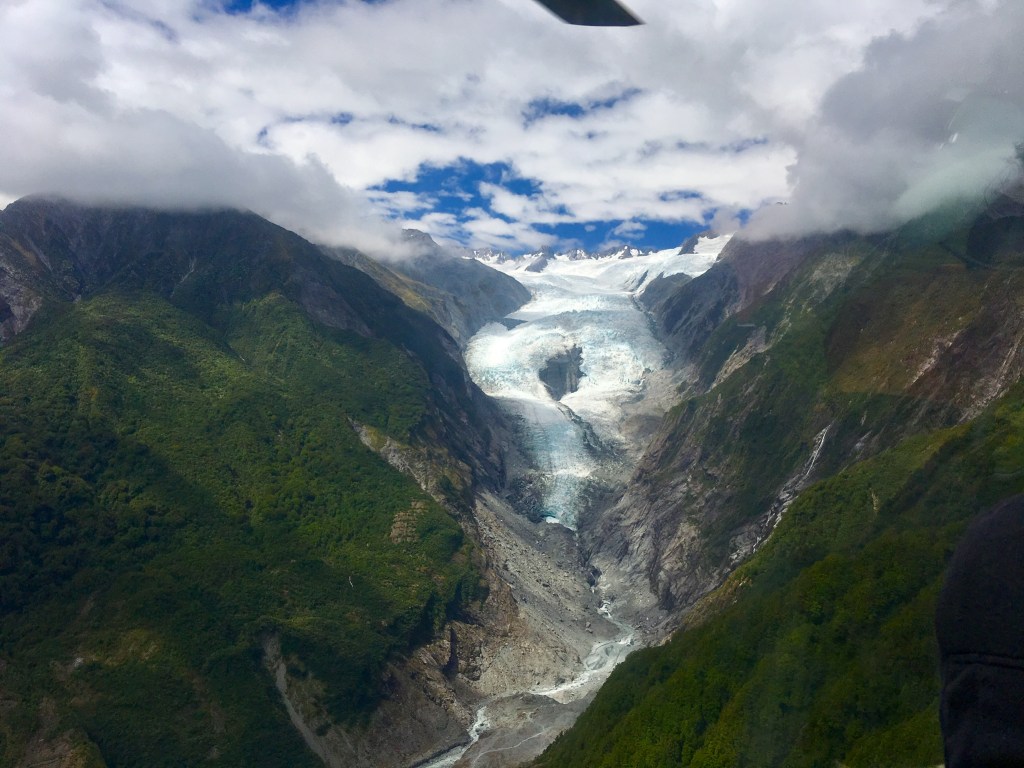
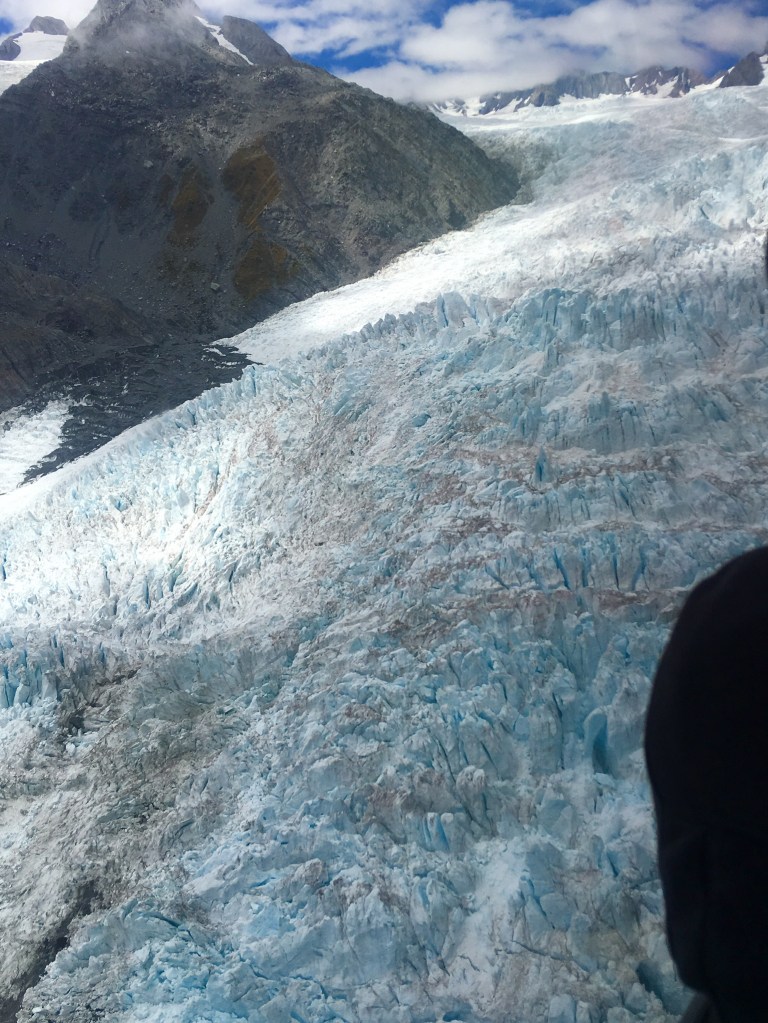
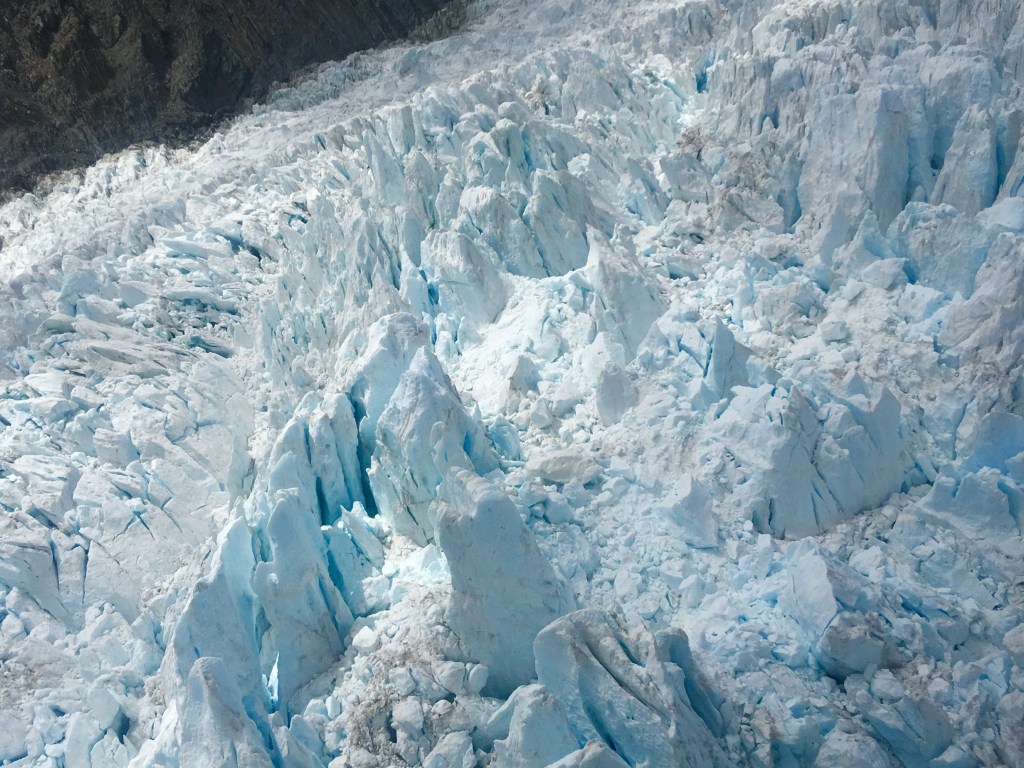
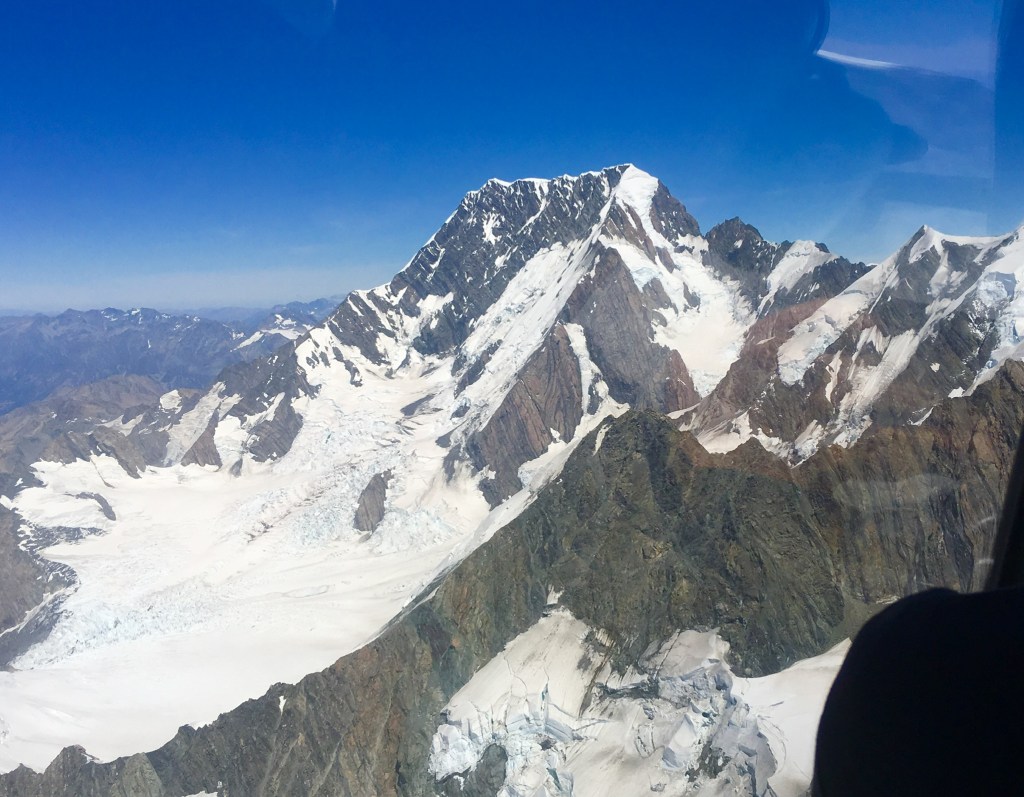
Mount Cook 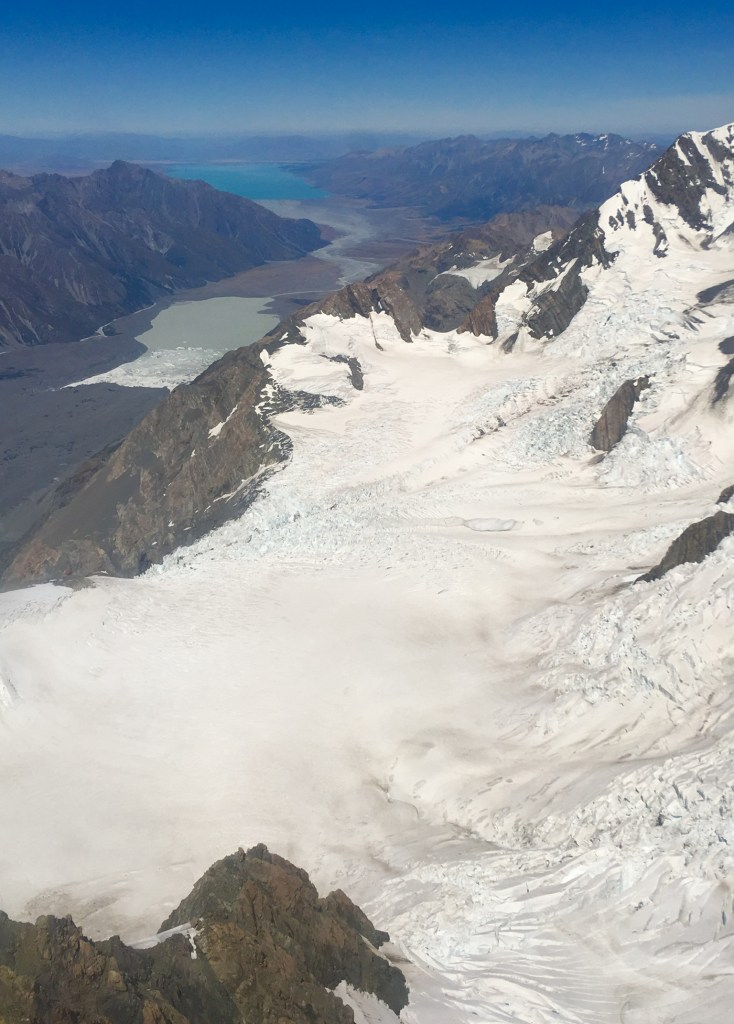
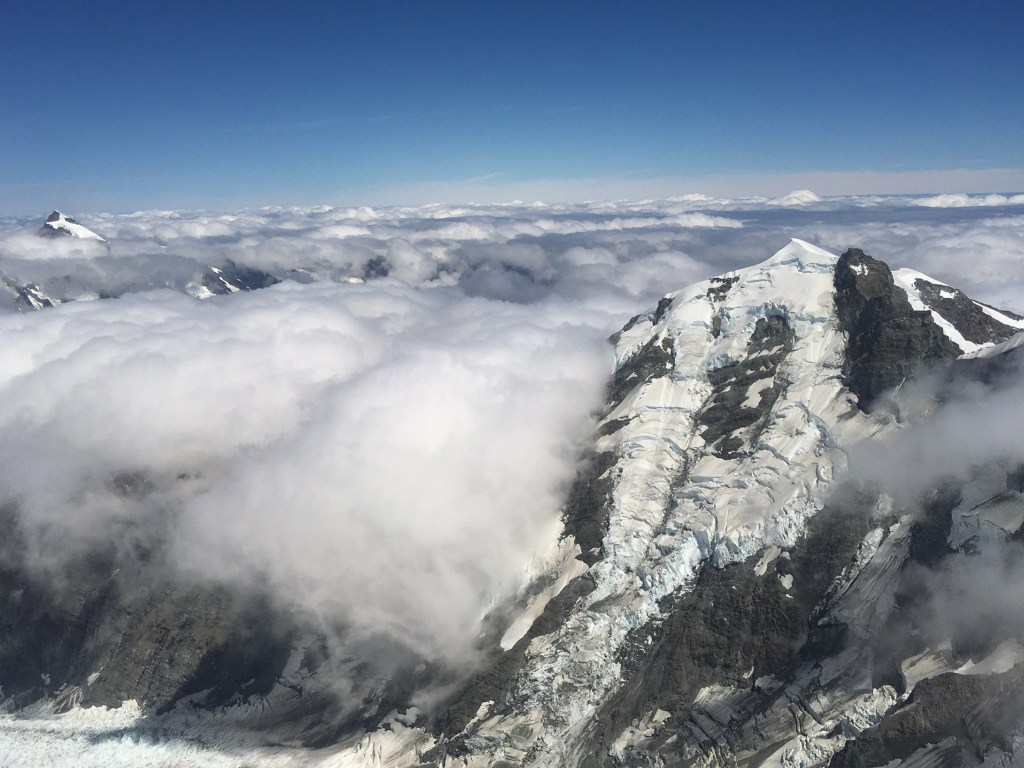
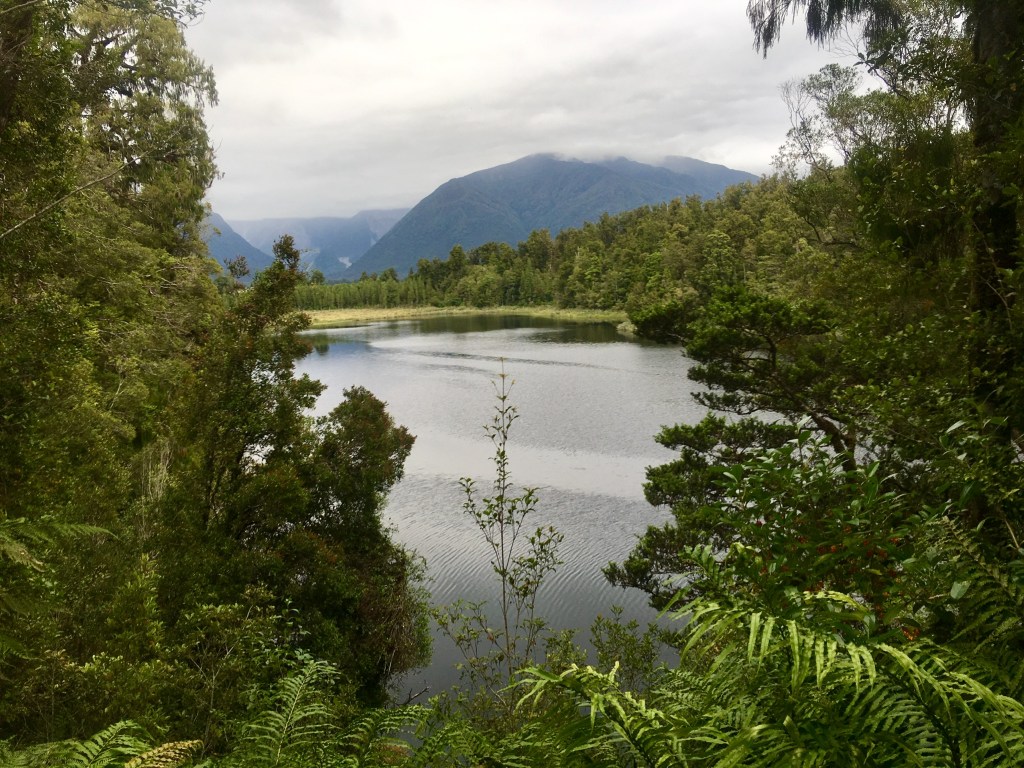
Lake Matheson
Haast Pass & Cardrona Valley
Heading south from Franz Josef our destination was an AirBNB in Cardrona Valley just next door to the Cardrona Hotel – good beer and great food, as we discovered. This was to be our base to explore the area which is called Central Otago, famous for mountains, ski fields, amazing lakes, vineyards and the home of the AJ Hackett Bungy Jumping at the Kawerau Bridge.
But first stop is the Haast Pass which links the West Coast to Central Otago, a great drive and compulsory stops to enjoy the views of the native timber forests, coastline, mountains, valleys, lakes and waterfalls. This four to five hour drive really has it all, whatever the weather, and the West Coast is renowned for having some “ full on weather”. Weather systems reared in the Antarctic, get bounced off continental Australia and next in the firing line – West Coast of the South Island of you guessed it, NZ!!
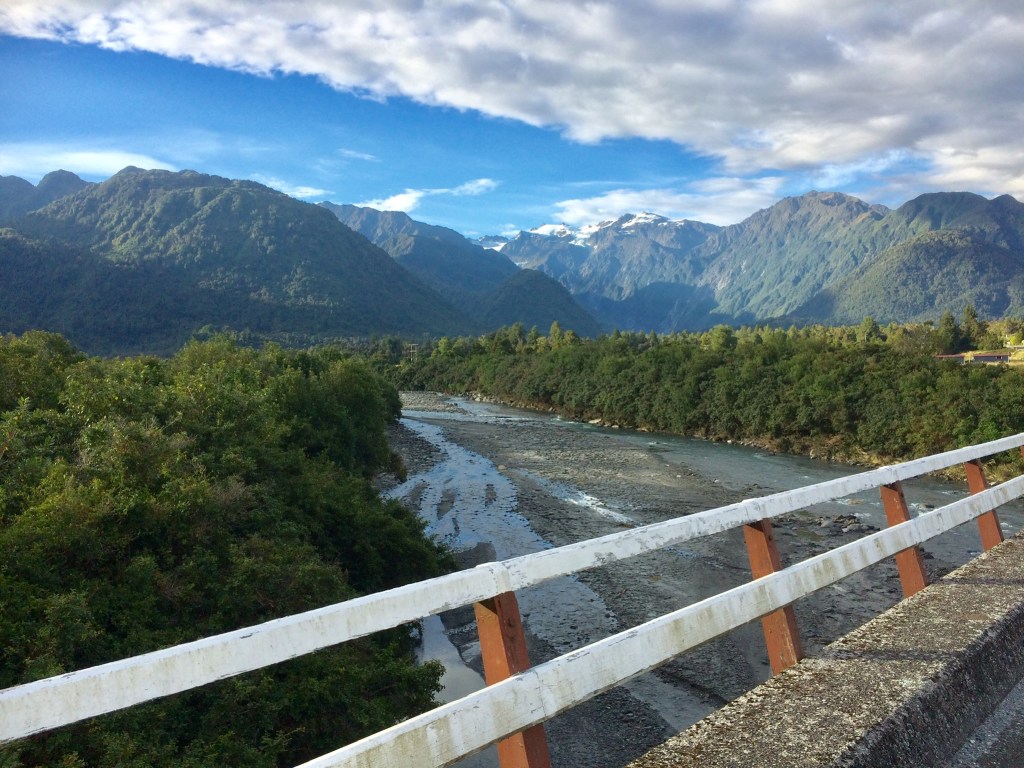
West Coast Highway 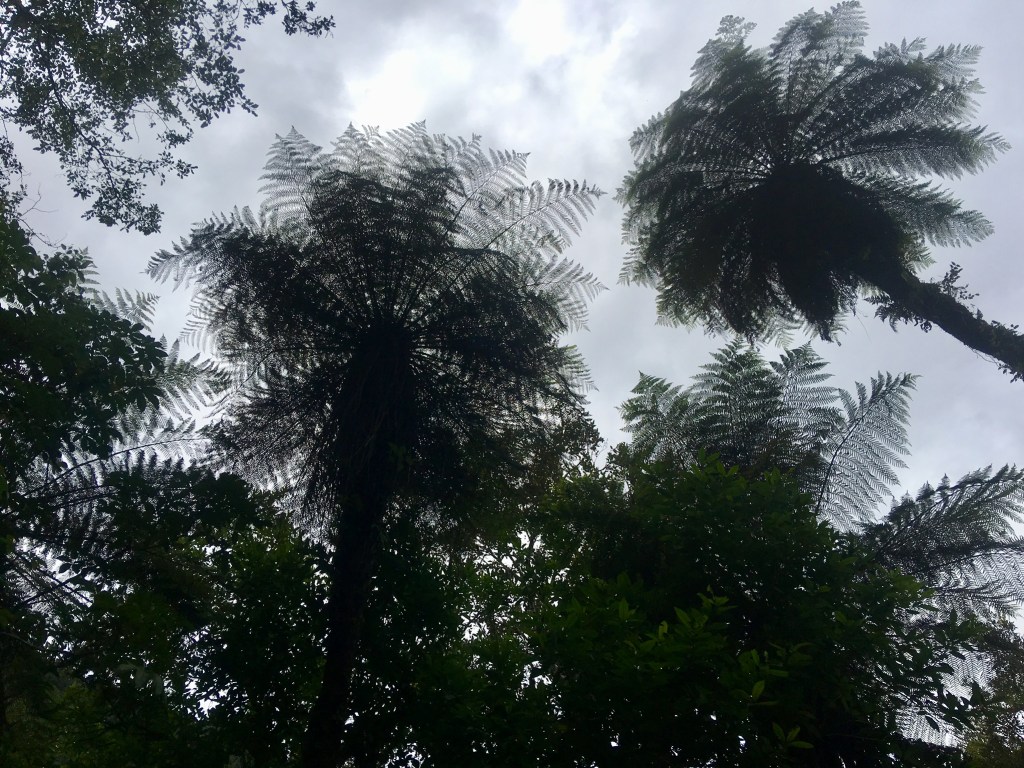
Ferns everywhere 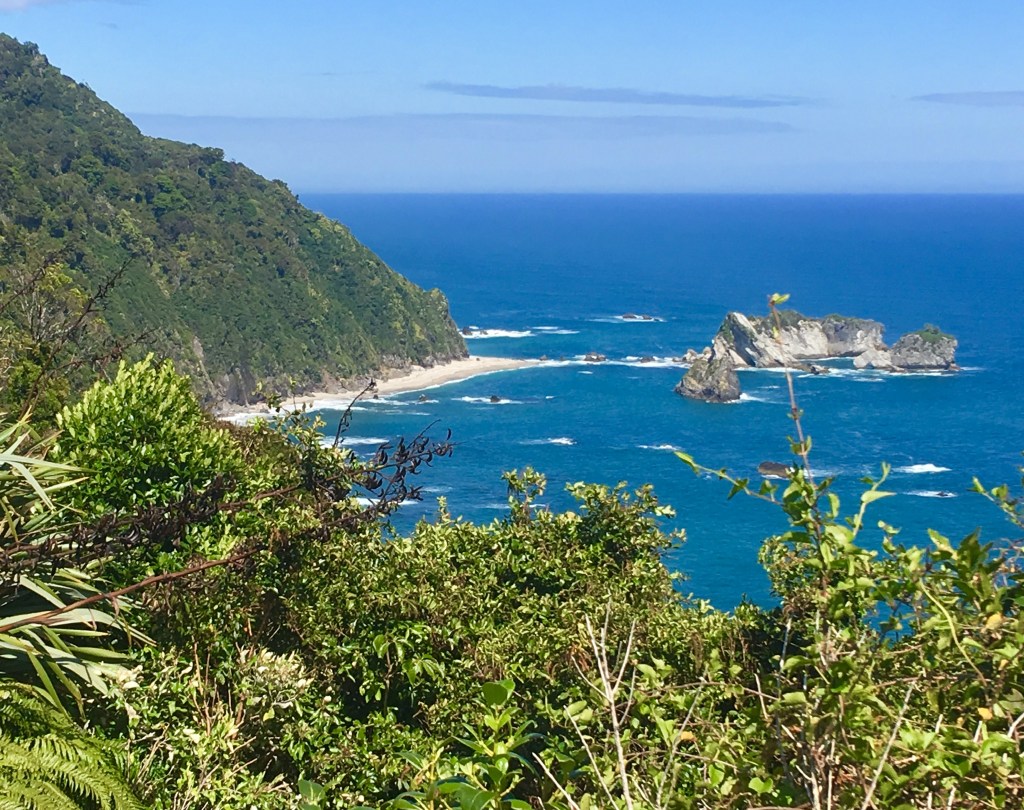
Dramatic west coast 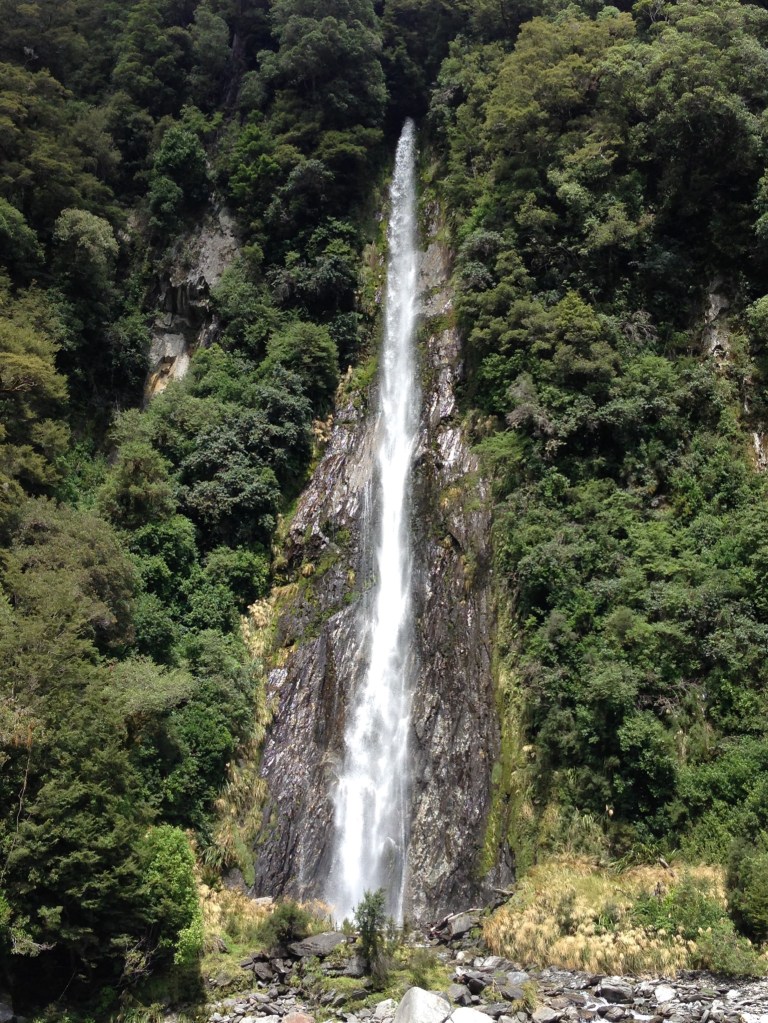
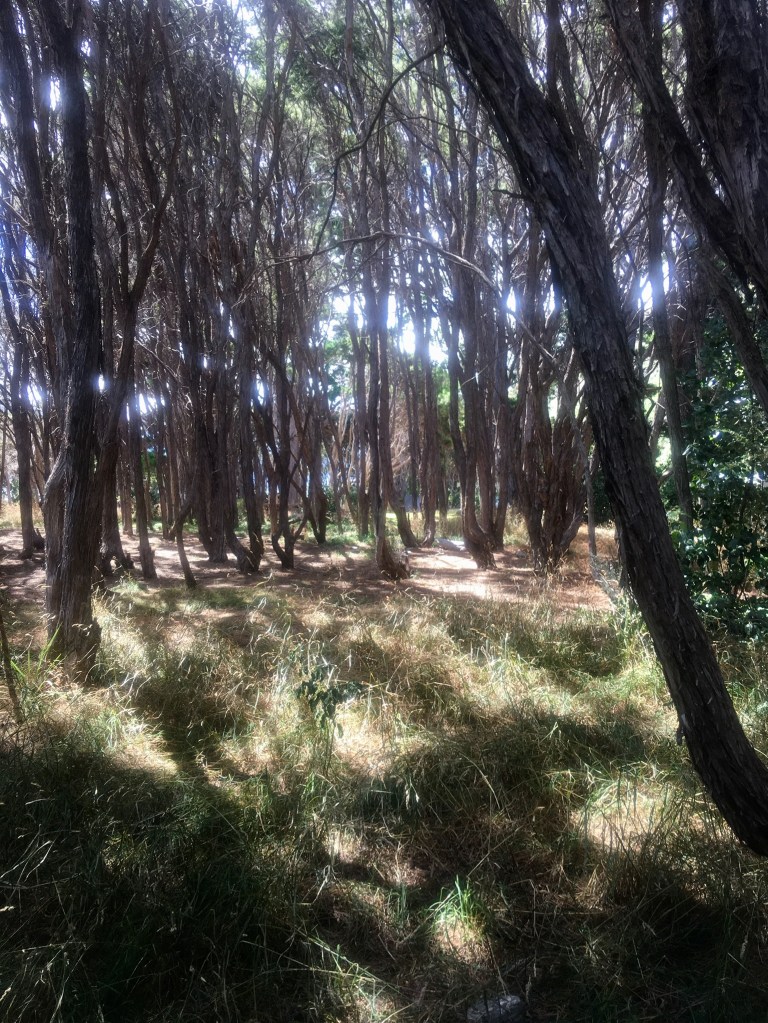
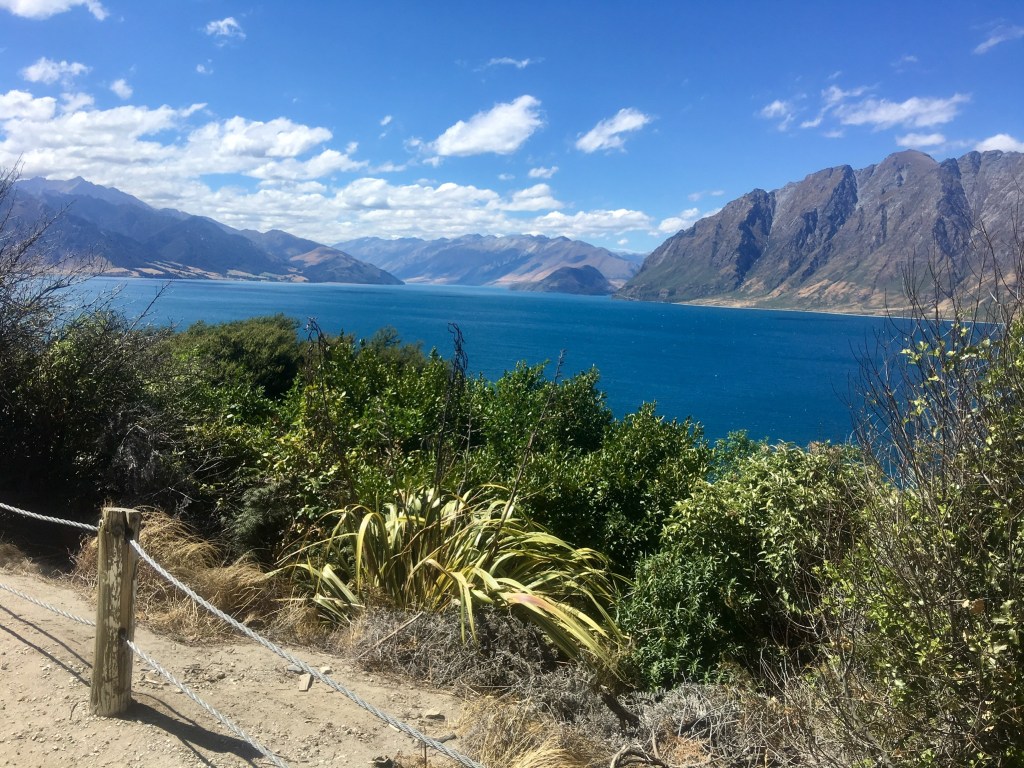
Lake Hawea 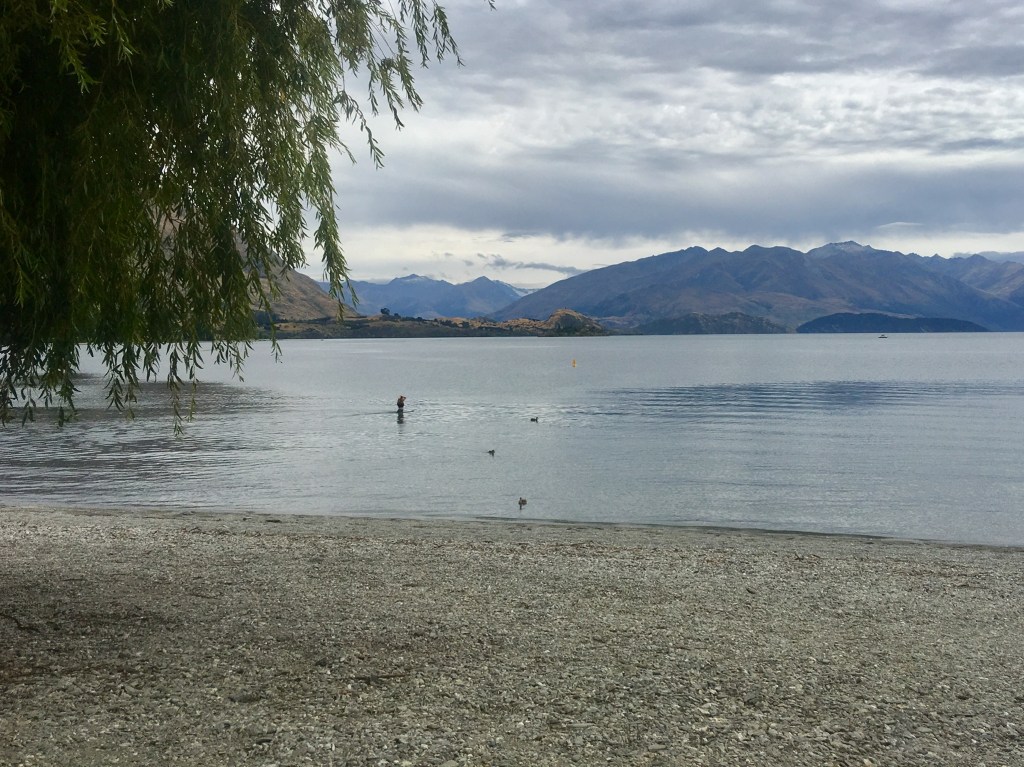
Lake Wanaka 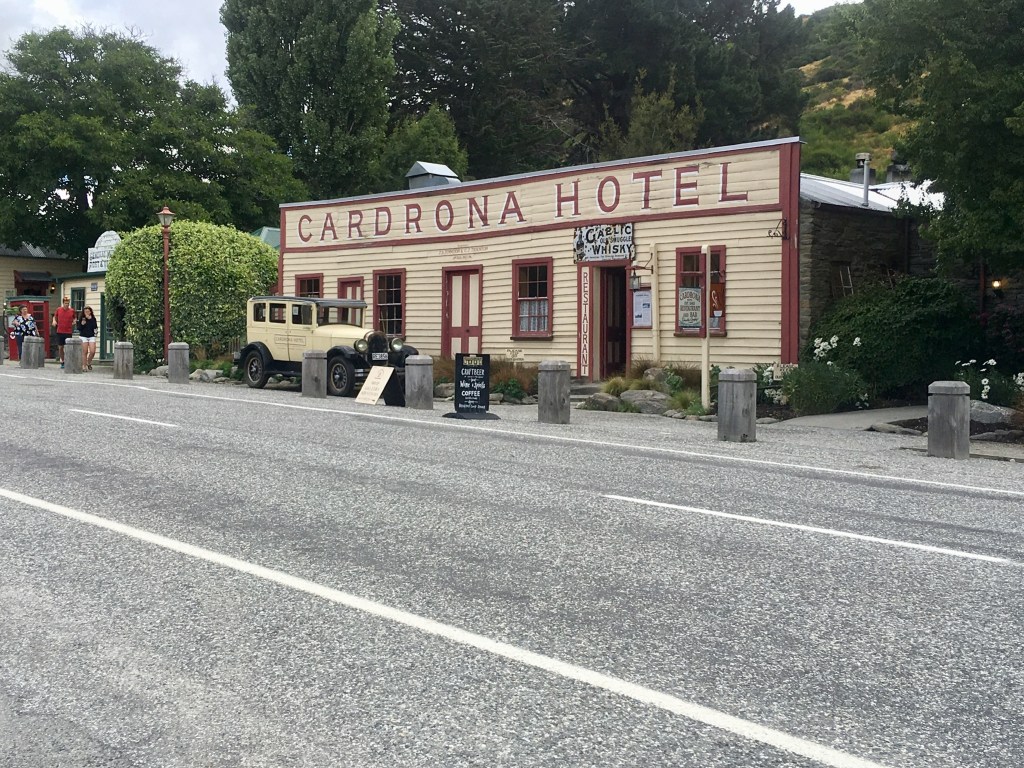
Queenstown & Wanaka
With its International Airport, “ on the doorstep ski fields”, outstanidng scenery and all year round attractions, Queenstown is a magnet for visitors. Situated in the region of Central Otago, Queenstown sits on Lake Wakatipu with the Remarkables Mountains as a stunning backdrop.
Restaurants, bars and every conceivable type of accommodation, Queenstown is well set up for the visitor and add in the range of activities available in all seasons, it’s got the lot! Fly / Cruise / Fly trips to Milford Sound, TSS Earnslaw trips on Lake Wakatipu to Walter Peak Station – great buffet food, beautiful location and sheep dog shows. At the top of the Lake is Glenorchy with walks, treks and super views. Central Otago is also famous for great golf courses , wineries, mountain bike trails plus all the winter sports you might want.
We took our summer visitors on the TSS Earnslaw, and they also did the Fly/Cruise/Fly trip to Milford both of which were superb, so Queenstown, lots to do! Check out the Real Journeys web site for lots of good info on the area.
Just over an hours drive from Queenstown is Lake Wanaka and the rapidly growing township that is Wanaka itself. We were staying next to the Cardrona Hotel in an excellent AirBNB , which is mid way between Queenstown and Wanaka up in the Cardrona Valley. Ideally situated in winter for the Cardrona ski field but in summer with a swimming pool on site, this AirBNB was well placed to explore all of Central Otago.
One lovely nearby ie just over the Crown Range, walk we did took about 90 mins and circumnavigated Lake Hayes, which is near Arrowtown, with an Akarua wine tasting at the end, a great morning out .
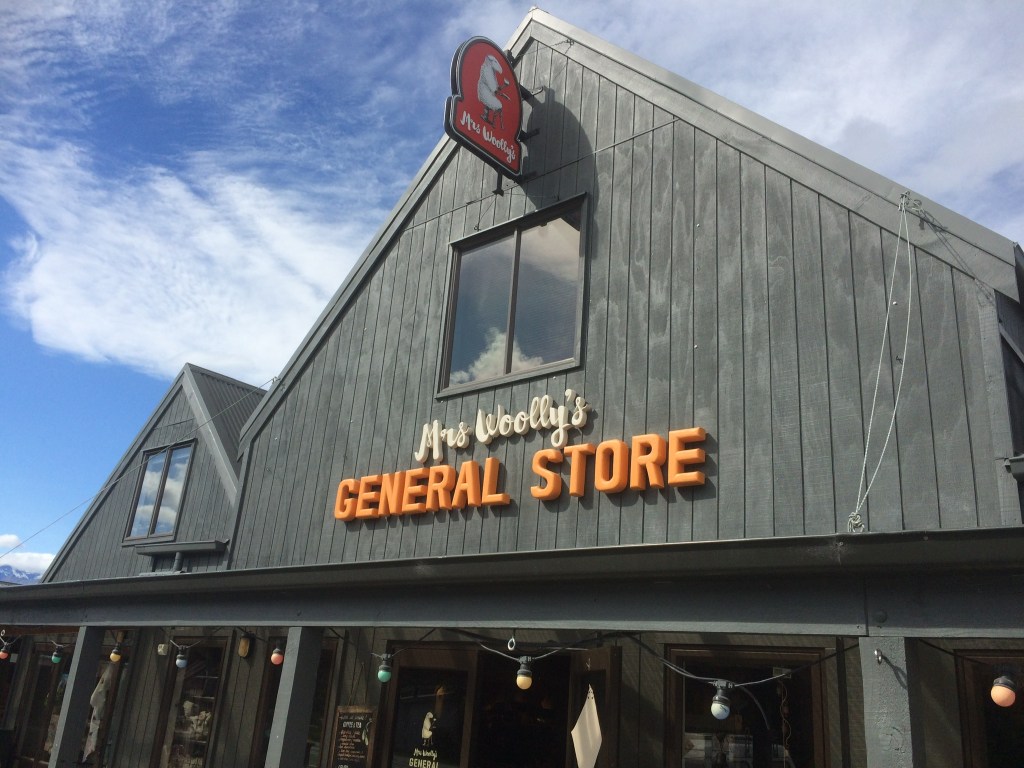
Glenorchy Store 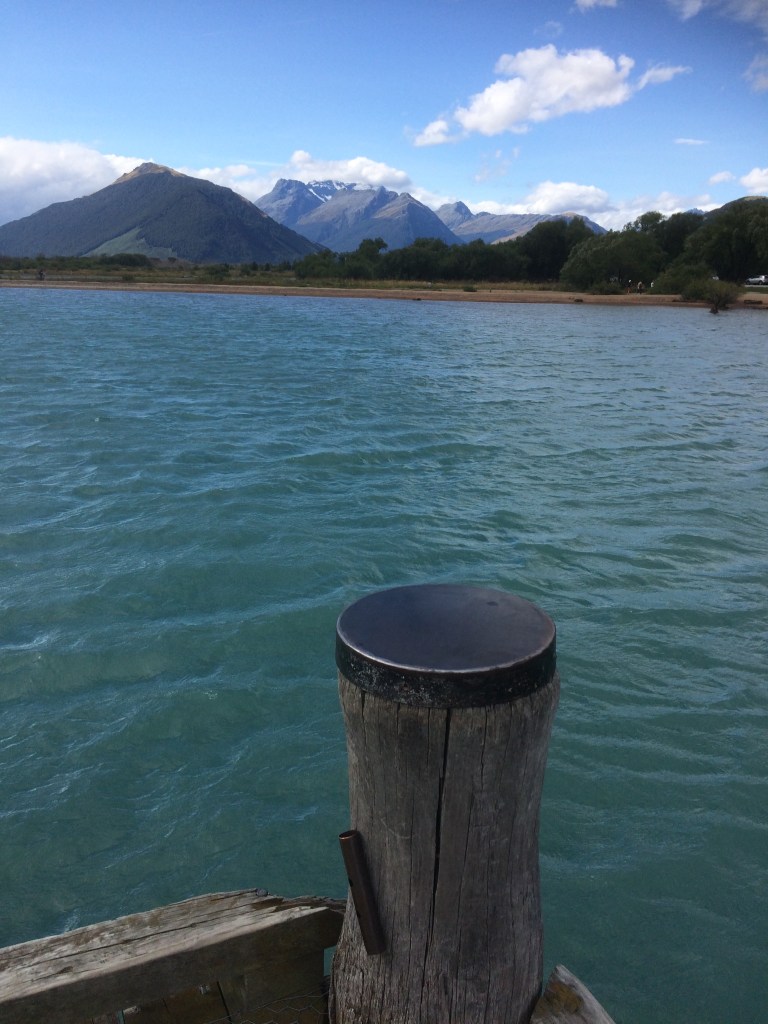
Glenorchy top of Lake Wakatipu 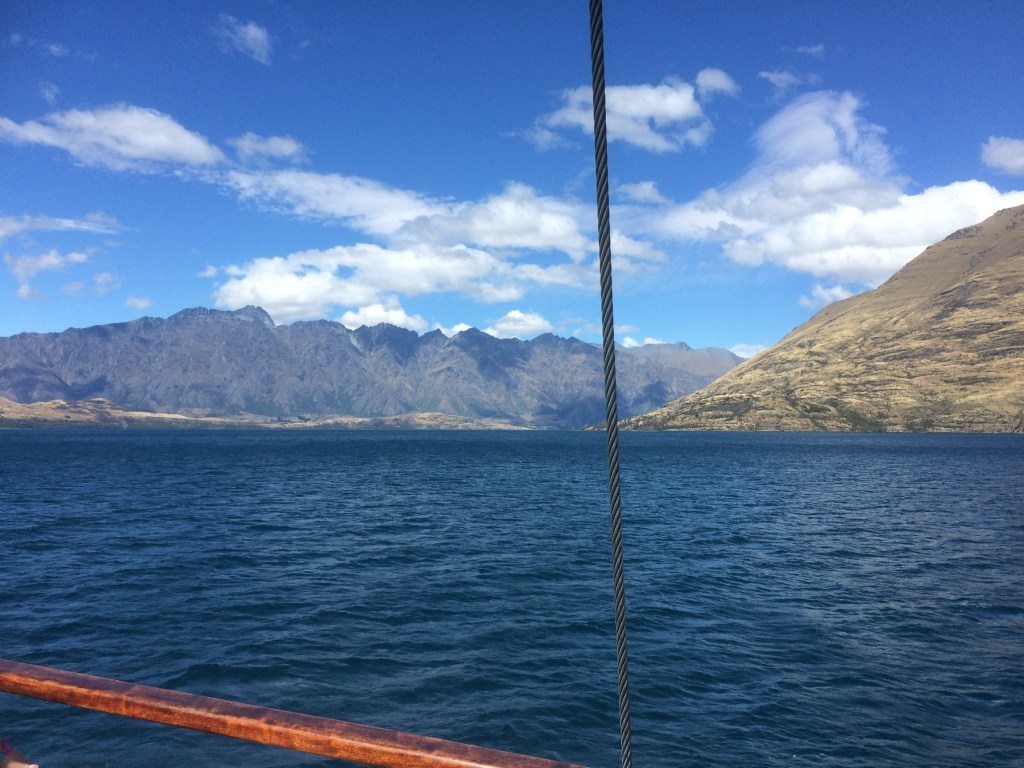
Remarkable Mountains from TSS Earnslaw 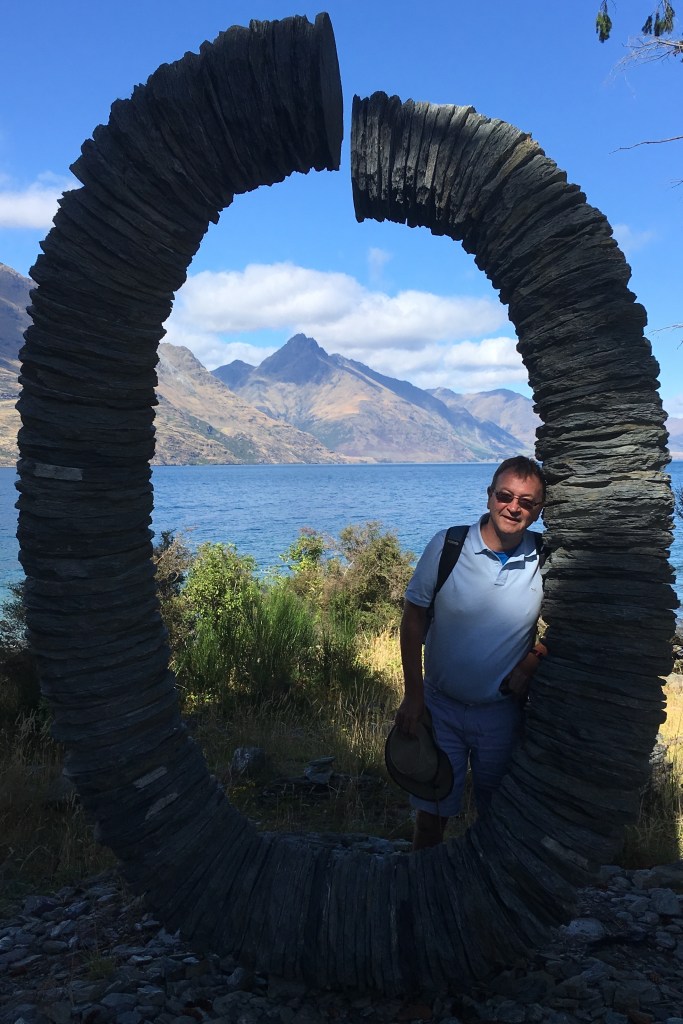
Kelvin Heights Art around the Golf Course 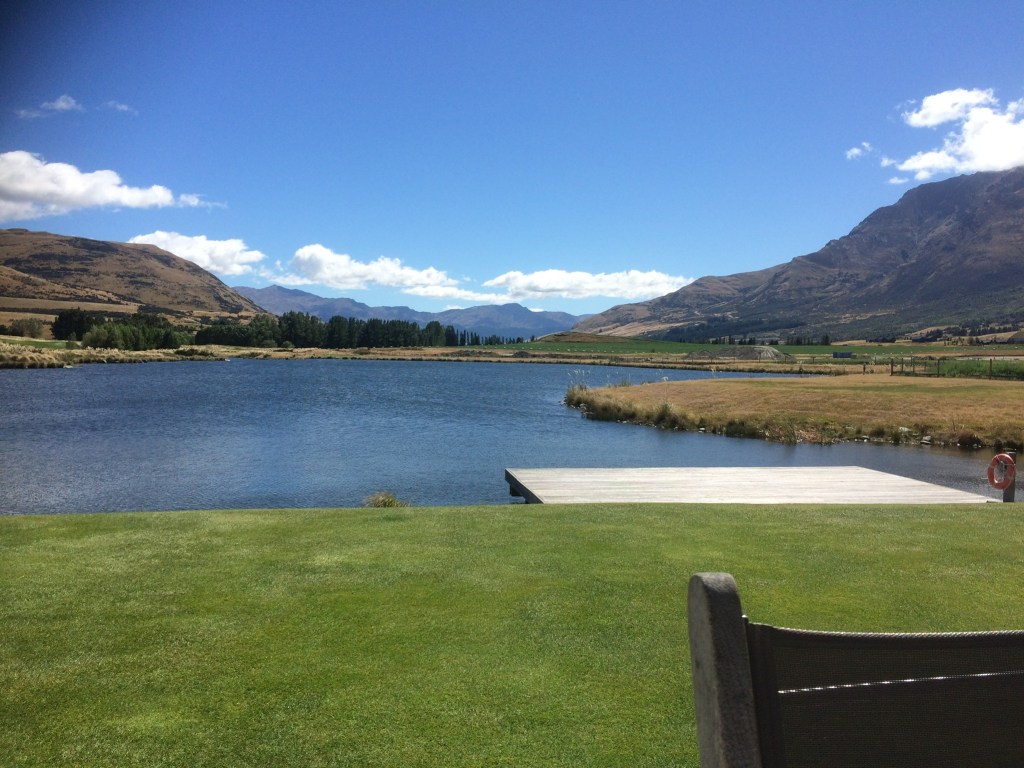
Jacks Point Golf Course 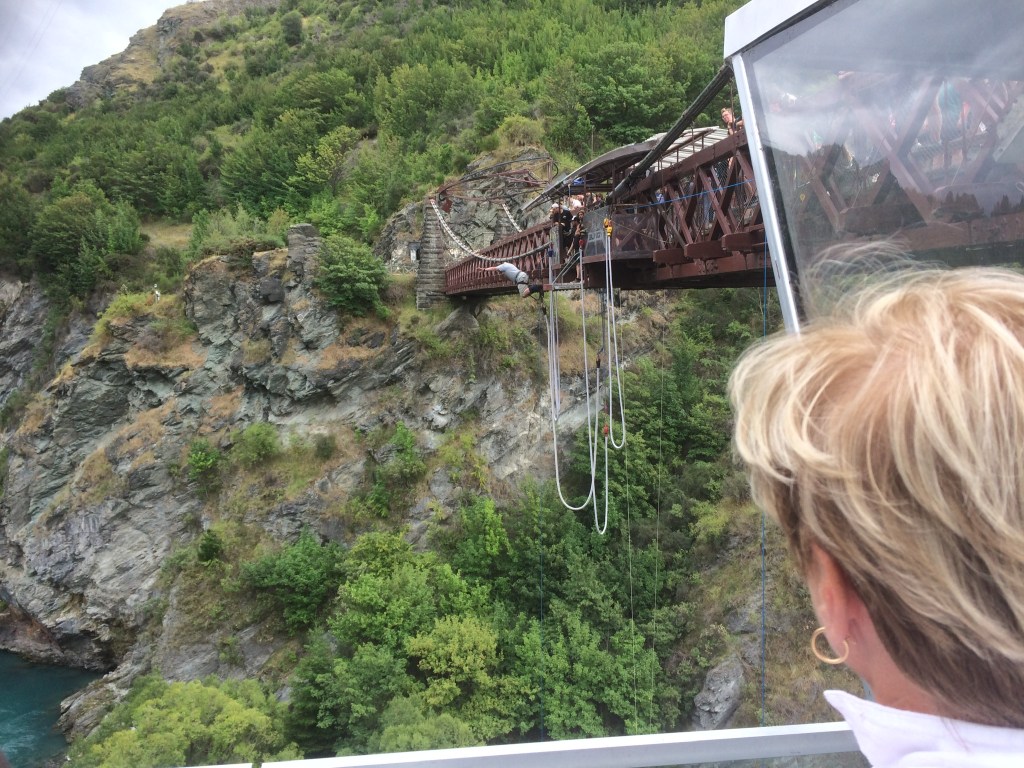
Bungy at Kawerau 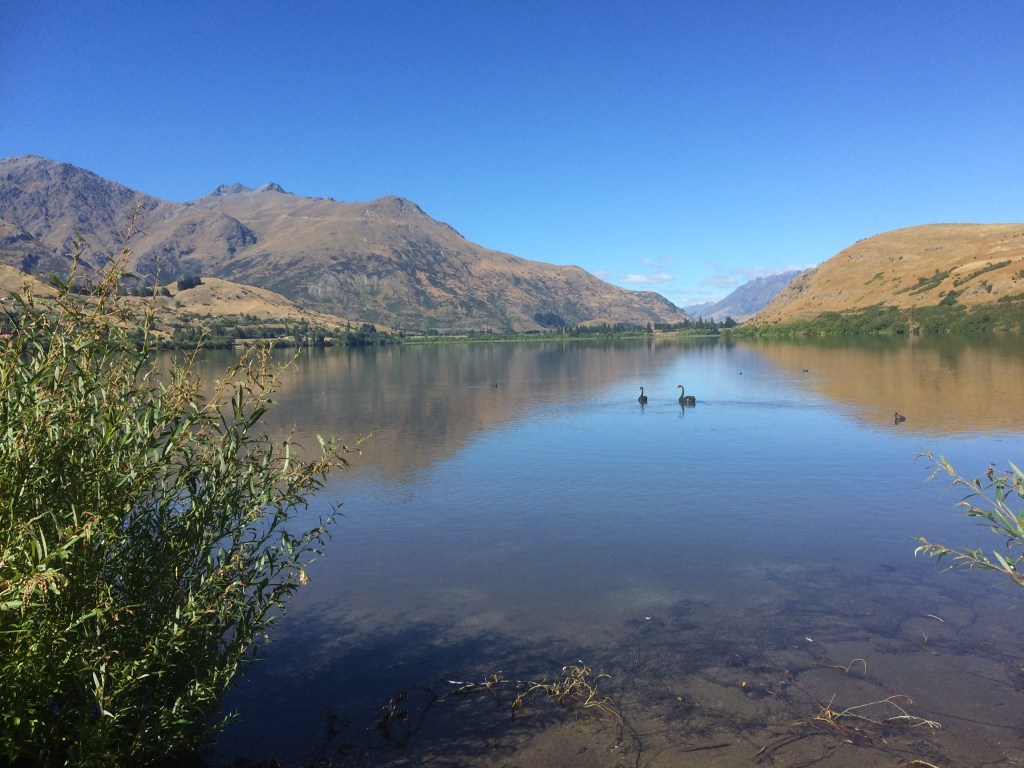
Lake Hayes 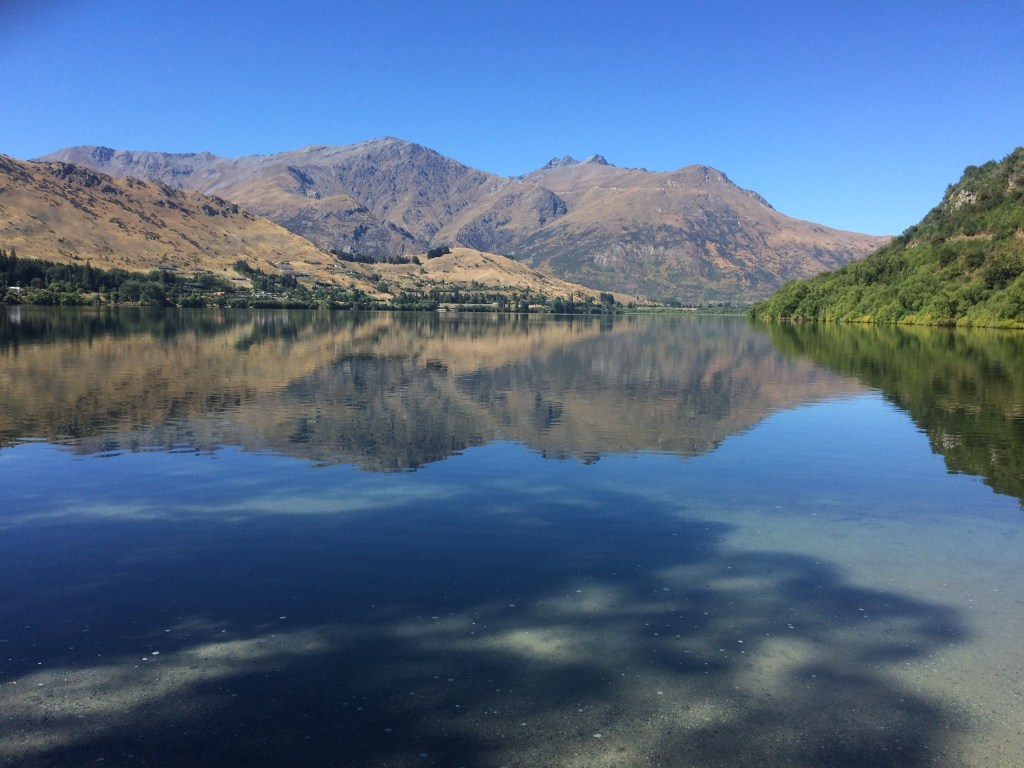
Lake Hayes 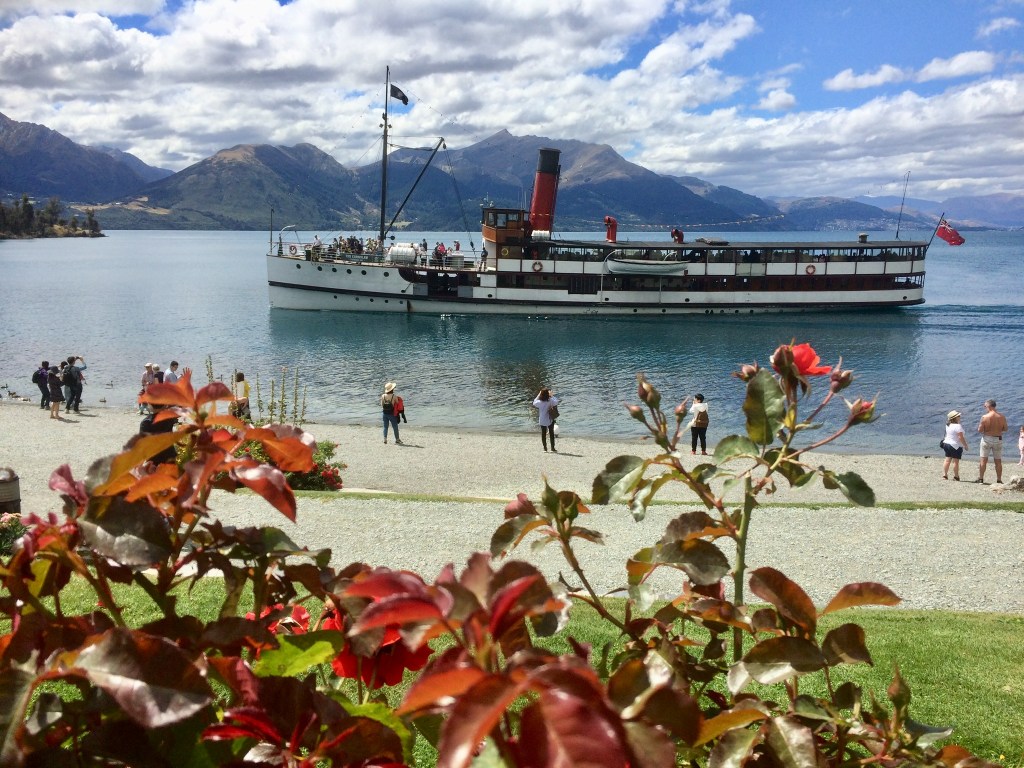
TSS Earnslaw arrives at Walter Peak Station 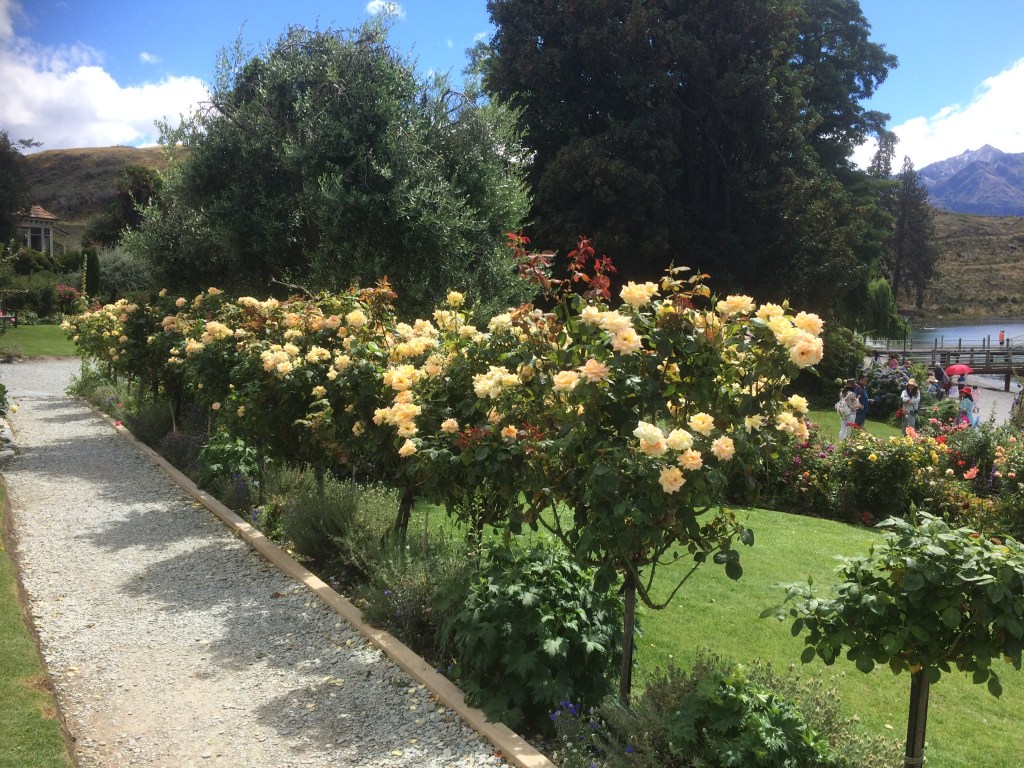
Walter Peak Gardens 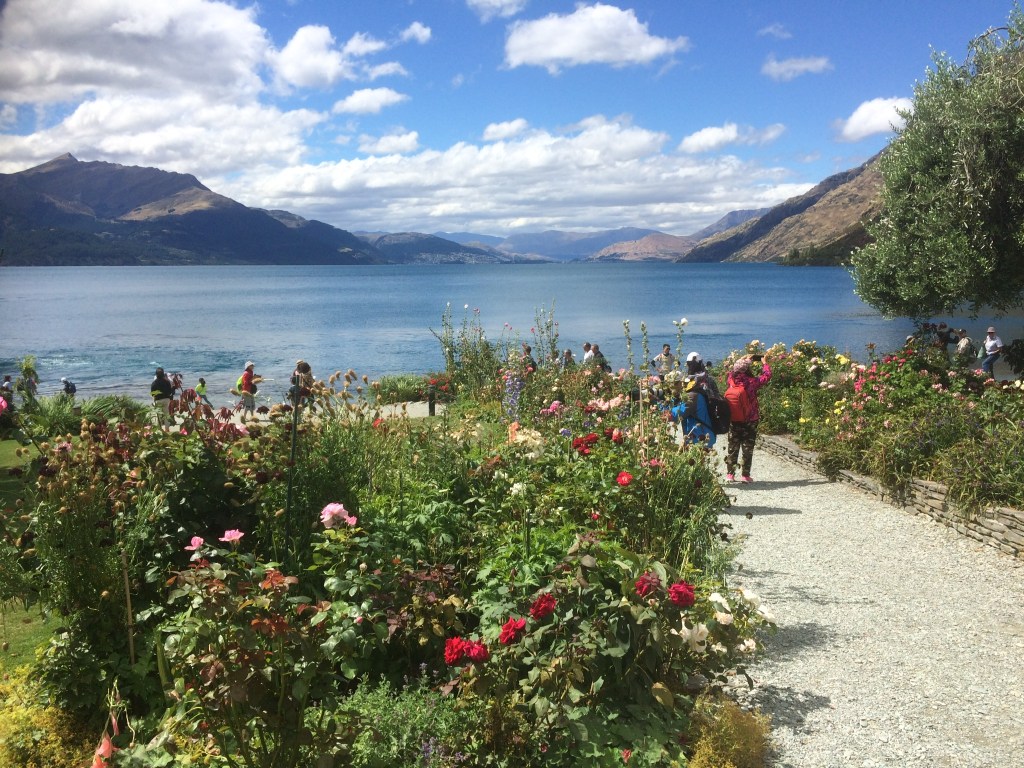
And Lake Wakatipu beyond 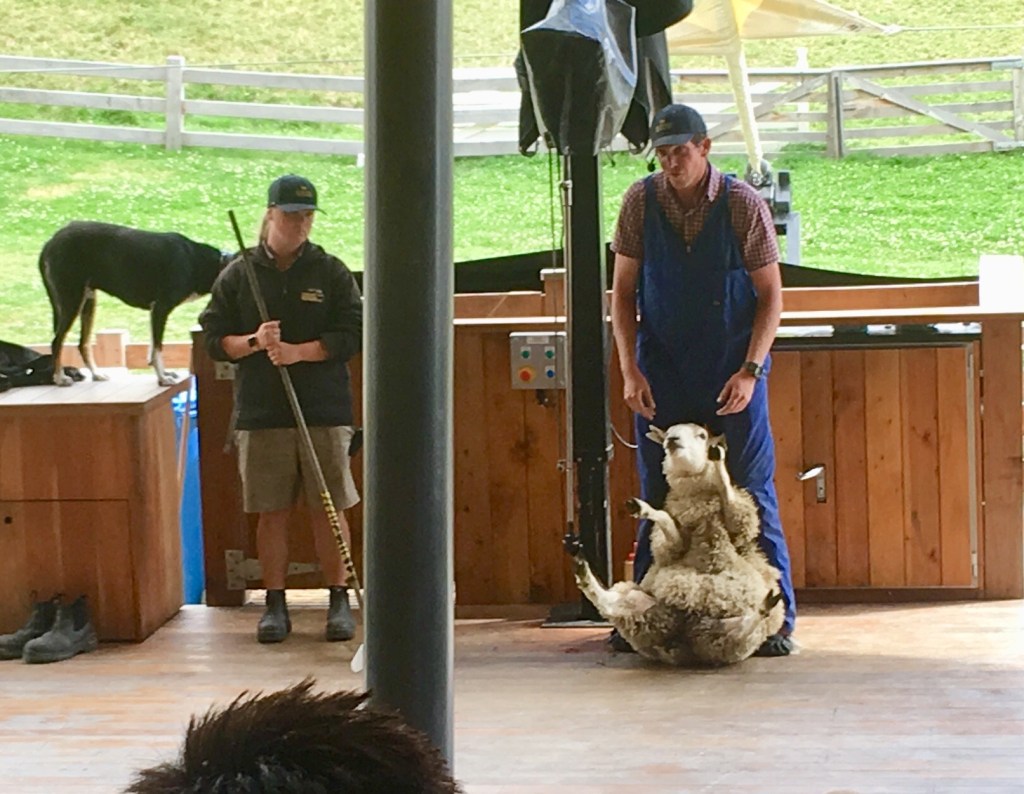
Walter Peak Dog Show 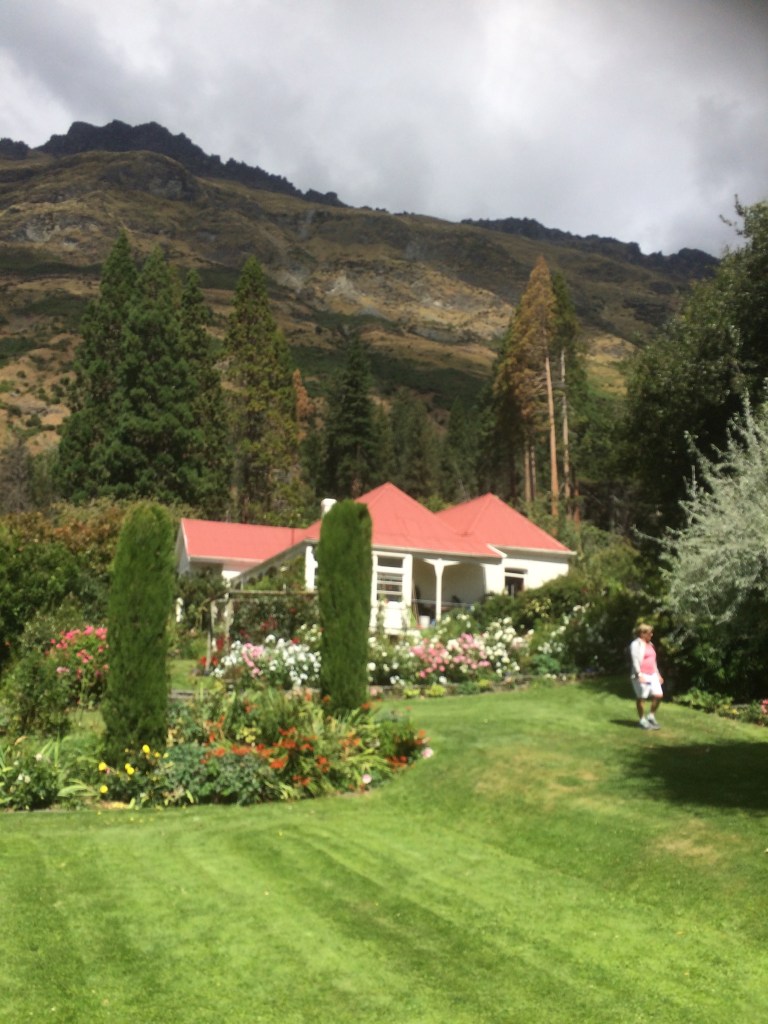
Walter Peak Station 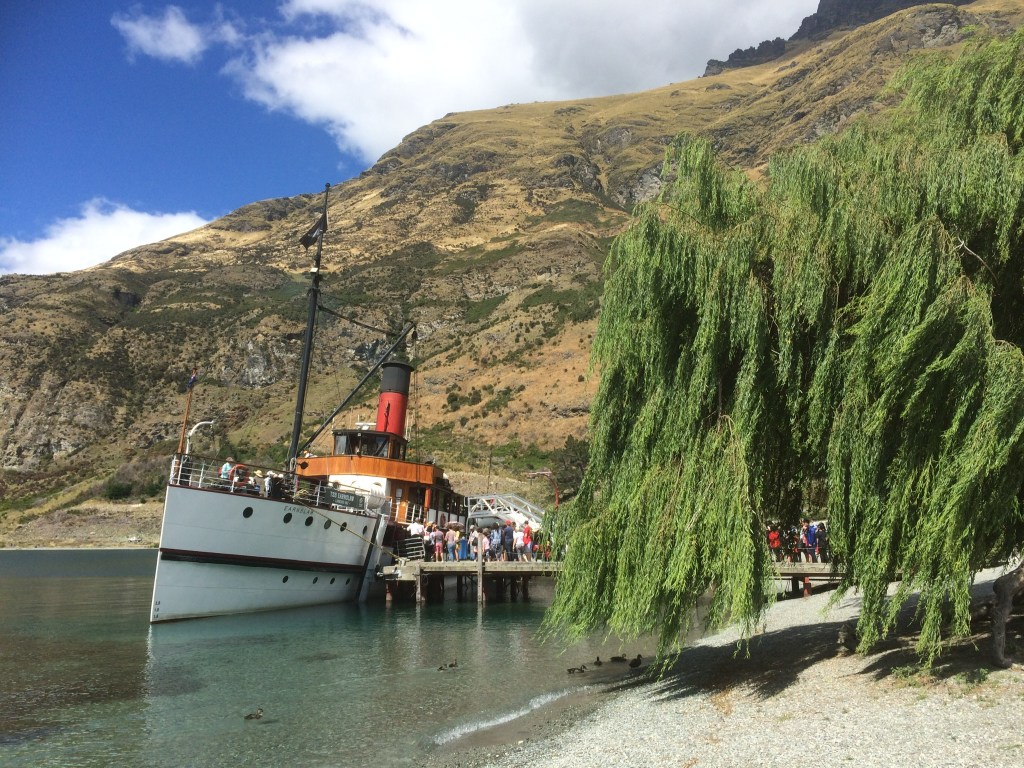
Arrivals and Departures for the TSS Earnslaw
Otago Rail Tour (ORT) Mountain Biking
For those interested in some modest mountain biking, there are wineries to be explored by bike trail along the Kawerau River plus some bungy jumping or viewing!! There are mountain bike trails for the much more daring too, but for those wanting to get into the beautiful back country of Central Otago, then consider the Otago Rail Trail.
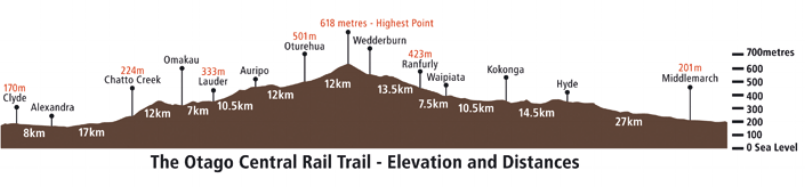
It starts at Clyde and some 160km later you arrive at Middlemarch. Being an old Railway Track the elevation is very modest and the trail itself is in great condition. We rode this in 2015 and had four nights accommodation two at a motel in Alexandra and two in a motel at Roxborough. It’s fantastic country, hot ie 30c + in February and cold ie freezing in the middle of winter. We highly recommend the ORT if this type of cycling sounds like you. In hindsight if reasonably fit one could do it in 3 days, but 4 or 5 will allow a more leisurely pace and time to enjoy the superb countryside.
MacKenzie Country, Mount Cook & Lake Tekapo
Our South Island Tour was planned to end in Christchurch, with a flight from there back up north. From the Cardrona Valley we drove east enjoying vistas of Mount Aspiring and then north through the MacKenzie Country to Mount Cook and on to an overnight at Lake Tekapo. The views of the Southern Alps are wonderful, but the real magic starts as one turns off SH 8 onto SH 80. Here the pale blue glacial meltwater of Lake Pukaki is revealed with the regal magnificence behind of Mount Cook and the Tasman Glacier. There are good parking places for the best views as you drive up the west shore of the Lake.
Mount Cook itself is a real tourist destination, helicopter flights up to the glacier and beyond, mountaineering adventures and more simple walks. But even if you only have a few hours to stop to look, perhaps lunch and a gentle walk, this is a “ must visit destination”!!
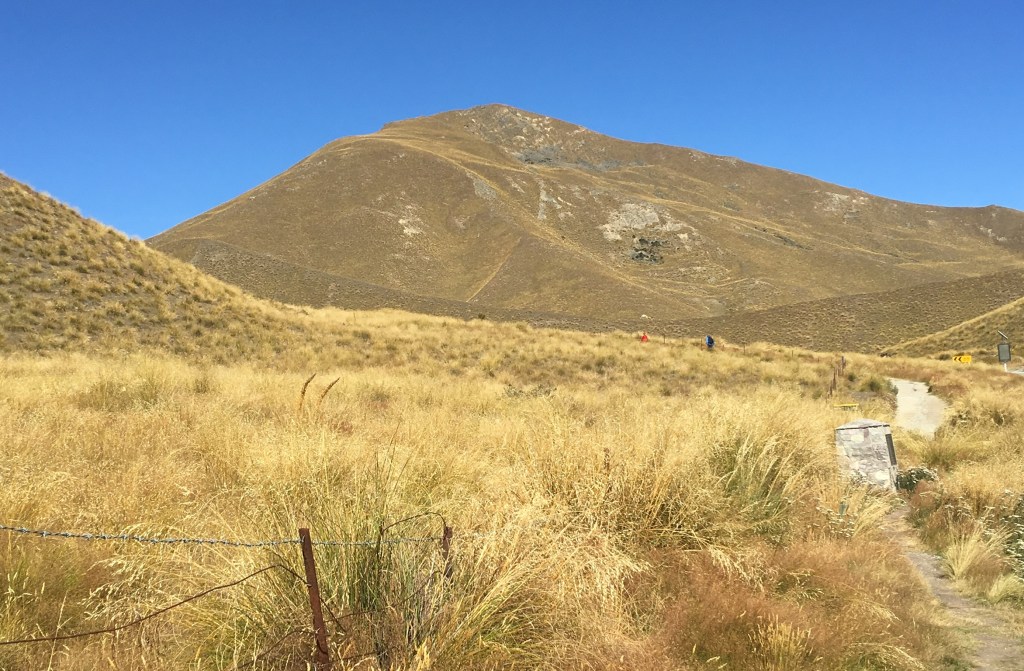
Lindis Pass 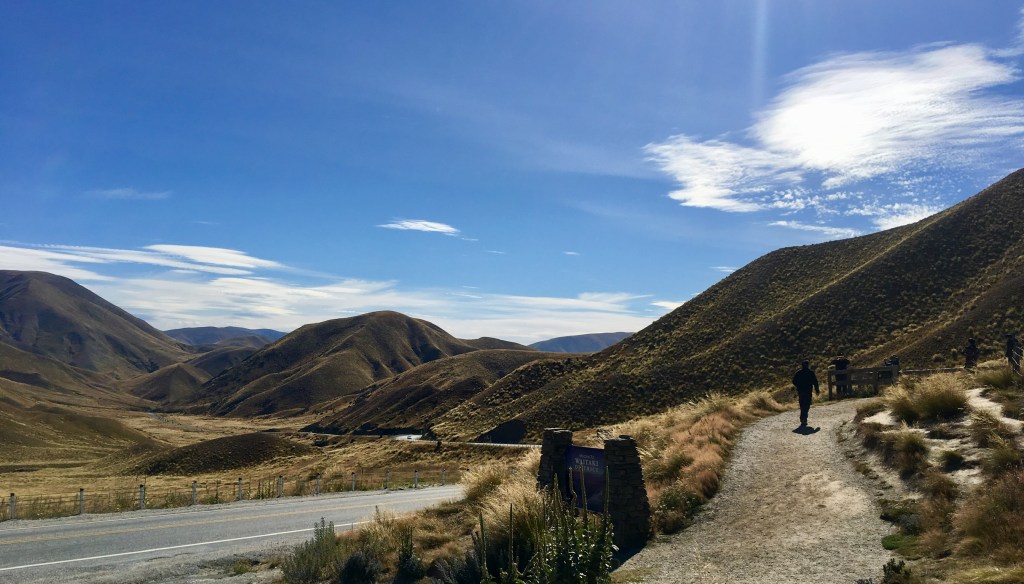
Lindis Pass 
Viewing point Lake Pukaki with Mt Cook in backrgound 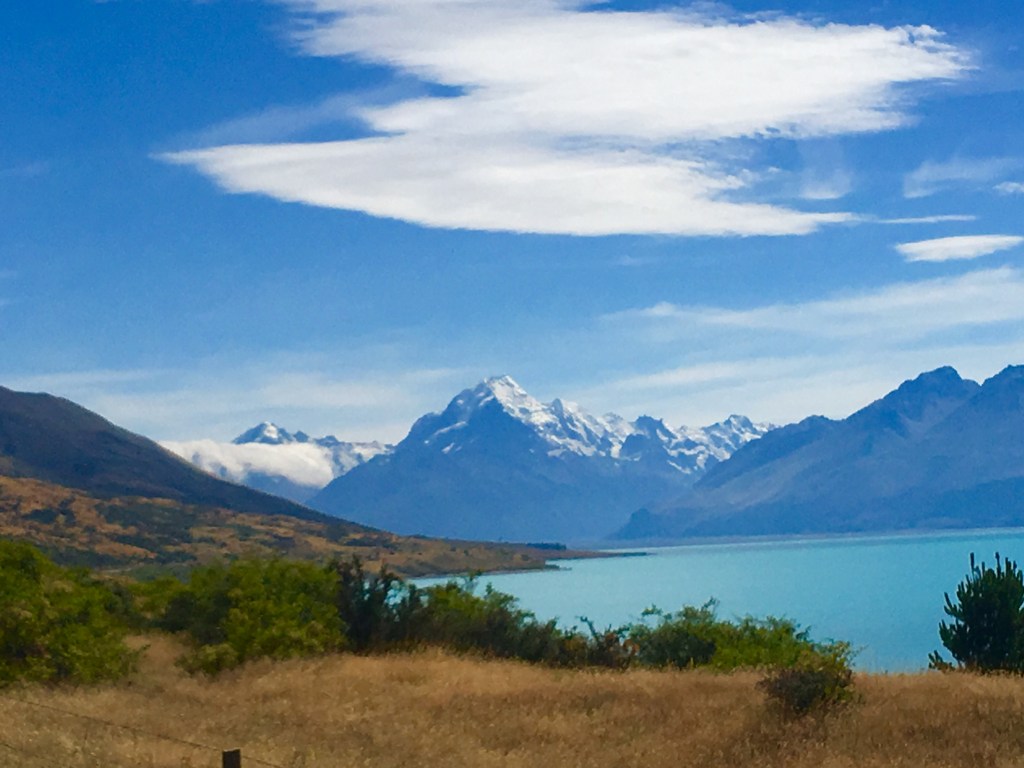
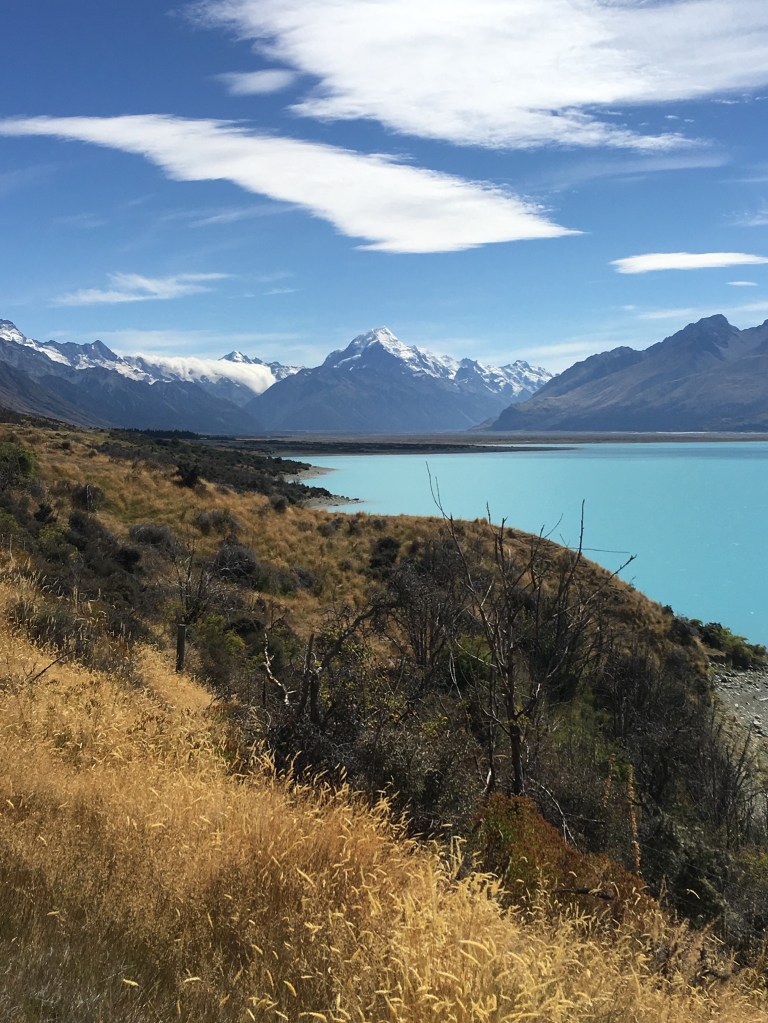
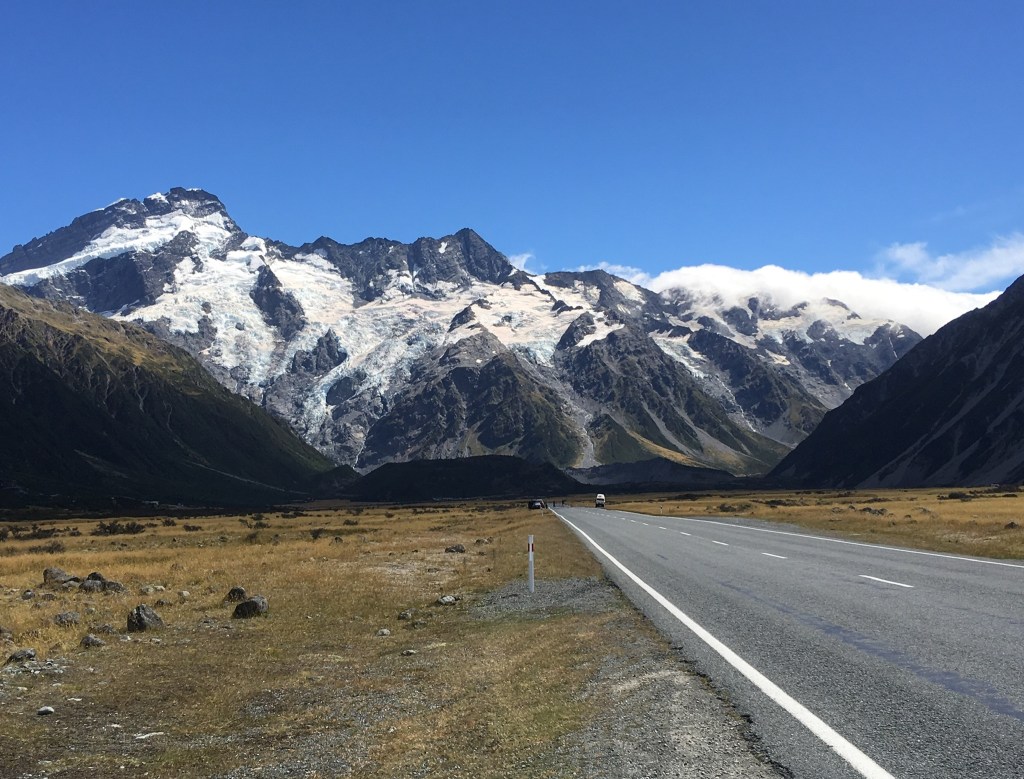
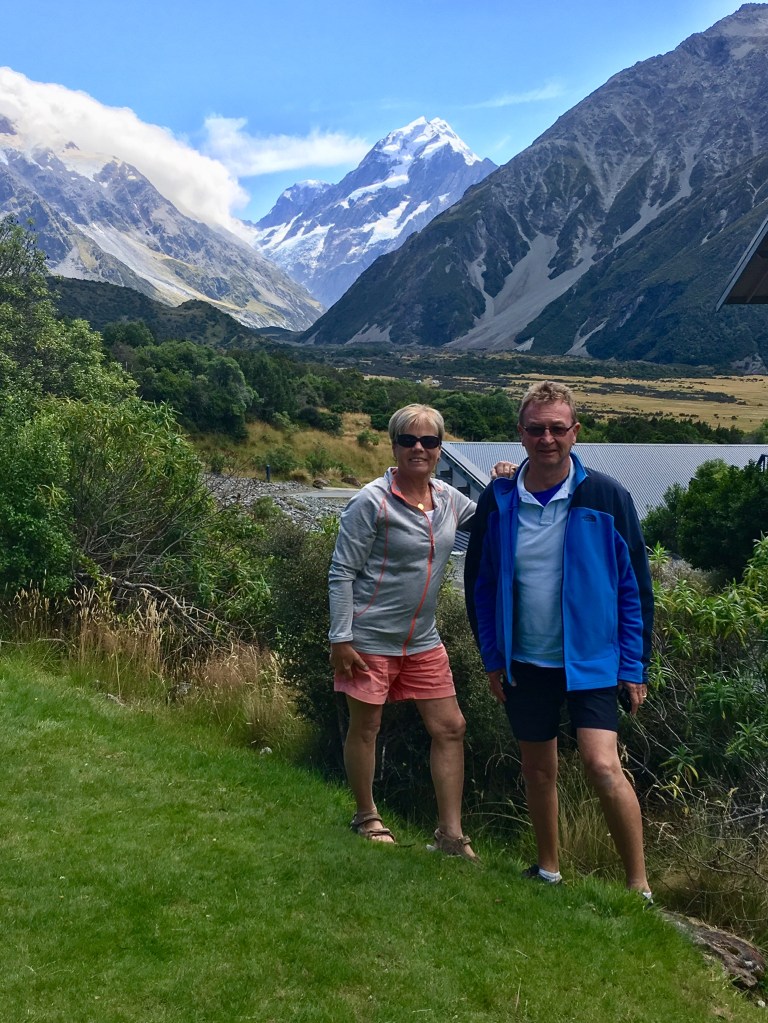
Mount Cook
The South Island of New Zealand is a land with many contrasts, from the drowned Sounds of Marlborough in the north, the Canterbury Plain in the east and the Southern Alps which form the spine of the Island.
So how long does one need to do justice to a tour of the South Island ??? Well whether you have, a few days, a few weeks or a life time this corner of the South Pacific has heaps to offer, so just plan your trip and make the most of each day.
 Travels with My Wife