
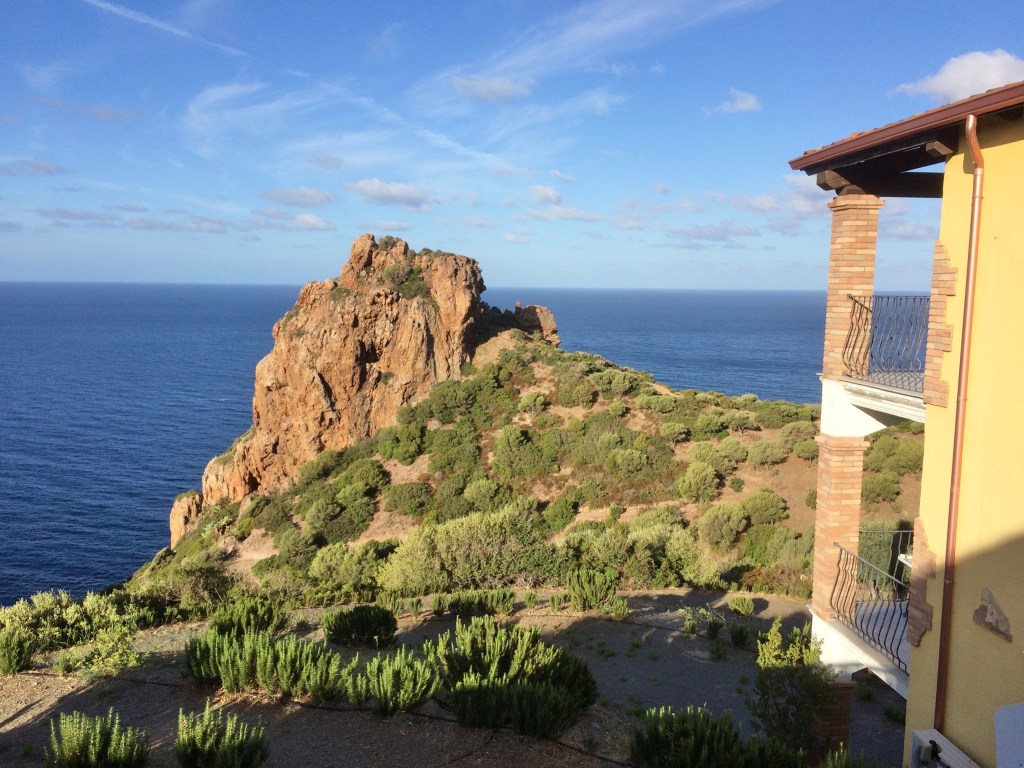
The Med from Nebida accomodation 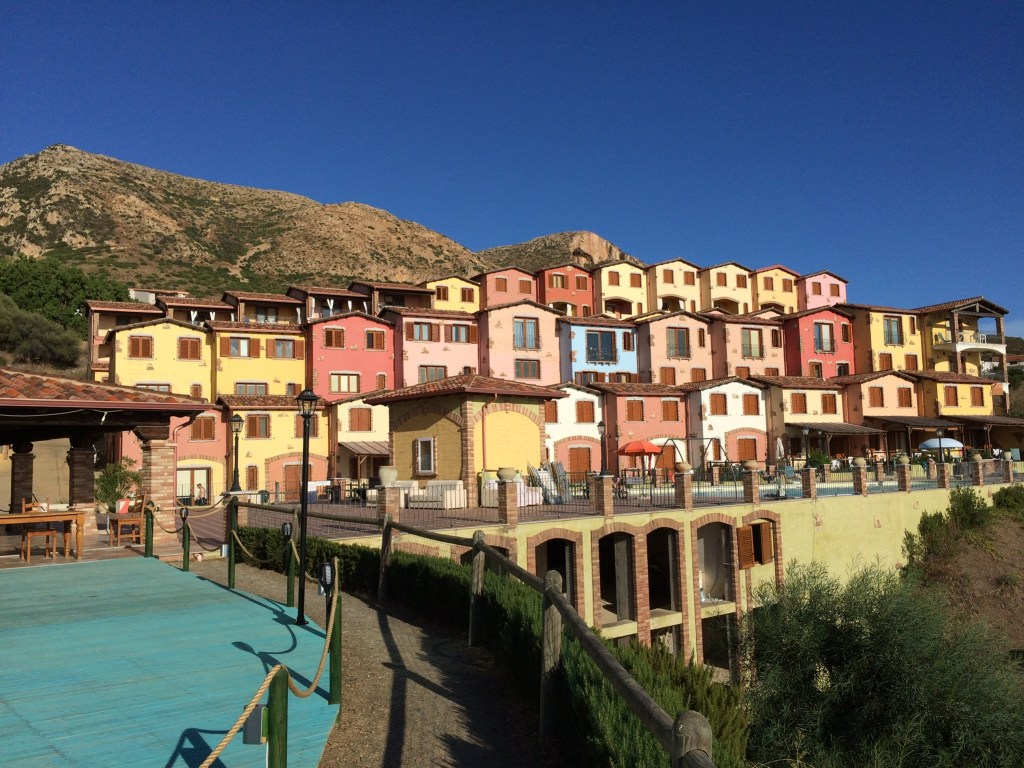
Nebida colourful accomodation
Nebida lies on the south west coast of Sardinia, about an hours drive west from the capital, Cagliari. For centuries it’s economy was focussed on mining, quarrying and brick making, but this is all largely gone leaving an amazing coastline framed by abandoned mineworkings.
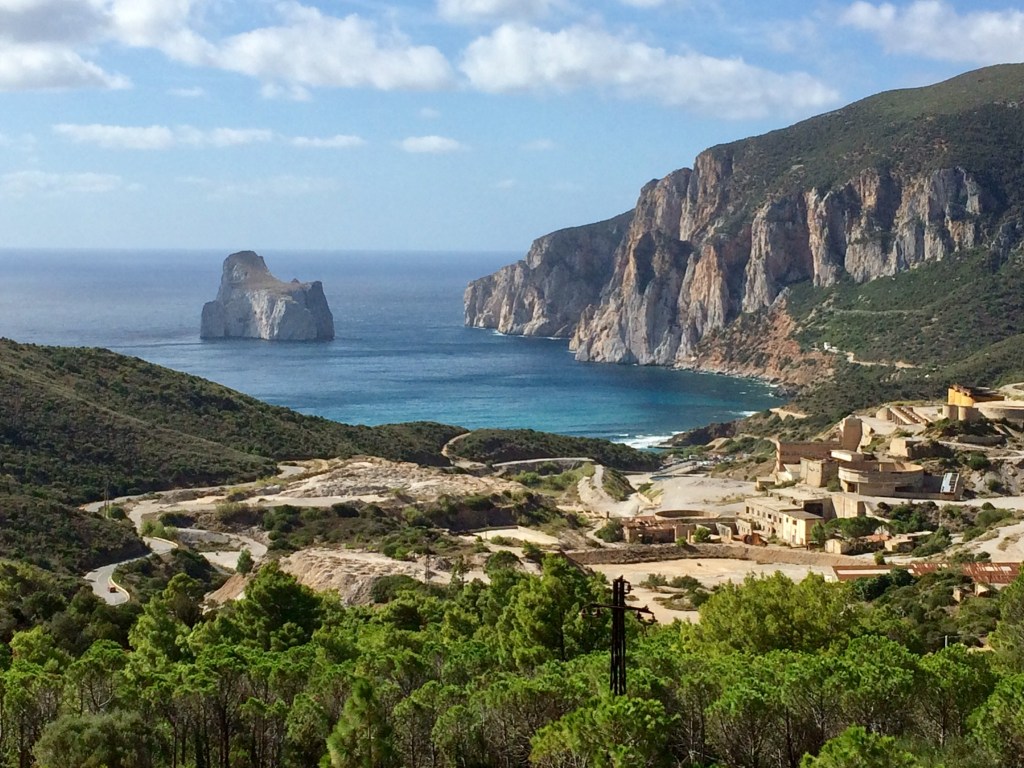
Now it’s Tourism not Mining
Nebida and it’s surrounding district, looks a little derelict at first glance with abandoned quarries, mines and brick works. But it’s adjacency to the likes of EasyJet and Ryanair arrivals and departures just an hours drive away at Cagliari International Airport has brought tourism as its saviour.
The majesty of the areas coastlines as they drop near vertically into the Golfo di Gonnesa and thus the Meditarranean, the scarred cliff faces and the deep deep blue sea is just perfect for the visiting tourist. Then add beautiful beaches, good food, rock climbing, high lining and sunsets that defy superlatives, it really works and some resorts have sprung up to cater.
We stayed at an interesting resort complex, see pic above and below. It was 95% empty when we visited, we were there at the end of September, but in mid summer season it would be packed and then not our idea of fun. For us in late September it was perfect as was the sea temperature, beach bars and even the resort pool where flocks of Sand Martins would drop by to “ drink on the wing”, a fascinating sight.
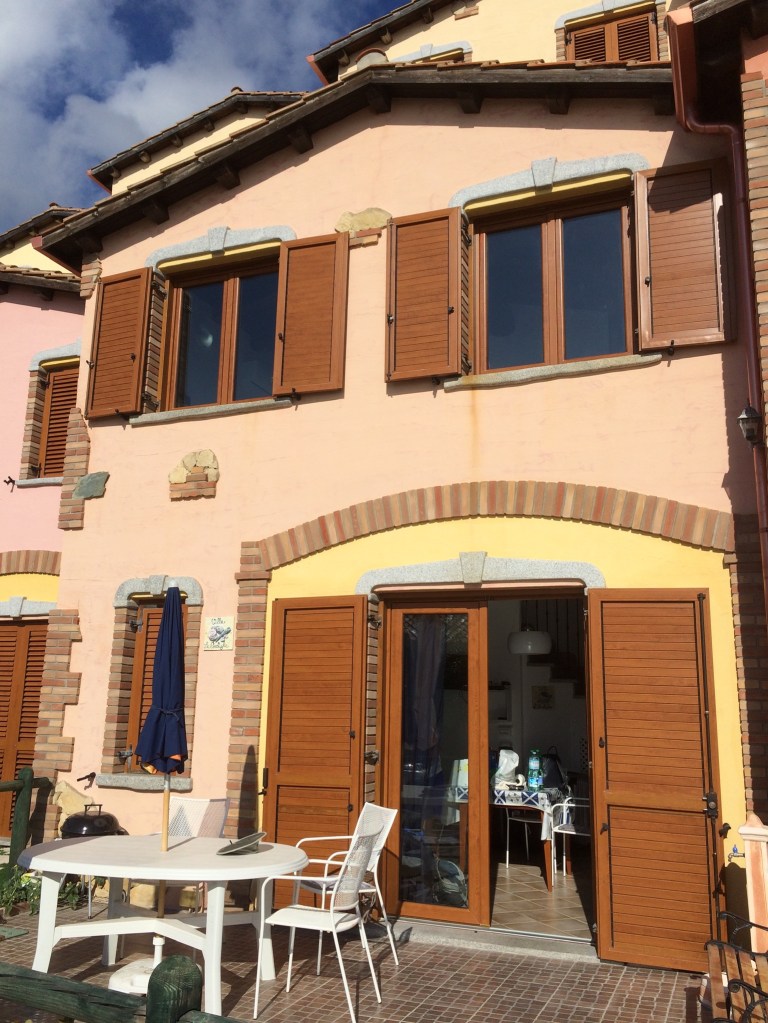
Simple 2 bed/2 bath house fully aircon & modern 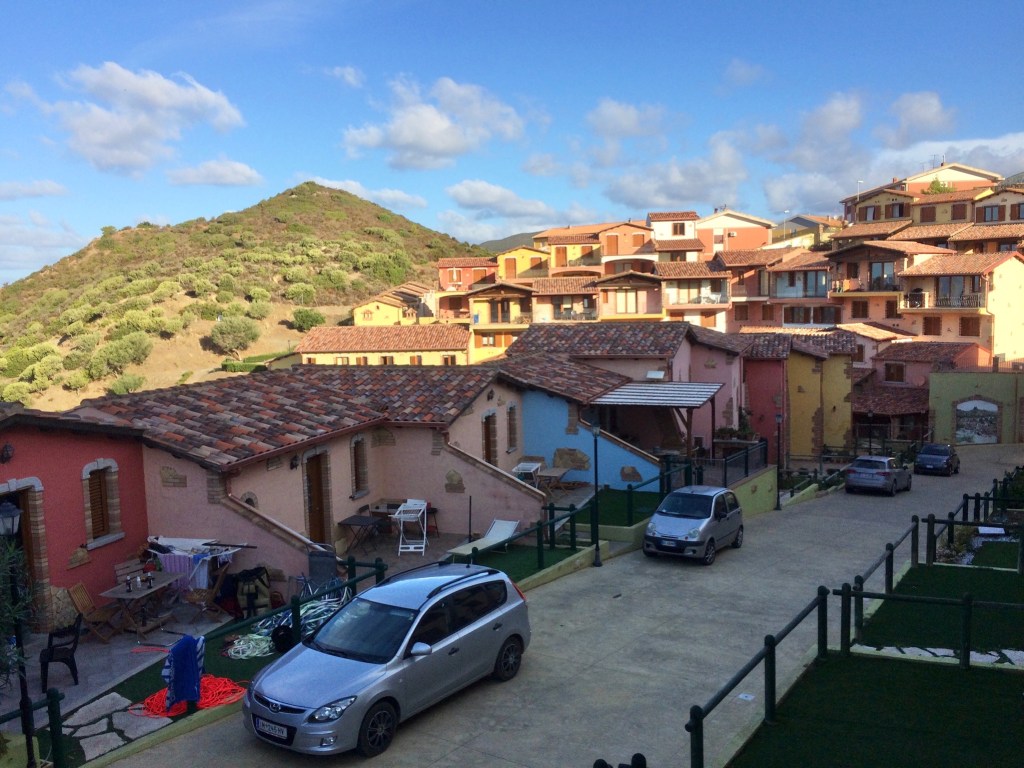
Interestingly colourful layout 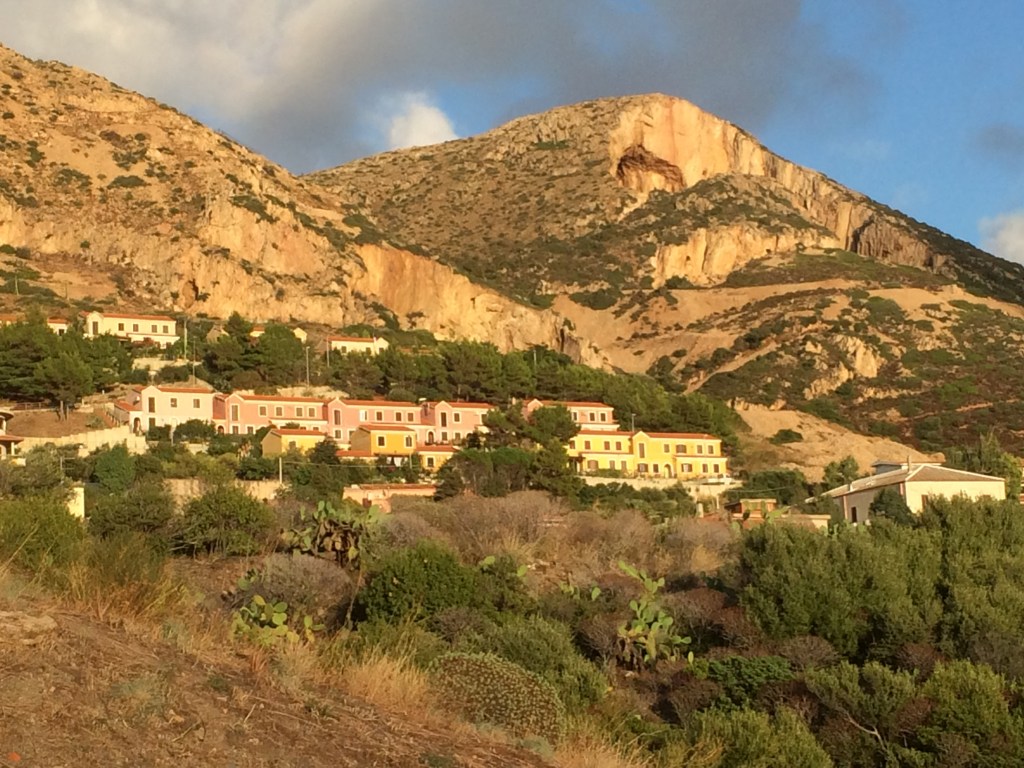
View back up to Nebida Village 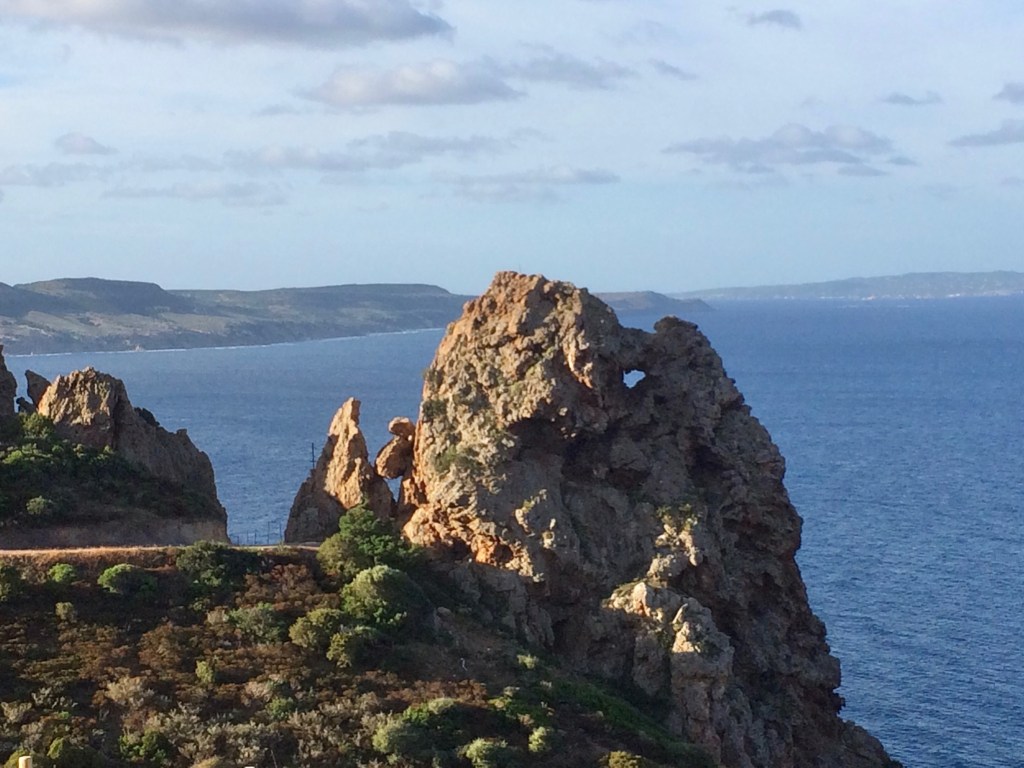
Morning views from accomodation 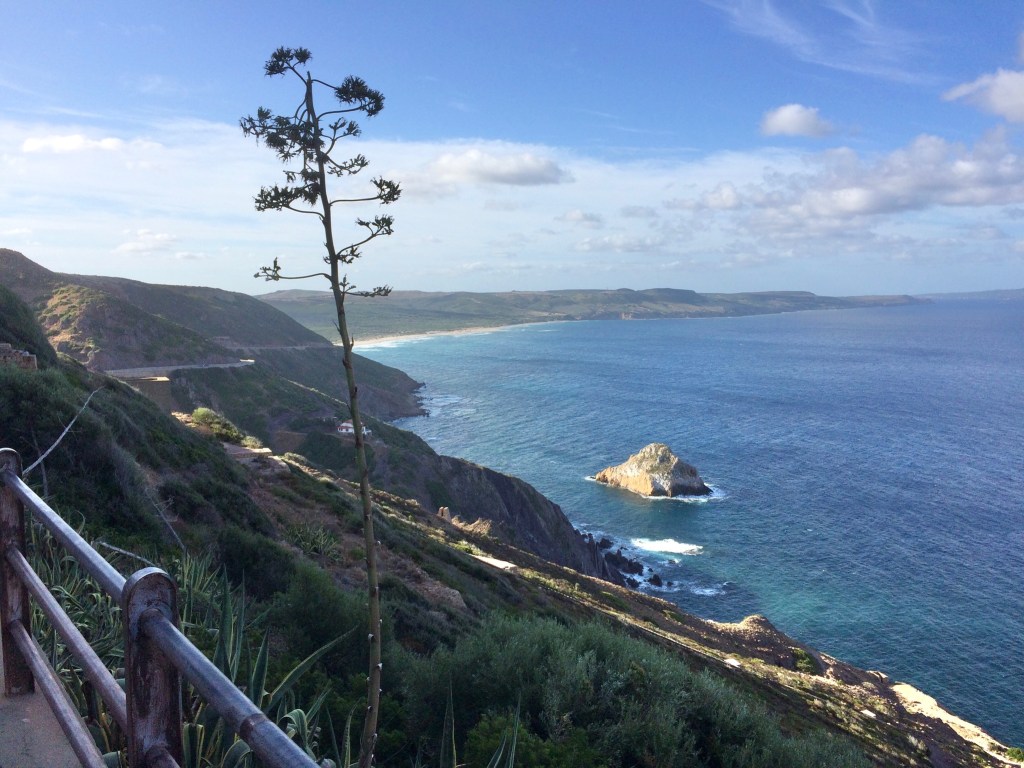
Morning Belvedere walk views south 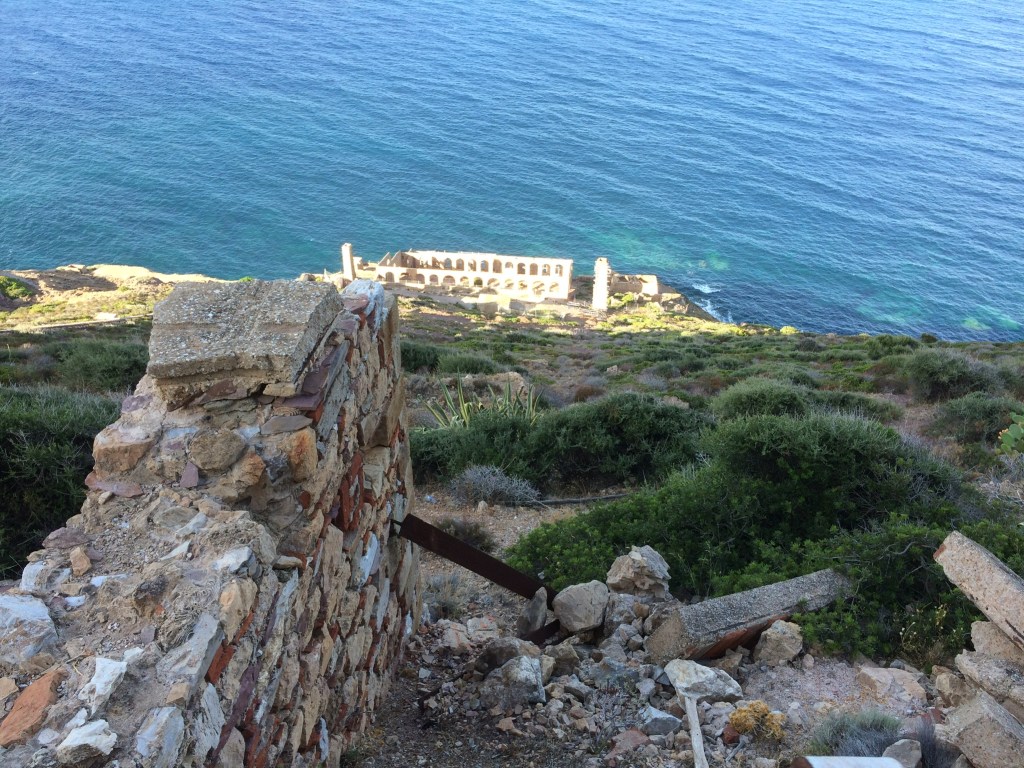
Disused mine below 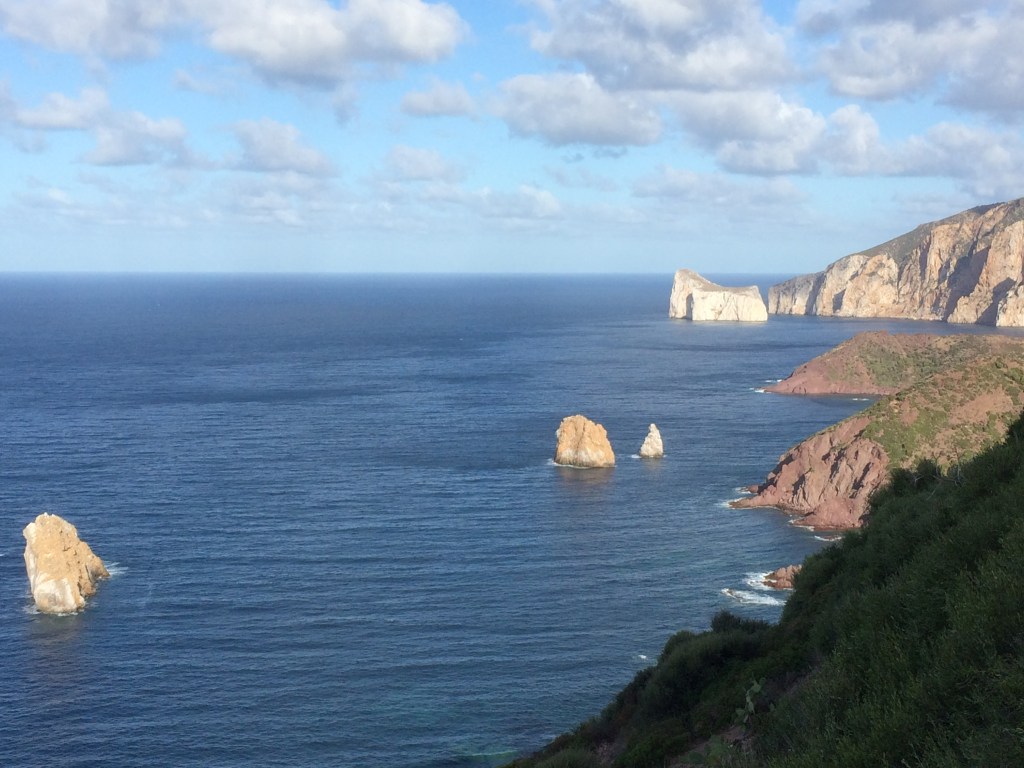
Limestone stacks 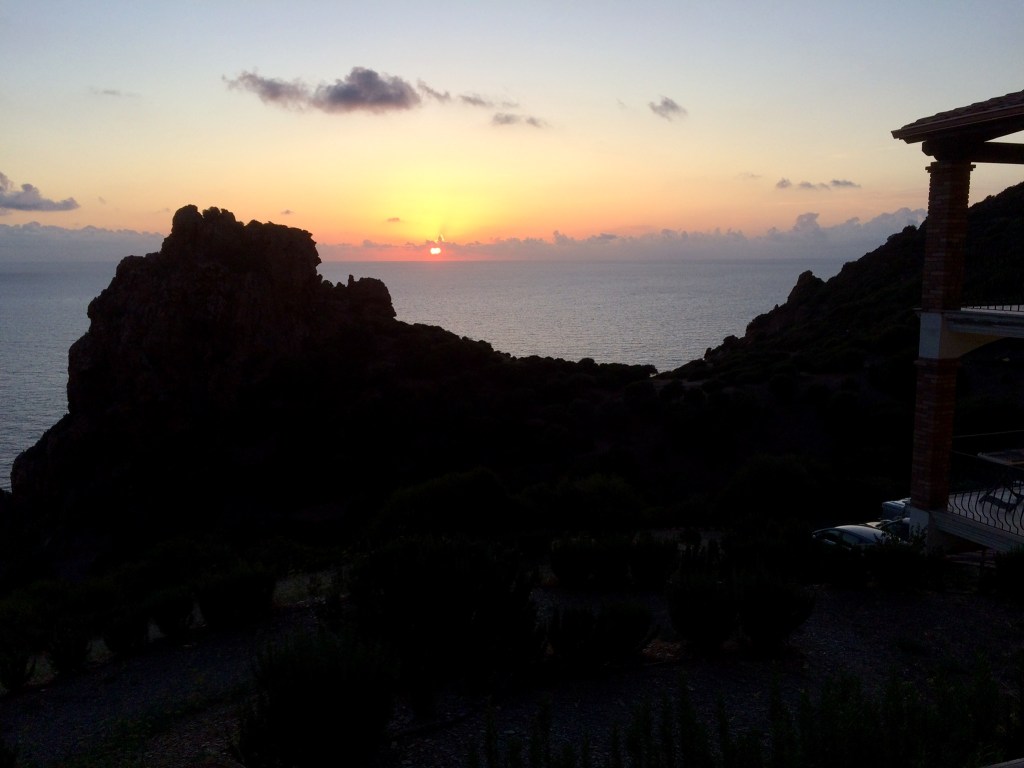
About 19.30 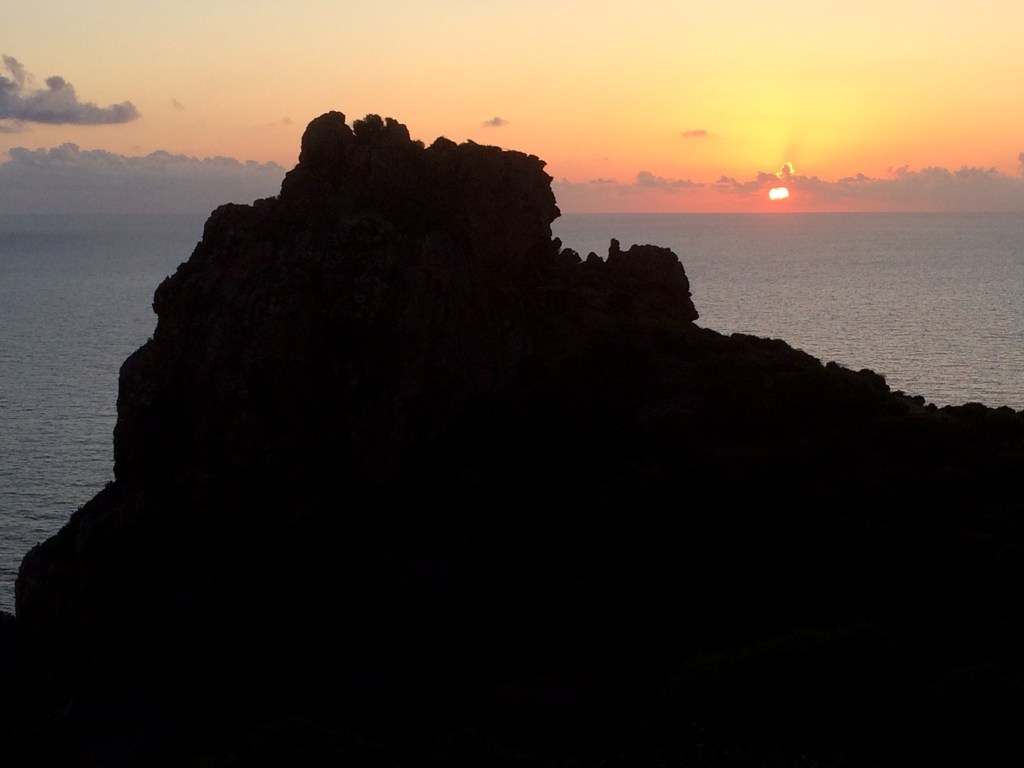
19.35 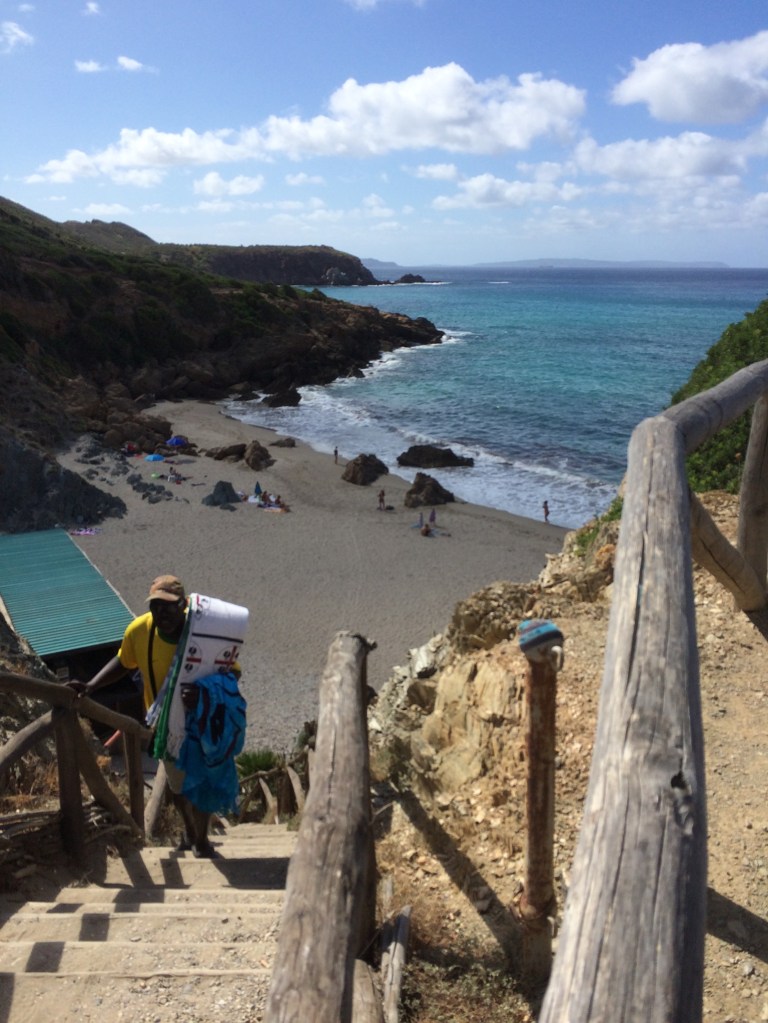
Beaches 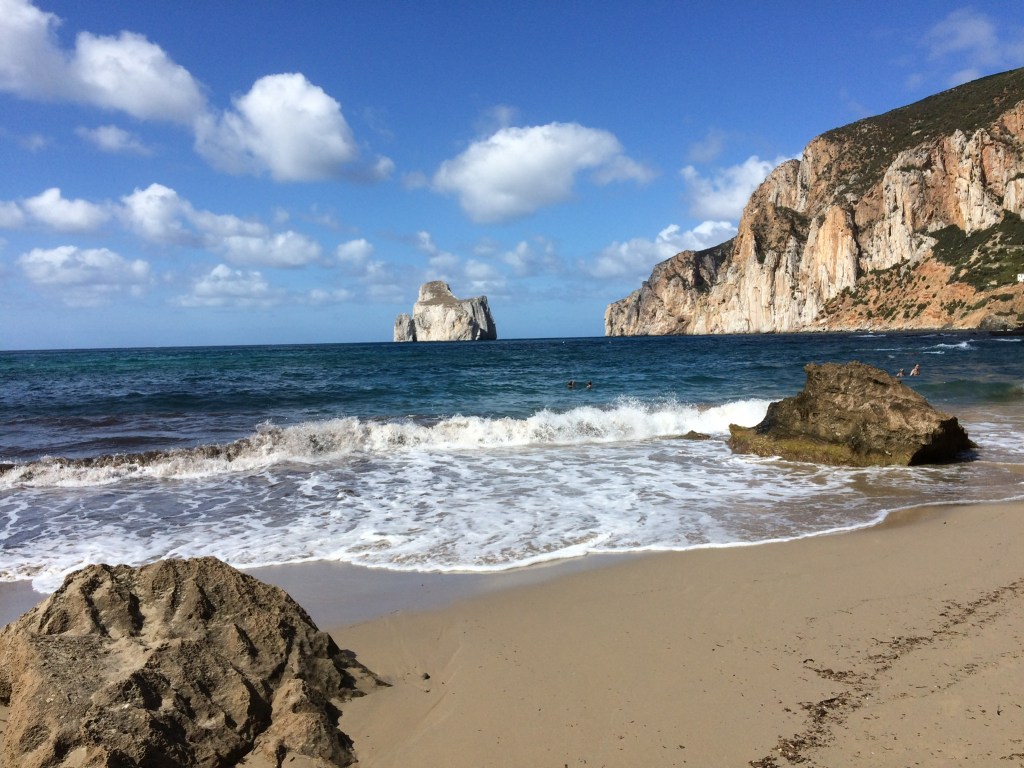
Swimming 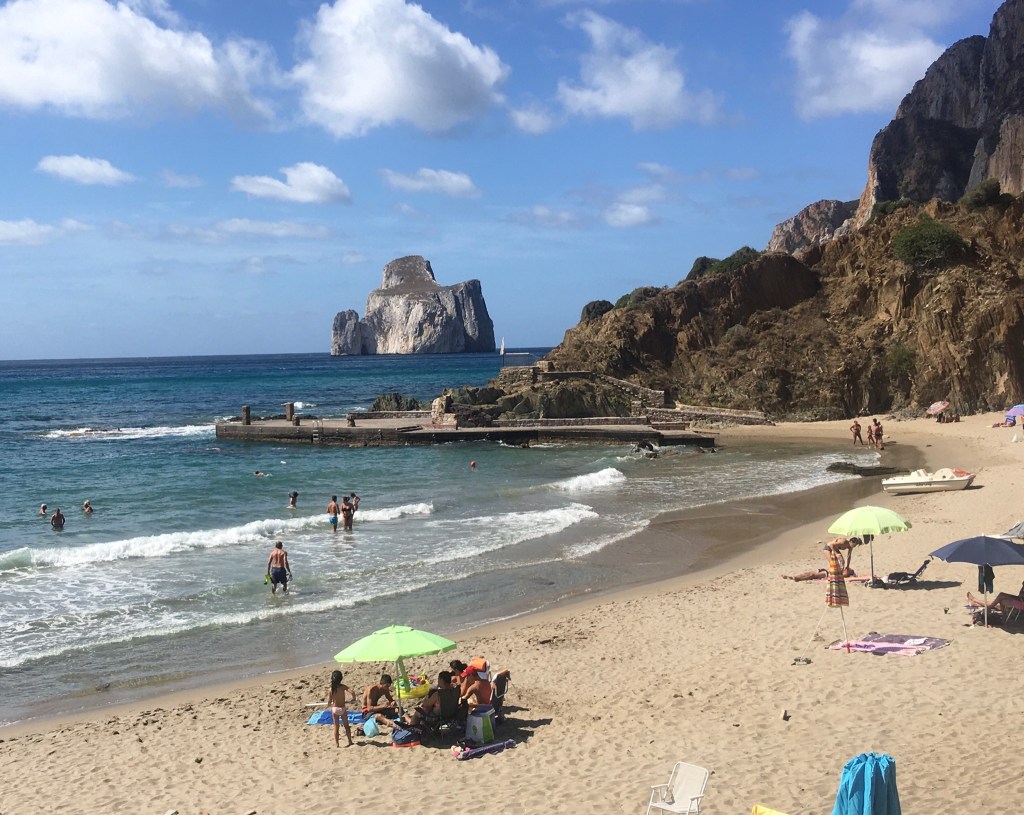
Lunchtime view 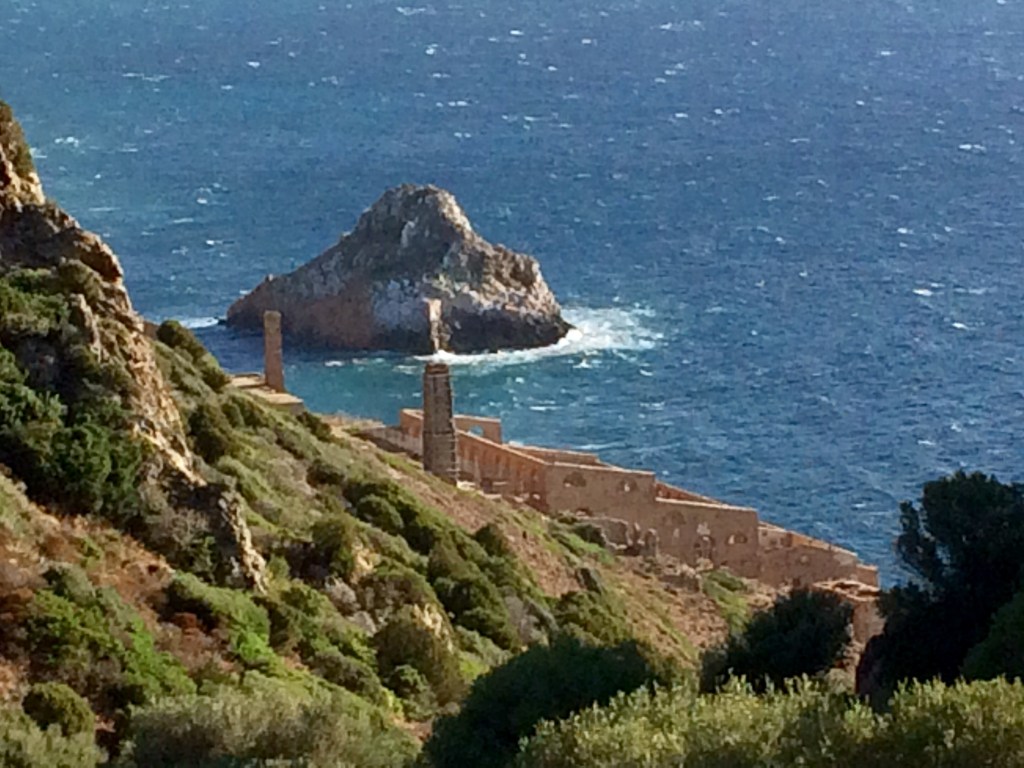
Dramatic coastline and industrial times past
Nebida Village and Food
The dual carriageway road from Cagliari gets to Inglesias, then up over the hills, past abandoned industry and wind up the coast road to Nebida. Our accommodation was past the village itself which overlooked the resort complex and the Meditarranean below.
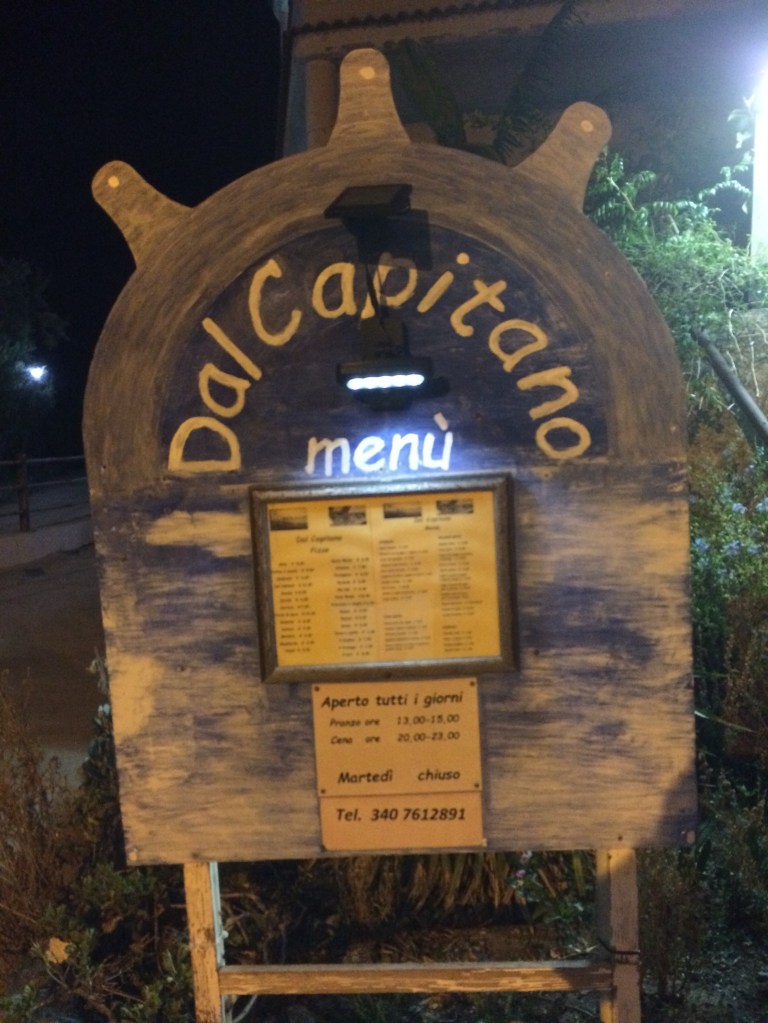
The centre of Nebida village is a square and to the cliff side of that a round hill with a “ Belvedere” that encircled it. The views from the Belvedere were extraordinary, early in the morning superb, and sunsets viewed from the pizza restaurant actually on the Belvedere, magical.
The square’s focal point was a stone mosaic featuring the names of a number of winds that occur in and around the Meditarranean, eg Mistrale, Scirroco, Levante etc. There were also two beautiful statues there, one a miner holding a pit prop, and the other of a woman.
We asked a lady at the Belvedere Pizza restaurant while we were making a reservation, what was behind these. She explained that the stone mosaic was the “ compass rose” and that Nebida experienced all of these winds from one season to another. The statues were a remembrance of a miners strike and the deaths that occurred then. It was beautifully presented and pretty moving.
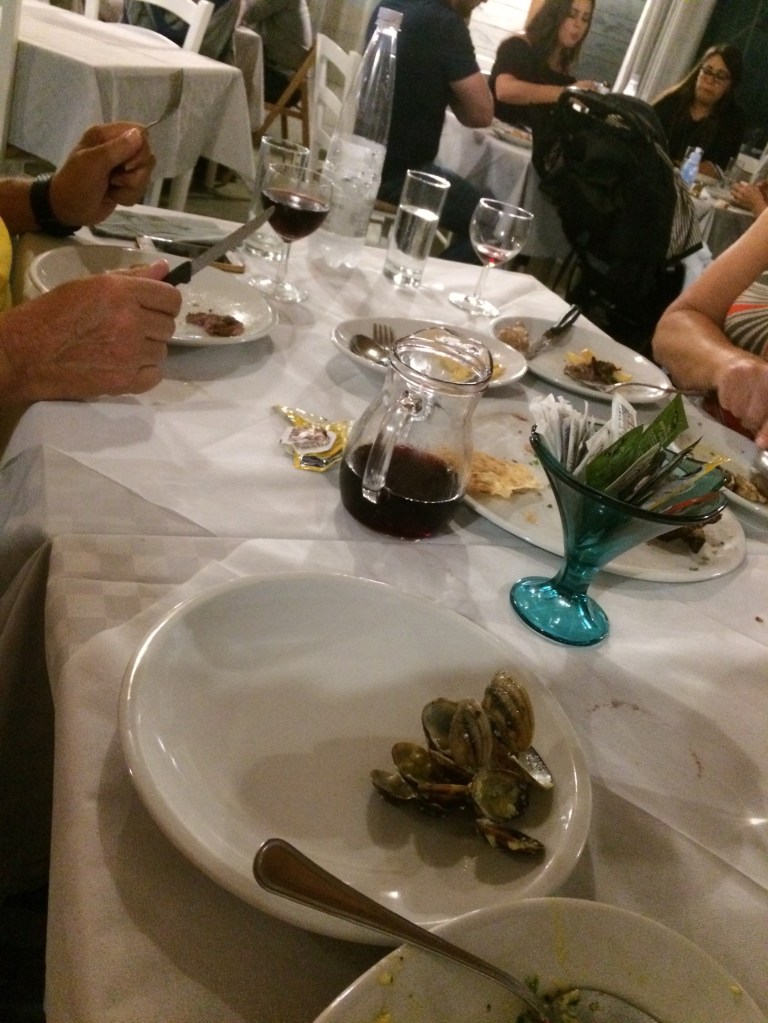
We ate at two village restaurants, brilliant inexpensive traditional Sardinian pastas, and purchased food at the local shop/ superette and local butcher. The superette was very modest, fresh vegetables – nothing pre- packaged – excellent range of cheeses, cooked meats and BYO container for the cheap local wine – see pic below. We also ate Lunch at two beach bars,similarly excellent. Local wines In restaurants very good & inexpensive, 1 litre of house red – mainly Carignan grape or Carbonneau- between €6 and €10.
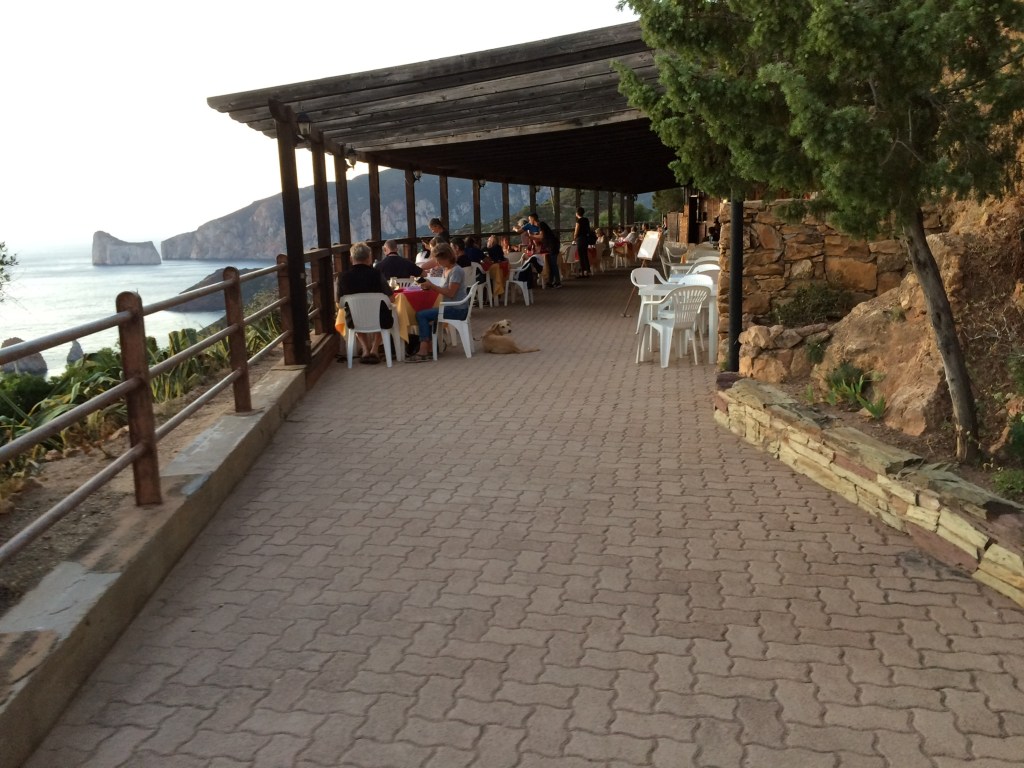
Belvedere restuarant 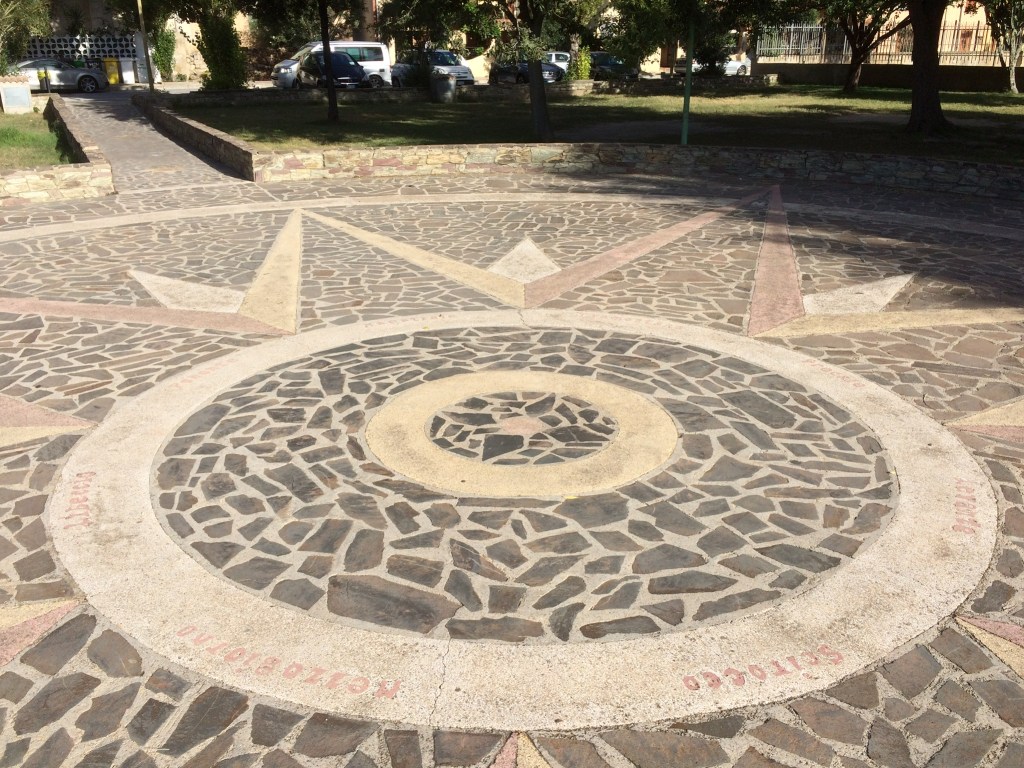
Winds on the compass centre 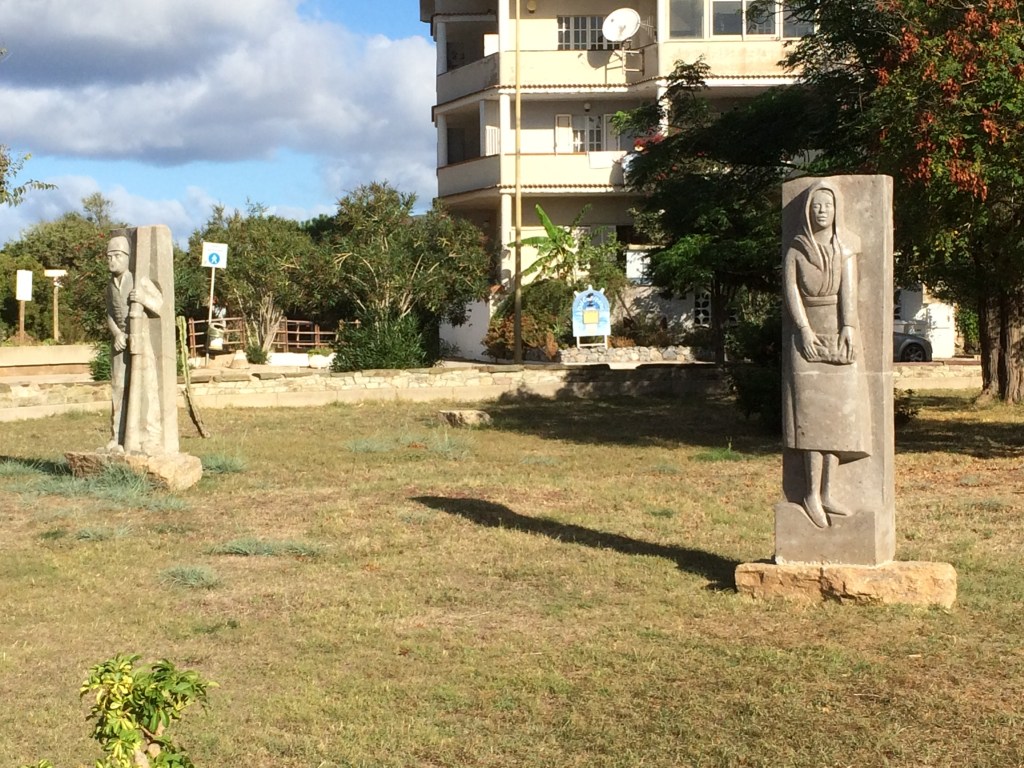
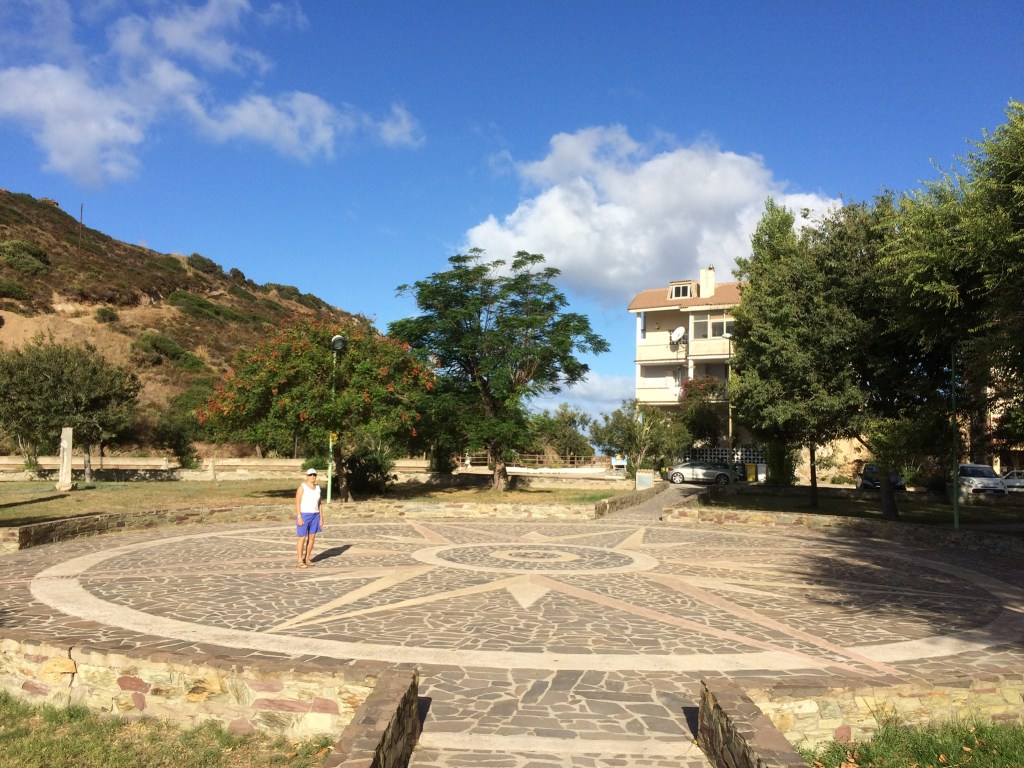
Compass Rose 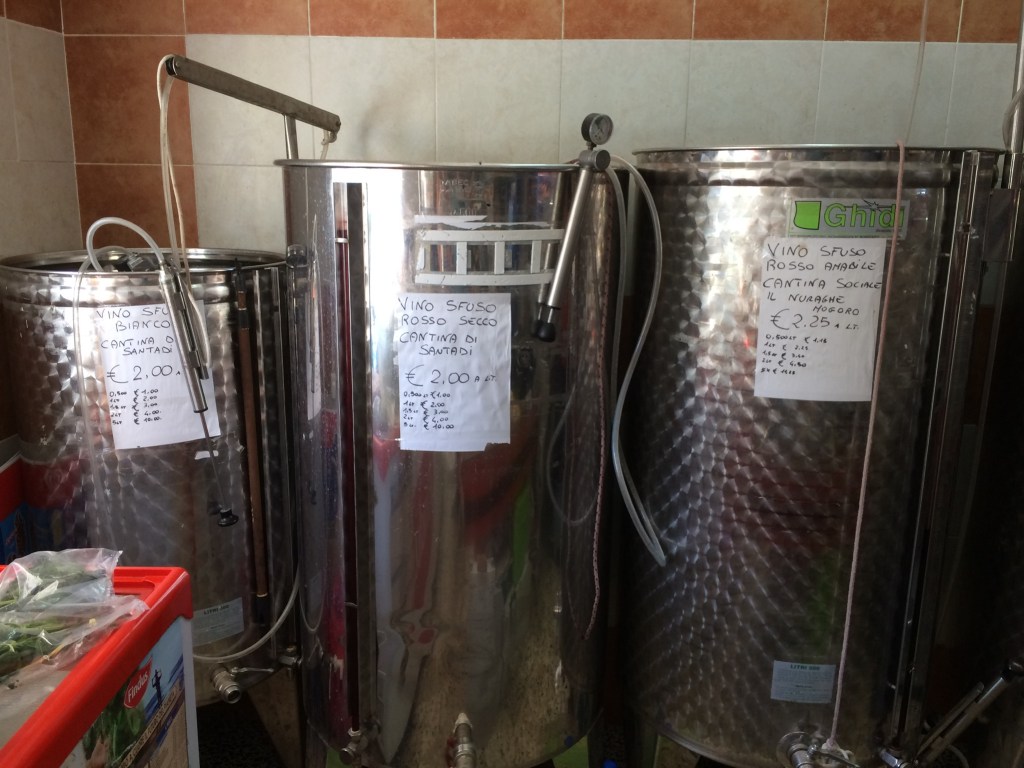
BYO Container to fill up with wine 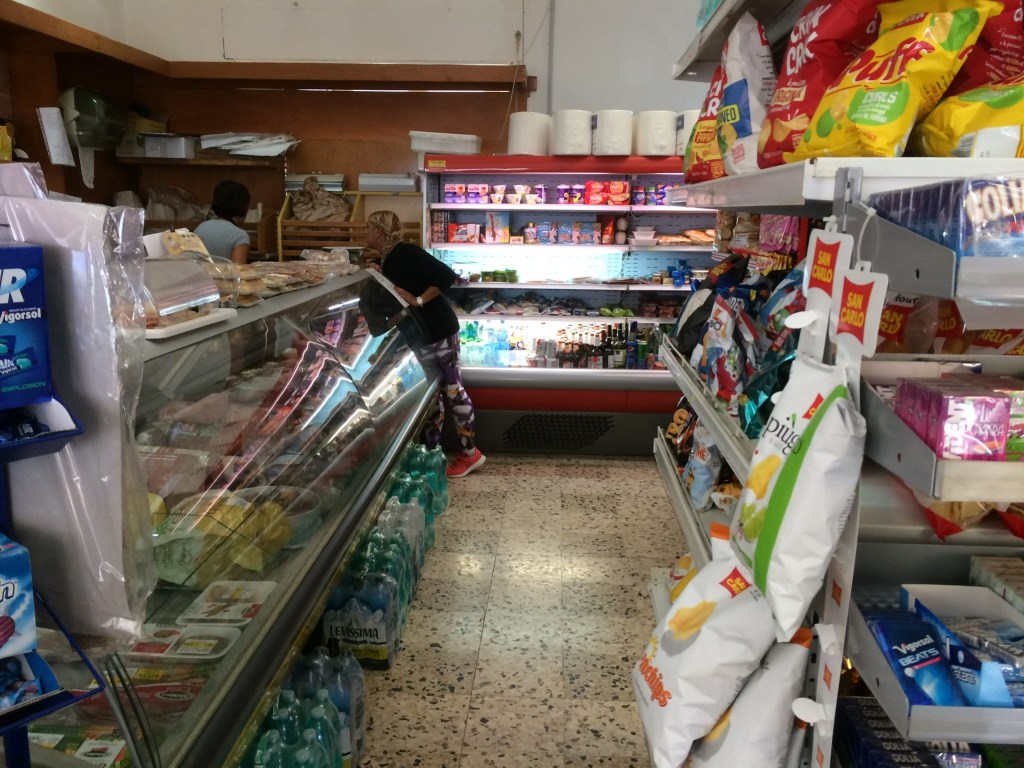
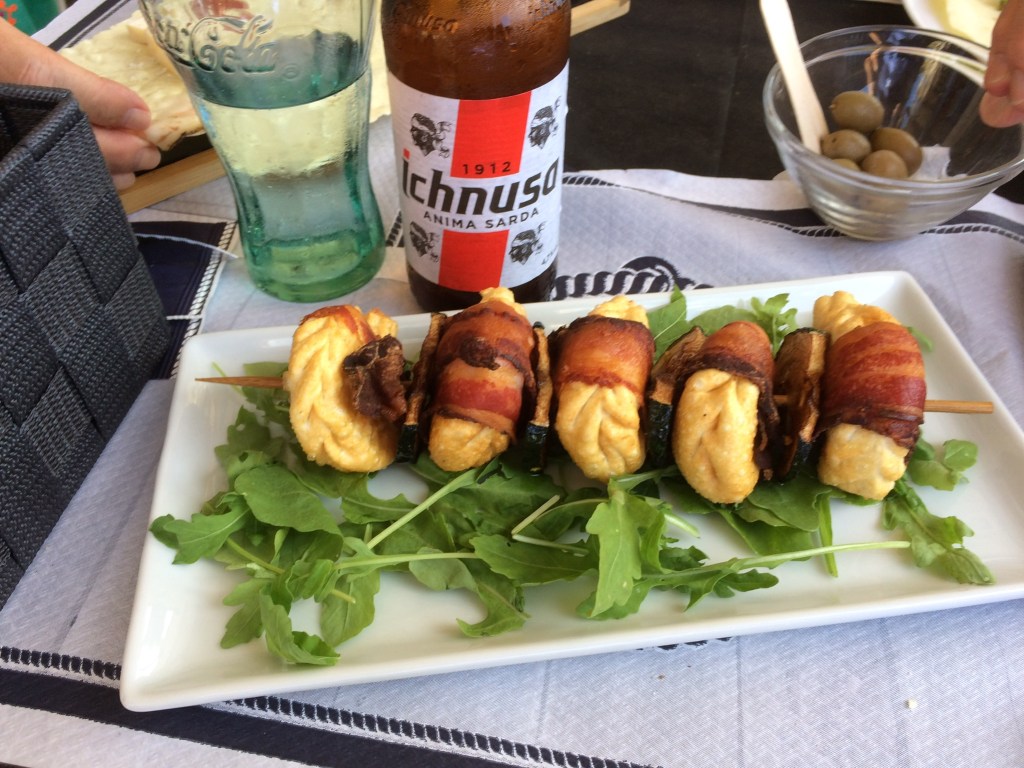
Beach bar food, local pasta filled with herbed potato, wrapped in bacon and bar b q – mmmmm & local beer 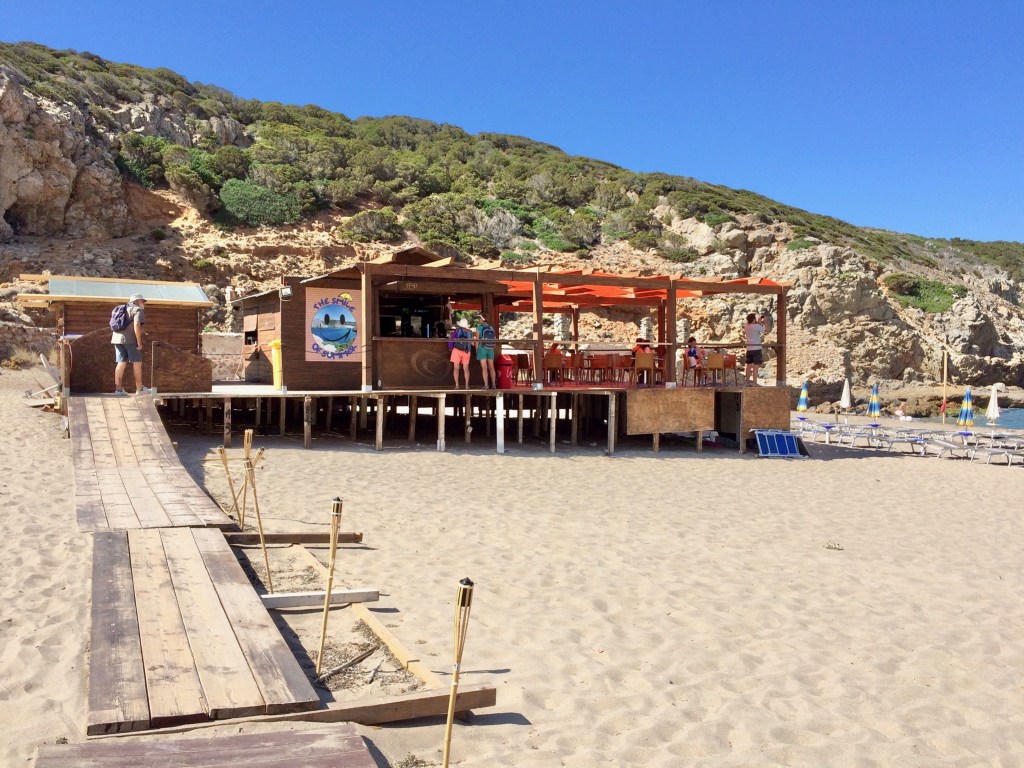
Beach bar- great coffee and marmalade croissants 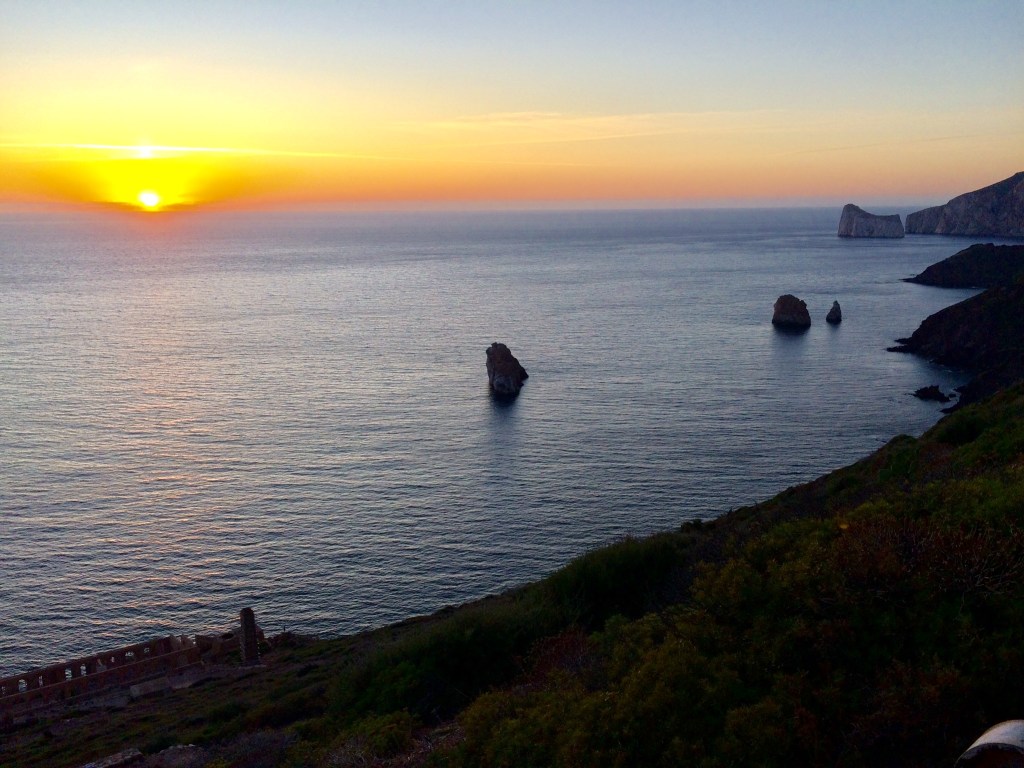
Limestone stacks at sunset 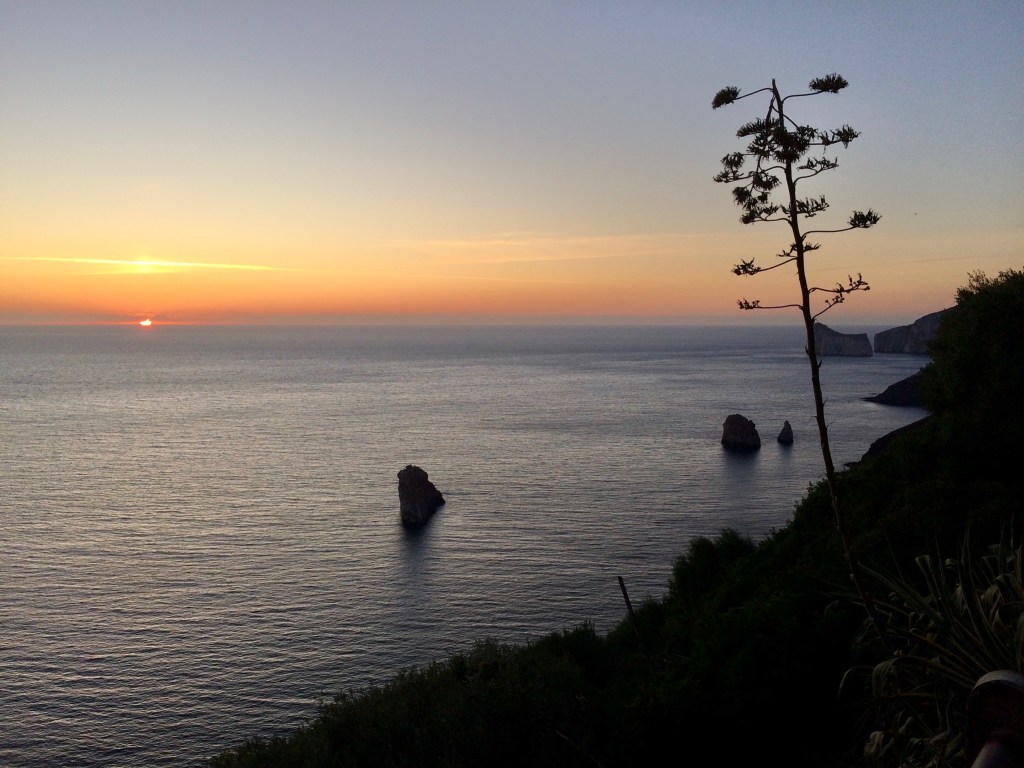
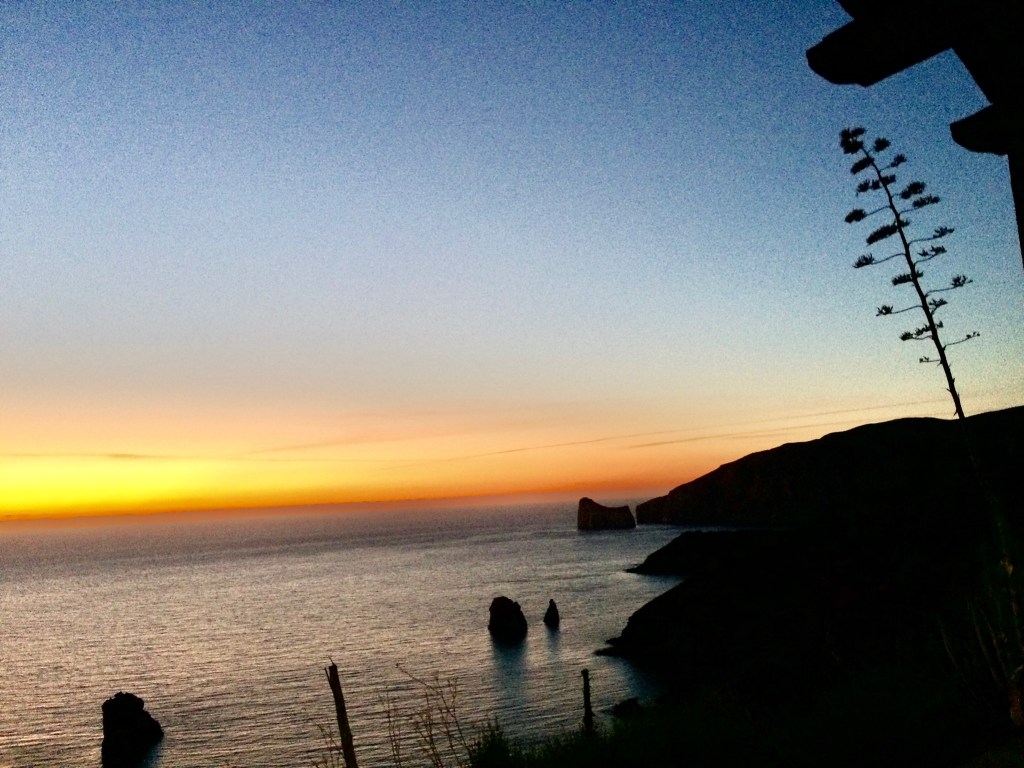
Mining memories
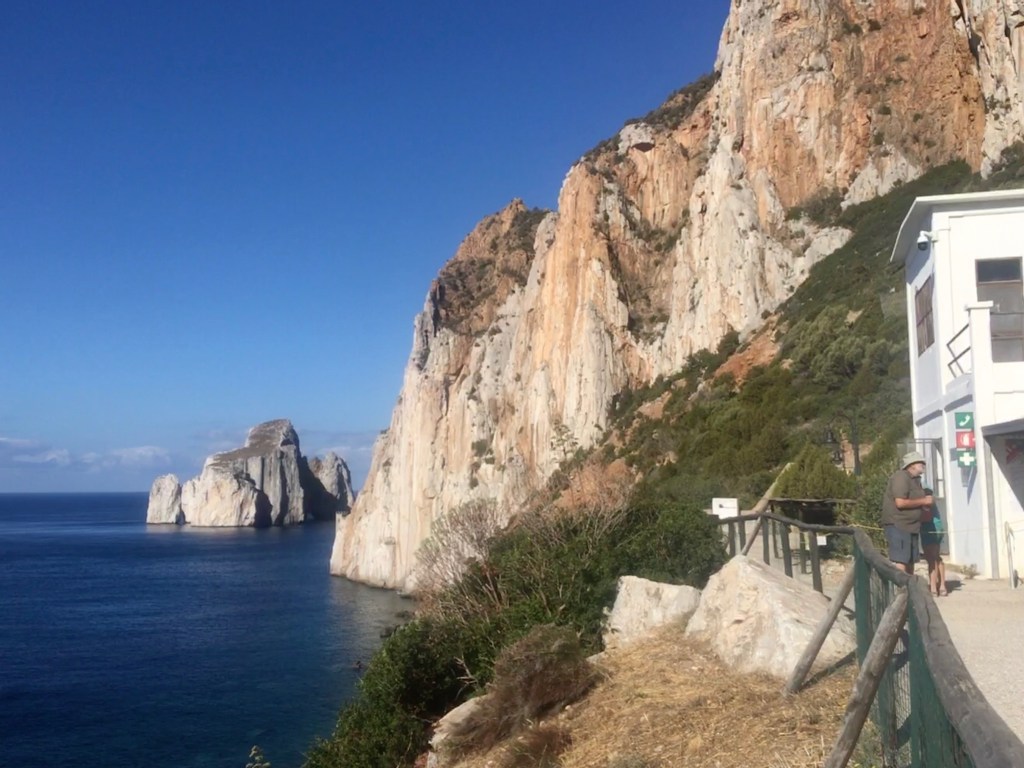
The biggest of the limestone stacks that you can see in a number of the pics, is called Pan di Zucherro. Today it is climbed by mountaineers and used for high lining attempts – we saw an Austrian/ German team preparing for this attempt – 500 metres of high lining at about 130 metres above the sea!!
But it is also the docking place for ships, which prior to the mines closing in about 1960, would have received minerals directly from the mine shafts and containers therein by conveyor.
Porto Flavia was one of the main mines in the area, and one of 4 that the owner eventually connected by a railway to deliver bulk shipments of minerals such as lead and zinc to ore carriers below. The mine was open for visitors, so we did, and with so many similar mines eg Cornwall in England and tin mining, the conditions that prevailed for the workers were dreadful. Originally mineral ore carried on the backs of workers to small sailing boats then trans shipped onto larger vessels. Today just a view of the past remains, and some history to learn from perhaps.
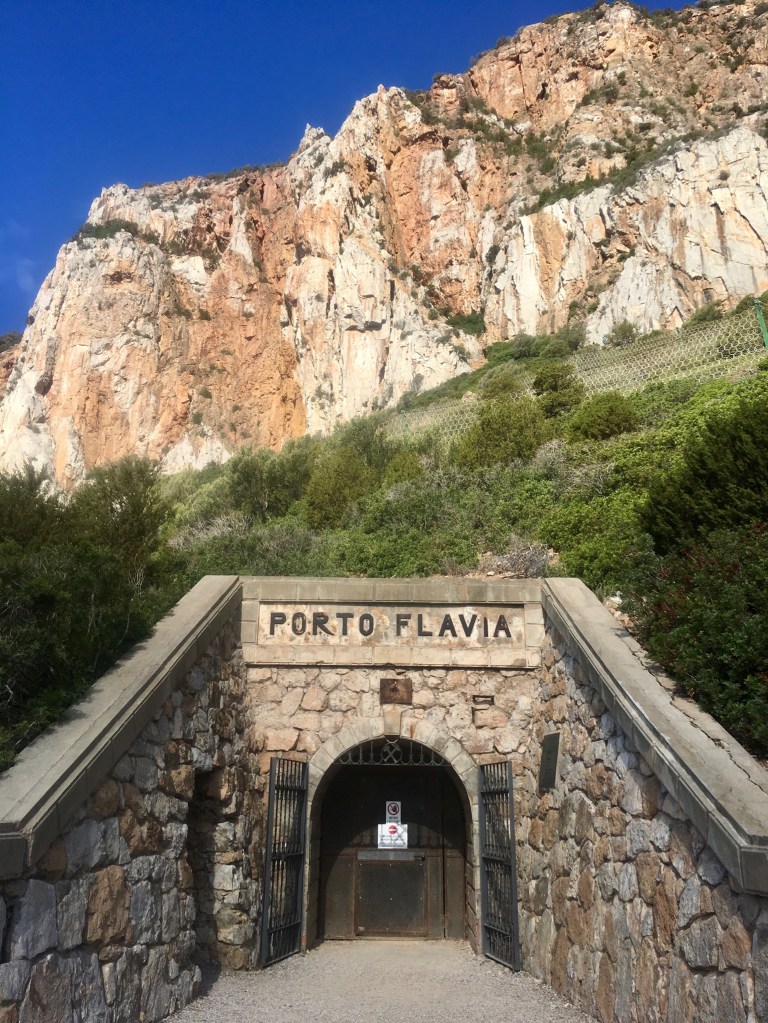
Mine entrance 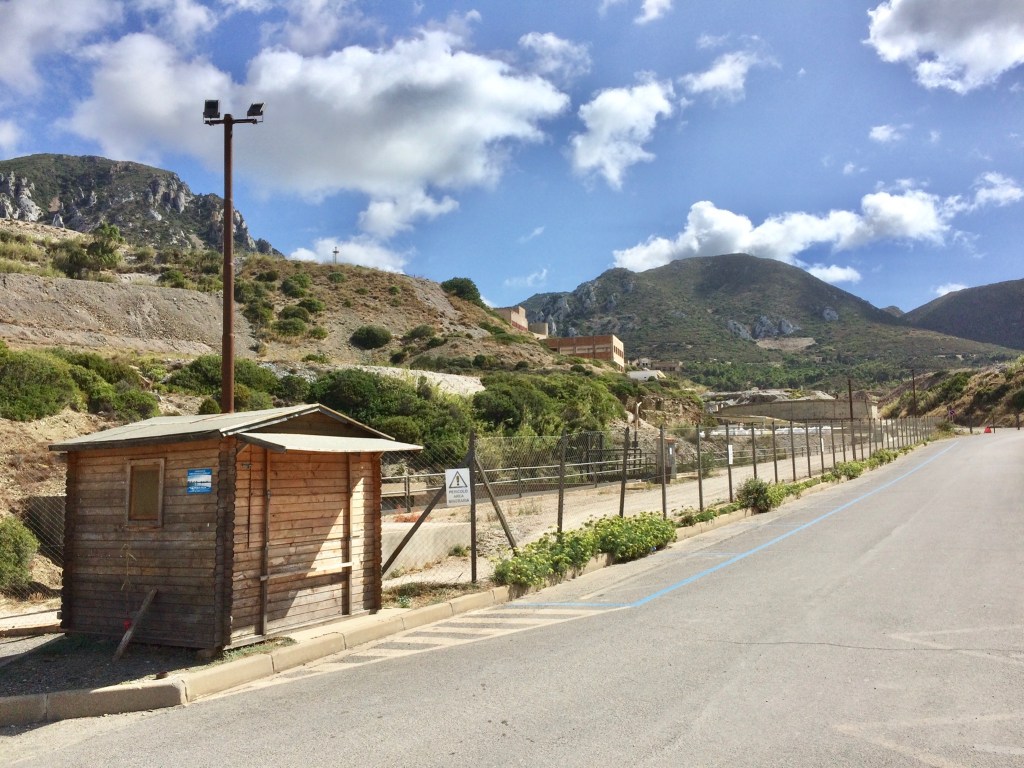
Open cast area 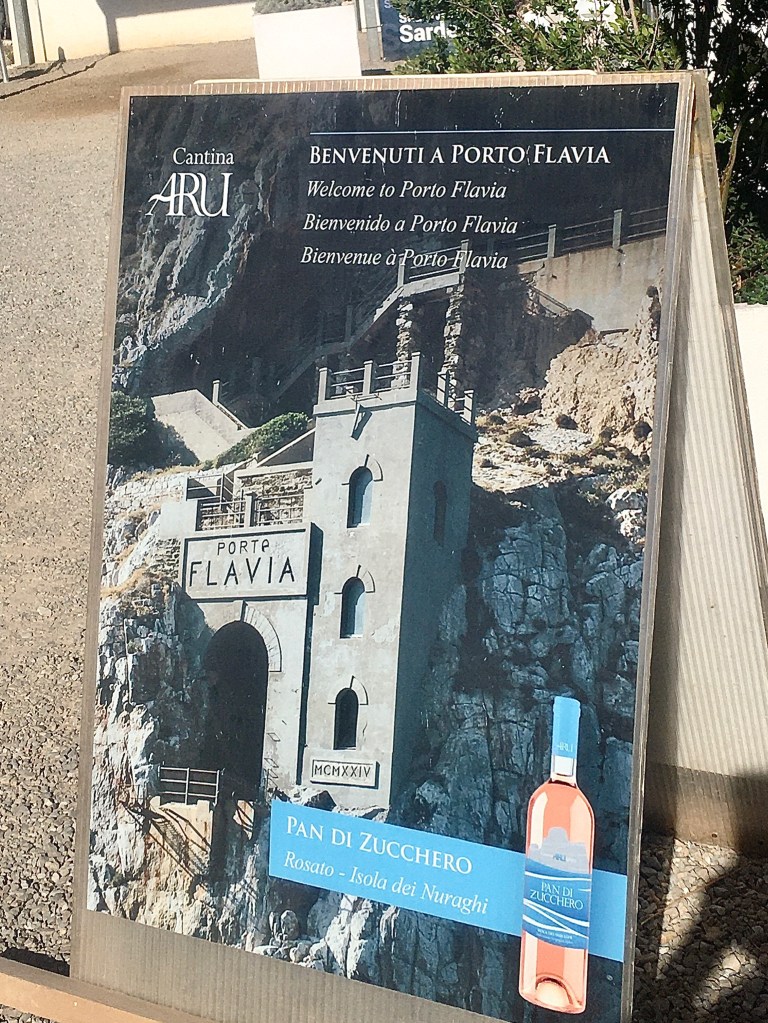
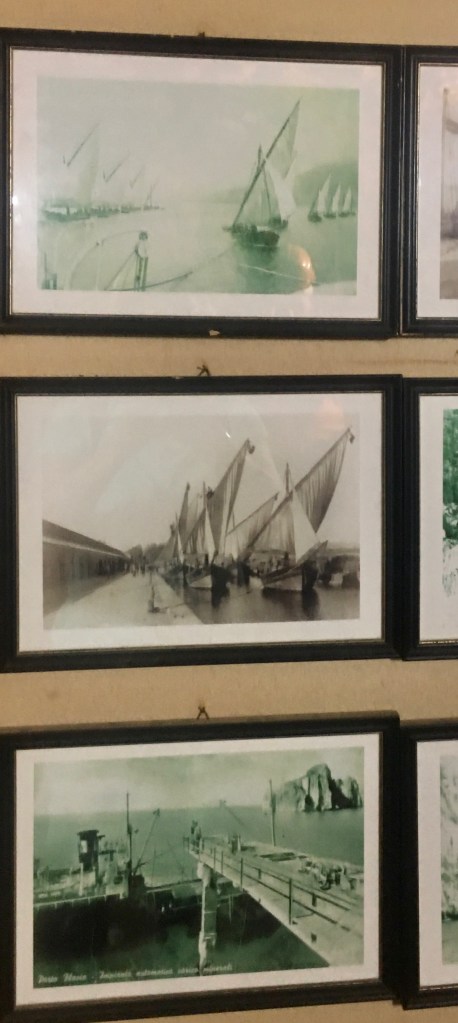
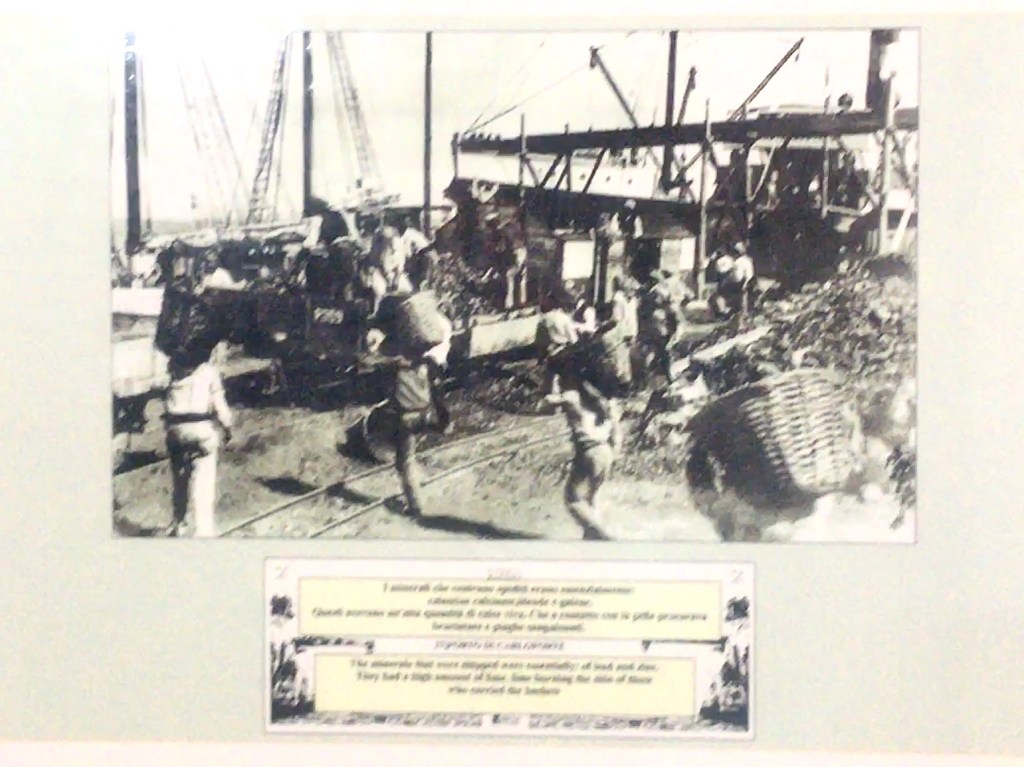
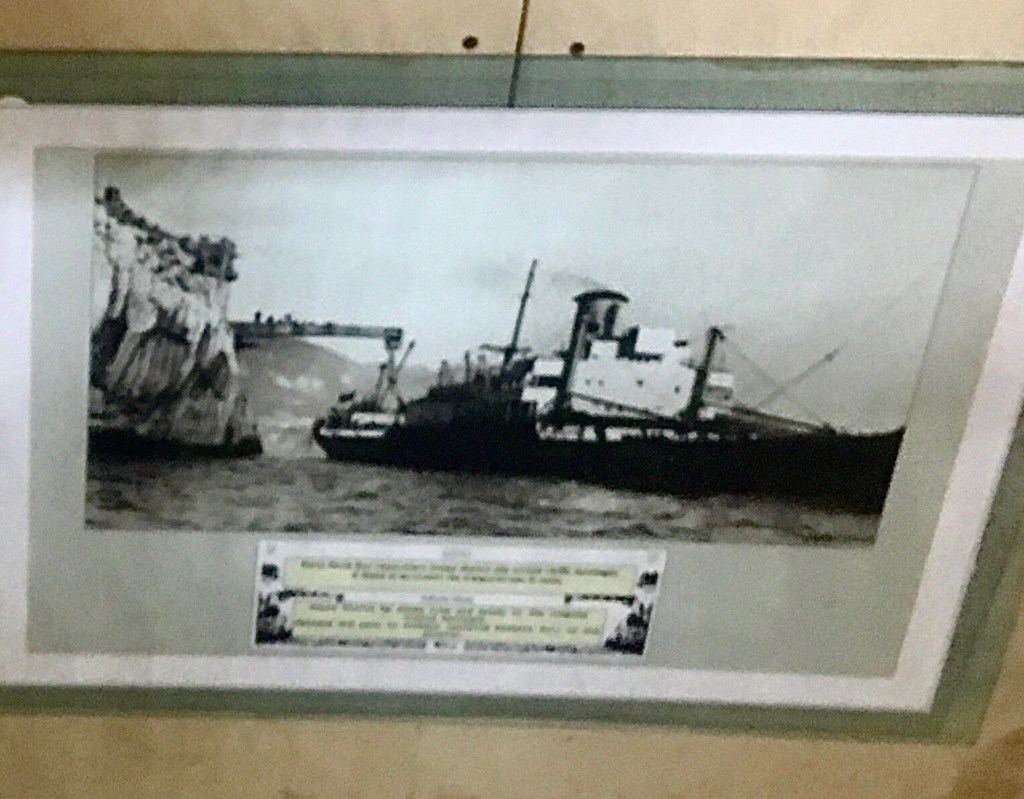
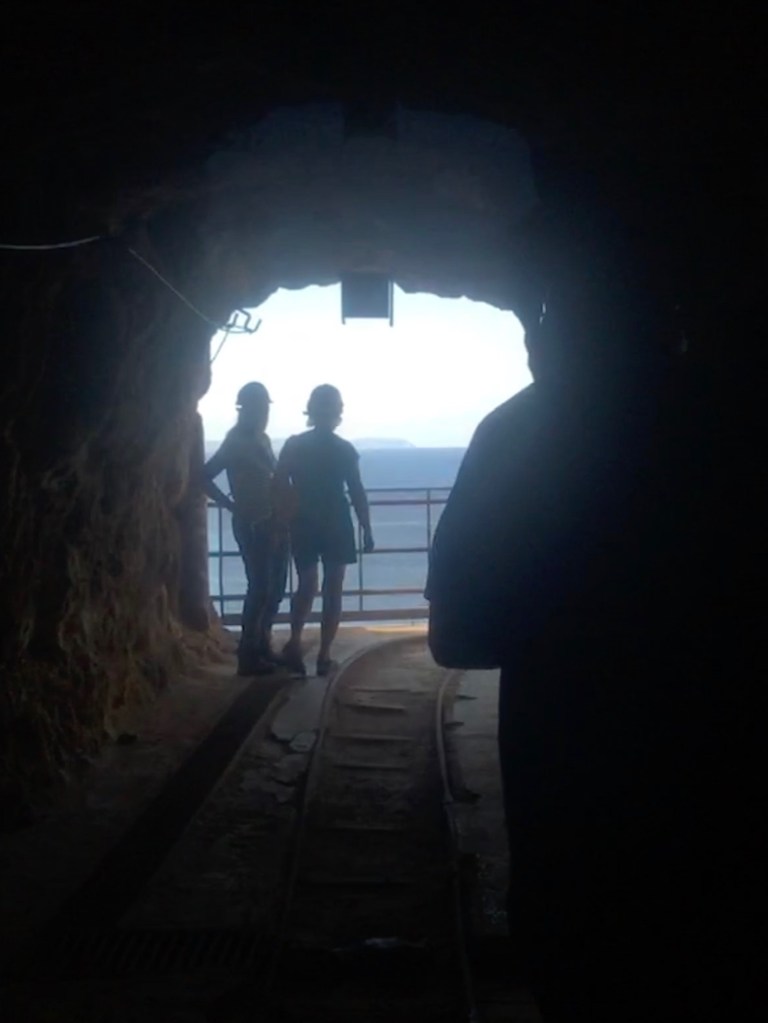
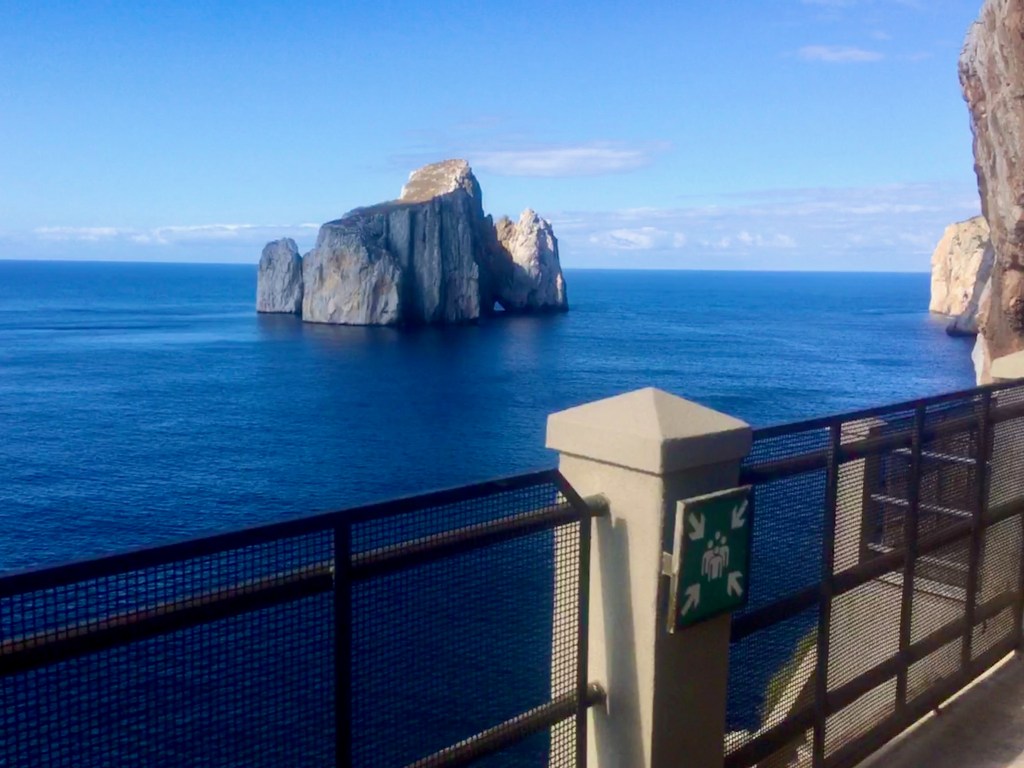
Minerals dispatched by conveyor from here to ships below. 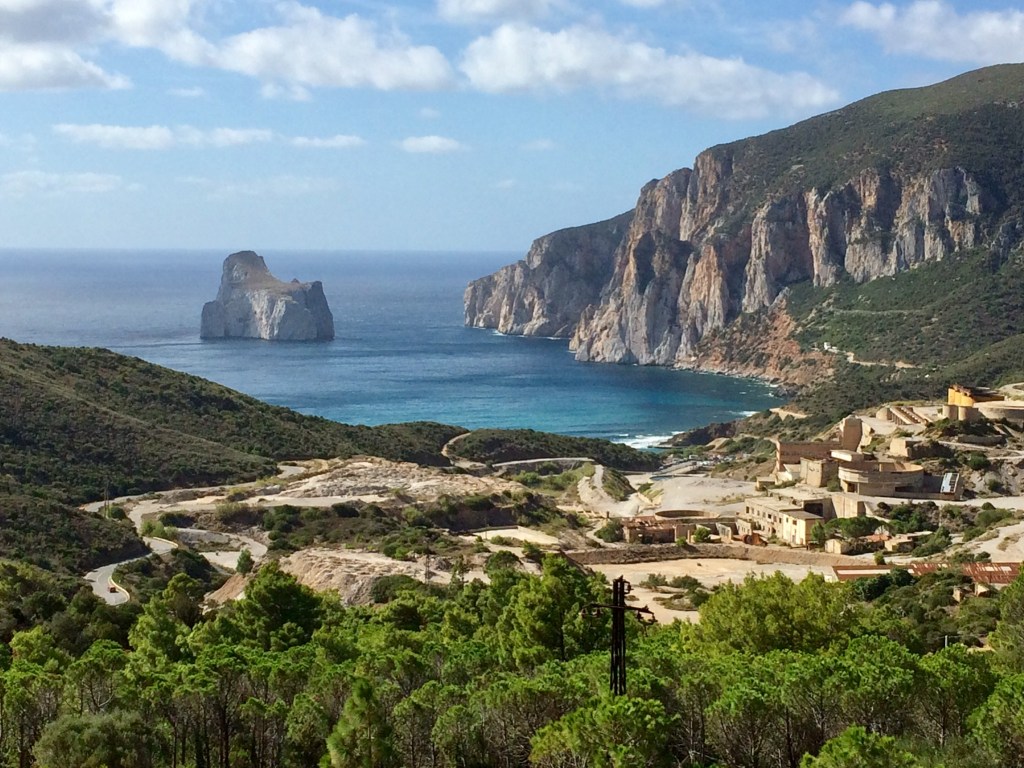
The surf in the picture is at a spectacular beach, never mind the mining backdrop!
Our visit to this south west side of Sardinia was initially made without much planning. The accommodation at Nebida was well priced, looked great let’s book it!! Subsequent Google Earth views showed a more dilapidated area around the resort and on the surface a very run down area. But Nebida surpassed our expectations, the natural beauty of the area shone through as did the friendliness of the local Sardinians.
We had a brilliant time exploring Nebida and thoroughly recommend.
 Travels with My Wife